Unveiling the New Face of Intelligence: A 2026 Perspective
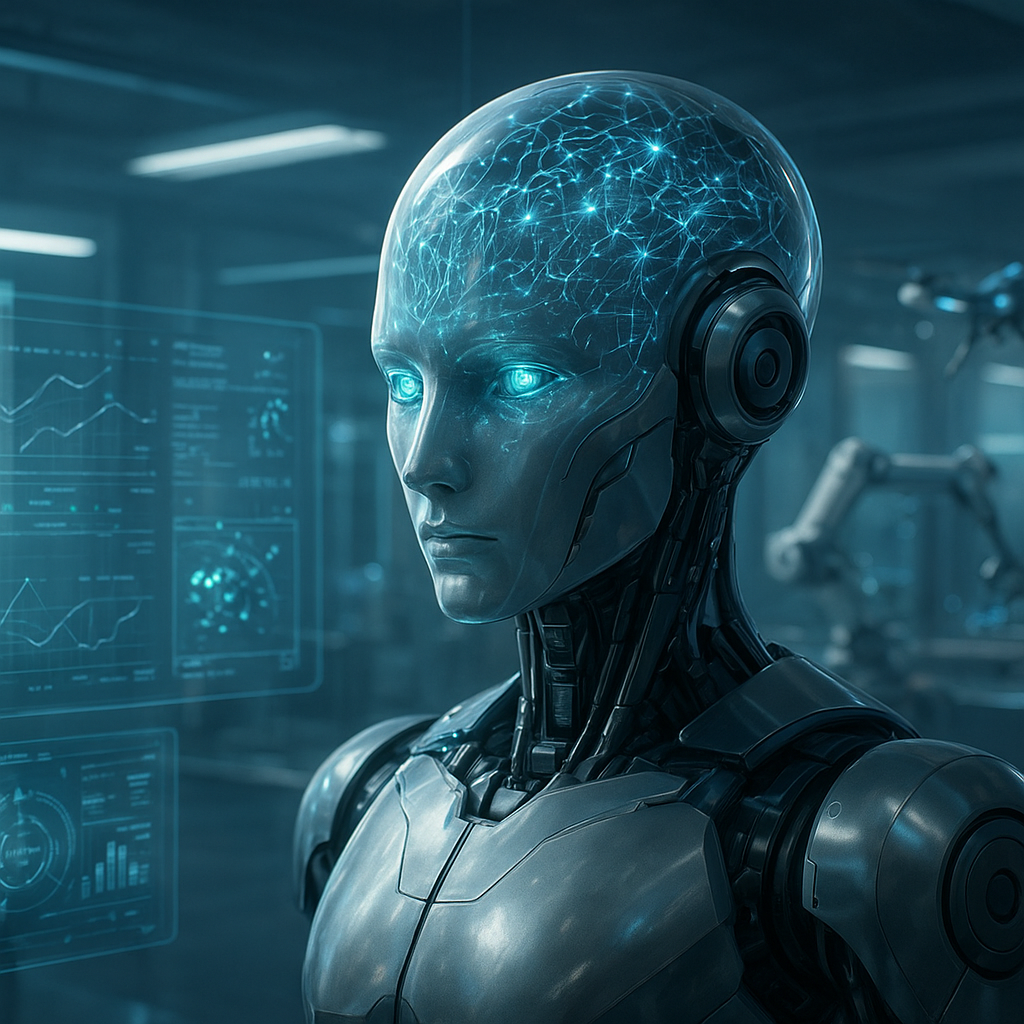
In a nondescript laboratory on the outskirts of Tokyo in early 2026, a humanoid robot named Aiko flawlessly assembles delicate microchips at a pace surpassing human technicians. Powered by an advanced machine learning model that adapts in real time, Aiko embodies the latest convergence of algorithms, robotics, and AI-driven learning. This scene is no longer science fiction but a vivid reality illustrating the profound transformation underway in how machines perceive, learn, and act.
The synergy between machine learning, robotics, and algorithms has accelerated technological capabilities to unprecedented levels. As machines gain autonomy and cognitive abilities, industries from manufacturing to healthcare are being reshaped. Yet, this evolution prompts a deeper examination of the underlying mechanisms and their implications for society.
“The integration of adaptive algorithms with robotics is not merely about automation but about creating entities capable of continuous learning and decision-making in complex environments.” — Dr. Aya Nakamura, Robotics AI Specialist
Tracing the Path: From Early AI to Today’s Intelligent Machines
The journey from rudimentary AI to the sophisticated systems of 2026 reflects decades of incremental innovation. Early algorithms in the mid-20th century relied on rule-based logic, unable to learn beyond their initial programming. The introduction of machine learning in the 1980s, particularly neural networks, marked a critical turning point, enabling systems to recognize patterns from data rather than explicit instructions.
Robotics followed a parallel trajectory. Initial industrial robots excelled at repetitive tasks but lacked adaptability. The 2010s heralded the integration of AI and robotics, yet many systems remained limited by rigid programming and insufficient computational power.
Key milestones include:
- 1997: IBM's Deep Blue defeats chess champion Garry Kasparov, demonstrating algorithmic strategic reasoning.
- 2012: Breakthroughs in deep learning with AlexNet revolutionize image recognition.
- 2020: Deployment of collaborative robots (cobots) capable of working safely alongside humans.
- 2024-2026: Emergence of adaptive, self-optimizing robotic systems with embedded reinforcement learning.
This historical context frames the current landscape where algorithms are no longer static instructions but dynamic engines driving continuous improvement.
Dissecting the Core Technologies: Algorithms, Machine Learning, and Robotics
At the heart of modern AI lies a triad of interdependent technologies. Algorithms are precise step-by-step instructions or formulas for solving problems. In AI, they evolve from simple heuristics to complex models that can self-tune based on data feedback.
Machine Learning (ML) refers to the subset of AI enabling systems to learn from data, identify patterns, and make decisions with minimal human intervention. This includes supervised learning, unsupervised learning, and reinforcement learning, each suited for different applications.
Robotics encompasses the physical embodiment of AI, where machines interact with the real world through sensors, actuators, and control systems. The integration of AI algorithms allows robots to perform tasks ranging from assembly to autonomous navigation.
Data from industry reports in 2026 highlight the scale of these technologies:
- Global ML market size: Estimated at $120 billion in 2026, with an annual growth rate of 22% (according to Gartner).
- Robotics market valuation: Surpassed $85 billion, driven by AI-powered automation.
- Algorithmic complexity: Average AI models have grown 15x in parameter size since 2023, enabling richer contextual understanding.
The interplay among these components allows systems like Aiko to not only execute tasks but also optimize and adapt based on environmental feedback.
Latest Advances in 2026: What’s Transforming AI Today?
Several breakthroughs in 2026 are catalyzing a new wave of AI innovation.
1. Self-Supervised Learning Maturation: Unlike traditional supervised learning needing labeled datasets, self-supervised methods leverage vast unlabeled data. This reduces dependency on costly annotation and boosts scalability.
2. Neuromorphic Robotics: Inspired by the human brain, neuromorphic chips are now standard in next-gen robots, offering ultra-low latency and energy-efficient processing.
3. Explainable AI Algorithms: Transparency has improved through algorithms that provide interpretable decision paths, crucial for sectors like healthcare and finance.
4. Autonomous Multi-Agent Systems: Swarms of robots collaborate using decentralized algorithms, enabling sophisticated tasks such as search-and-rescue operations or agricultural monitoring.
These developments are underpinned by increased computational power, cloud-edge hybrid architectures, and advances in algorithmic design.
“Explainability is no longer an afterthought but a core design principle, essential for trust and regulatory compliance.” — Elena Rodriguez, AI Ethics Lead
The impact of these technologies is visible across sectors:
- Healthcare: Robotic surgeons assisted by ML algorithms achieve higher precision with real-time adaptation.
- Manufacturing: Predictive maintenance powered by AI reduces downtime by up to 40%.
- Logistics: Autonomous delivery robots navigate complex urban environments with enhanced safety protocols.
For a deeper understanding of these dynamics, readers may explore how algorithms and robotics are driving AI innovation in our piece Why Algorithms, Robotics, and Machine Learning Are Reshaping AI Innovation.
Industry Insights: Expert Perspectives on the AI Triad
Leading voices in AI research and industry emphasize the transformative potential of the algorithm-robotics-ML nexus.
Dr. Marcus Lee, CTO at Synapse Robotics, highlights the shift from isolated AI modules to integrated intelligent systems. "The future lies in systems that learn continuously and adapt autonomously, blurring the lines between software and hardware intelligence," he asserts.
Similarly, AI strategist Naomi Chen points to ethical considerations: "As algorithms govern more critical decisions, embedding ethical constraints and accountability mechanisms becomes imperative."
These views reflect a growing consensus that technological advances must be balanced with societal responsibility. TheOmniBuzz's coverage on the synergy among machine learning, robotics, and algorithms provides a comprehensive exploration of such expert perspectives (Rethinking Intelligence: The Synergy of Machine Learning, Robotics, and Algorithms).
“Balancing innovation with ethical stewardship is the defining challenge for AI in this decade.” — Naomi Chen, AI Strategist
Future Outlook: Navigating Opportunities and Challenges Ahead
Looking forward, the trajectory of AI suggests several key themes shaping the next decade.
- Hybrid Intelligence Systems: Collaboration between humans and AI will deepen, with augmented decision-making becoming the norm.
- Regulatory Frameworks: Governments worldwide are developing comprehensive AI governance models to address privacy, security, and fairness.
- Cross-Disciplinary Innovation: AI will increasingly integrate with biotechnology, quantum computing, and materials science.
- Workforce Transformation: Automation will redefine roles, demanding reskilling and new educational paradigms.
- Environmental Impact: Energy-efficient algorithms and robotics will be prioritized to mitigate AI’s carbon footprint.
Stakeholders must remain vigilant about unintended consequences such as algorithmic bias and job displacement, while fostering innovation that benefits society broadly.
Ultimately, the future of AI lies in orchestrating the intricate dance of algorithms, robotics, and machine learning to unlock new forms of intelligence that augment human potential.
For readers interested in how these forces are forging the AI frontier, the article How Machine Learning, Robotics, and Algorithms Are Forging the New AI Frontier offers in-depth analysis and projections.
Case Studies: Real-World Applications Demonstrating Impact
Several organizations exemplify the transformative power of AI’s triad.
Case 1: Tesla’s Optimus Robot
Leading automotive giant Tesla unveiled Optimus, a humanoid robot with deep reinforcement learning capabilities. Optimus performs manufacturing tasks autonomously and adapts workflows based on real-time sensor data, enhancing production efficiency by 35% in pilot plants.
Case 2: DeepMed Diagnostics
This healthcare startup uses ML algorithms integrated with robotic biopsy devices to improve diagnostic accuracy. In trials, the robotic system reduced sampling errors by 50%, accelerating patient treatment timelines.
Case 3: AgriSense Drone Swarms
AgriSense deploys fleets of autonomous drones coordinated via decentralized algorithms to monitor crop health. These systems optimize pesticide use and irrigation, increasing yields while reducing environmental impact.
- Each case underscores the benefits of integrating learning algorithms with robotic platforms.
- They also highlight challenges, such as ensuring robust data security and maintaining system reliability in dynamic environments.
These examples provide concrete evidence of AI’s growing footprint across domains, reinforcing the insights from Unlocking Intelligence: How Algorithms, Robotics, and Machine Learning Shape Our Future.