Unveiling the New Frontier: AI's Transformative Nexus
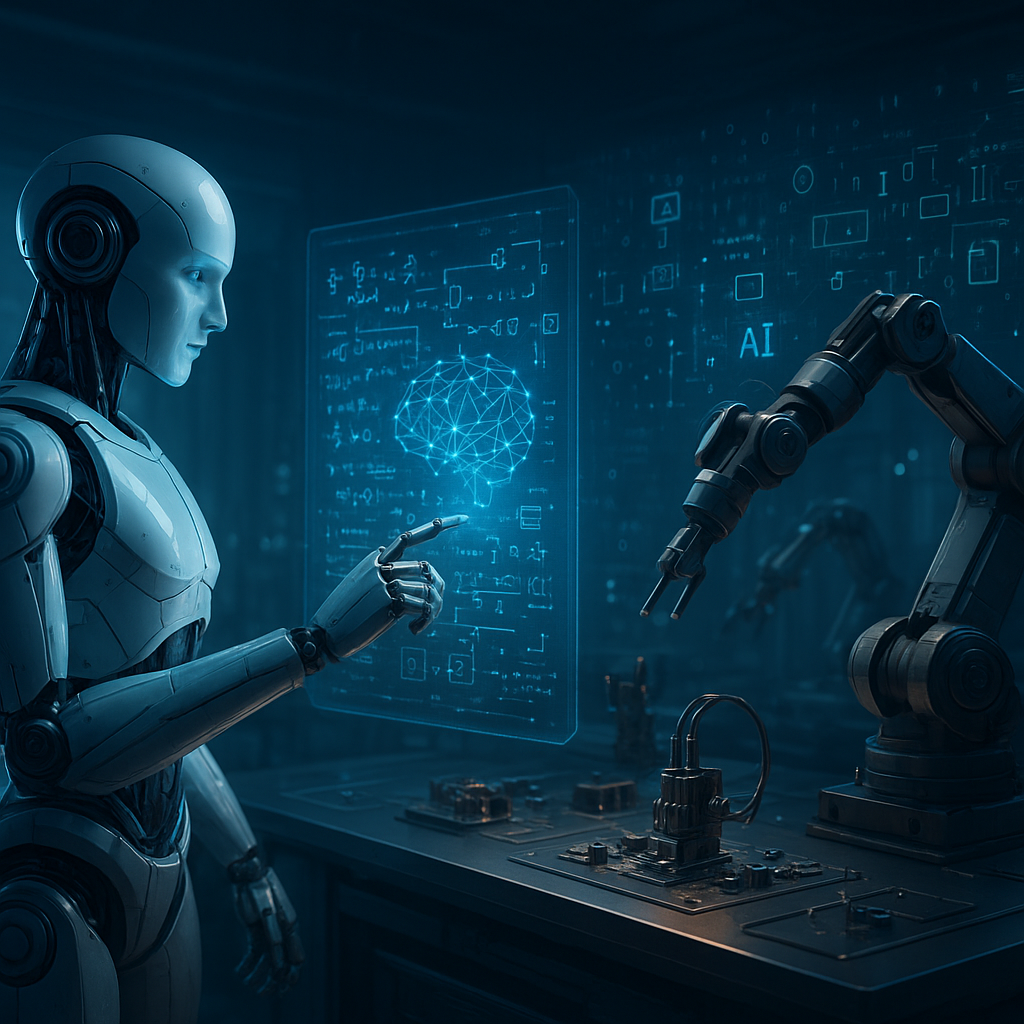
On a brisk morning in Silicon Valley, a robotic arm deftly assembles microchips with precision that surpasses human steadiness. Nearby, a machine learning model continuously refines its predictions, adapting to subtle shifts in data streams. This scene captures the essence of contemporary artificial intelligence—where algorithms, robotics, and machine learning converge to redefine technological boundaries. As industries worldwide accelerate automation and intelligent systems integration, understanding this triad's interplay becomes essential.
Recent reports from the International Federation of Robotics reveal that global industrial robot installations surpassed 600,000 units in 2025, marking a 12% rise over the previous year. Parallelly, machine learning's adoption in sectors from finance to healthcare has surged, with Gartner estimating a 20% annual growth in enterprise AI investments. Behind these advances are sophisticated algorithms that drive decision-making and system autonomy. This article explores the evolution, present state, and future trajectory of these AI pillars, unveiling their profound impact on society and industry.
Tracing the Roots: The Evolution of AI's Core Components
The journey of artificial intelligence began in the mid-20th century, with pioneering work by Alan Turing and John McCarthy laying foundational concepts. Early AI efforts focused on rule-based systems and symbolic reasoning. However, limitations in computational power and data availability constrained progress. The rise of machine learning (ML) in the 1980s and 1990s marked a paradigm shift by enabling systems to learn from data rather than relying solely on explicit programming.
Robotics followed a parallel path, initially emphasizing mechanical design and control systems. Early robots performed repetitive tasks but lacked adaptability. The integration of machine learning and advanced algorithms in the 2010s ushered in a new era of intelligent robotics capable of perception, decision-making, and collaboration with humans. Algorithms evolved from simple linear models to complex deep neural networks, enabling breakthroughs in image recognition, natural language processing, and autonomous navigation.
Understanding this historical context is crucial to appreciating current developments. The synergy of machine learning, robotics, and algorithms did not emerge overnight; it reflects decades of interdisciplinary research and incremental innovation, propelled by advances in hardware, data science, and computational theory.
Decoding the Triad: Machine Learning, Robotics, and Algorithms in 2026
In 2026, the interdependence of machine learning, robotics, and algorithms is more pronounced than ever. Machine learning provides the adaptive intelligence that empowers robots to operate in dynamic environments. Algorithms form the decision-making backbone, optimizing tasks ranging from path planning to predictive maintenance.
Consider the manufacturing sector, where autonomous robotic arms equipped with deep reinforcement learning algorithms have optimized assembly lines, reducing defects by 35% and increasing throughput by 22%, according to industry analysts. These systems rely on real-time data analytics and advanced control algorithms to adjust to material variations and production anomalies.
In healthcare, surgical robots augmented with machine learning models analyze vast datasets of patient information to tailor procedures, improving outcomes and reducing recovery times. Algorithms enable these robots to interpret imaging data, predict complications, and assist surgeons with unprecedented precision.
"The fusion of these technologies is not merely additive; it creates a multiplier effect that accelerates innovation and efficiency," says Dr. Elena Morozova, AI research director at a leading robotics firm.
The ongoing refinement of algorithms also addresses ethical and operational challenges, including bias mitigation, transparency, and robustness against adversarial attacks. This has spurred a wave of research into explainable AI (XAI) and algorithmic auditing frameworks, ensuring that AI systems remain accountable and trustworthy.
Breaking Ground: Latest Developments and Industry Impact
The year 2026 has been pivotal for AI, marked by several breakthroughs. One notable advancement is the deployment of multi-modal learning algorithms that enable robots to seamlessly integrate visual, auditory, and tactile data streams. This has enhanced capabilities in complex tasks such as disaster response, where robots navigate uncertain terrains while interpreting environmental cues.
Leading companies like Tesla Robotics and Siemens Automation have launched collaborative robots (cobots) with embedded AI, designed to work safely alongside human operators. These robots use reinforcement learning to adapt behavior in real time, improving workplace safety and flexibility.
Moreover, cloud-based AI platforms have democratized access to powerful algorithms and robotics control systems. Startups and SMEs leverage these platforms to innovate without heavy upfront investments. According to a 2026 report by McKinsey, AI-driven automation contributed to a 15% increase in global manufacturing productivity this year.
- Multi-modal sensor fusion enabling robust robotic perception.
- Advances in real-time machine learning for adaptive control.
- Enhanced explainability features improving algorithm transparency.
- Rapid growth of cloud-hosted AI robotics services.
- Increased cross-sector adoption accelerating economic impact.
"The convergence of cloud AI and robotics is transforming how industries approach automation and innovation," remarks CEO Rajesh Patel of Nexa Robotics.
These trends underscore the expanding scope of AI integration, where machine learning algorithms tailor robotic functions to diverse applications, from agriculture and logistics to defense and entertainment.
Voices from the Frontlines: Expert Insights and Industry Perspectives
Experts emphasize that the interplay between machine learning, robotics, and algorithms is shaping the competitive landscape. Dr. Lisa Chang, professor of Robotics and AI Ethics, highlights the importance of interdisciplinary collaboration: "Bridging algorithmic development with robotic hardware engineering and ethical frameworks is key to sustainable AI deployment."
Industry leaders echo this sentiment. At the 2026 Global AI Summit, CTO Miguel Alvarez of RoboTech Solutions underscored how integrating explainable machine learning algorithms into robotics has enhanced client trust and regulatory compliance.
- Ethical AI frameworks are becoming integral to product design.
- Investment in AI education and workforce reskilling is critical.
- Cross-industry partnerships accelerate technology transfer.
- Regulatory landscapes are evolving to address AI risks and opportunities.
TheOmniBuzz’s coverage of AI evolution, including Rethinking Intelligence: The Synergy of Machine Learning, Robotics, and Algorithms, provides further context on how these technologies intersect to drive innovation. Additionally, the article How Machine Learning Is Redefining Intelligence and Industry in 2026 offers detailed industry applications illustrating these dynamics in action.
Looking Ahead: Navigating the Future of AI Integration
As 2026 progresses, the trajectory of artificial intelligence suggests a future where machine learning, robotics, and algorithms become ever more entwined. Emerging trends to watch include quantum algorithms enhancing machine learning efficiency, bio-inspired robotics adopting neural control systems, and AI governance frameworks maturing globally.
Organizations must prepare by investing in robust data infrastructures, fostering interdisciplinary teams, and prioritizing ethical AI development. The balance of innovation with societal impact remains crucial, ensuring AI serves humanity's broad interests.
- Quantum-enhanced machine learning models promise exponential speed gains.
- Integration of soft robotics and AI for delicate human-robot interaction.
- Development of universal algorithmic standards for AI safety.
- Expansion of AI literacy programs to address workforce shifts.
- Growth of AI applications in climate modeling and sustainability.
"The future of AI lies not just in advancing technology but in harmonizing it with human values and societal goals," concludes Dr. Morozova.
In sum, the intricate relationship between machine learning, robotics, and algorithms is forging an AI landscape marked by unprecedented capabilities and responsibilities. Staying informed about these developments and their implications is essential for stakeholders across sectors.
For readers seeking a foundational understanding, Rethinking Intelligence: What Exactly Is Artificial Intelligence? offers a comprehensive introduction to AI concepts that underpin these advancements.