
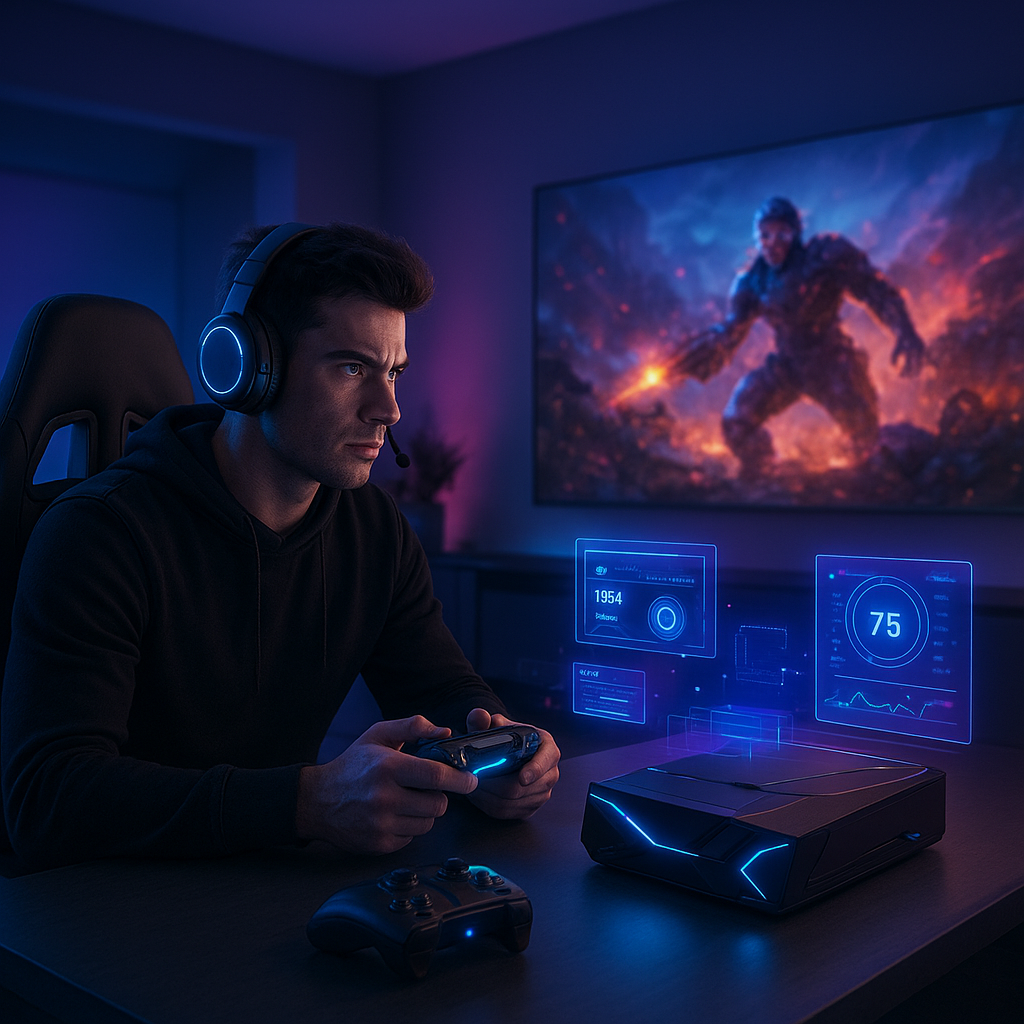
Gaming Hardware's Quantum Leap: A New Era of Player Empowerment
On a brisk autumn evening in 2026, a competitive gamer in Seoul plugs in a sleek, new VR headset that weighs barely 250 grams yet delivers an unprecedented 16K resolution per eye. Minutes later, their movements translate flawlessly into a hyper-realistic game world, powered by next-generation haptic gloves and a neural interface that anticipates physical intent. This scene, once the domain of sci-fi imagination, underlines the radical transformation gaming hardware has undergone. The stakes for immersive, responsive, and ultra-fast gaming equipment have never been higher, driven by millions of players worldwide and an industry surpassing $350 billion in annual revenues (according to industry analysts).
As gaming becomes a principal entertainment pillar, hardware innovation is no longer just about raw specs but about enhancing player agency. With the rise of AI-assisted rendering, real-time ray tracing, and adaptive ergonomics, hardware manufacturers are crafting tools that do more than run games—they amplify player skill and immersion.
“In 2026, gaming hardware is the silent partner in every victory and defeat, shaping how players interact with their virtual worlds at a fundamental level,” says Dr. Helena Morozov, lead scientist at QuantumPlay Technologies.
From Silicon Roots to Hyper-Realism: The Journey of Gaming Hardware
The journey of gaming hardware from chunky CRT monitors and bulky joysticks to the ultra-light, high-performance peripherals of today is a story of relentless innovation. In the early 2000s, the industry focused on incremental improvements in CPU and GPU clock speeds. The advent of multi-core processors and GDDR memory laid foundations, but the real breakthrough came with the introduction of dedicated ray tracing cores in GPUs in the late 2010s, which matured by 2024 to deliver near-photorealistic lighting effects.
Meanwhile, peripherals evolved from simple input devices to sophisticated extensions of the player's body. Mechanical keyboards with ultra-fast actuation, low-latency mice with customizable DPI, and audio devices with spatial surround sound became the norm. The emergence of VR and AR in the mid-2020s, catalyzed by advances in display tech and sensor miniaturization, expanded the hardware ecosystem.
The competitive esports scene further pressured manufacturers to innovate. Latency benchmarks tightened to under 1 millisecond for wired connections and sub-2 milliseconds for wireless, reflecting the demand for seamless responsiveness. The rise of cloud gaming and edge computing also influenced hardware design, pushing for devices capable of hybrid local and streaming performance.
Looking back, the evolution is not just technological but cultural—hardware now embodies the aspirations and skills of its users with unprecedented fidelity.
Dissecting the Core: Key Innovations Driving 2026’s Gaming Hardware
The heart of modern gaming hardware lies in the interplay between raw computing power, precision input, and sensory feedback. Four pillars define the current landscape:
- AI-Powered GPUs and CPUs: The latest GPUs integrate AI cores that optimize rendering pipelines dynamically, balancing frame rates and image quality for the best player experience. For instance, NVIDIA’s 15th-gen RTX series and AMD’s RX 9000 series both incorporate tensor cores that enable real-time DLSS 4.0, boosting frame rates by up to 60% without perceptible quality loss.
- Neural Input Devices: Beyond mechanical keyboards and mice, neural interfaces now interpret subtle brain signals and muscle movements. Startups like NeuroSense and major players such as Sony’s NeuralGear division have introduced headsets and gloves that reduce input latency by predicting player intentions.
- Adaptive Haptics: Haptic feedback has evolved from simple vibrations to multi-dimensional tactile experiences. Advanced actuators in gloves, vests, and controllers simulate textures, resistance, and temperature changes, deepening immersion.
- Ultra-High Refresh Rate Displays: 360 Hz monitors have become mainstream for competitive gamers, paired with OLED and micro-LED panels delivering vivid colors and near-zero motion blur. Innovations in variable refresh rate tech reduce screen tearing even further.
These innovations coalesce to create hardware that is not merely functional but intuitive and responsive. According to market data from IDC, the global shipment of neural input devices grew by 340% from 2024 to 2026, signaling the mainstream embrace of this technology.
“The convergence of AI and hardware is unlocking player potential in ways never imagined. It’s about creating a seamless extension of the player’s will,” explains Marcus Leclerc, CTO of ProGamerTech.
2026 Milestones: What’s New in Gaming Hardware This Year?
This year has been pivotal for gaming hardware, marked by breakthroughs that push boundaries and redefine expectations. Highlights include:
- Quantum Dot OLED Displays: Manufacturers like Samsung and LG have launched consumer-ready 4K QD-OLED monitors with dynamic HDR and near-instantaneous response times, offering superior contrast and color accuracy.
- Wireless Charging Ecosystems: Wireless charging mats and desks compatible with gaming mice, keyboards, and headsets are now industry standard, eradicating cable clutter and ensuring uninterrupted sessions.
- Modular Gaming PCs: New modular designs from brands such as Alienware and Razer allow gamers to upgrade GPUs, CPUs, and cooling systems without tools, reducing downtime and increasing customization.
- AI-Enhanced Cooling Solutions: Smart liquid cooling systems integrated with AI monitor thermal loads and adjust pump speed and airflow proactively, extending component life and maintaining peak performance.
Another significant development is the widespread adoption of eco-friendly materials in gaming hardware production, responding to increasing environmental concerns. Biodegradable plastics and recycled metals are now prevalent in high-end peripherals.
These advances not only elevate performance but also enhance sustainability and user convenience.
The Industry Impact: Experts Weigh In on Gaming Hardware's Future
The rapid evolution of gaming hardware has rippled across the industry, influencing development cycles, player expectations, and competitive dynamics. Experts highlight several effects:
- Game Development Synergies: Developers now design games specifically leveraging hardware capabilities, such as AI-assisted NPC behavior and real-time physics, driving demand for cutting-edge equipment.
- Esports and Competitive Balance: Hardware disparities can impact tournament fairness. Governing bodies are advocating for standardized equipment environments to ensure skill remains the decisive factor.
- Accessibility Advances: Innovations like eye-tracking and voice command controls are making gaming more inclusive for players with disabilities.
- Market Consolidation: Hardware innovation is capital intensive, leading to mergers and strategic partnerships among leading technology firms to pool R&D resources.
Industry insiders like Jane Alvarez, CEO of HyperGear, emphasize the role of community feedback in shaping hardware design. “Players today are collaborators in innovation. Their feedback drives iterative improvements in real-time,” she notes.
The Omnibuzz’s coverage of gaming hardware innovation driving player immersion and why cutting-edge gaming hardware is redefining player experience today provides further analysis of these trends.
“Gaming hardware is no longer a backdrop but a frontline participant in the gaming experience,” reflects Alvarez.
Looking Ahead: What’s Next for Gaming Hardware?
As 2026 unfolds, the horizon of gaming hardware innovation is both thrilling and complex. Future trajectories include:
- Expanded Neural Interfaces: Research into non-invasive brain-computer interfaces aims to reduce reliance on physical peripherals, enabling players to control games with thought alone.
- AI-Driven Personalization: Hardware that adapts not only to game content but to individual player styles and physiological states will become more common, optimizing performance and comfort.
- Augmented Reality Integration: AR glasses with gaming capabilities promise to blend real-world environments with game elements seamlessly, a potential frontier for social gaming.
- Energy-Efficient Designs: With sustainability a growing concern, the push for low-power yet high-performance components will accelerate, supported by advances in semiconductor materials.
Gamers and professionals alike should watch for these developments, as they will redefine how games are played and experienced. Staying informed and adaptable will be crucial.
For newcomers seeking to build or upgrade their setups, our expert guide on mastering gaming hardware for ultimate performance and longevity offers practical insights.
In sum, gaming hardware in 2026 is a confluence of cutting-edge technology, player-centric design, and environmental awareness. It promises to unlock new levels of immersion and competitive edge, heralding an exhilarating future for the global gaming community.