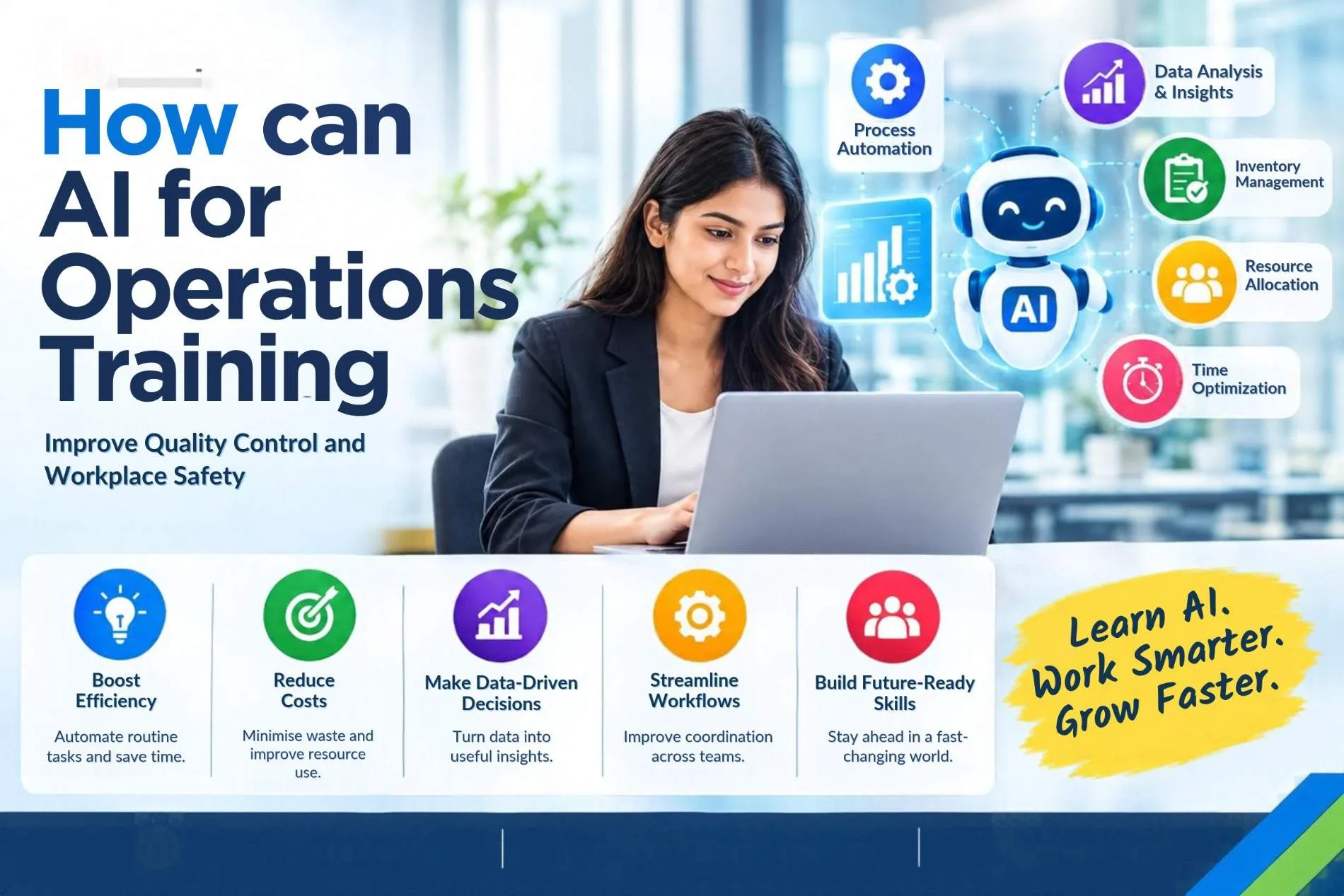
Running a business smoothly is not only about completing tasks on time. Organisations must also maintain product quality, protect employees and follow established operating procedures. In industries such as manufacturing, logistics, healthcare and retail, a small operational mistake can create delays, additional expenses or safety concerns. AI for Operations training helps professionals understand how artificial intelligence can support quality inspections, workplace monitoring and operational compliance.
Improving Quality Inspection Processes
Quality control is an important part of business operations. Companies need to check whether products meet the required specifications before they reach customers. Traditional inspections often depend on manual checking, which can become difficult when production volumes increase. AI for Operations introduces technologies such as computer vision and automated data analysis that can help identify visible defects, unusual patterns and inconsistencies. For example, a manufacturing unit may use camera-based systems to flag products with damaged surfaces for further inspection.
Monitoring Equipment Conditions
Unexpected equipment failure can interrupt production and affect delivery schedules. Regular maintenance helps reduce this risk, but identifying early warning signs is not always easy. AI-powered monitoring systems can analyse information such as temperature, vibration and machine performance to identify unusual changes. Maintenance teams can investigate these alerts and plan inspections before a minor issue develops into a larger operational problem. Such systems support maintenance planning but do not eliminate the need for physical inspections.
Strengthening Workplace Safety
Employee safety should remain a priority in every organisation. Industrial workplaces may involve heavy machinery, restricted areas, electrical equipment and other potential hazards. AI-based monitoring tools can help identify certain unsafe conditions, such as restricted-area entry or missing safety equipment, where appropriate cameras and sensors are installed. An AI for Operations Course can introduce professionals to these applications and explain how technology can support existing safety procedures without replacing employee training or supervision.
Maintaining Consistent Operating Standards
Businesses often follow standard operating procedures to ensure that tasks are completed correctly. However, maintaining consistency across different teams, locations and shifts can be challenging. AI-assisted systems can help organise inspection records, compare operational data and highlight missing documentation. Employees can use these insights to identify areas that need attention and improve internal processes. Important decisions should always be checked against the organisation's approved standards.
Detecting Quality Trends Before They Become Major Problems
A single product defect may appear minor, but repeated defects can indicate a larger issue in materials, machinery or production methods. Analysing quality records over time can help organisations understand whether a particular problem is becoming more frequent. When comparing the Best AI for Operations training, learners should look for practical topics such as quality analytics, defect identification, process monitoring and interpreting performance indicators. These skills can help professionals investigate the reasons behind recurring quality issues.
Supporting Environmental and Regulatory Monitoring
Many businesses must monitor waste, energy usage, storage conditions and industry-specific operating requirements. AI tools can help organise sensor readings, maintain records and highlight unusual changes that may require investigation. For example, a facility may monitor temperature conditions in a storage area to identify readings outside its approved operating range. An Online AI for Operations course can help working professionals understand these applications through flexible learning and practical examples.
Preparing Employees for Technology-Driven Workplaces
Introducing AI into operations requires employees who understand how digital systems work and how to interpret their outputs. Professionals may need to communicate with technical teams, review automated alerts and explain operational findings to managers. Practical training can help learners become more comfortable with these responsibilities. An AI for Operations course with placement may also interest learners seeking career support, but they should verify whether the programme offers internships, interview preparation, employer connections or actual placement assistance.
Balancing Automation with Human Responsibility
AI systems can make mistakes when sensors provide inaccurate readings, data is incomplete or conditions change unexpectedly. Businesses should establish clear procedures for reviewing automated alerts and protecting operational information. Employees must also know who is responsible for approving corrective actions. Technology should assist experienced professionals rather than independently make critical safety or compliance decisions.
Conclusion
Quality control and workplace safety require regular monitoring, reliable procedures and responsible decision-making. Artificial intelligence can support these activities by identifying unusual patterns, analysing equipment information and organising inspection records. However, its effectiveness depends on accurate data and trained employees who can interpret the results correctly. Through practical AI for Operations training, professionals can develop relevant knowledge and prepare to contribute to safer, more consistent and technology-enabled business operations.