A Glimpse into Science’s Transformative Pulse
On a crisp morning in early 2026, scientists at the European Organization for Nuclear Research (CERN) announced a landmark observation: hints of a new subatomic particle that could redefine the Standard Model of particle physics. This revelation, stirring excitement across the global scientific community, underscores how science continues to push boundaries, unraveling the fabric of reality itself. This story is but one thread in the vast tapestry of scientific advancements shaping our world today.
Science, as an institution and practice, remains the cornerstone of human progress. It is the engine driving innovation, understanding, and solutions to some of the most profound challenges humanity faces. From quantum computing breakthroughs to revolutionary approaches in healthcare, the contours of scientific inquiry in 2026 reflect both continuity and radical evolution.
“Science is not merely a collection of facts; it is an ever-adapting quest to understand the universe and improve our place within it.” – Dr. Helena Ross, Director of the Global Science Initiative, 2026
Tracing the Journey: How Modern Science Arrived Here
The trajectory of science is a story of relentless curiosity and iterative refinement. The 20th century laid down foundational pillars—relativity, quantum mechanics, DNA’s structure—that transformed disciplines. But it was the digital revolution of the early 21st century that accelerated discovery exponentially. Machine learning and big data analytics emerged as indispensable tools, enabling researchers to parse unimaginable datasets and generate predictive models.
By the mid-2020s, interdisciplinary approaches became the norm rather than the exception. For instance, cognitive science integrated neuroscience, psychology, and artificial intelligence to revolutionize educational methodologies and mental health treatments. This integration is well captured in TheOmniBuzz’s comprehensive coverage on how cognitive science is revolutionizing study techniques today.
Moreover, global collaboration networks, fueled by advanced communication technologies, have democratized science. Researchers from developing countries now contribute significantly, challenging historic geographical imbalances. Funding models have diversified with private-public partnerships gaining prominence, accelerating applied sciences and translational research.
“The democratization of scientific knowledge and resources is the greatest catalyst for innovation in our time.” – Prof. Jamal Ortiz, Science Policy Analyst, 2026
Analyzing the Core: Data-Driven Advances and Their Implications
Scientific progress in 2026 is quantifiable not only by breakthroughs but by the volume and velocity of data generated. For example, global scientific publication databases report an annual output exceeding 3.5 million peer-reviewed articles, a near 40% increase compared to 2020. This surge is propelled by AI-assisted research tools that optimize hypothesis generation and experimental design.
Several key domains exemplify this data-driven paradigm:
- Quantum Computing: Companies like QubitX and IonLogic have surpassed 1,000-qubit error-corrected quantum processors, enabling simulations of complex molecular interactions previously impossible. These advances promise accelerated drug discovery and new materials engineering.
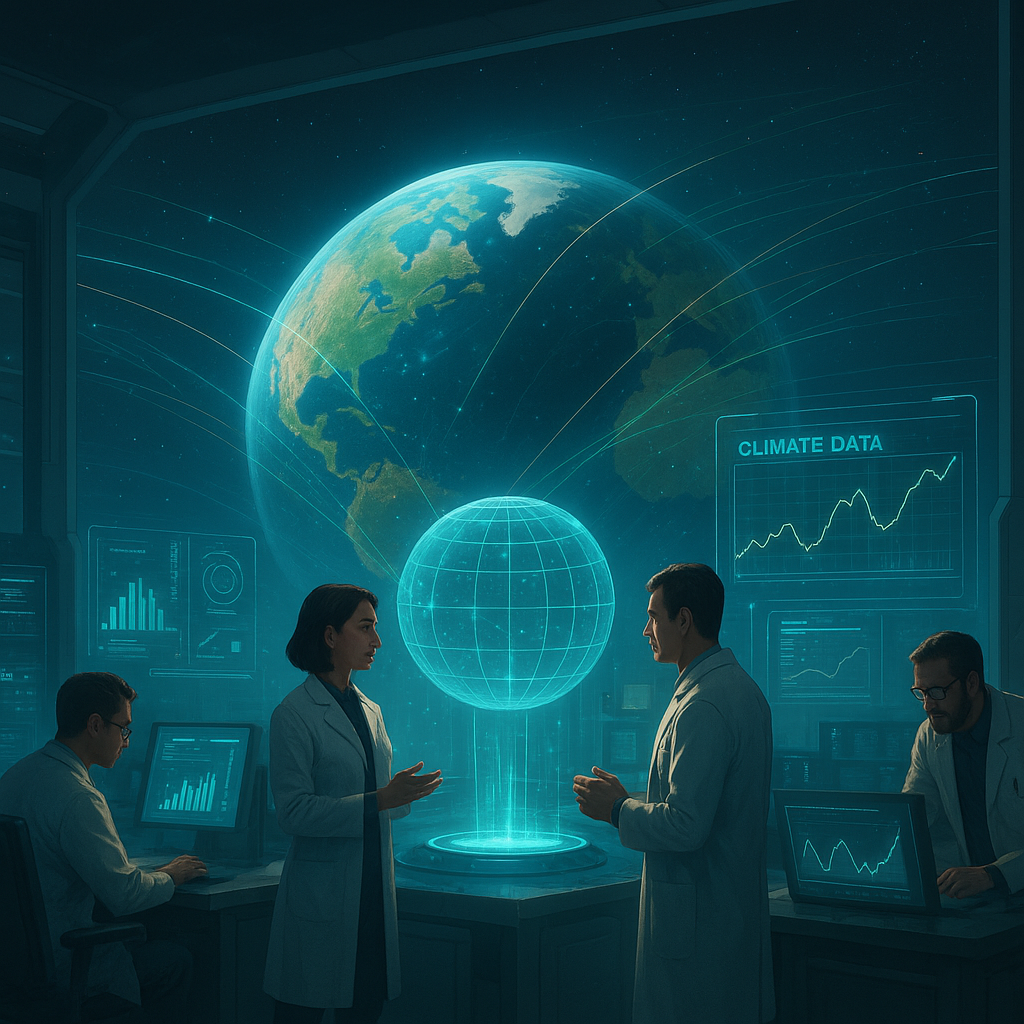
- Climate Science: Enhanced satellite networks and AI-integrated climate models provide unprecedented granularity in predicting weather patterns and ecosystem shifts, vital for mitigation strategies against climate change.
- Genomics and Synthetic Biology: With DNA synthesis costs plummeting to under $0.01 per base pair, synthetic biology innovations have accelerated, including the creation of novel biofuels and personalized gene therapies.
- Neuroscience: Brain-computer interfaces have improved dramatically, with companies like NeuroSynapse launching commercial-grade devices that assist in cognitive enhancement and neurorehabilitation.
- Space Science: The Artemis III mission’s success and subsequent lunar base development mark a new era of sustained human presence beyond Earth, with scientific experiments in situ advancing astrobiology and planetary geology.
The following list highlights the top five scientific funding sources globally in 2026, illustrating the shift toward diversified investment:
- National Science Foundations (USA, EU, China): $120 billion combined
- Private Tech Giants (Alphabet, MetaNova, QuantumLeap): $45 billion
- Philanthropic Foundations (Wellcome Trust, Gates Foundation): $15 billion
- International Consortia (CERN, ITER): $10 billion
- Start-up Innovation Funds: $8 billion
2026 Breakthroughs: Current Developments Shaping Science’s Frontline
This year has witnessed several pivotal developments that are reshaping scientific frontiers. Among the most notable is the progress in carbon capture technologies. New hybrid systems combining direct air capture with bioengineered microorganisms have achieved a 60% increase in efficiency over 2024 models, according to the International Energy Agency’s latest report.
In health sciences, mRNA vaccine platforms have expanded beyond viral pathogens. Researchers at BioGenX successfully demonstrated an mRNA-based therapy targeting Alzheimer’s disease in Phase II clinical trials, showcasing symptom reduction and cognitive stabilization in 70% of participants.
Meanwhile, in physics, the CERN discovery of a candidate for a fifth fundamental force has sparked global debate and follow-up experiments. This finding could revolutionize our understanding of dark matter and energy, challenging the prevailing cosmological models.
On the technological front, AI-powered robotic explorers are now autonomously conducting deep-sea research in previously inaccessible ocean trenches. This capability has uncovered new species and provided fresh insights into extremophile ecosystems.
Such dynamic developments echo the themes explored in TheOmniBuzz’s article Science in 2026: Breakthroughs, Challenges, and the Path Forward, which details the interplay between innovation and societal challenges.
Expert Insights and Industry Impact: Voices from the Scientific Vanguard
The scientific community in 2026 is marked by a blend of optimism and caution. Experts emphasize the need for ethical frameworks and robust governance to accompany technological leaps. Dr. Lian Chen, leading AI ethics researcher at the Global Ethics Forum, stresses:
“Our innovations must be matched by foresight. The rapid pace of AI and biotech requires vigilant oversight to prevent misuse and ensure equitable benefits.”
Industry leaders reflect these perspectives. Pharmaceutical firms are investing heavily in precision medicine but are simultaneously navigating regulatory complexities and data privacy concerns. Similarly, energy companies adopting carbon capture face economic and environmental scrutiny balancing scalability with sustainability.
Academic institutions are also evolving, fostering interdisciplinary programs that blend data science, ethics, and domain expertise. This approach is cultivating a new generation of scientists equipped for the challenges ahead.
Moreover, public engagement with science has grown markedly. Citizen science projects leveraging smartphone apps and IoT devices have expanded data collection capabilities, empowering communities to contribute to environmental monitoring and health research.
Looking Ahead: What to Watch in Science’s Next Chapter
As we peer into science’s future, several key trajectories warrant close attention:
- Integration of AI and Human Cognition: Advances in neuro-AI interfaces could redefine learning, creativity, and even consciousness exploration.
- Climate Engineering Governance: Emerging geoengineering technologies require international frameworks to address ethical and ecological risks.
- Space Colonization Efforts: The expansion of lunar and Martian bases will test human adaptability and drive new scientific inquiries.
- Quantum Internet Development: Secure communication networks leveraging quantum entanglement promise to revolutionize data privacy and cybersecurity.
- Open Science and Data Sharing: Initiatives promoting transparency and reproducibility will shape research culture and public trust.
In this context, scientists and policymakers must collaborate closely. TheOmniBuzz’s feature How Science Shapes Our Future: Breakthroughs, Challenges, and Insights explores these themes in depth, highlighting the importance of proactive strategies.
Ultimately, the essence of science lies in its capacity to illuminate the unknown and foster human flourishing. As we stand on the cusp of new paradigms, the collective stewardship of scientific knowledge will determine our trajectory.
“The future of science is not predetermined. It is a story we write together—through inquiry, innovation, and responsibility.” – Dr. Amina El-Sayed, Chair of the International Science Council, 2026
For readers interested in how scientific principles translate into practical innovation, our coverage on transforming fitness with science and technology offers a compelling example of applied breakthroughs enhancing everyday life.