
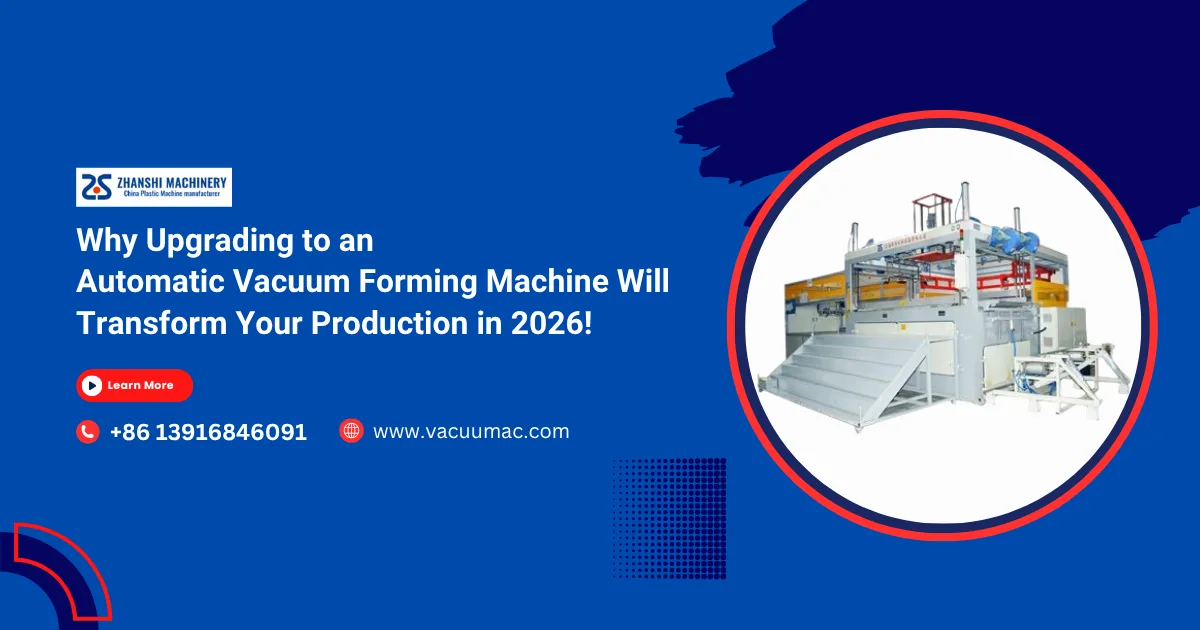
In 2026, the global manufacturing landscape is more competitive and innovation-driven than ever before. Customer expectations are rising, technology is advancing at lightning speed, and sustainability is now a priority in every industry. One of the smartest decisions any modern manufacturer can make is upgrading to an automatic vacuum forming machine. This strategic move can completely revolutionize your production capabilities, giving you the speed, efficiency, and adaptability needed to outpace industry rivals.
At Shanghai Zhanshi Mechanical Equipment Co., Ltd., we have witnessed firsthand how companies—from packaging startups to large-scale industrial enterprises—have transformed their production processes and profitability through the adoption of advanced automatic vacuum forming machines. Our years of R&D, customer feedback, and engineering innovation have shaped solutions that address the pressing needs of today’s manufacturers.
1. What Is an Automatic Vacuum Forming Machine?
Vacuum forming is a process where plastic sheets are heated until they become pliable, then shaped over a mold using vacuum pressure. This technique is used in industries from food packaging to automotive, electronics, medical supply, and more.
An automatic vacuum forming machine takes this process to the next level. Unlike manual or semi-automatic machines, an automatic vacuum forming machine integrates all critical functions—including feeding, heating, forming, trimming, stacking, and even quality checks—with minimal human intervention. These machines run preset programs, use advanced controls, and can operate for long hours with exceptional reliability.
Typical automation includes:
- Automated material sheet feeding
- Automated heating zones with precise control
- Automatic mold lifting and vacuum forming
- Auto trimming and cutting of finished products
- Stackers and robotic arms for finished parts
- Touchscreen or PLC-based operation for recipe management
2. Why Is 2026 the Perfect Year for Upgrading?
The decision to upgrade to an automatic vacuum forming machine should be driven by both industry trends and business strategy. In 2026, several factors have come together to make this transition more valuable than ever:
1. Customer Demands Are Evolving
End-users expect more variety, higher quality, rapid delivery, and sustainable options. Only an automatic vacuum forming machine can deliver at the necessary scale and speed.
2. Labor Costs and Scarcity
With skilled operators becoming harder to find and labor costs rising worldwide, automation is essential to maintain profitability and meet throughput targets.
3. Advanced Technology Availability
Thanks to robust R&D (exemplified by Shanghai Zhanshi’s innovations), the latest generation of automatic vacuum forming machines are more affordable, reliable, and efficient than previous versions.
4. Industry 4.0 and Data Integration
Companies not leveraging real-time data, remote diagnostics, and analytics in 2026 risk falling behind. Automatic vacuum forming machines are fully compatible with digital factory trends and smart production environments.
5. Environmental Compliance
Regulations and market preferences are leaning toward reduced waste, recyclability, and lower energy consumption—objectives automatic vacuum forming machines are designed to achieve.
Also Read: Fully Automatic Negative Pressure Multi Station Thermoforming Machine
3. How Does an Automatic Vacuum Forming Machine Work?
A modern automatic vacuum forming machine from Shanghai Zhanshi Mechanical Equipment Co., Ltd. automates every step:
1. Sheet Feeding: Plastic sheets are loaded automatically from a roll or stack. Sensors ensure no missed feeds.
2. Heating: Advanced, segmented heaters bring only target areas to forming temperature, saving energy.
3. Forming: The machine transfers the heated sheet over a mold. Vacuum draws the sheet tightly, replicating every detail. Pressure forming can be added for extra precision.
4. Cooling: Built-in cooling systems enable rapid handling of finished parts without distortion.
5. Trimming/Cutting: Products are cut automatically, either in-mold or via automated die-cutting stations.
6. Stacking and Ejection: Finished parts are stacked and conveyed out for packaging or further processing—no operator lifting required.
7. Process Monitoring: Everything is managed through a PLC or HMI touchscreen. Alarms, diagnostics, and reporting are built-in.
4. Key Features and Capabilities
When you upgrade to a Shanghai Zhanshi automatic vacuum forming machine, these cutting-edge features come as standard or options:
- Smart PLC or Industrial PC Controls with recipe storage for repeat jobs
- Servo-driven movements for consistent accuracy and lower energy use
- Multi-zone heating for precise temperature management
- Quick-change tooling for fast product changeovers
- Automated sheet feeding and trimming
- In-line quality assurance with integrated vision systems
- Data logging and remote monitoring capability
- Safety interlocks and barriers to protect operators
5. The Transformational Benefits of Automatic Vacuum Forming Machines
Speed & Efficiency
Automatic vacuum forming machines allow you to run continuous operations, day and night, with only minimal operator supervision—multiplying your output compared to semi-automatic or manual equipment.
Example
If you currently produce 1,000 units per shift, an automatic machine could easily boost this to 5,000–10,000 units without increasing staff.
Consistency & Quality
Automation eliminates errors caused by operator fatigue, inconsistent timing, or temperature fluctuations. Every part is made to exact specifications, batch after batch. This translates to fewer rejects, customer complaints, and wasted material.
Waste Reduction & Sustainability
Shanghai Zhanshi machines feature intelligent sheet nesting, controlled trimming, and tight process tolerances—reducing scrap rates and supporting recycled/recyclable materials. Lower energy use is achieved via rapid, focused heating and recovery systems.
Greater Product Flexibility
With programmable controls and rapid tooling swaps, automatic vacuum forming machines support fast product shifts—ideal for custom or OEM projects as well as short runs, prototyping, and seasonal product lines.
Cost Control & ROI
Though the initial investment for an automatic vacuum forming machine is higher, ROI is achieved rapidly:
- Lower labor costs per unit
- Decreased material and energy waste
- Faster cycle times and order fulfillment
- Opportunities for new products and contracts
6. Shanghai Zhanshi Mechanical Equipment Co., Ltd.: Engineering Excellence
As a premier automatic vacuum forming machine provider, Shanghai Zhanshi Mechanical Equipment Co., Ltd. stands out due to:
- Decades of design and manufacturing expertise
- Global installation and service support
- Continuous investment in R&D and customer-driven innovation
- Sustainable manufacturing focus
Our machines are built for high visibility, traceability, fast troubleshooting, and reliable 24/7 operation. Every system can be tailored to your production environment, throughput targets, or material preferences.
7. Implementation Considerations
When preparing to upgrade to an automatic vacuum forming machine, consider:
- Floor Space & Utility Requirements: Most modern machines are modular, with expandable features for larger production areas.
- Product Range & Volume: Analyze your current SKUs and future forecast for size, shape, and throughput.
- Material Compatibility: Ensure your key plastics (PET, PVC, PS, PLA, etc.) are supported. Shanghai Zhanshi machines handle standard and specialty materials, including recycled grades.
- Operator Training: Our team provides hands-on and remote training to minimize line downtime and ensure successful transition.
- Maintenance & Support: Built-in diagnostics, remote troubleshooting, and a ready spare parts inventory are essential for uptime.
Lead Your Industry with Automation
Upgrading to an automatic vacuum forming machine is no longer just an option for leading manufacturers—it’s a necessity for all who want to survive and thrive in the competitive markets of 2026. The transformation it brings goes far beyond simple labor savings: it means bigger production, better quality, faster order response, reduced footprint and energy use, and unprecedented flexibility.
Frequently Asked Questions (FAQ)
Q1: How long does it take to see ROI after upgrading to an automatic vacuum forming machine?
A: Most manufacturers see ROI within 12–24 months, often sooner if operating at higher volumes or moving from labor-intensive processes.
Q2: Is it difficult to train staff on an automatic vacuum forming machine?
A: No—the intuitive interfaces, automated recipes, and built-in process monitoring mean operators with basic technical background can become proficient quickly, especially with our training.
Q3: Can I still make small batch or custom products with an automatic vacuum forming machine?
A: Absolutely. Recipe storage, quick-change tooling, and digital settings allow for batch flexibility and rapid switches between products or materials.
Q4: Does an automatic vacuum forming machine work with recycled or bio-based plastics?
A: Yes! Shanghai Zhanshi machines can be configured to process a variety of eco-friendly materials, enabling your business to meet sustainability goals and regulatory requirements.
Q5: What kind of maintenance does an automatic vacuum forming machine require?
A: Preventive maintenance is scheduled based on hours of run time. The machine’s diagnostic system alerts staff to required service—minimizing unexpected downtime. Our global support team ensures help is always available.
Q6: How does an automatic vacuum forming machine support quality assurance?
A: Integrated sensors, vision inspection systems, and data logging mean consistent output and full traceability. Defective items can be auto-ejected, ensuring only high-quality products reach your customers.
Q7: How scalable are these machines for future business growth?
A: Shanghai Zhanshi’s automatic vacuum forming machines are modular. Start with a base model and easily expand capabilities (e.g., add extra formers, stackers, or robotic arms) as your business grows.