
The Silent Revolution on Wheels
In the early hours of a brisk November morning in 2026, the streets of Oslo buzz quietly with a fleet of electric vehicles (EVs) gliding past historic landmarks. This scene, now common in many cities worldwide, marks a profound shift in transportation. The global electric vehicle market has surpassed 25 million units on roads, a sharp acceleration compared to just a decade ago when EVs were niche products largely confined to early adopters. According to industry estimates, EVs accounted for over 35% of new car sales globally this year, a milestone reflecting aggressive policy interventions, technological breakthroughs, and changing consumer preferences.
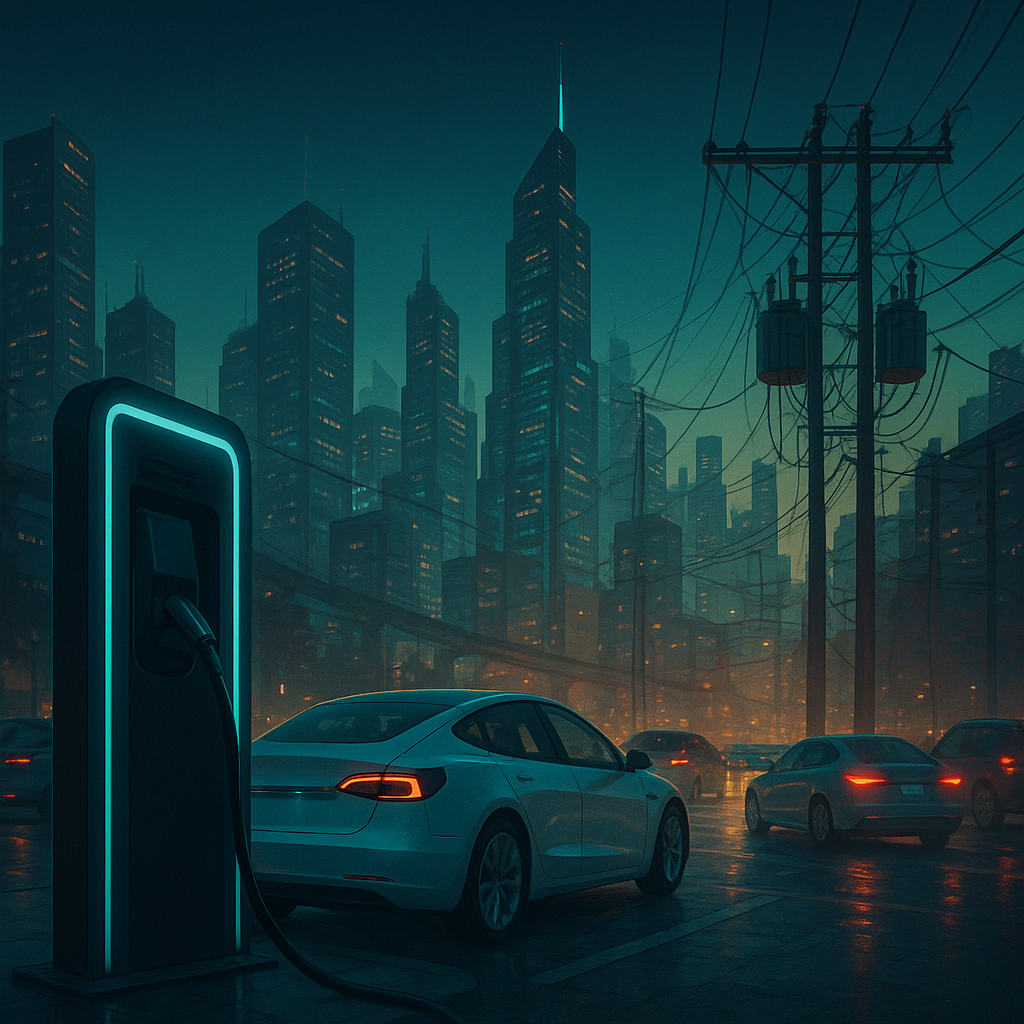
Yet beneath this surge lies an unspoken tension: the existing energy infrastructure struggles to keep pace. As EV adoption climbs, power grids in many regions face unprecedented stress, threatening to undermine sustainability goals. This article examines the interplay between the rapid EV boom and the readiness of power systems to support this transformation, exploring technological, economic, and environmental dimensions.
"Electric vehicles represent one of the most significant shifts in transportation history, but without a parallel evolution in energy infrastructure, their promise might fall short," notes Dr. Elena Martinez, a leading energy systems analyst.
Tracing the Path: From Early Concepts to Mass Adoption
The journey to today’s electric vehicle dominance is rooted in decades of innovation and incremental policy shifts. In the 2010s, EVs were largely experimental, hindered by limited battery capacity, high costs, and sparse charging infrastructure. Governments began incentivizing EV purchases through subsidies and tax breaks, recognizing their potential to reduce urban pollution and greenhouse gas emissions.
By the early 2020s, lithium-ion battery technology matured significantly, driving down costs by nearly 85% compared to 2010 levels, according to data from the International Energy Agency (IEA). This cost reduction catalyzed an influx of new EV models from established automakers and new entrants alike. Meanwhile, environmental regulations tightened worldwide, with the European Union, China, and California setting ambitious targets to phase out internal combustion engines by the mid-2030s.
Infrastructure expansion followed suit. Public and private sectors invested heavily in charging networks, deploying over two million fast chargers globally by 2025. Innovation in battery chemistry and recycling also gained momentum, mitigating earlier concerns about resource scarcity and environmental impact.
"The 2020s will be remembered as the decade where electric vehicles shifted from hopeful alternatives to mainstream mobility solutions," observes automotive historian James Clarkson.
Analyzing the Numbers: Growth, Impact, and Challenges
The EV market's growth trajectory is striking. According to the Global EV Outlook 2026, the global EV fleet expanded by 40% annually between 2023 and 2026. China remains the largest market, accounting for nearly 50% of all EVs, followed by Europe and North America. Notably, EV penetration in urban centers now exceeds 60% of new vehicle sales in several countries.
However, this rapid growth has complex ramifications:
- Electricity demand surge: The International Renewable Energy Agency (IRENA) reports that EV charging increased electricity consumption by approximately 6% in 2026, straining grids designed for predictable residential and industrial loads.
- Grid stability concerns: Peak charging hours often coincide with evening residential demand, creating load spikes that challenge grid operators.
- Renewable integration: While EVs offer emission reductions, their environmental benefits hinge on the carbon intensity of electricity generation. Regions reliant on fossil fuels see diminished gains.
- Resource supply chains: The mining of lithium, cobalt, and nickel continues to raise ethical and environmental questions, despite advances in recycling.
In terms of emissions, studies show that EVs emit 40–70% fewer lifecycle greenhouse gases than traditional vehicles, assuming moderate grid decarbonization. Yet, the push for sustainability now demands accelerating renewable energy deployment to maximize EV benefits.
Current 2026 Developments: Innovation Meets Infrastructure
As of 2026, several pivotal developments shape the EV ecosystem. Battery innovations have reached new heights, with solid-state batteries entering commercial production. These batteries offer higher energy density, faster charging, and enhanced safety, driving adoption further.
Charging infrastructure has diversified. Ultra-fast chargers capable of delivering over 350 kW reduce refueling times to under 10 minutes for most vehicles. Moreover, vehicle-to-grid (V2G) technology has gained traction, allowing EVs to feed stored energy back to the grid during peak demand, enhancing grid flexibility.
However, the grid itself often lags behind. Many utilities grapple with the need for substantial upgrades, including smart grid technologies, expanded transmission capacity, and energy storage systems. Financial and regulatory hurdles complicate these efforts, especially in regions with fragmented energy markets.
Governments are responding. The European Green Deal’s updated framework allocates over €150 billion to EV-related infrastructure and grid modernization by 2030. Similarly, the U.S. Inflation Reduction Act has facilitated investments in EV manufacturing and clean energy integration.
- Key 2026 EV milestones:
- Global EV sales surpassing 15 million units annually
- Deployment of over 3 million public fast chargers worldwide
- Commercial rollout of second-generation solid-state batteries
- Widespread adoption of V2G-enabled fleets in Japan and Europe
Expert Insights: Industry and Policy Perspectives
Industry leaders emphasize the intertwined nature of EV growth and energy infrastructure evolution. Greta Johansson, CEO of Nordic EV manufacturer Voltis, explains, "Our responsibility extends beyond producing vehicles. We must collaborate with utilities and policymakers to ensure the grid can handle future demand sustainably."
Energy experts highlight the importance of integrating renewables with EV charging to avoid merely shifting pollution from tailpipes to power plants. Dr. Ahmed Khan, senior researcher at the International Institute for Sustainable Energy, states, "EV adoption without grid decarbonization risks locking in fossil fuel dependencies. Smart charging and localized renewable generation are crucial."
Policymakers face the challenge of balancing rapid EV deployment with infrastructure readiness. Incentives for off-peak charging, investment in grid upgrades, and harmonizing standards for vehicle-grid communication are among prioritized measures.
"Grid modernization is as critical as EV manufacturing in achieving climate targets," asserts Maria Lopez, European Commission energy advisor.
Looking Ahead: What to Watch in the EV and Energy Nexus
The trajectory of electric vehicles is clear, but the road ahead demands coordinated action. Key areas to monitor include:
- Grid expansion and smart technologies: Advances in AI-driven grid management and localized energy storage will be vital to handle fluctuating demand.
- Battery recycling and alternative chemistries: Reducing reliance on scarce minerals through innovation will shape long-term sustainability.
- Policy frameworks: Harmonizing incentives for EV adoption, renewable energy, and grid upgrades will determine overall success.
- Consumer behavior: Public willingness to adopt smart charging practices and new ownership models like battery leasing will influence demand patterns.
- Emerging markets: How developing economies integrate EVs with their growing energy infrastructure will impact global emissions trajectories.
Investors and planners must anticipate not only vehicle sales but also infrastructure capacity and energy generation sources. Failing to do so risks bottlenecks that could erode consumer confidence and environmental gains.
For a detailed examination of consumer attitudes toward EVs in 2026, readers can explore our coverage on Are Consumers Considering Electric Vehicles? A Deep Dive into the 2026 Landscape. Additionally, insights into the systemic challenges of grid capacity are explored in Electric Vehicles Are Booming — But the Grid Isn't Ready.
Case Studies: Cities Leading the Transition
Several urban centers provide instructive examples of managing EV integration and grid readiness.
Oslo, Norway
Oslo’s success in EV adoption is driven by comprehensive policies including congestion charges for fossil fuel vehicles, extensive charging infrastructure, and incentives for green energy. The city has piloted V2G programs with municipal fleets to stabilize the grid during peak hours.
Seoul, South Korea
Seoul has implemented a smart grid system that dynamically adjusts EV charging rates based on real-time demand and renewable energy availability. Collaboration between automakers, utilities, and regulators has created a scalable model for other megacities.
San Francisco, USA
San Francisco’s integration of solar-powered charging stations and fast chargers along major corridors exemplifies how renewable energy can support EV growth. However, the city faces challenges in upgrading aging grid infrastructure to meet rising demand.
- Lessons from these cities include:
- Importance of multi-stakeholder collaboration
- Need for flexible, technology-driven grid solutions
- Value of consumer incentives aligned with grid capabilities
These examples highlight that while vehicle technology advances rapidly, the supporting infrastructure requires equally innovative and coordinated efforts.