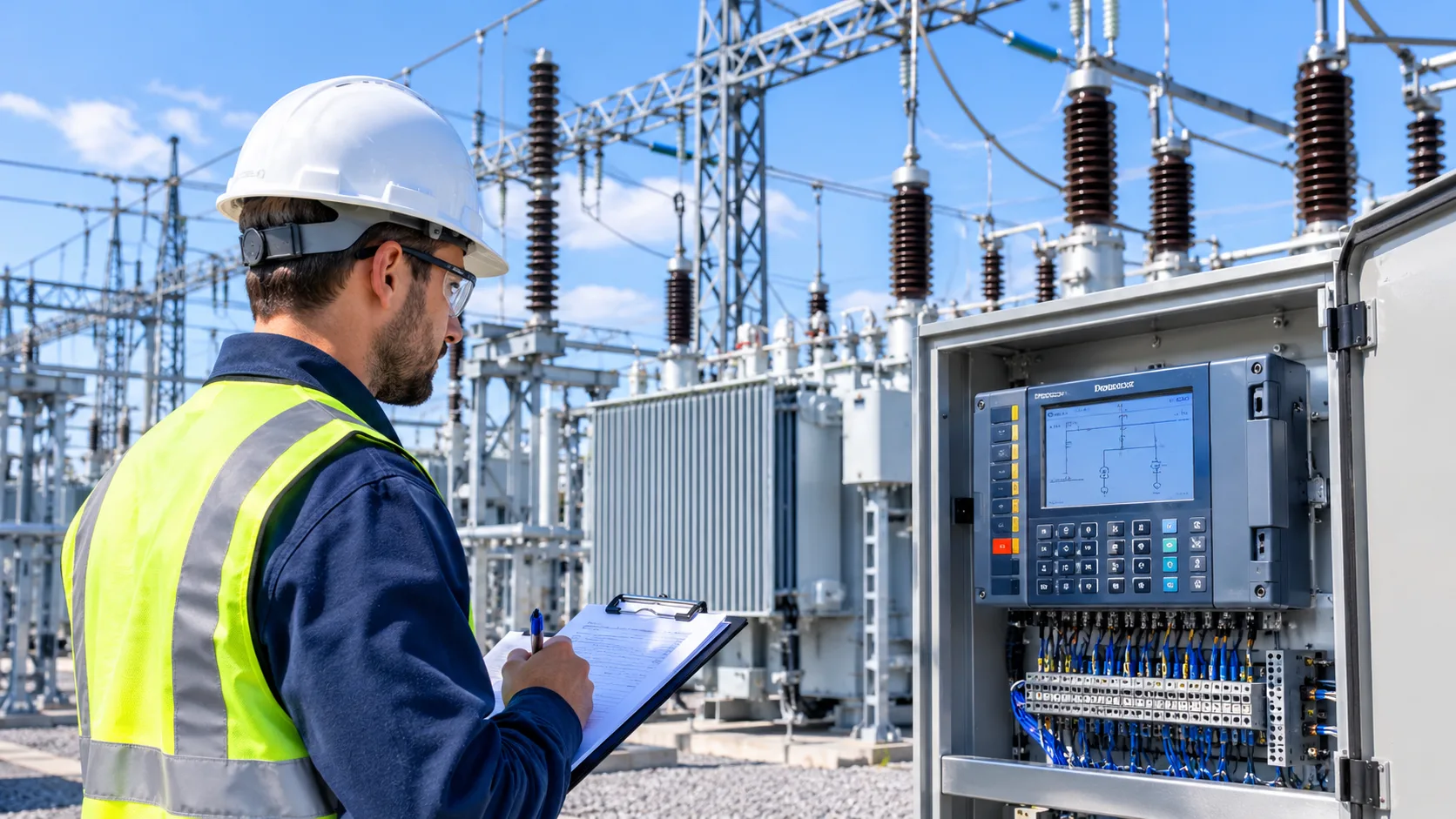
Electricity plays a vital role in almost every part of modern life, from homes and hospitals to manufacturing plants and large industrial facilities. Behind this reliable supply is a complex network of substations that help control voltage, distribute power, and keep electrical systems operating safely. However, even a well-designed electrical network can experience faults caused by equipment failure, insulation damage, lightning, or unexpected changes in operating conditions.
This is where substation protection systems become essential. They detect abnormal electrical conditions, identify potential problems, and isolate faulty equipment before an issue spreads through the network. With the right protection strategy, utilities and industrial facilities can reduce equipment damage, improve operational safety, and maintain a more reliable power supply.
Understanding Substation Protection Systems
A substation brings together transformers, circuit breakers, disconnect switches, busbars, instrument transformers, and other electrical equipment. Each component has a specific role in moving electricity safely from one part of the grid to another. Because these components operate under demanding electrical conditions, they need reliable protection against faults.
Substation protection systems combine protective relays, current transformers, voltage transformers, circuit breakers, and communication equipment to monitor electrical conditions and respond when something goes wrong.
For example, a short circuit can cause current to rise far above its normal operating level. If that current continues flowing, it may damage insulation, overheat conductors, or harm expensive equipment. A properly configured protection system detects the abnormal condition and sends a trip signal to the appropriate circuit breaker, disconnecting the affected section.
The objective is not simply to shut down power whenever a problem occurs. Effective protection isolates only the affected area whenever possible, allowing the rest of the electrical network to continue operating.
Common Electrical Faults in Substations
Electrical faults can develop for several reasons, and each presents different risks to the power system.
Short circuits: These occur when conductors come into unintended contact, creating a low-impedance path for current. Short circuits can generate extremely high fault currents and require a fast protective response.
Ground faults: A ground fault occurs when an energized conductor makes an unintended connection to earth or grounded equipment. Depending on the system configuration, it can create dangerous touch voltages and damage electrical components.
Overloads: When equipment carries more current than its rated capacity for an extended period, excessive heating can shorten its service life or cause failure. Overcurrent and thermal protection help manage these conditions.
Transformer faults: Internal winding problems, insulation deterioration, and overheating can threaten transformer performance. Specialized protection functions help detect these issues before they cause extensive damage.
Voltage and frequency disturbances: Abnormal voltage or frequency conditions can affect equipment performance and grid stability. Appropriate protective functions help prevent operation outside acceptable limits.
Understanding these fault types helps engineers select suitable protection devices and develop a coordinated strategy for each substation.
How Protective Relays Detect and Isolate Faults
Protective relays are among the most important components of a substation's safety system. They continuously evaluate electrical measurements received from instrument transformers and compare those measurements with configured protection settings.
When the relay identifies a condition that meets its operating criteria, it initiates a trip command to the relevant circuit breaker. The breaker then interrupts the current and isolates the affected circuit.
Different relay functions address different risks. Overcurrent relays respond when current exceeds a defined threshold, while differential relays compare currents entering and leaving protected equipment to identify certain internal faults. Distance protection is commonly used on transmission lines to identify faults based on measured electrical impedance.
The speed and accuracy of this process depend on correct settings, reliable equipment, and careful engineering. Incorrect settings can lead to unnecessary outages or, more seriously, failure to clear a fault when protection is needed.
The Importance of Protection Coordination
A substation may contain several layers of protection, each responsible for a particular circuit or piece of equipment. These devices must work together in a planned sequence.
Protection coordination ensures that the device closest to a fault generally operates first, provided it can safely clear the fault. Upstream devices may operate as backup if the primary protection or circuit breaker fails.
For instance, if a fault develops on a distribution feeder, the feeder's protective relay should normally trip its circuit breaker without shutting down the entire substation. If that breaker fails to interrupt the fault, backup protection can act to limit the consequences.
This selective approach reduces the number of customers or industrial processes affected by an electrical incident. It also helps engineers balance rapid fault clearance with continuity of service.
Effective coordination requires a detailed understanding of fault-current levels, equipment ratings, relay characteristics, and the overall network configuration. These factors are central to power system protection engineering, particularly in substations connected to complex transmission and distribution networks.
How Modern Protection Technology Improves Reliability
Substation protection has advanced significantly with digital relays, automated monitoring, and communication-based control systems. Modern intelligent electronic devices can perform several protection functions, record disturbance data, and provide information that helps engineers understand why an event occurred.
Communication systems can also support protection schemes that exchange information between devices. Depending on the design, this can improve fault identification, coordination, and response times.
Digital event records are especially useful after a trip. Engineers can review recorded currents, voltages, and relay operations to identify the likely cause of the fault and determine whether settings or equipment need attention.
However, modern technology does not eliminate the need for careful design and maintenance. Communication failures, incorrect configuration, outdated settings, or inadequate testing can undermine system performance. Regular inspections and functional testing remain essential.
The Role of Engineering Studies and Maintenance
Reliable protection begins long before a substation is energized. Engineers assess the network, calculate prospective fault currents, evaluate equipment interrupting ratings, and determine suitable protective devices and settings.
A short-circuit study helps establish the fault-current levels that equipment may experience. A relay coordination study checks whether protective devices operate in the intended sequence. Arc-flash assessments can also help evaluate incident-energy hazards and support appropriate electrical safety procedures.
These studies are particularly important when a facility adds new transformers, connects renewable generation, expands a distribution network, or changes its operating configuration. Even a seemingly minor modification can affect fault levels and protection coordination.
Professional electrical fault protection planning should therefore consider the complete system rather than treating each device as an isolated component. Engineers must also verify that settings remain appropriate as the network changes.
Routine maintenance completes the process. Testing relays, checking circuit breakers, inspecting connections, reviewing event records, and confirming communication performance can reveal problems before they lead to an unexpected outage.
Conclusion
Substation protection systems are fundamental to safe and reliable electrical power delivery. By detecting abnormal conditions, isolating faults, coordinating protective devices, and supporting ongoing monitoring, they help prevent localized electrical problems from becoming wider system disruptions.
For utilities, renewable energy developers, and industrial operators, a dependable protection strategy requires more than installing relays and circuit breakers. It involves sound engineering studies, accurate settings, equipment testing, and regular reviews as the electrical network evolves.
American Power Engineers supports power and energy projects through engineering expertise that helps address system reliability and electrical infrastructure challenges. Investing in properly designed and maintained protection systems helps organizations protect valuable equipment, reduce avoidable interruptions, and build a more resilient electrical network.