An enterprise campaign can be approved, funded, and ready to launch, yet still depend on someone manually checking customer eligibility or moving data between platforms. That operational gap carries a cost. It slows execution and limits what marketing teams can deliver.
The answer is often a focused application built for the missing workflow.
Custom applications allow enterprises to add capabilities that their CRM, CMS, loyalty, and marketing automation tools cannot support on their own. They connect processes, apply business rules, and give teams control over work that would otherwise remain fragmented.
Let’s understand;
Where Custom Applications Fit Into Enterprise Martech
Most enterprises have already invested heavily in established marketing platforms. Those tools handle important functions, but a business-specific requirement may fall between their standard features.
Custom software development addresses that gap through purpose-built applications that extend existing systems. A regional campaign portal, a loyalty eligibility engine, or an internal approval tool can sit alongside current platforms, using APIs to exchange the information needed for each task.
An integration passes data between systems, while a custom application provides a user interface, coordinates steps, enforces rules, and records decisions. It turns connectivity into a usable business process.
Why Standard Platforms Cannot Cover Every Workflow
Enterprise marketing operations rarely follow one vendor's default process. A hospitality group may need different offer rules for each property. A global retailer may require regional content approval and local inventory checks. A B2B company may need account-level campaign permissions tied to sales territories.
Standard software can cover much of this work, yet configuring an existing platform beyond its intended purpose can become expensive and difficult to maintain.
Custom applications are useful when the requirement is specific, repeated, and important to business performance. They should solve a defined constraint rather than duplicate features the enterprise already owns.
Where Custom Applications Create the Most Value
Custom applications can be beneficial for:
Campaign Execution and Approval
Campaign launches often depend on work that happens outside the campaign platform. Local teams submit requests, legal reviewers approve terms, product teams confirm availability, and marketing operations prepares audience files.
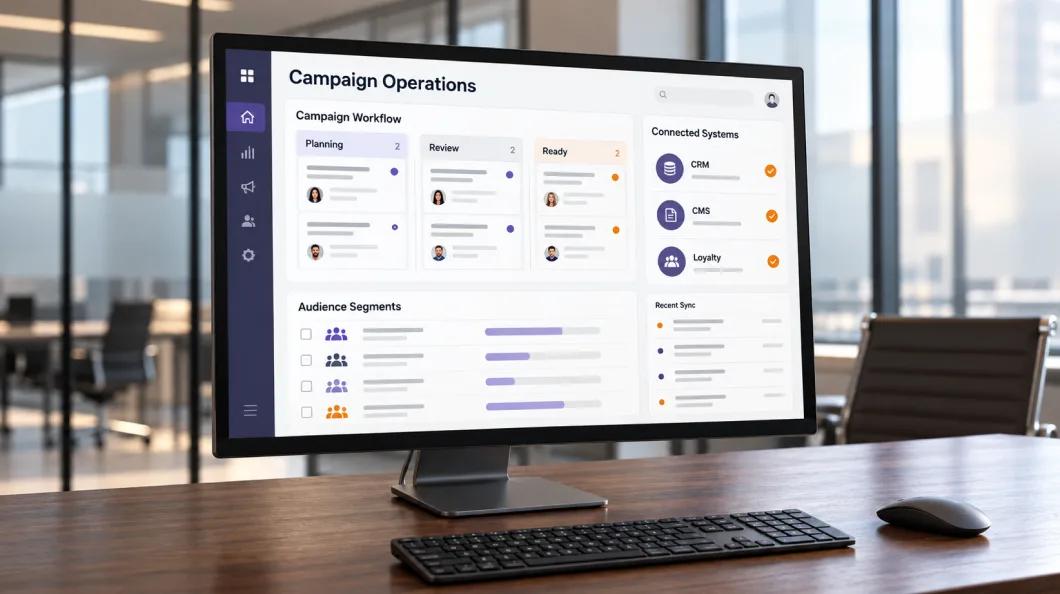
A custom campaign operations application can bring these steps into one managed workflow. It might assign reviewers by region, check that required assets are ready, and release approved campaign details to the CMS or automation platform through APIs.
Marketing gains visibility into what is holding a launch up, while developers spend less time handling routine exceptions.
Loyalty and Offer Management
Offers may involve purchase conditions, membership tiers, partner agreements, expiration rules, and market restrictions. Those requirements can be difficult to manage in a standard campaign builder.
A custom application can evaluate eligibility before an offer is displayed or redeemed. For example, it could check current loyalty status, verify a partner benefit, and return an approved offer to a website or mobile app.
The underlying loyalty platform remains responsible for balances and transactions. The custom layer handles the additional business logic.
Customer Data Activation
Marketing teams frequently have useful customer signals in several places but lack a reliable way to act on them.
A custom application can assemble selected information from the CRM, e-commerce system, and preference center to support a specific decision, such as whether a customer should enter a renewal journey. It can check consent, account status, and recent purchases before sending a trigger to marketing automation.
Clear data ownership is essential here. The application should request only what the workflow needs and avoid creating another competing customer database.
Reporting Built Around Business Outcomes
Platform dashboards tend to reflect the activity each product manages. Executives may need something different: a view that connects campaign investment with qualified pipeline, bookings, loyalty redemptions, or repeat purchases.
A reporting application can present agreed metrics across systems, surface delayed feeds, and give regional teams the views relevant to their responsibilities. Its usefulness depends on consistent campaign identifiers and documented measurement rules, not simply an attractive interface.
What to Consider Before Development Begins
Custom development introduces responsibility. The enterprise must support the application after launch, manage security, and plan for changes in connected systems.
Before approving a build, evaluate five questions:
- Business case: Which recurring delay, error, or missed opportunity will the application address?
- Build versus configure: Can existing tools or supported connectors meet the need with less effort?
- Data ownership: Which platform remains the source of truth for each record?
- Security and reliability: Who can access the application, and what happens when an API is unavailable?
- Long-term support: Who will monitor performance, maintain documentation, and update integrations?
Testing should include real campaign conditions, such as incomplete customer records, regional permission differences, high activity during launch, and failed downstream requests. A workflow that works with perfect test data may struggle with daily operations.
Measure the Results, Not the Features
Measure custom applications against the operational problems they were built to solve.
For a campaign portal, track approval cycle time, launch delays, and rework. For an eligibility application, review decision accuracy, response time, and failed redemptions. For a reporting tool, measure data freshness, reconciliation effort, and adoption by decision-makers.
Review these measures after implementation. If a feature adds complexity without improving an important workflow, reconsider it.
Summing It Up
Custom applications earn their place in enterprise marketing infrastructure when they make difficult, business-specific work easier to execute and control. Built around existing platforms, they can close workflow gaps without demanding a wholesale technology replacement.
Start with the constraint that matters most. Build the missing capability, connect it carefully, and judge its value by what marketing teams can accomplish with it.