
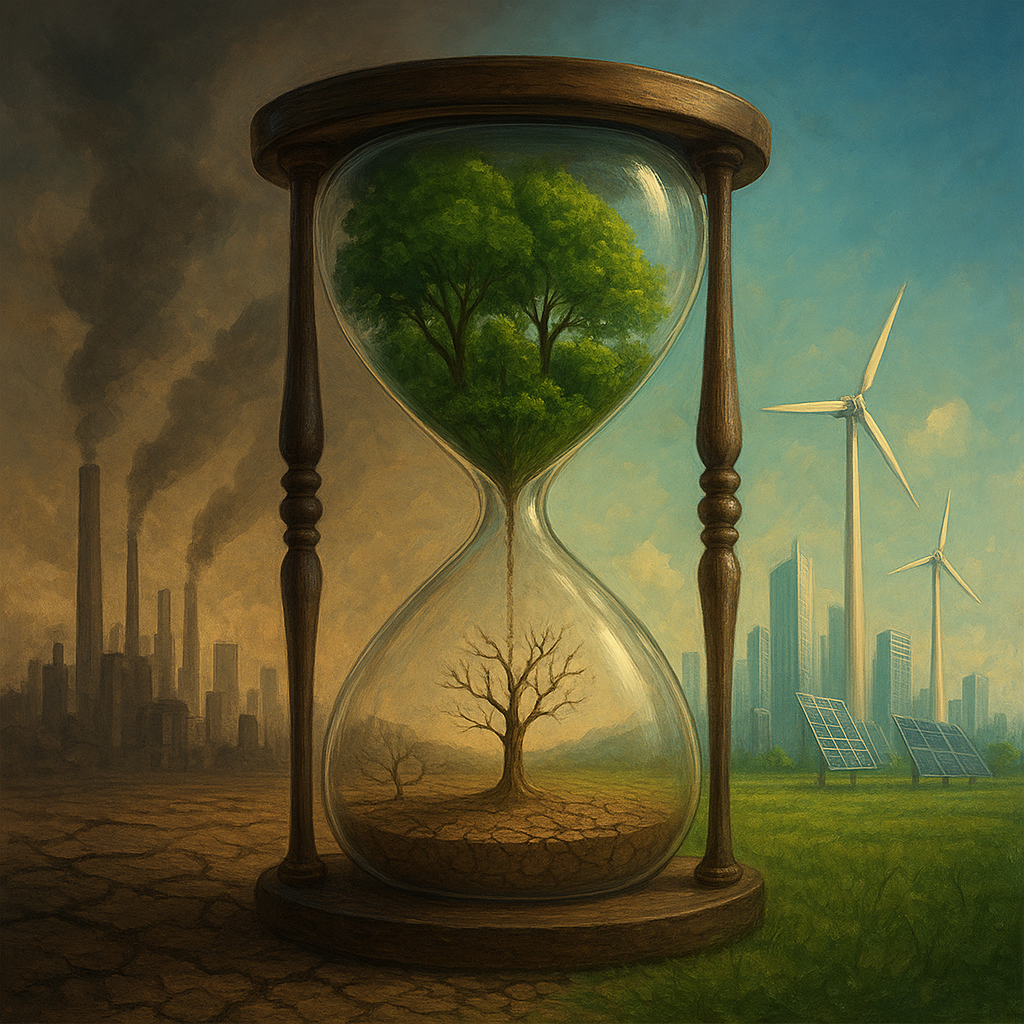
Eyes on the Horizon: A Critical Climate Crossroads in 2026
On a brisk April morning in 2026, the world collectively crossed a sobering threshold: atmospheric carbon dioxide concentrations reached 430 parts per million, the highest in recorded history. This alarming figure, reported by the Global Climate Observatory, highlights the widening gap between climate commitments and tangible outcomes. Despite decades of international summits, technological advances, and grassroots activism, global emissions have only recently plateaued, not declined. Meanwhile, climate-induced disasters continue to escalate, destabilizing vulnerable communities worldwide.
This moment crystallizes the urgency and complexity of climate action today. It is no longer just about setting ambitious targets but about radically transforming economies, energy systems, and societal behaviors to meet those goals. The challenge is multifaceted: reconciling economic growth with sustainability, ensuring equitable transitions, and overcoming political inertia. The 2026 climate landscape demands a fresh appraisal of what climate action truly entails and how it can be accelerated.
Tracing the Roots: How Decades of Climate Action Led to This Juncture
The history of climate action is marked by incremental progress shadowed by persistent challenges. The landmark 1997 Kyoto Protocol set binding emission reduction targets for developed nations, but its limited scope and exclusion of major emitters blunted its impact. The 2015 Paris Agreement represented a breakthrough, with nearly 200 countries pledging to limit global temperature rise to well below 2°C above pre-industrial levels, aiming for 1.5°C. However, the voluntary nature of nationally determined contributions (NDCs) created compliance gaps.
Throughout the 2010s and early 2020s, advances in renewable energy technology, energy storage, and electric vehicles expanded rapidly, lowering costs and driving adoption. Yet, global fossil fuel consumption remained stubbornly high, supported by entrenched infrastructure and subsidies. The 2020s saw increased climate-related disasters — wildfires in Australia and North America, floods in Europe and Asia, and droughts in Africa — underscoring the growing costs of inaction.
International negotiations often faltered due to geopolitical tensions, economic disparities, and divergent national interests. Meanwhile, climate justice movements emphasized the disproportionate burden on developing nations and marginalized communities, demanding equitable support and accountability. These tensions frame the current dynamics of climate action, where ambition must be met with inclusion and pragmatism.
Quantifying the Climate Action Gap: Data and Trends in 2026
Despite progress, the data reveal a stark reality: global greenhouse gas emissions remain near historic highs. According to the latest reports from the Climate Action Tracker and the International Energy Agency (IEA), current NDCs collectively point to an estimated temperature rise of approximately 2.4°C by 2100 if unaltered. This overshoot threatens catastrophic environmental, economic, and social consequences.
Key statistics shaping the climate action discourse in 2026 include:
- Global CO₂ emissions stabilized in 2025 at around 36 billion metric tons, a plateau rather than a decline.
- Renewable energy accounts for 38% of global electricity generation, up from 29% in 2020, yet fossil fuels still supply over 50%.
- Deforestation rates in tropical regions decreased by 15% over the last five years but remain a significant source of emissions.
- Investments in clean technologies reached $1.2 trillion in 2025, a 40% increase from 2020, yet insufficient to meet the $4 trillion annual target estimated by climate economists.
These figures expose the persistent emission gap and the scale of investment shortfall. Furthermore, disparities in climate finance and technology transfer hinder developing nations’ ability to implement effective climate strategies. The data underscore that while incremental improvements exist, systemic shifts are urgently needed.
"The window for limiting warming to 1.5°C is rapidly closing. Without transformative action, we risk irreversible damage to ecosystems and human livelihoods," said Dr. Helena Forsberg, senior climate analyst at the International Science Council.
2026 Developments: Emerging Innovations and Policy Shifts
This year has witnessed notable developments bolstering climate action prospects. The Global Climate Summit held in Nairobi in July 2026 marked a turning point, with over 75 countries enhancing their NDCs to include explicit net-zero targets by 2050 or earlier. Notably, several emerging economies committed to leapfrogging fossil fuels with direct investments in green hydrogen and advanced carbon capture technologies.
Technological innovations have accelerated. Breakthroughs in solid-state battery technology have increased electric vehicle (EV) range and reduced costs, spurring wider consumer adoption. Additionally, next-generation negative emission technologies, such as enhanced rock weathering and biochar application, are gaining traction as scalable carbon removal strategies.
On the policy front, the European Union expanded its Emissions Trading System (ETS) to cover maritime and aviation sectors, while China implemented stricter carbon pricing mechanisms aligned with its 2060 carbon neutrality pledge. The United States passed the Climate Innovation Act, allocating $250 billion over the next decade to fund climate resilience and clean tech R&D.
Despite progress, challenges remain. Energy security concerns amid geopolitical tensions have led some countries to temporarily revert to coal and natural gas, complicating the energy transition. Moreover, social resistance to climate policies, particularly those perceived as economically disruptive, continues to generate political friction.
"Climate action must be inclusive and just. Without addressing social equity, policy measures risk undermining public support and long-term success," emphasized Maria Gomez, director of the Climate Justice Alliance.
Case Studies: Real-World Climate Action Successes and Lessons
Examining concrete examples illustrates how diverse sectors and regions are advancing climate solutions.
1. Costa Rica’s Regenerative Forestry Initiative
Since 2020, Costa Rica has scaled its payments for ecosystem services program, incentivizing farmers to restore degraded lands. This initiative has sequestered over 20 million metric tons of CO₂ equivalent to date and revitalized biodiversity hotspots. The program’s community-centered approach has enhanced livelihoods while promoting sustainable land management.
2. Denmark’s Integrated Energy Grid
Denmark’s national energy grid now integrates 75% renewable sources, supported by smart grid technologies and regional energy sharing agreements with neighboring countries. This flexibility has reduced emissions in the power sector by 65% since 2010 and stabilized energy prices.
3. India’s Urban Heat Mitigation Efforts
Faced with escalating heatwaves, Indian cities like Ahmedabad implemented urban greening and heat-resilient infrastructure projects. Combined with solar rooftop expansions, these measures reduced peak energy demand by 12% and improved public health outcomes.
These case studies highlight the potential of tailored, multi-dimensional approaches combining technology, policy, and community engagement. They also reveal that effective climate action requires context-specific strategies rather than one-size-fits-all solutions.
Expert Perspectives and Industry Impact
Leading climate scientists, economists, and business leaders increasingly agree that climate action is no longer optional but fundamental to economic viability and societal well-being. Dr. Rajiv Menon, chief sustainability officer at GreenTech Innovations, notes, "Corporate climate commitments have moved from branding exercises to core strategic imperatives, influencing investment flows and innovation pipelines."
Financial markets reflect this shift. Climate-related disclosures mandated by regulators have improved transparency, enabling investors to assess climate risks more accurately. This has led to a surge in green bonds and sustainable finance instruments, which totaled over $3 trillion in 2025, according to the Climate Bonds Initiative.
Industries such as agriculture, transportation, and manufacturing face unprecedented transformation pressures. The automotive sector’s pivot to electric and hydrogen vehicles is reshaping supply chains and labor markets. Agriculture is adopting regenerative practices to reduce emissions and enhance soil carbon stocks. These transitions carry economic opportunities but require robust policy frameworks to manage job displacements and retraining.
Moreover, climate risks are increasingly integrated into corporate governance. The Task Force on Climate-related Financial Disclosures (TCFD) framework has become a global standard, pushing companies to align strategies with climate scenarios.
Future Outlook: What to Watch and Steps Forward
Looking ahead, the trajectory of climate action hinges on several critical factors. First, bridging the emissions gap demands scaling up finance, technology transfer, and capacity building, especially in vulnerable regions. The 2026 UN Climate Finance Report indicates that only 45% of the $100 billion annual goal for developing countries has been met, signaling urgent need for mobilization.
Second, enhancing policy coherence and enforcement mechanisms is essential. The voluntary nature of many climate pledges must evolve towards binding agreements with transparent monitoring and accountability. TheOmniBuzz’s article Why Climate Action Demands Urgency Beyond Political Promises explores this imperative in depth.
Third, innovation and behavioral change at scale remain pivotal. As highlighted in How Renewable Energy Is Reshaping Global Power and Climate Action, renewable energy and digital technologies are catalysts for decarbonization but must be complemented by shifts in consumption patterns and urban planning.
Key actions to watch and implement include:
- Strengthening international cooperation on technology sharing and climate finance.
- Implementing just transition policies to support affected workers and communities.
- Expanding nature-based solutions alongside engineered carbon removal.
- Integrating climate resilience into infrastructure and development planning.
- Enhancing public engagement and education to build sustained support for climate policies.
The climate action landscape in 2026 is at a pivotal juncture. The path forward demands bold, coordinated, and inclusive strategies that move beyond rhetoric to measurable impact.
In closing, the urgency underscored in Rethinking Climate Action: Strategies for Urgent and Lasting Impact remains the clarion call for governments, businesses, and citizens alike. The choices made today will shape the planet’s future for generations to come.