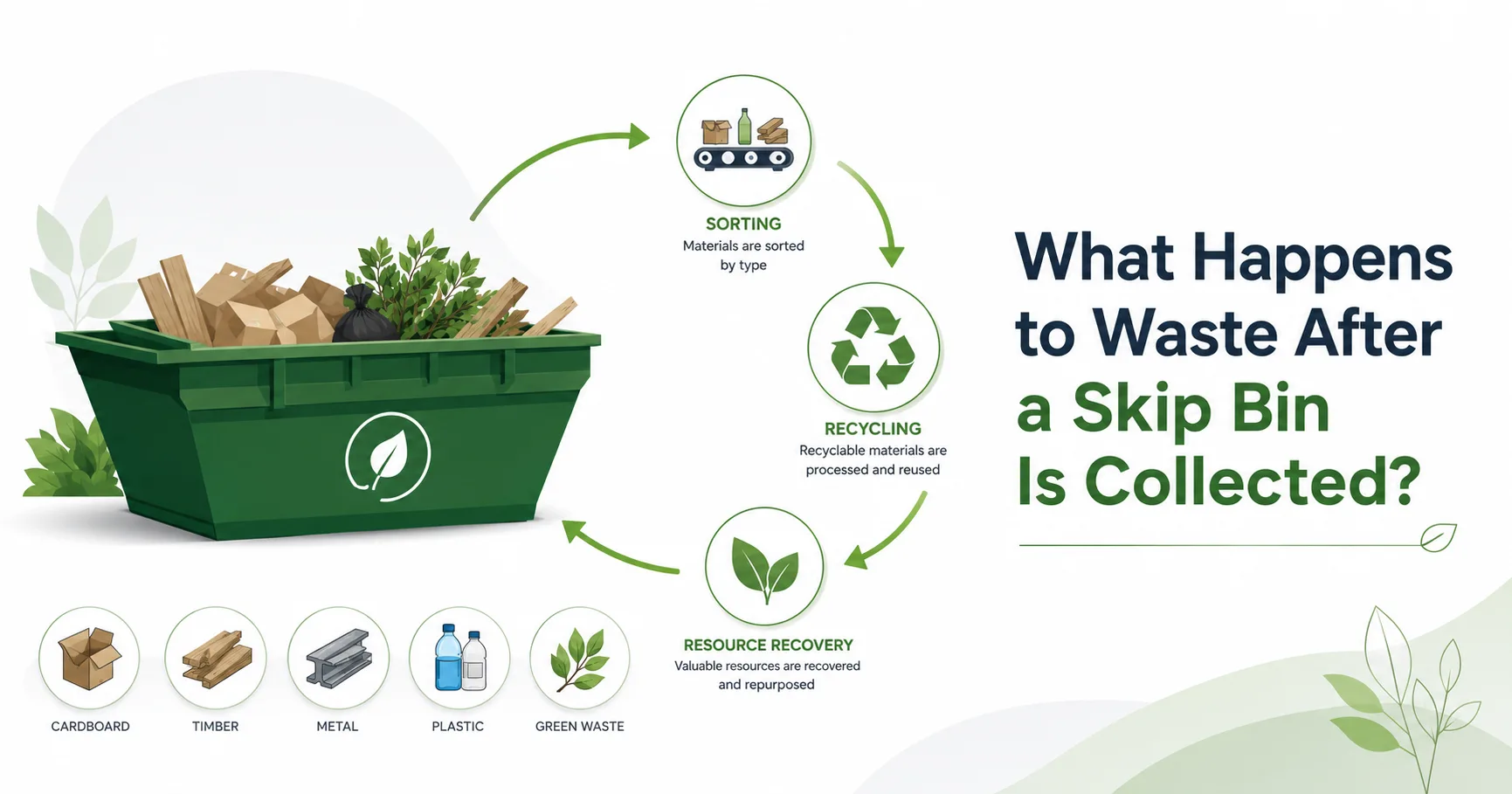
Once your skip bin has been picked up from your property, the journey has just started for the materials you have placed inside it. There are plenty of skip bin users who know that skip bins are great tools for removing rubbish, yet not many know about what happens after a skip bin has been picked up from their property.
It may appear to people that the majority of the rubbish ends up at landfill sites. However, there is always a portion of the waste which undergoes the sorting process and gets recycled in order to get reused again.
Knowing the journey your waste takes after leaving your property could help you and many others to better manage their rubbish and protect the environment from pollution.
Transporting the Waste to a Waste Processing Facility
When you hire skip bins for your household rubbish, construction waste or renovation materials, you are assured of proper handling of your waste. Once picked up by a service provider, skip bins are brought to a licensed waste transfer facility.
This is a place where your waste undergoes further sorting in order to recover the recyclable materials contained within the skip bins.
Why Does Waste Need Sorting?
Since the waste collected in a skip bin usually includes various kinds of materials, they cannot simply be put in one pile and taken away to a landfill site.
The sorting process allows for proper recycling of the usable items collected within the skip bin so that fewer recyclable resources will be lost.
Which Materials Are Sorted?
Some common types of items found in a skip bin are:
- Timber materials
- Cardboard
- Plastic
- Metal
- Green waste
- Concrete
- Other household rubbish
How Do They Get Sorted?
Manual Inspection
The first step of the sorting process is the manual inspection of the content of skip bins. Workers try to sort out large items such as timber boards, cardboard boxes and metal parts which could be easily recovered.
Mechanical Separation
Today many facilities use automated waste sorting equipment which separates various types of waste with high accuracy.
Conveyor belts transport materials into the next sorting stage where items get automatically separated based on size, weight and materials.
Metal Separation
Magnets are widely used in waste sorting because of their ability to easily separate steel items from the mixed waste.
Recovered metals are then delivered to metal recycling plants where they get recycled and reused to produce metal items again.
Recycling the Usable Items Found in Skip Bins
Timber Waste
Clean timber can usually be made into wood chip mulch or reused to manufacture building products.
Paper Products
Paper items can be compressed and packed into large bales which will later be recycled to create new paper and packaging items.
Plastics
Plenty of items made of plastic can be recycled once they are sorted out and properly cleaned.
Metals
Steel items can get melted down and become new items including construction items.
Green Waste
What should be noted about green waste collected in skip bins is that this kind of waste can get repurposed.
Green waste usually consists of garden and landscaping waste, which include:
- Leaves
- Grass clippings
- Branches
- Plant trimmings
After sorting and processing, green waste can be made into mulch and compost which will be useful for landscaping and gardening purposes.
Construction and Renovation Waste
The waste generated during construction and renovation projects can be recycled, too.
Common Types of Construction Waste
- Concrete materials
- Bricks
- Timber
- Metal
- Plasterboard
Such waste can be recovered and reused as concrete or asphalt base in road works. This is an environmentally friendly method of dealing with construction waste.
Choosing a Reputable Waste Management Company
If you want your waste to be sorted out properly, you need to work with a reliable skip bin hire company.
Such companies know what to do with various kinds of waste and will direct them to the right place.
If you want to organize a clean-up or renovation project, the Skippy Bin Adelaide can assist you with your skip bin hiring needs.
What Cannot Be Recycled?
There is no need to worry because today it is possible to recycle almost any product using advanced techniques and technology.
However, some items still require special disposal as they cannot be recycled or pose harm to people.
Examples of Unusable Waste
- Hazardous chemicals
- Paints and solvents
- Contaminated items
- Certain types of mixed products
Does Any Waste Still End Up in Landfills?
Indeed, there is some waste which is taken to landfills after being processed.
But today's facilities try to recycle the largest volume of waste as possible so as to minimize the quantity of waste being sent to landfill sites.
The more recyclable items get recovered, the less rubbish will end up in landfills.
How Can You Help Improve the Waste Recycling Process?
Making small changes can significantly improve your waste management.
Separate Your Waste
Separate your waste wherever possible.
Avoid Contamination
Avoid contaminating waste items.
Follow Disposal Guidelines
Follow waste disposal guidelines to ensure materials can be processed correctly.
Plan Ahead
Plan ahead and choose the right bin type for your project.
The Future of Waste Management
New technologies and innovative approaches allow for improving recycling rates of waste.
With new equipment for sorting waste, even more accurate results could be achieved in separating various materials in the waste.
In this way, more recyclable materials will be identified and recovered.
Concluding Remarks
Waste management process involves much more than just collecting waste. Once collected, waste undergoes the sorting and processing process allowing for proper recovery of useful materials.