Peering into the Night Sky: The Everlasting Allure of Space
Imagine standing beneath a clear, dark sky, far from city lights, and looking up to see countless stars twinkling silently. This scene has inspired countless generations to wonder about what lies beyond our blue planet. Space exploration, once the realm of science fiction and government agencies, has evolved into a vibrant field accessible to enthusiasts, students, and professionals alike. As of 2026, our understanding of the cosmos is richer and more complex than ever, yet the fundamental questions remain: How do we begin to explore space? What does it take to be part of this grand human endeavor?
Space exploration is not merely about rockets and astronauts; it is the pursuit of knowledge, innovation, and the future of humanity. Today’s beginners are stepping into a landscape shaped by decades of achievements and breakthroughs, from the Apollo moon landings to Mars rovers and the burgeoning commercial spaceflight industry. The journey to becoming knowledgeable about space exploration involves grasping scientific principles, technological milestones, and understanding the organizations and missions shaping the next frontiers.
“Exploration is curiosity put into action. Space exploration embodies humanity’s deepest desire to understand our place in the universe.” — Dr. Elena Ramirez, Astrophysicist
Tracing the Trajectory: How We Arrived at Today’s Space Age
The story of space exploration begins in the mid-20th century with the dawn of the Space Age. The launch of Sputnik 1 by the Soviet Union in 1957 marked humanity’s first step outside Earth’s atmosphere, igniting a fierce competition known as the Space Race. This era saw rapid advancements: Yuri Gagarin’s historic orbit in 1961, the Apollo 11 moon landing in 1969, and the establishment of the International Space Station (ISS) in the late 1990s.
These milestones were not only feats of engineering but also catalysts for technological innovation and international cooperation. The Cold War rivalry pushed the boundaries of rocket propulsion, satellite technology, and human spaceflight endurance. Yet, beyond geopolitical motives, scientific discovery was the driving force. Understanding Earth’s atmosphere, the solar system’s composition, and the effects of microgravity on biology laid the groundwork for future missions.
In the 21st century, the landscape shifted with the emergence of private enterprises like SpaceX, Blue Origin, and Rocket Lab, democratizing access to space. Governments and commercial players now collaborate, compete, and complement each other in unprecedented ways. This evolution has expanded opportunities for newcomers, making space exploration more accessible than ever.
“The transition from purely government-led space programs to a mixed ecosystem of private and public ventures has accelerated innovation and lowered barriers to entry.” — Mark Chen, Space Industry Analyst
Core Concepts: Understanding the Building Blocks of Space Exploration
For beginners, grasping the foundational elements of space exploration is essential. This includes the physics of launching spacecraft, the nature of orbits, and the types of missions currently underway. Rocketry remains central; chemical propulsion is the workhorse, but emerging technologies such as ion thrusters and nuclear thermal propulsion promise to revolutionize deep space travel.
Orbits define the paths satellites and spacecraft follow around celestial bodies. Low Earth orbit (LEO), medium Earth orbit (MEO), and geostationary orbit (GEO) each serve distinct purposes, from telecommunications to Earth observation. Understanding these orbits helps beginners appreciate mission design complexity.
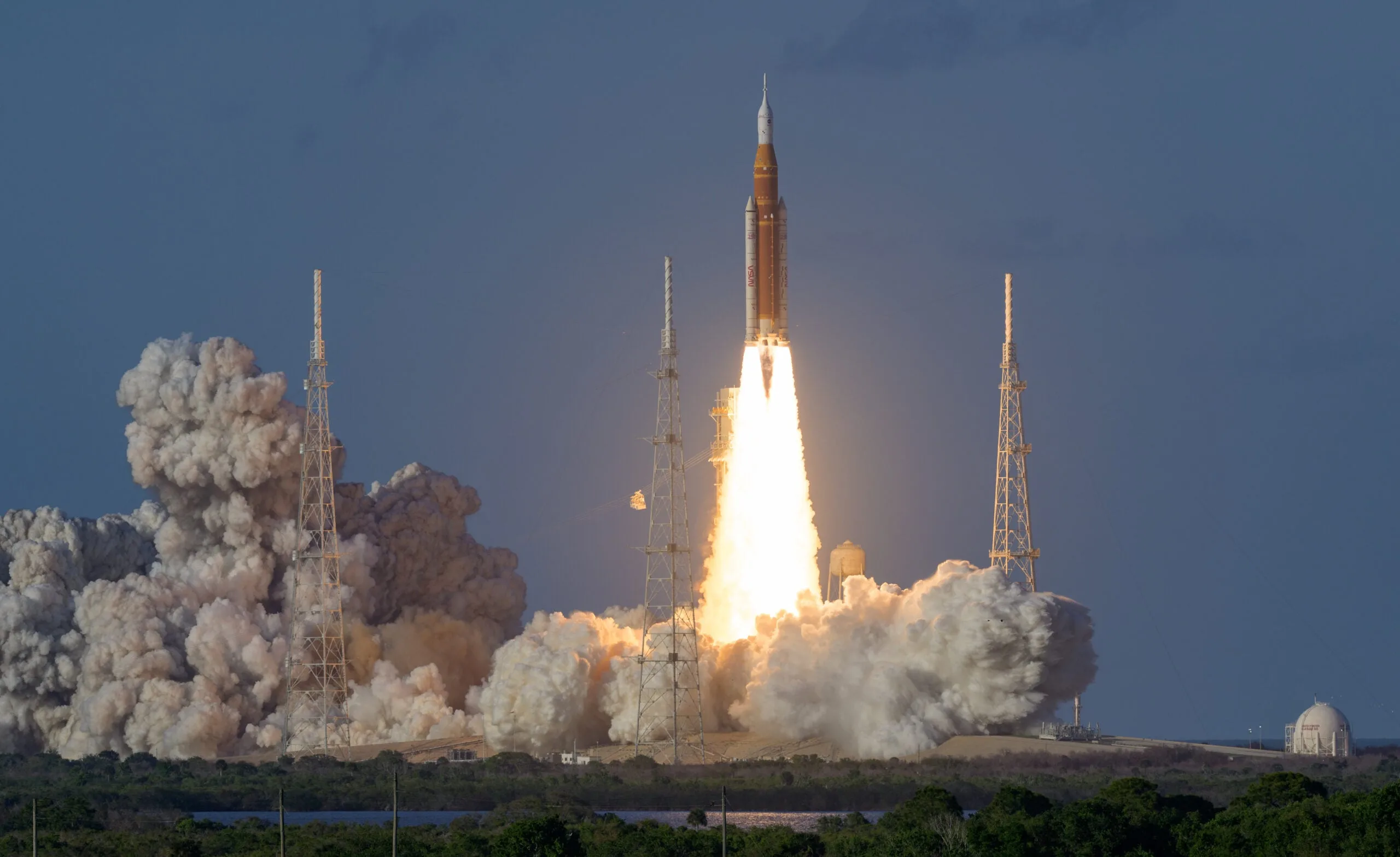
Space missions range from robotic probes exploring distant planets to crewed missions aboard the ISS or lunar bases. Recent data from NASA and ESA highlight the trend toward sustainable, reusable spacecraft and modular habitats. The Artemis program aims to establish a sustainable human presence on the Moon, which is a stepping stone for Mars exploration.
- Rocket Propulsion: Chemical rockets dominate but electric propulsion is growing.
- Orbital Mechanics: Understanding elliptical orbits, escape velocity, and transfer orbits.
- Mission Types: Robotic exploration, crewed missions, satellite deployment.
- Space Habitats: ISS, lunar bases, and future Mars colonies.
Beginners can build knowledge through online courses, amateur astronomy, and increasingly, citizen science projects that contribute to real space research.
The Cutting Edge in 2026: What’s New and Emerging
The current year marks significant progress in several domains of space exploration. Notably, the deployment of the James Webb Space Telescope’s successor, the Cosmic Origins Observatory, has begun unveiling unprecedented insights into galaxy formation and exoplanet atmospheres. Meanwhile, international collaboration on lunar infrastructure has intensified, with NASA, ESA, Roscosmos, and CNSA pooling resources for the Lunar Gateway and Artemis Base Camp.
Private companies continue to push boundaries. SpaceX’s Starship has achieved routine orbital flights, enabling rapid cargo and crew transportation to LEO and beyond. Blue Origin’s New Glenn is preparing for its inaugural crewed flight, while Rocket Lab has expanded its Electron rocket capabilities for interplanetary missions. These developments reduce launch costs and increase mission frequency.
Artificial intelligence and machine learning play growing roles in mission planning, autonomous navigation, and data analysis. The integration of AI-driven systems allows spacecraft to make real-time decisions, crucial for deep space missions where communication delays are significant.
- New Telescopes: Cosmic Origins Observatory operational.
- Lunar Infrastructure: Progress on Gateway and Artemis Base Camp.
- Reusable Launch Vehicles: Starship’s routine orbital flights.
- AI Integration: Autonomous spacecraft operations expanding.
For beginners, staying informed about these trends is vital. TheOmniBuzz’s coverage, including Charting the Next Cosmic Frontier, offers detailed updates on these breakthroughs.
Expert Insights and Industry Impact: Voices from the Field
Leading figures in space science emphasize the importance of interdisciplinary knowledge and global cooperation. Dr. Amira Solis, Director of Lunar Sciences at ESA, stresses the role of education in cultivating the next generation of explorers. “Space exploration is no longer an isolated endeavor,” she says. “It requires engineers, biologists, data scientists, and policymakers working together.”
Industry leaders highlight the economic potential of space resources. The mining of asteroids for rare metals and lunar ice harvesting could transform Earth’s industries and support sustained human presence off-world. However, governance frameworks remain a challenge, with international treaties evolving to address property rights and environmental protection in space.
“The fusion of scientific ambition with commercial capability is reshaping the space sector into a vibrant ecosystem of innovation.” — Raj Patel, CEO of AstroTech Innovations
Beginners should also note the growing role of educational initiatives and space tourism. Companies like Space Adventures and Virgin Galactic offer suborbital flights, introducing the public to space firsthand. This burgeoning sector is expected to expand, providing unique learning and career opportunities.
Looking Forward: What Beginners Should Watch and How to Engage
Looking ahead, several trends promise to shape space exploration’s future. The Artemis program aims to establish a permanent lunar base by the early 2030s, serving as a proving ground for Mars missions. The continued development of nuclear propulsion could halve travel times to Mars, making crewed missions more feasible.
Beginners interested in space exploration have multiple pathways to involvement. Academic study in STEM fields remains foundational, but citizen science initiatives and online platforms enable contributions to real research. Amateur astronomers participate in discovering near-Earth objects and tracking satellites, while coding and robotics clubs foster skills essential for space technology.
- Educational Programs: University courses, online certifications.
- Citizen Science: Contributing to telescope data analysis.
- Space Advocacy: Joining organizations promoting space policy.
- Technology Development: Participating in hackathons and open-source projects.
In parallel, following trusted sources like Travel in 2026: Navigating the Future of Exploration and Connectivity helps track new developments. Engaging with communities, attending conferences, and staying updated through platforms like TheOmniBuzz empower beginners to transition from curious observers to active participants.
“The cosmos belongs to everyone. Our collective curiosity and effort will determine how far humanity ventures.” — Dr. Elena Ramirez