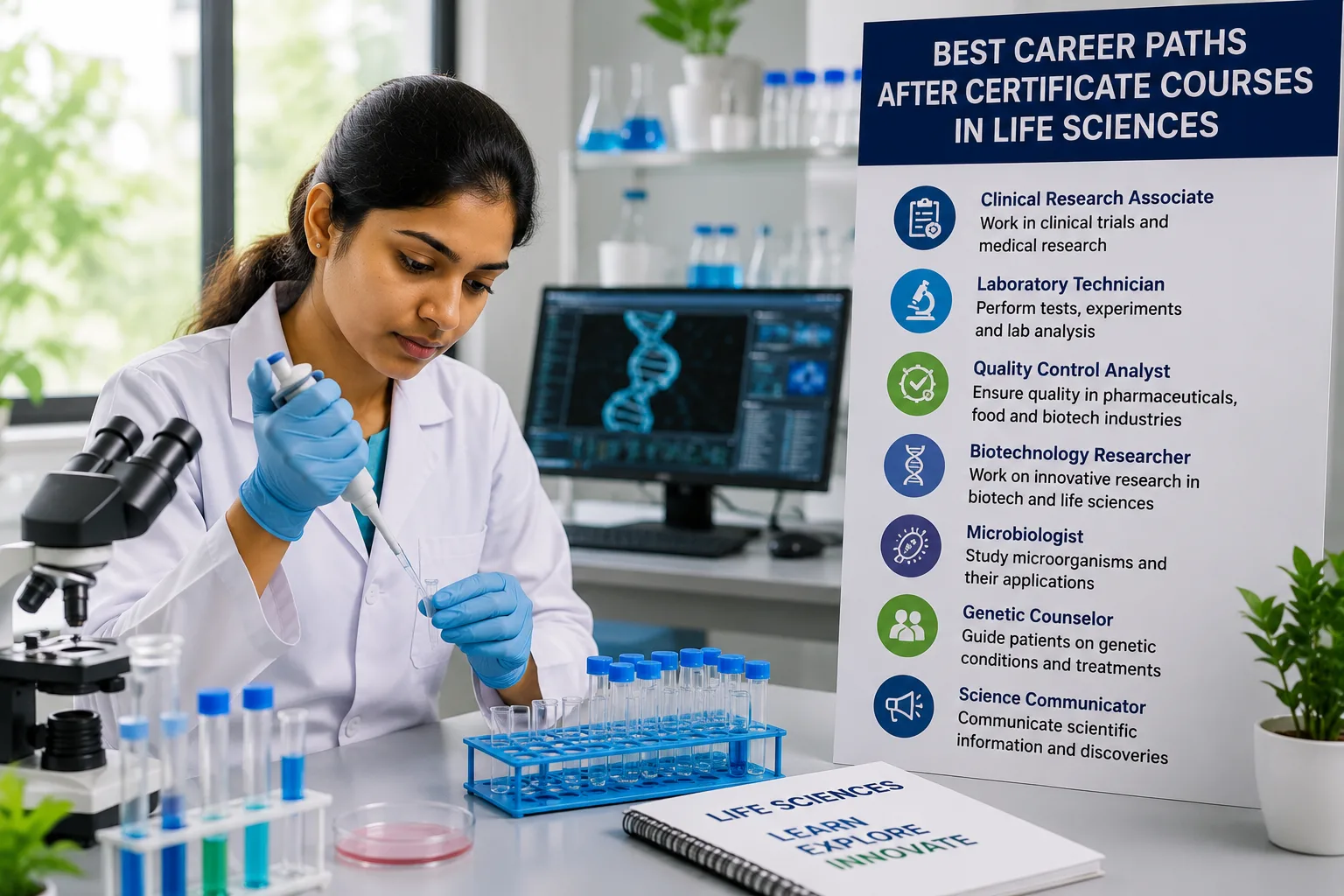
The life sciences field is growing rapidly with increasing opportunities in biotechnology, healthcare, pharmaceuticals, genetics, microbiology, and research industries. Today, students are looking for career-focused programs that provide both practical knowledge and industry exposure. This is why many students are now choosing certificate courses in life sciences to improve their technical skills and prepare for professional careers.
These certification programs help students gain specialized knowledge, laboratory experience, and hands-on training that can improve employability in various scientific sectors.
Why Certificate Courses Matter
Traditional academic programs mainly focus on theoretical learning, but industries today prefer candidates with practical experience and technical expertise. Certificate programs help students understand real-world scientific applications and industry standards.
Certificate courses help students:
- Gain practical laboratory exposure
- Learn modern scientific techniques
- Improve technical knowledge
- Build research skills
- Prepare for industry careers
Students who complete certification programs often feel more confident while applying for internships, research positions, and professional roles.
Research and Laboratory Careers
One of the most popular career paths after completing certificate courses in life sciences is laboratory and research work. Students can work in:
- Biotechnology laboratories
- Clinical research centers
- Diagnostic laboratories
- Pharmaceutical companies
- Academic research institutions
Practical training in laboratory procedures and scientific equipment helps students perform better in research-based careers.
Biotechnology and Genetics Careers
The biotechnology sector is creating many opportunities for skilled life science professionals. Students with certification training can explore careers in:
- Molecular biology
- Genetic research
- Bioinformatics
- DNA analysis
- Biomedical science
Companies and research organizations are increasingly looking for candidates who understand modern laboratory technologies and scientific methods.
Organizations such as Veta Genomics are contributing to innovation and research in the life sciences field, highlighting the growing importance of scientific skill development and practical learning.
Importance of Internships for Life Science Students
Internships for life science students are extremely valuable because they provide practical industry exposure and real-world experience. Internship programs help students understand workplace environments, scientific workflows, and professional research standards.
Internships help students:
- Improve laboratory confidence
- Learn industry procedures
- Build communication skills
- Gain practical research experience
- Explore career interests
Students with internship experience often have better career opportunities compared to those with only theoretical knowledge.
Role of FYUGP Internship in Kerala
The FYUGP internship in Kerala initiative is helping students gain practical learning opportunities during their academic journey. These internships encourage students to apply scientific concepts in real laboratory and industry settings.
Through FYUGP internships, students can:
- Work on real projects
- Learn from industry professionals
- Understand scientific research methods
- Develop teamwork and analytical skills
- Gain exposure to modern laboratory environments
This practical experience helps students become more career-ready and improves their professional confidence.
Career Opportunities in Healthcare and Pharmaceuticals
Life science students can also build careers in healthcare and pharmaceutical sectors after completing certification programs. Opportunities include:
- Clinical research assistant
- Laboratory technician
- Medical coding professional
- Pharmaceutical quality analyst
- Research associate
The healthcare industry continues to create strong demand for skilled life science graduates with practical knowledge and technical expertise.
Final Thoughts
The life sciences industry offers exciting career opportunities for students who combine academic learning with practical training and industry exposure. Certificate courses in life sciences help students build technical knowledge, laboratory skills, and professional confidence needed for modern science careers.
With the support of internships for life science students and programs like FYUGP internship in Kerala, students can gain valuable hands-on experience and prepare for successful careers in biotechnology, healthcare, research, and pharmaceutical industries.