Walk into any farm, nursery, or even a small home garden, and you’ll hear the same question again and again: Should you use natural fertilizer or chemical fertilizer?
Some growers swear by organic methods and say natural nutrition keeps the soil alive for years. Others prefer chemical fertilizers because crops respond faster and growth becomes visible within days. The truth is, both have their place in farming. The real difference comes from how they are used and what your plants actually need.
Over the last few years, farmers have become far more aware of soil health and long-term productivity. Earlier, most people only focused on getting bigger yields. Now, growers are also paying attention to soil quality, water retention, crop strength, and sustainable farming practices.
That shift is one reason why conversations around natural fertilizer vs chemical fertilizer have become so important in modern agriculture.
Companies like Dhanuka are also encouraging balanced crop nutrition and practical farming solutions that help growers improve productivity without ignoring soil health.
Let’s understand both fertilizer types simply and practically.
What Is a Natural Fertilizer?
Natural fertilizers come from organic or naturally available materials. They improve plant nutrition gradually while helping maintain healthy soil conditions.
Some common examples are:
- Compost
- Cow dung manure
- Vermicompost
- Seaweed extracts
- Bio fertilizers
- Plant-based nutrients
Many farmers now prefer organic fertilizer for crop management because it supports long-term soil fertility instead of only short-term plant growth.
Natural fertilizers do not usually show overnight results. But over time, they help improve:
- Soil texture
- Root activity
- Moisture retention
- Microbial life in soil
This creates stronger growing conditions for plants season after season.
What Is a Chemical Fertilizer?
Chemical fertilizers are manufactured products designed to provide nutrients quickly to crops.
These fertilizers mainly supply:
- Nitrogen
- Phosphorus
- Potassium
One reason farmers use chemical fertilizers widely is speed. Crops often show visible growth quickly after application.
In large-scale farming, fast nutrient supply becomes important because crops may suffer if nutrient deficiencies are not corrected on time.
Chemical fertilizers are especially common in high-production farming systems where growers need quick crop response and faster nutrient management.
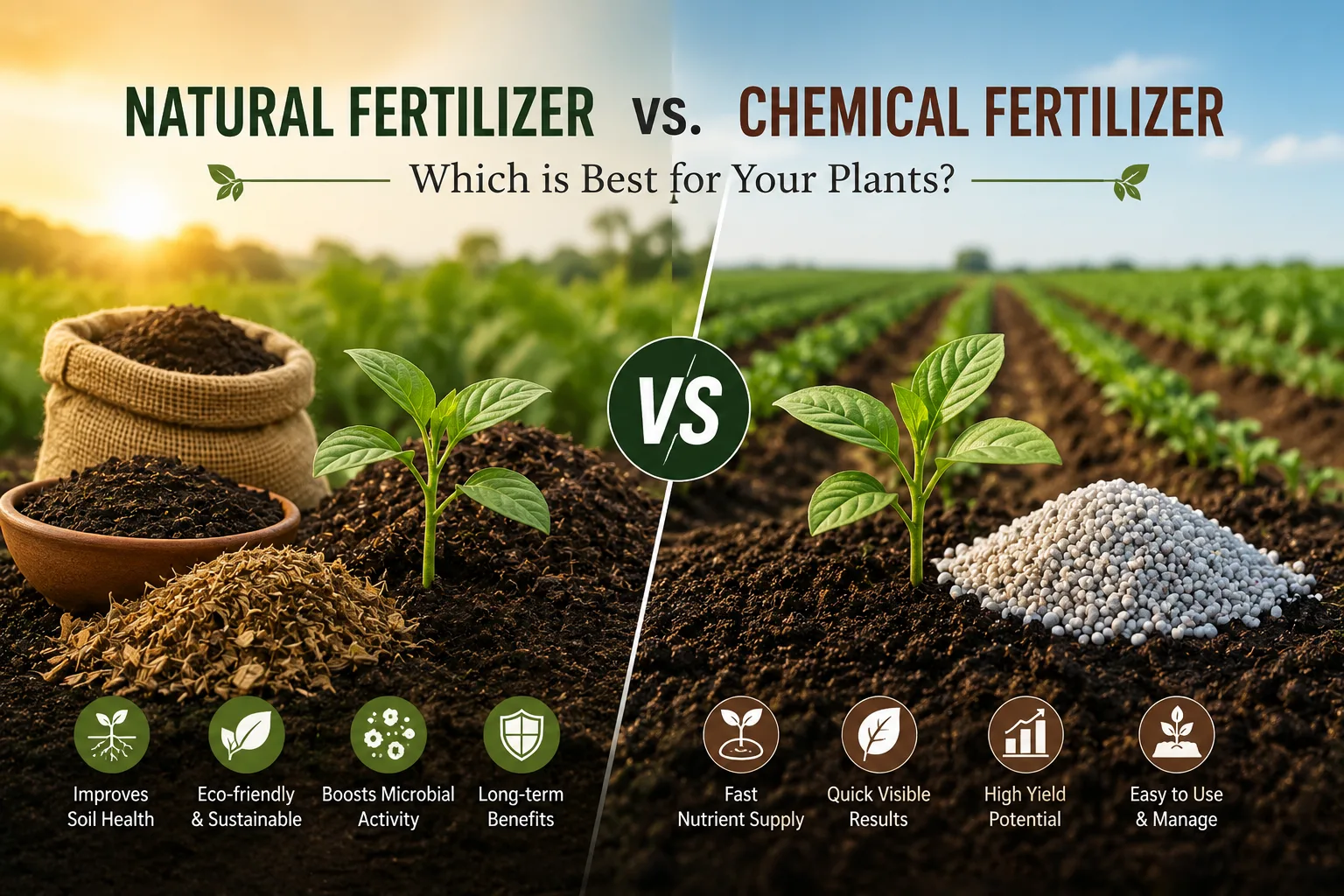
Natural Fertilizer vs Chemical Fertilizer
The comparison between natural fertilizer vs chemical fertilizer is not about deciding which one is completely good or completely bad.
Both are tools for farming.
Natural fertilizers mainly help with:
- Long-term soil improvement
- Sustainable farming
- Balanced nutrient release
- Healthy microbial activity
Chemical fertilizers mainly help with:
- Quick nutrient availability
- Faster crop growth
- Immediate deficiency correction
- High-yield crop management
The better option often depends on the crop, soil conditions, and farming goals.
Why Many Farmers Prefer Natural Fertilizers
One major reason growers are shifting toward organic solutions is soil health.
The benefits of natural fertilizer in farming become more noticeable over time.
Better Soil Structure
Natural fertilizers improve the texture of soil and help it hold moisture better. This becomes especially useful during dry weather conditions.
Healthier Root Development
Healthy soil usually supports stronger root systems. Plants with stronger roots often handle stress better.
Improved Soil Life
Natural fertilizers encourage beneficial microorganisms in soil. These microorganisms help break down nutrients naturally and improve nutrient availability for plants.
Long-Term Farming Support
Farmers who use natural nutrition methods often notice better soil balance after repeated use over several seasons.
Why Chemical Fertilizers Are Still Popular?
Even with growing interest in organic farming, chemical fertilizers remain important in agriculture.
The biggest reason is simple speed.
Faster Plant Response
Chemical fertilizers work quickly. Crops showing yellowing or weak growth often recover faster after proper application.
Useful During Critical Growth Stages
Certain crop stages demand immediate nutrient supply. In those situations, chemical fertilizers help support rapid plant development.
Easy Nutrient Management
Farmers can apply exact nutrient quantities based on crop requirements and soil conditions.
High Productivity Farming
Commercial farming often depends on fast nutrient availability to maintain large-scale production.
Which Is Better for Plants?
A lot of growers ask, " Which is better, natural or chemical fertilizer?
Honestly, there is no single answer for every farm.
If someone wants:
- Quick green growth
- Fast nutrient correction
- Immediate crop response
Chemical fertilizers may help more.
But if the goal is:
- Healthy soil
- Long-term productivity
- Sustainable farming
- Better soil fertility
Natural fertilizers often work better over time.
That is why many experienced farmers no longer depend completely on one system alone. They combine balanced nutrition practices according to crop needs.
Best Fertilizer for Plant Growth
The best fertilizer for plant growth is not simply the one that makes plants grow faster.
Good plant growth depends on many things together:
- Soil health
- Water availability
- Root strength
- Nutrient balance
- Climate conditions
Even the best fertilizer cannot perform properly if the soil quality is poor.
Healthy plants usually grow in healthy soil.
This is why modern farming is slowly shifting toward balanced nutrient management instead of excessive fertilizer use.
Why Natural Plant Nutrition Is Gaining Attention?
Interest in natural plant nutrition has increased a lot in recent years.
Farmers are becoming more careful about:
- Soil fertility
- Residue management
- Sustainable farming practices
- Water conservation
Natural nutrient systems help improve soil naturally without putting excessive stress on the land.
Many vegetable growers, fruit farmers, and even home gardeners now prefer natural nutrient solutions for long-term crop health.
Role of Biofertilizer in Agriculture
Bio fertilizer for agriculture is also becoming popular because it supports natural nutrient activity in the soil.
Bio fertilizers work differently from traditional fertilizers. Instead of supplying heavy nutrients directly, they help improve biological activity around plant roots.
This supports:
- Better nutrient absorption
- Healthier root systems
- Improved soil fertility
Many farmers now use bio fertilizers along with balanced crop nutrition practices.
Can Chemical Fertilizers Harm Soil?
Chemical fertilizers themselves are not automatically harmful. Problems usually happen when they are overused repeatedly without proper soil management.
Excessive use may sometimes lead to:
- Reduced organic matter
- Soil imbalance
- Hard soil texture
- Poor water retention
This is why soil testing and balanced fertilizer planning have become important parts of modern farming.
Responsible use matters more than anything else.
Farming Today Needs Balance
Modern agriculture is changing.
Farmers now understand that long-term productivity depends on maintaining healthy land, not just chasing bigger yields every season.
That is why many growers now combine:
- Organic nutrients
- Bio fertilizers
- Precision farming
- Limited chemical inputs
- Soil health management
This balanced approach often creates better long-term farming stability.
Best Fertilizer for Crop Productivity
The best fertilizer for crop productivity depends on:
- Crop type
- Soil fertility
- Weather conditions
- Farming practices
Different crops respond differently to nutrient systems.
For example:
- Vegetables often benefit from organic matter
- Grain crops may need quick nutrient support
- Fruit crops usually respond well to balanced nutrition systems
Good farmers usually focus on understanding their soil first before choosing fertilizers.
Sustainable Farming Is the Future
Agriculture is slowly moving toward more sustainable methods.
Farmers now realize that:
- Healthy soil gives healthier crops
- Balanced nutrition improves long-term productivity
- Soil damage reduces future farming potential
This is one reason why natural fertilizers, bio fertilizers, and integrated nutrient systems are becoming more common across agriculture.
The goal today is not only higher production. It is also maintaining farming stability for future generations.
How Dhanuka Supports Modern Farming?
Indian farmers need practical solutions that work in real field conditions.
Dhanuka continues supporting growers with:
- Modern crop nutrition technologies
- Balanced farming solutions
- Agricultural innovation
- Practical field support
Modern farming works best when productivity and soil health move together.
Final Thoughts
The debate around natural fertilizer vs chemical fertilizer will probably continue for years, but farming today is no longer about choosing one side blindly.
Natural fertilizers support healthier soil and long-term sustainability. Chemical fertilizers help provide quick nutrient support when crops need immediate care.
The smartest farming approach is balance.
Farmers who pay attention to soil health, crop condition, and responsible nutrient management usually achieve better results over time.
Healthy crops start with healthy soil. And healthy soil always rewards farmers in the long run.
With practical farming knowledge, balanced fertilizer use, and modern agricultural support from companies like Dhanuka, growers can build stronger and more sustainable farming systems for the future.
FAQs
1. What is the main difference between natural and chemical fertilizers?
Natural fertilizers come from organic sources, while chemical fertilizers are manufactured for quick nutrient supply.
2. Which is better, natural or chemical fertilizer?
Both have advantages, but natural fertilizers usually support better long-term soil health.
3. What are the benefits of natural fertilizer in farming?
They improve soil fertility, support microbial activity, and help maintain sustainable farming systems.
4. Can chemical fertilizers increase crop growth quickly?
Yes, they usually provide faster nutrient availability and quicker plant response.
5. What is natural plant nutrition?
It refers to plant nutrition supported through organic and naturally available nutrient sources.
6. Are biofertilizers useful in agriculture?
Yes, bio fertilizers help improve soil fertility and support healthier root development naturally.
7. Can too much chemical fertilizer damage soil?
Excessive use without balanced soil management may affect soil structure and fertility over time.
8. What is the best fertilizer for plant growth?
The best fertilizer depends on soil condition, crop type, and farming goals.
9. Why is soil health important in farming?
Healthy soil supports stronger roots, better nutrient absorption, and long-term productivity.
10. Why do farmers trust Dhanuka Agricultural Solutions?
Dhanuka supports farmers with practical crop nutrition products and modern agricultural technologies.