An ovulation tracker will tell you the days you are most likely to get pregnant; this is called the fertile window. It begins five days before ovulation and ends on the day of ovulation. Your period dates provide a rough estimate, and cervical mucus changes and ovulation tests fill in more details. Apps estimate ovulation but can't confirm it. Persistently irregular cycles, or trouble conceiving, are worth discussing with a doctor.
Quick Reads
- The window is six days. The egg lasts only 12 to 24 hours.
- Ovulation timing depends on your cycle length and varies from person to person. It doesn’t necessarily have to be 14 days.
- Mucus changes and LH tests look ahead, while temperature mostly looks back.
- Doctors generally suggest an evaluation after 12 months of trying, or six months if you're 35 or older.
Trying to conceive can feel like solving a puzzle with pieces missing. Paper charts and thermometers once carried the load. Now a fertility tracker or ovulation tracking app can store months of cycle data and offer an estimate with a tap, and home tests are easy to buy. The tools have improved a lot. Their estimates are still only as good as the information you feed them.
What Is Ovulation, and When Does the Fertile Window Occur?
Ovulation is the release of an egg from an ovary. The fertile window is the five days before it plus ovulation day, because sperm can survive for several days while the egg lives only 12 to 24 hours, according to the American College of Obstetricians and Gynecologists (ACOG).
TimingWhat it meansFive days before ovulationPregnancy is possible because sperm can surviveOvulation dayThe egg is released and can be fertilisedAfter ovulationThe egg usually survives about 12 to 24 hours
How Can Someone Track Ovulation and Estimate Their Fertile Window?
Tracking starts with period dates and gets more useful once you add other signs. A fertile window calculator or app can organise the numbers, but it can only work with what you give it: Steps to follow:
- Record period dates: Call the first day of bleeding day one, and log when the next period starts.
- Review patterns: Follow a few cycles, and you’ll see how long yours usually runs and how much it shifts.
- Estimate ovulation: It typically falls about 14 days before your next period, but that can move.
- Watch for signs: Keep an eye on changes in cervical mucus, or try an ovulation predictor kit.
- Compare the clues: Check your estimated days against what you actually observe.
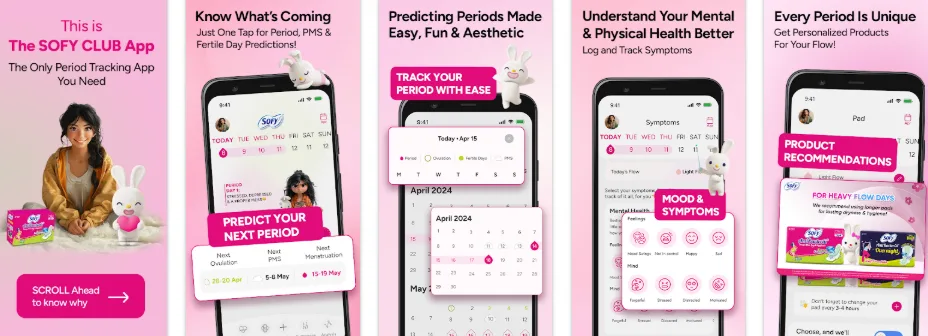
The Sofy Club app lets you log period dates, flow, and symptoms and shows predictions for upcoming periods and PMS days. That gives you the cycle history these steps depend on, with the same caveat that predictions are estimates.
What Signs Can Help Identify Approaching Ovulation?
Your body gives clues, though not everyone notices them. None of them should be used alone.
Signs to watch:
- Cervical mucus: It can turn clearer, wetter, slippery, and stretchy as ovulation nears.
- Basal body temperature: It rises slightly after ovulation, so it confirms a pattern better than it predicts the day.
- Ovulation predictor kits: These urine tests pick up a rise in luteinising hormone (LH), which usually comes before ovulation.
- Other symptoms: Mild pelvic discomfort or a change in libido can happen, but they're unreliable.
When Is the Best Time to Have Sex to Improve Conception Chances?
Pregnancy is most likely when sperm are already in place as ovulation happens. According to the American College of Obstetricians and Gynecologists (ACOG), sex as much as five days before ovulation, or one day after it, can still lead to pregnancy. Timing tips:
- Start early: The days leading up to ovulation count just as much as ovulation day.
- Use several clues: Pair your cycle tracking with other fertility signs.
- Skip the pressure: Predictions aren’t always right, so there’s no need to hunt for one exact day.
Good timing improves the opportunity. It can't guarantee pregnancy in any single cycle.
How Accurate Is Ovulation Tracking, and When Is Medical Advice Needed?
No home method predicts ovulation perfectly, especially when cycle lengths vary. Each one answers a slightly different question.
MethodWhat it can tell youPeriod calendar or appProvides an estimate of your potential fertile days based on your historyCervical mucusSuggests fertile window may be approachingLH testDetects a rise in hormones that normally occurs just before ovulation
See a doctor if your periods are consistently irregular or absent. A fertility evaluation after 12 months of trying if you're under 35, and after six months if you're 35 or older, is generally recommended by bodies like ACOG. It can be sooner if you have risk factors or ovulation concerns.
Bottom Line
Tracking works best when you combine methods. Period dates give you a starting estimate, cervical mucus and ovulation tests add clues, and a fertility tracker or app keeps it all in one place. None of them can promise the exact day, so treat every prediction as a good guess and time sex across the whole fertile window instead of one date. That keeps the process calmer and the odds better. Even perfect timing can't guarantee pregnancy in a single cycle, so patience is part of the plan. If your cycles stay irregular or conception takes longer than expected, bring your records to a doctor. They'll make the conversation faster and more useful. Tracking should reduce stress, not add to it.