In the maritime industry, effective protection against potential impact damage during docking and mooring is not just a matter of safety—it is a critical operational requirement. One of the most trusted components for this job is the d type rubber fender. Recognized for their unique shape, superior energy absorption, and exceptional durability, d type rubber fenders have become indispensable in dock and ship applications worldwide.
Understanding D Type Rubber Fenders
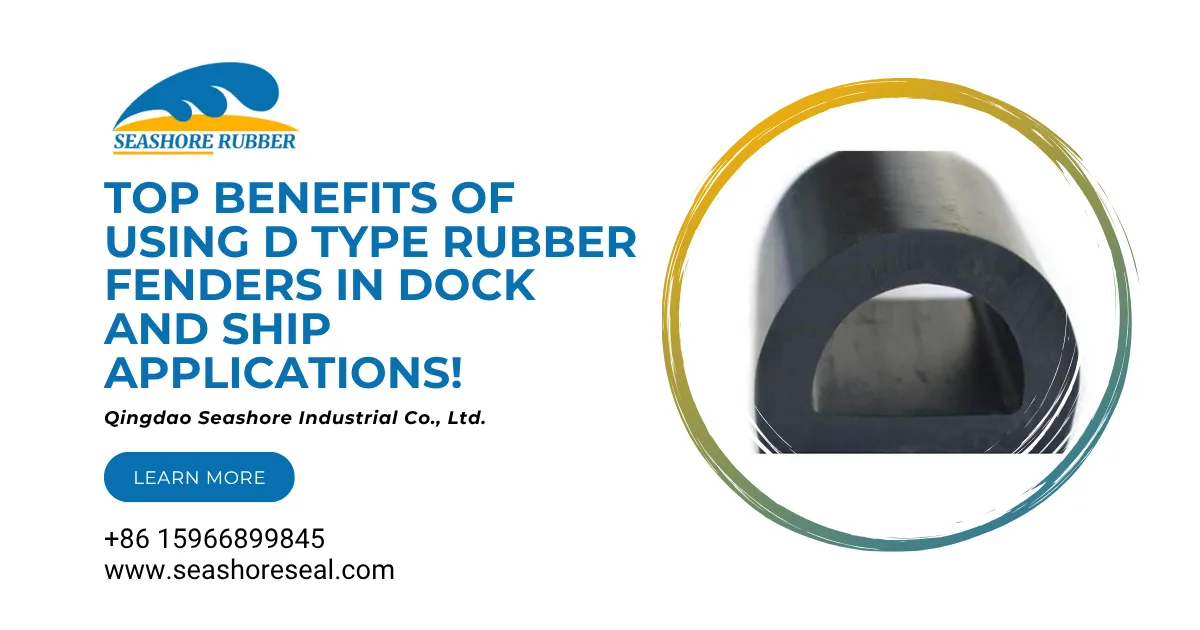
It is essential to understand what distinguishes d type rubber fenders from other types of marine fenders. The 'D' shape refers to their cross-section, with a flat side designed to be mounted on the quay wall and a bulging curved face towards the vessel.
This design provides:
- Large contact area: Ensures efficient distribution of impact forces.
- High energy absorption: Cushions vessels during berthing.
- Self-rebounding capability: The curved face rebounds vessels slightly after contact, preventing hard impacts.
More than just their shape, the materials used in producing d type rubber fenders involve high-quality synthetic rubber compounds, which are resistant to abrasion, corrosion, and extreme environmental factors.
Top Benefits of Using D Type Rubber Fenders in Dock and Ship Applications
1. Superior Impact Energy Absorption
One of the primary benefits of d type rubber fenders is their outstanding capacity to absorb and dissipate the kinetic energy generated during vessel berthing. The unique D-shaped cross-section offers a cushioning effect that reduces the force transmitted to both the vessel hull and the dock structure.
- Why it matters: This energy absorption prevents damage such as hull dents, paint scratches, or even severe structural deformation on the dock wall.
- Comparison: Compared to cylindrical or block fenders, d type rubber fenders provide a larger reaction surface, enabling greater energy absorption for a given size.
This property is vital for protecting expensive assets and maintaining operational safety across a wide range of vessel sizes and weights.
2. Even Load Distribution Protects Vessel and Dock
The flat mounting face of d type rubber fenders allows them to be firmly affixed to dock walls or quay faces. Once installed, the curved face contacts vessels, distributing the load evenly over a broader area during impact.
- Result: This even load distribution minimizes pressure points and stress concentration, reducing the risk of localized damage.
- Benefit: Vessel operators and dock managers benefit from reduced maintenance and repair costs and extended service life of critical infrastructure.
3. Versatility and Adaptability
D type rubber fenders are highly versatile and are suitable for a variety of marine environments, including:
- Ports and harbors
- Offshore platforms
- Commercial docks
- Residential marinas for larger vessels
At Qingdao Seashore Industrial Co., Ltd., we manufacture d type rubber fenders in various sizes, hardness levels, and with different installation options such as bolt-on or adhesive mounting, customized to the specific operational requirements of each client.
This versatility means operators can tailor fender solutions according to vessel types—from small ferries to massive container ships and tankers—ensuring optimal protection across numerous scenarios.
4. Durability in Harsh Marine Environments
Marine environments are notoriously tough, with constant exposure to:
- Saltwater corrosion
- UV radiation
- Temperature fluctuations
- Mechanical wear from repeated impacts
Our d type rubber fenders are made from premium synthetic rubber compounds with excellent resistance to abrasion, saltwater degradation, ozone, and UV damage. This durability:
- Ensures consistent performance over years of service
- Minimizes frequent replacements and downtime
- Offers extended return on investment (ROI)
These robust features enable ports and ship owners to rely on d type rubber fenders for uninterrupted, long-term protection.
5. Easy Installation and Maintenance
Efficiency in installation and maintenance is critical to minimizing downtime and operational disruption.
- Installation: The flat back plate can be easily mounted on quay walls or vessel hulls using bolts or adhesives with minimal specialized equipment.
- Low Maintenance: Due to the durability of the materials, these fenders require minimal upkeep. Periodic inspections and cleaning suffice, reducing operational costs.
In comparison to other fender types that may require complex mounting or frequent replacement, d type rubber fenders provide an excellent balance of performance and ease.
Applications of D Type Rubber Fenders in Dock and Ship Operations
Ports and Harbor Protection
D type rubber fenders play a vital role in protecting wharf structures from repeated ship impacts. Their large face contact and energy absorption reduce wear on concrete structures, preventing costly repairs and enhancing port safety.
Ship Mooring Protection
Fenders installed on ship hulls or alongside hulls, particularly on oil tankers, container vessels, and bulk carriers, protect against hull deformation or damage during mooring or alongside operations, drastically reducing repairs and insurance claims.
Offshore Platforms
Offshore drilling and production platforms utilize d type rubber fenders to shield their support structures from supply vessels and anchor handling ships, maintaining platform integrity even in rough sea conditions.
Installation Best Practices for D Type Rubber Fenders
At Qingdao Seashore Industrial Co., Ltd., we recommend a systematic approach:
- Site Assessment: Understand water depth, tidal range, vessel sizes, and berthing speed.
- Fender Selection: Choose appropriate fender size, hardness, and quantity based on vessel displacement and berthing energy.
- Mounting Design: Decide between bolt-on, welding backing frames, or clamp-on methods for ease of replacement and robust fixation.
- Quality Inspection: Confirm material certification, manufacturing standards (ISO, BV, DNV), and compliance with local regulations.
- Regular Inspection: Implement routine checks for wear, deformation, or damage; timely repair or replacement ensures ongoing protection.
D type rubber fenders remain one of the most trusted solutions for protecting both vessel hulls and docking infrastructure across the globe. Their unmatched energy absorption, durability, adaptability, and ease of installation make them indispensable in modern ports, harbors, and offshore platforms.
Frequently Asked Questions (FAQ)
Q1: What are d type rubber fenders primarily used for?
A: D type rubber fenders are used to absorb impact between vessels and docking structures or between vessels themselves, protecting both ship hulls and dock infrastructure.
Q2: How does the shape of d type rubber fenders enhance performance?
A: The flat back face allows secure quay mounting, while the rounded front face contacts vessels, distributing impact forces and absorbing energy efficiently.
Q3: Are d type rubber fenders suitable for all vessel types?
A: Yes, through customization of size and hardness, they can accommodate different vessels ranging from small ferries to large cargo or tanker ships.
Q4: How resistant are d type rubber fenders to harsh marine conditions?
A: Made from marine-grade, synthetic rubber, these fenders resist saltwater corrosion, UV rays, abrasion, and temperature extremes.
Q5: What installation methods are available for d type rubber fenders?
A: Common methods include bolting directly to quay walls, welding onto backing frames, or using clamp/spline systems; choice depends on site specifics.
Q6: How long can d type rubber fenders last?
A: With proper maintenance and installation, service life often exceeds 10 years, depending on usage and environmental conditions.
Q7: Can d type rubber fenders be repaired if damaged?
A: Minor damage can often be repaired with specialized rubber compounds; however, significant wear usually requires replacement to ensure safety.
Q8: How do I select the correct size and hardness for my application?
A: Selection depends on vessel displacement, berthing velocity, and dock structure. Qingdao Seashore offers expert consultation for optimal specification.
Q9: Are environmental regulations considered in manufacturing these fenders?
A: Yes, production adheres to international environmental and safety standards ensuring sustainable and compliant manufacturing.
Q10: What standards do Qingdao Seashore’s d type rubber fenders meet?
A: They conform to ISO 9001, BV, DNV, and other relevant marine and quality certifications.