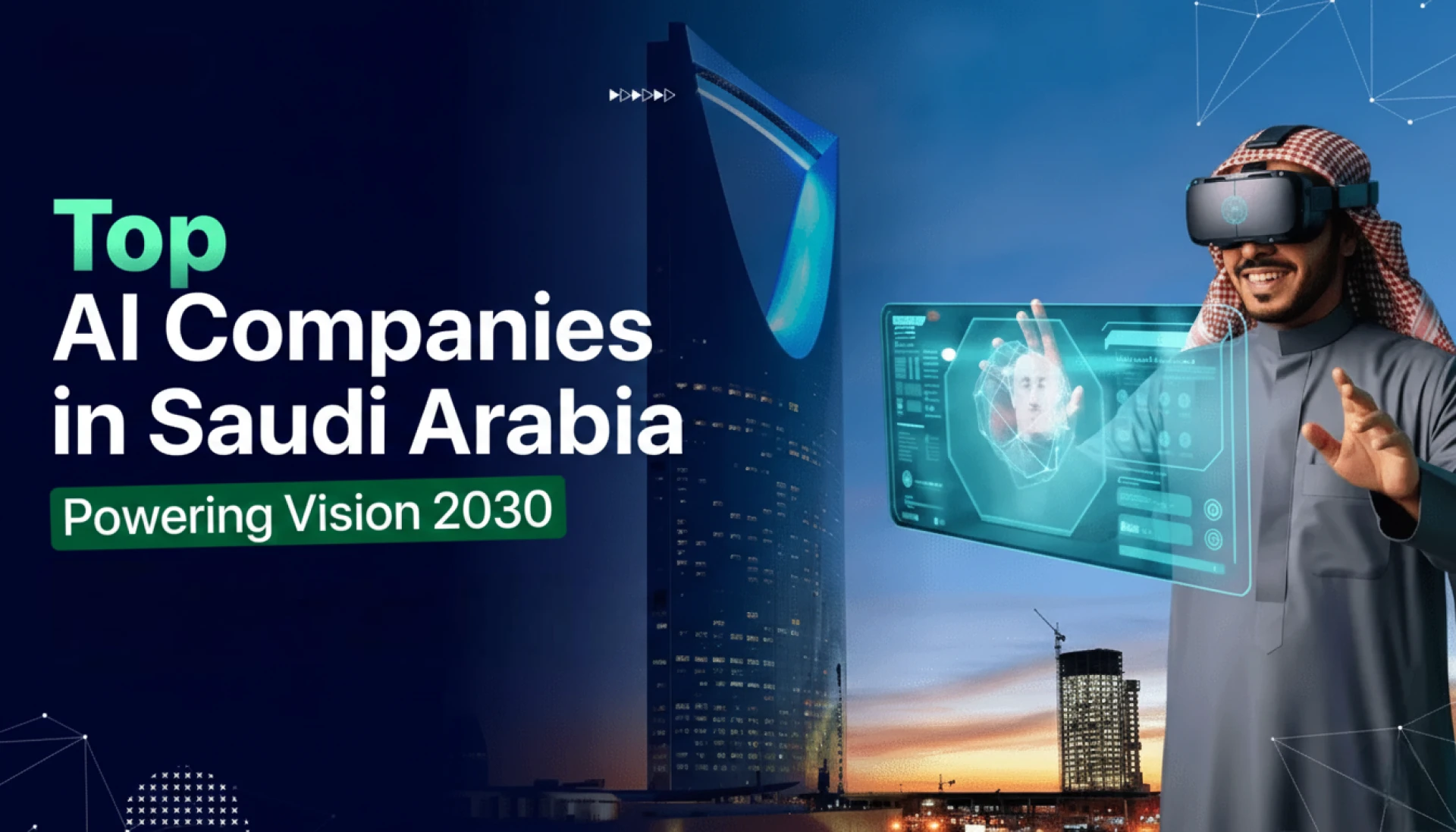
Saudi Arabia is rapidly transforming into a global artificial intelligence powerhouse, powered by the ambitions of Vision 2030, large-scale digital transformation programs, and the strategic leadership of the Saudi Data & AI Authority (SDAIA). By 2026, AI has moved from experimentation to enterprise-wide adoption across the Kingdom.
According to recent market assessments, the Saudi Arabian AI market crossed USD 1.3 billion in 2025 and is projected to grow at a CAGR of 16%–18% through 2032. The economic impact is even more compelling—AI is expected to contribute over USD 135–140 billion to Saudi Arabia’s GDP by 2030, representing nearly 12%–13% of the national economy.
For enterprise leaders, government stakeholders, and investors, this signals a clear opportunity: Saudi Arabia’s AI ecosystem is maturing fast, and early collaboration with leading AI companies can unlock long-term competitive advantage.
In this article — “Top 15 Leading AI Companies in Saudi Arabia Driving Innovation in 2026” — we spotlight the most influential organizations shaping AI adoption across energy, healthcare, finance, smart cities, logistics, defense, and public services. These companies are not only advancing technology but also enabling Saudi Arabia’s vision of becoming a global digital leader.
Read on to explore which companies are driving the biggest impact, what differentiates them, and how they are positioning Saudi Arabia as a premier hub for AI innovation in 2026.
Top 15 AI Companies in Saudi Arabia Driving Innovation in 2026
Discover the Top 15 AI companies in Saudi Arabia transforming industries through artificial intelligence, automation, and data-driven intelligence. These innovators are accelerating Vision 2030 by enabling smarter enterprises, intelligent infrastructure, and AI-powered decision-making in 2026.
1. Apptunix
Apptunix is a leading AI development company in Saudi Arabia, helping enterprises and startups implement scalable, future-ready AI solutions. The company builds intelligent AI-powered applications, automation platforms, and custom enterprise systems aligned with Saudi Vision 2030 initiatives.
Specialities:
- AI-powered enterprise applications
- AI mobile app development
- Predictive analytics & intelligent automation
- Generative AI solutions & chatbot development
Founded Year: 2013
Why It Stands Out: Apptunix is known for delivering custom, regulation-compliant AI solutions with deep expertise in enterprise scalability, Arabic AI support, and Vision 2030–focused digital transformation.
2. IBM Watson AI
IBM Watson AI is a globally recognized enterprise AI platform supporting automation, machine learning, and advanced analytics. In Saudi Arabia, IBM works closely with government entities and enterprises to modernize operations and enable data-driven decision-making.
Specialities:
- Cognitive AI & enterprise automation
- Predictive analytics & data intelligence
- AI-driven workflow optimization
Founded Year: 1911 (Watson launched in 2011)
Why It Stands Out: IBM Watson AI plays a key role in Saudi Arabia’s smart government, banking modernization, and large-scale enterprise AI initiatives.
3. NVIDIA AI
NVIDIA AI is a global leader in accelerated computing and GPU-based AI platforms. Saudi organizations leverage NVIDIA technologies for deep learning, generative AI, healthcare imaging, and autonomous system development.
Specialities:
- AI GPUs & high-performance computing
- Deep learning & autonomous systems
- Large language model (LLM) training
Founded Year: 1993
Why It Stands Out: NVIDIA powers Saudi Arabia’s AI research labs, supercomputing initiatives, and next-generation smart city infrastructure.
4. OpenAI
OpenAI is a pioneer in generative artificial intelligence, offering advanced language models used for automation, conversational AI, and intelligent content generation across industries in Saudi Arabia.
Specialities:
- Generative AI & large language models
- Natural language processing (NLP)
- AI assistants & automation systems
Founded Year: 2015
Why It Stands Out: OpenAI models are widely adopted by Saudi businesses for AI-driven automation, customer engagement, and digital transformation.
5. Adobe Firefly
Adobe Firefly is a generative AI platform that enables businesses to create images, designs, and marketing assets using natural language prompts, accelerating creative workflows.
Specialities:
- AI-powered image generation
- Creative workflow automation
- Branding and marketing acceleration
Founded Year: Adobe founded in 1982; Firefly launched in 2023
Why It Stands Out: Firefly helps Saudi marketing and e-commerce companies reduce design timelines while maintaining brand consistency.
6. Amazon Web Services (AWS) AI
AWS AI provides cloud-based tools that allow businesses in Saudi Arabia to build, deploy, and scale AI applications efficiently using machine learning and analytics services.
Specialities:
- AI cloud infrastructure
- Machine learning & MLOps
- Data analytics and automation tools
Founded Year: 2006
Why It Stands Out: AWS AI enables cost-effective and scalable AI adoption across fintech, logistics, healthcare, and retail sectors in Saudi Arabia.
7. ORA AI (Saudi Arabia)
ORA AI is a Saudi-based conversational AI company focused on improving customer interactions through intelligent chatbots and voice-enabled automation solutions.
Specialities:
- AI chatbots & voice assistants
- Arabic NLP & customer automation
- AI service desk platforms
Founded Year: 2018
Why It Stands Out: ORA AI specializes in Arabic-language AI and regional dialects, making it highly suitable for Saudi enterprises.
8. Oracle AI
Oracle AI integrates machine learning and automation into enterprise applications such as ERP, HR, finance, and supply chain management used across Saudi organizations.
Specialities:
- AI-powered ERP automation
- Predictive analytics & data modeling
- Enterprise cloud AI solutions
Founded Year: 1977
Why It Stands Out: Oracle AI is trusted by Saudi enterprises for digitizing operations and enabling data-driven business decisions.
9. Infosys Nia
Infosys Nia is an enterprise AI platform designed to automate processes, deliver predictive insights, and improve operational intelligence for large organizations.
Specialities:
- Intelligent process automation
- Predictive analytics & forecasting
- Enterprise AI integration
Founded Year: Infosys founded in 1981; Nia launched in 2017
Why It Stands Out: Infosys Nia helps Saudi enterprises accelerate digital transformation through AI-powered automation.
10. Huawei Cloud AI
Huawei Cloud AI offers AI cloud services and big data platforms that support smart city development and telecom modernization in Saudi Arabia.
Specialities:
- AI cloud computing platforms
- IoT and smart city AI
- AI infrastructure services
Founded Year: 1987
Why It Stands Out: Huawei Cloud AI supports Vision 2030 projects focused on urban intelligence, telecom automation, and public-sector innovation.
11. Google AI
Google AI provides advanced machine learning tools, generative AI models, and analytics platforms widely used by startups and enterprises in Saudi Arabia.
Specialities:
- Machine learning & AI research
- NLP & generative AI
- Predictive analytics
Founded Year: Google founded in 1998; Google AI formed in 2017
Why It Stands Out: Google AI enables fast experimentation, scalable deployment, and cloud-native AI innovation.
12. Meta AI
Meta AI focuses on generative AI, immersive technologies, and intelligent personalization across social platforms and metaverse environments.
Specialities:
- Generative AI & content creation
- AR/VR and metaverse technologies
- AI-driven personalization
Founded Year: Meta founded in 2004
Why It Stands Out: Meta AI supports Saudi Arabia’s metaverse, immersive learning, and digital experience initiatives.
13. Tempus AI
Tempus AI is a healthcare-focused AI company using machine learning to enhance diagnostics, treatment planning, and personalized medicine.
Specialities:
- AI-powered medical diagnostics
- Predictive healthcare analytics
- Precision medicine
Founded Year: 2015
Why It Stands Out: Tempus AI aligns with Saudi Arabia’s expanding smart healthcare and AI-enabled hospital ecosystem.
14. Microsoft Azure AI
Microsoft Azure AI provides cloud-based AI platforms that support machine learning, automation, and intelligent application development for enterprises.
Specialities:
- Cloud AI & ML platforms
- Enterprise automation
- AI application development
Founded Year: 2010
Why It Stands Out: Microsoft collaborates closely with Saudi government and enterprises to accelerate cloud modernization and AI adoption.
15. Baidu AI
Baidu AI focuses on deep learning, generative AI, and autonomous systems, supporting innovation in mobility and smart infrastructure.
Specialities:
- Generative AI & large language models
- Autonomous driving technology
- Computer vision & robotics
Founded Year: 2000
Why It Stands Out: Baidu AI contributes to Saudi Arabia’s interest in autonomous mobility and smart city transformation.
Top AI App Development Trends to Watch in 2026
Artificial Intelligence is entering a more mature and impact-driven phase in 2026, reshaping how applications are designed, how businesses operate, and how users engage with digital platforms. From predictive intelligence to autonomous automation and hyper-personalized experiences, AI is no longer an add-on—it has become the core foundation of modern app development. Organizations across healthcare, finance, logistics, retail, and education are rapidly embedding AI into their digital strategies to remain competitive and future-ready.
Below are the top AI app development trends shaping 2026:
1. Generative AI–Integrated Applications
In 2026, applications are increasingly powered by Generative AI (GenAI) models such as GPT-based systems, Claude, and advanced image and video generation tools. These technologies enable apps to:
- Create real-time content such as reports, emails, proposals, and product descriptions
- Generate images, videos, and creative design concepts
- Enhance customer support through intelligent, context-aware conversations
Generative AI is transforming how businesses automate content creation, making applications more intelligent and productive.
2. Autonomous AI Automation
Businesses are rapidly adopting self-operating and decision-driven applications, where AI systems can function with minimal human intervention. These applications can:
- Automate workflows end-to-end
- Predict user behavior and business outcomes proactively
- Reduce manual operations while improving efficiency and accuracy
This trend is especially prominent in logistics, e-commerce, finance, and customer support platforms.
3. AI-Powered Personalization and Predictive User Experience
Applications in 2026 are becoming increasingly intuitive by analyzing real-time behavioral and contextual data. AI now enables apps to:
- Anticipate what users need next
- Deliver accurate product or service recommendations
- Display personalized dashboards, alerts, and content
Netflix-style personalization has evolved into a baseline expectation across digital platforms.
4. Advanced Voice and Conversational Interfaces
Voice-driven AI is now a standard component of mobile and web applications. Modern AI-powered apps can:
- Accept natural voice commands
- Provide voice-based search and navigation
- Function as intelligent digital assistants
This significantly improves accessibility and enables more natural human–app interactions.
5. AI + IoT for Smart Ecosystems
The integration of AI with the Internet of Things (IoT) allows applications to monitor, predict, and optimize physical environments. Common use cases include:
- Smart homes adjusting lighting, security, and temperature automatically
- Fleet management systems predicting maintenance needs
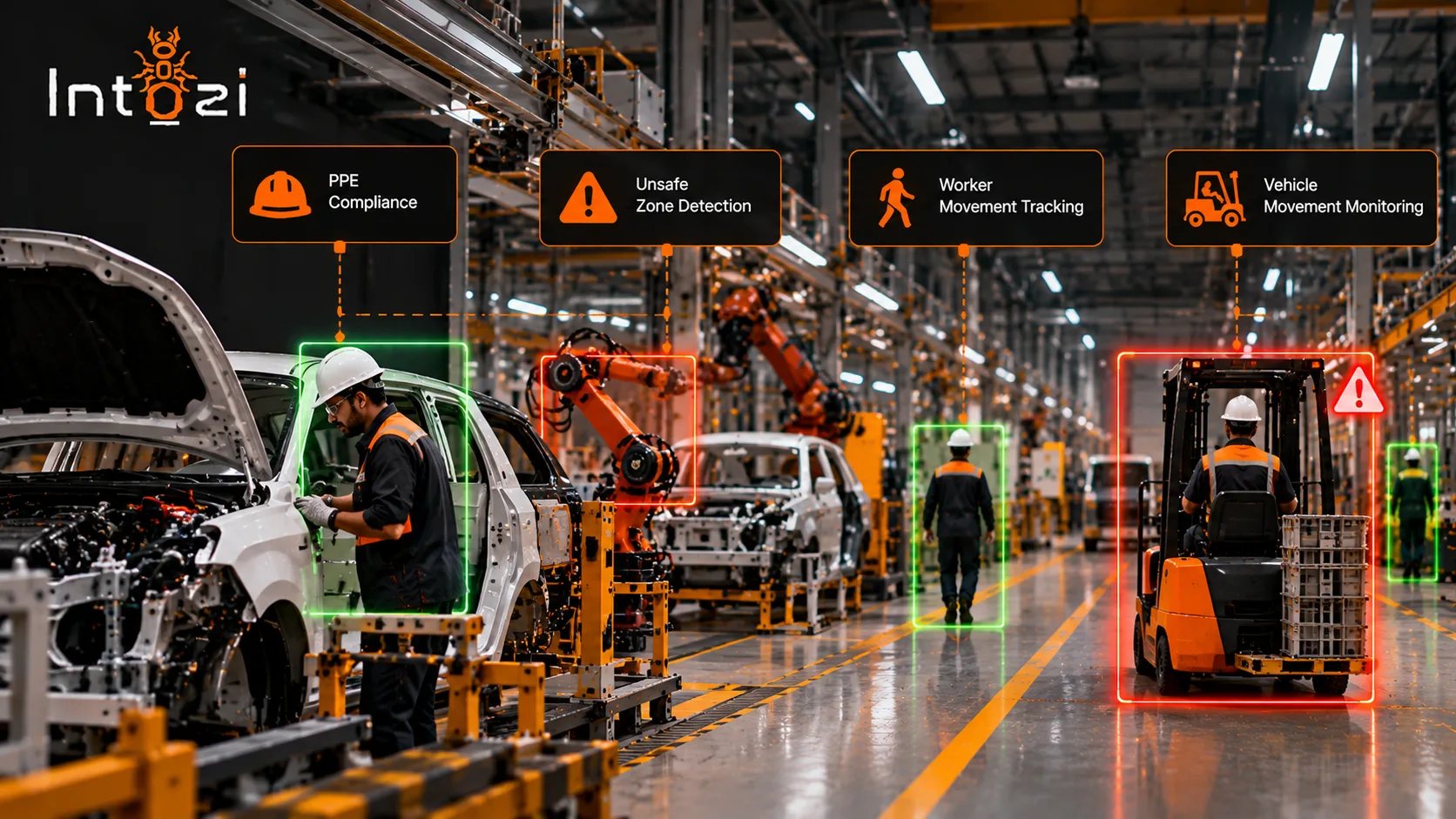
- Smart factories monitoring machinery performance in real time
This trend plays a critical role in automotive, logistics, manufacturing, and real estate sectors.
6. AI Security and Real-Time Threat Detection
With cyber threats becoming more sophisticated, AI-driven security has become essential in 2026. AI-powered systems can:
- Detect anomalies and fraud in real time
- Prevent data breaches before they escalate
- Enhance authentication through biometrics such as facial, voice, and fingerprint recognition
Organizations are prioritizing AI-first cybersecurity strategies to protect sensitive data and digital transactions.
7. On-Device AI (AI Without Internet Dependency)
Instead of relying solely on cloud infrastructure, AI models are increasingly running directly on devices such as smartphones and edge hardware.
Key benefits include:
- Faster response times
- Offline functionality
- Improved data privacy and compliance
This approach is especially valuable for industries with strict data protection and latency requirements.
Key Reasons Why Saudi Arabia Is a Hotspot for AI Development
Saudi Arabia is rapidly emerging as one of the world’s most active AI markets. With strong government backing, multi-billion-dollar investments, and ambitious initiatives like NEOM, the Kingdom is positioning itself as a global AI innovation hub.
- Massive Government Investment: Vision 2030 and the National Strategy for Data & AI aim to place Saudi Arabia among the world’s top AI-driven economies.
- Mega Smart City Projects (NEOM & The Line): These projects rely heavily on AI, automation, robotics, and intelligent infrastructure.
- Growing Talent & Startup Ecosystem: Saudi Arabia is attracting global AI talent while supporting startups through funding and innovation programs.
- High Demand for Digital Transformation: Healthcare, banking, logistics, retail, and government sectors are rapidly adopting AI.
- Strong Data Security & Compliance: Regulations like PDPL provide a trusted framework for AI development and deployment.
Saudi Arabia is not just adopting AI—it is actively shaping the future of AI-driven innovation.
AI Compliance & Regulatory Framework in Saudi Arabia (2026)
As artificial intelligence adoption accelerates across Saudi Arabia, regulatory compliance and ethical AI development have become top priorities. The Kingdom has introduced clear frameworks to ensure AI systems are secure, transparent, and aligned with national values under Vision 2030.
In 2026, businesses deploying AI solutions in Saudi Arabia must ensure compliance with the following key regulations and standards:
1. Saudi Personal Data Protection Law (PDPL)
PDPL governs how personal data is collected, stored, processed, and transferred. AI applications must ensure data minimization, user consent, secure storage, and controlled cross-border data sharing.
2. National Strategy for Data & Artificial Intelligence (NSDAI)
Led by SDAIA, this strategy defines how AI should be developed responsibly, promoting innovation while maintaining national security, data sovereignty, and ethical AI practices.
3. Data Localization & Sovereignty Requirements
Certain categories of sensitive and government-related data must remain within Saudi Arabia. AI systems are expected to support local hosting, secure cloud infrastructure, and controlled data access.
4. AI Ethics & Transparency Guidelines
AI models must be explainable, auditable, and free from bias. Organizations are encouraged to implement responsible AI principles, including fairness, accountability, and transparency in automated decision-making.
5. Cybersecurity & NCA Compliance
AI platforms must comply with National Cybersecurity Authority (NCA) requirements, ensuring strong protection against cyber threats, breaches, and unauthorized access.
For enterprises, this means choosing an AI development partner that understands Saudi compliance is no longer optional—it is essential. AI solutions must be designed with privacy-by-design, security-by-default, and compliance-first architectures to ensure long-term scalability and regulatory safety.
Key Benefits of Hiring a Custom AI App Development Company in Saudi Arabia
Businesses across Saudi Arabia are leveraging AI to improve efficiency, enhance customer experience, and unlock new revenue streams. Partnering with a custom AI app development company provides a strategic advantage by delivering solutions tailored specifically to your business needs.
1. Tailored AI Solutions for Business Needs
Custom AI development ensures applications are designed around your workflows—whether predictive analytics, automation, or intelligent mobile solutions—delivering higher performance and ROI.
2. Local Market Expertise & Saudi Compliance
Saudi-based AI partners understand local regulations, data protection laws, and Vision 2030 priorities, ensuring compliance and long-term scalability.
3. Faster Deployment & On-Ground Collaboration
Operating within the same region enables smoother communication, faster delivery cycles, and real-time technical support.
4. Enhanced Data Privacy & Security
Sensitive business data remains protected through local hosting, strong cybersecurity frameworks, and adherence to Saudi data protection standards.
5. Seamless Integration with Existing Systems
Custom AI solutions integrate smoothly with ERP, CRM, HRMS, and legacy systems, eliminating data silos and improving decision-making.
Choosing the Right AI App Development Company – What to Consider
Before selecting an AI development partner in Saudi Arabia, evaluate:
- Technical Expertise: Proven experience in AI/ML, automation, mobile apps, and conversational AI
- Proven Case Studies: Demonstrated success in delivering measurable business outcomes
- Transparent Pricing: Clear timelines, costs, and deliverables with no hidden charges
- Scalability: Ability to support business growth and future enhancements
Conclusion
Saudi Arabia is rapidly establishing itself as a global center for artificial intelligence, driven by Vision 2030 and large-scale digital transformation investments. The Top AI Companies in Saudi Arabia, including global leaders like IBM Watson AI, NVIDIA, OpenAI, AWS, Oracle, Google AI, Microsoft Azure, and regional innovators like Apptunix, are transforming industries such as healthcare, logistics, fintech, retail, and smart cities.
These organizations are not only advancing technologies like machine learning, generative AI, NLP, and automation, but also enabling businesses to improve efficiency, reduce operational costs, and make smarter, data-driven decisions.
Whether you are a startup building an AI-powered product or an enterprise modernizing existing systems, partnering with the right AI development company in Saudi Arabia can accelerate innovation and deliver long-term competitive advantage. For more information, contact us today.
FAQs
1. What makes Saudi Arabia a growing hub for AI development?
Saudi Arabia is investing heavily under Vision 2030 to drive AI adoption across industries, making it one of the fastest-growing AI markets globally.
2. Which industries benefit the most from AI in Saudi Arabia?
Healthcare, logistics, fintech, real estate, manufacturing, education, and government services.
3. Why should businesses work with companies listed in the Top AI Companies?
These companies offer proven expertise in AI, automation, analytics, and enterprise-scale deployment.
4. What services does Apptunix provide in Saudi Arabia?
Apptunix offers custom AI app development, AI chatbots, predictive analytics, generative AI solutions, and intelligent automation tailored to Saudi businesses.
5. How do IBM Watson AI and Microsoft Azure AI support AI adoption?
They provide enterprise-grade AI platforms, cloud infrastructure, and scalable tools for rapid AI integration.
6. Are AI solutions compliant with Saudi data security regulations?
Yes, leading providers follow PDPL and national cybersecurity frameworks to ensure data protection.
7. How can AI improve operational efficiency?
AI automates repetitive tasks, enhances decision-making, reduces costs, and improves customer engagement.
8. Do these companies offer scalable AI solutions?
Yes, solutions are designed to scale from startups to large enterprises.
9. Can businesses get fully custom AI applications?
Absolutely. Companies like Apptunix specialize in building custom AI solutions aligned with specific business goals.
10. How do I choose the right AI development company in Saudi Arabia?
Evaluate technical expertise, portfolio, transparency, scalability, and post-launch support.