
Introduction
The media and entertainment landscape is evolving at an extraordinary pace, driven by digital innovation, immersive content experiences, and intelligent platforms. At the center of this transformation lies the future of television technology, a concept that reflects how broadcasting, streaming, content creation, and user engagement are merging into one seamless ecosystem. Television is no longer confined to traditional cable networks. It now exists across smart devices, connected homes, cloud platforms, and mobile environments.
As digital engineering reshapes the media value chain, companies are reimagining how viewers discover, consume, and interact with content. From smart TVs and OTT platforms to AI-powered personalization and cloud-based workflows, the future of television technology is defined by flexibility, scalability, and user-centric design.
The Future of Television Technology and Digital Transformation
The transformation of television is deeply connected to advancements in software engineering, cloud computing, and data analytics. Broadcasters and streaming providers are investing in intelligent systems that allow real-time content delivery, predictive recommendations, and seamless multi-device experiences.
At its core, the future of television technology depends on digital platforms capable of handling vast content libraries while maintaining performance and reliability. Cloud-native architectures allow media companies to scale instantly during peak demand, reduce infrastructure costs, and deploy updates faster than ever before.
Modern television ecosystems integrate content management systems, analytics engines, and monetization platforms into a unified environment. This integration ensures that content flows smoothly from production studios to viewers worldwide without latency or interruptions. Digital transformation is not simply about upgrading hardware; it is about building intelligent platforms that respond dynamically to audience behavior.
Smart Devices and Connected Ecosystems
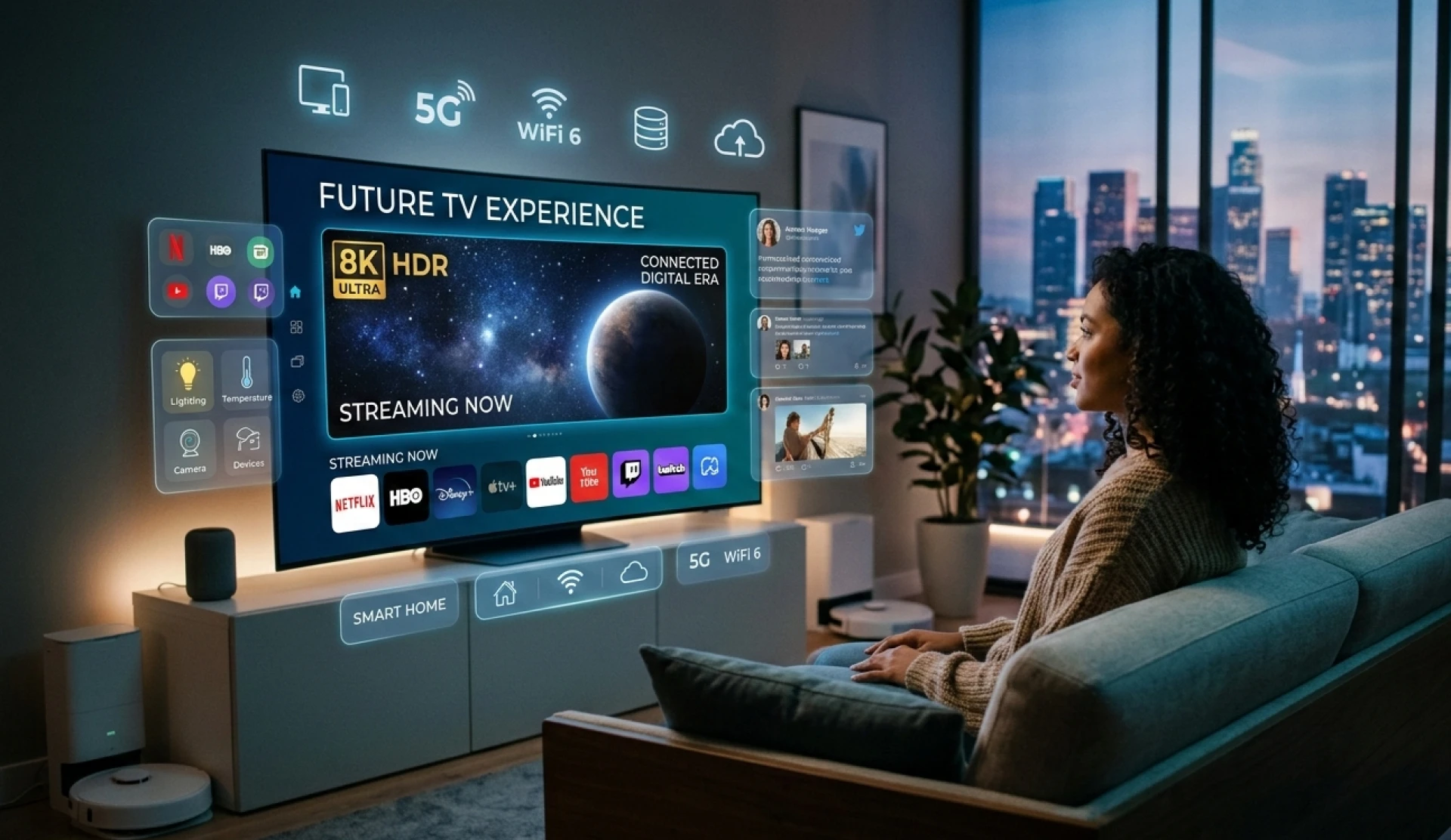
Smart TVs, streaming sticks, gaming consoles, and mobile applications now serve as gateways to digital entertainment. Consumers expect uninterrupted access to content across multiple screens, and this expectation is shaping the future of television technology.
Connected ecosystems enable synchronized viewing experiences, where users can begin watching a program on a television and continue on a smartphone without losing progress. Behind this convenience lies sophisticated backend engineering that supports authentication, streaming optimization, and device compatibility.
The integration of Internet of Things technologies into entertainment systems further enhances the viewing experience. Voice assistants, gesture controls, and smart home connectivity are no longer experimental concepts. They are foundational components of the future of television technology, ensuring that content interaction becomes intuitive and personalized.
Artificial Intelligence Driving Personalization
Artificial intelligence plays a critical role in redefining how viewers engage with television content. AI-powered recommendation engines analyze viewing patterns, search behavior, and content preferences to deliver tailored suggestions.
Personalization represents one of the strongest pillars supporting the future of television technology. Instead of generic programming schedules, viewers now experience curated dashboards that evolve according to their interests. Machine learning algorithms refine these recommendations continuously, improving accuracy over time.
AI also enhances operational efficiency within media organizations. Automated content tagging, subtitle generation, quality control, and ad placement are powered by intelligent systems. These advancements reduce manual effort while improving user satisfaction, reinforcing how the future of television technology blends creativity with data science.
Cloud Streaming and Scalability
Cloud computing has transformed media delivery models. Traditional broadcast infrastructure required heavy capital investment and limited flexibility. Today, cloud-based streaming platforms provide on-demand scalability and global reach.
The scalability offered by cloud architecture is fundamental to the future of television technology. Streaming platforms must handle millions of concurrent users during major live events without service disruption. Cloud environments make this possible by dynamically allocating resources based on traffic demand.
Additionally, cloud-native development accelerates innovation cycles. Media companies can test new features, deploy updates, and integrate analytics tools without downtime. This agile approach supports rapid experimentation and continuous improvement, ensuring that the future of television technology remains adaptable to market shifts.
Immersive Experiences and Advanced Display Technologies
Television technology is also advancing at the hardware level. Ultra-high-definition displays, OLED panels, and emerging MicroLED screens are redefining visual quality. High dynamic range enhances color accuracy, while spatial audio systems create immersive soundscapes.
Beyond visual enhancements, immersive technologies such as augmented reality and virtual reality are gradually influencing content experiences. Interactive storytelling, live sports enhancements, and virtual studio production environments demonstrate how the future of television technology is moving beyond passive consumption.
These innovations rely on robust software frameworks capable of processing high-resolution graphics in real time. As bandwidth capabilities expand through 5G and fiber networks, immersive content will become increasingly mainstream, further shaping the future of television technology.
Data Analytics and Audience Insights
Data has become one of the most valuable assets in modern television ecosystems. Analytics platforms provide real-time insights into viewer engagement, drop-off rates, ad performance, and content popularity.
The strategic use of data analytics is central to the future of television technology. Media companies can refine programming strategies based on measurable insights rather than assumptions. This data-driven approach improves content relevance and enhances monetization opportunities.
Predictive analytics also supports targeted advertising models. Advertisers can deliver personalized campaigns based on demographic and behavioral data, maximizing return on investment. Such precision marketing would not be possible without the advanced infrastructure that powers the future of television technology.
Security, Compliance, and Content Protection
As digital distribution expands, security concerns become increasingly significant. Protecting intellectual property and user data is essential in the evolving television landscape.
Secure streaming protocols, digital rights management systems, and encryption technologies form the backbone of the future of television technology. Media organizations must ensure that content is protected from piracy while maintaining seamless user access.
Compliance with global data regulations further influences platform design. Robust governance frameworks and secure development practices ensure that innovation does not compromise privacy or trust. In this way, the future of television technology balances growth with responsibility.
The Road Ahead for Media Innovation
The trajectory of television innovation suggests a future defined by convergence. Broadcast, streaming, gaming, and interactive experiences will increasingly intersect within unified platforms. Engineering excellence, cloud integration, AI capabilities, and user-centric design will determine industry leaders.
Organizations investing in digital transformation and scalable architectures will shape the future of television technology. As consumer expectations continue to rise, media companies must prioritize agility, personalization, and immersive engagement.
Ultimately, the future of television technology is not just about better screens or faster streaming. It represents a comprehensive reimagining of how stories are created, delivered, and experienced in a connected digital world. By embracing innovation and leveraging advanced engineering solutions, the television industry is poised to deliver richer, smarter, and more interactive experiences than ever before.