
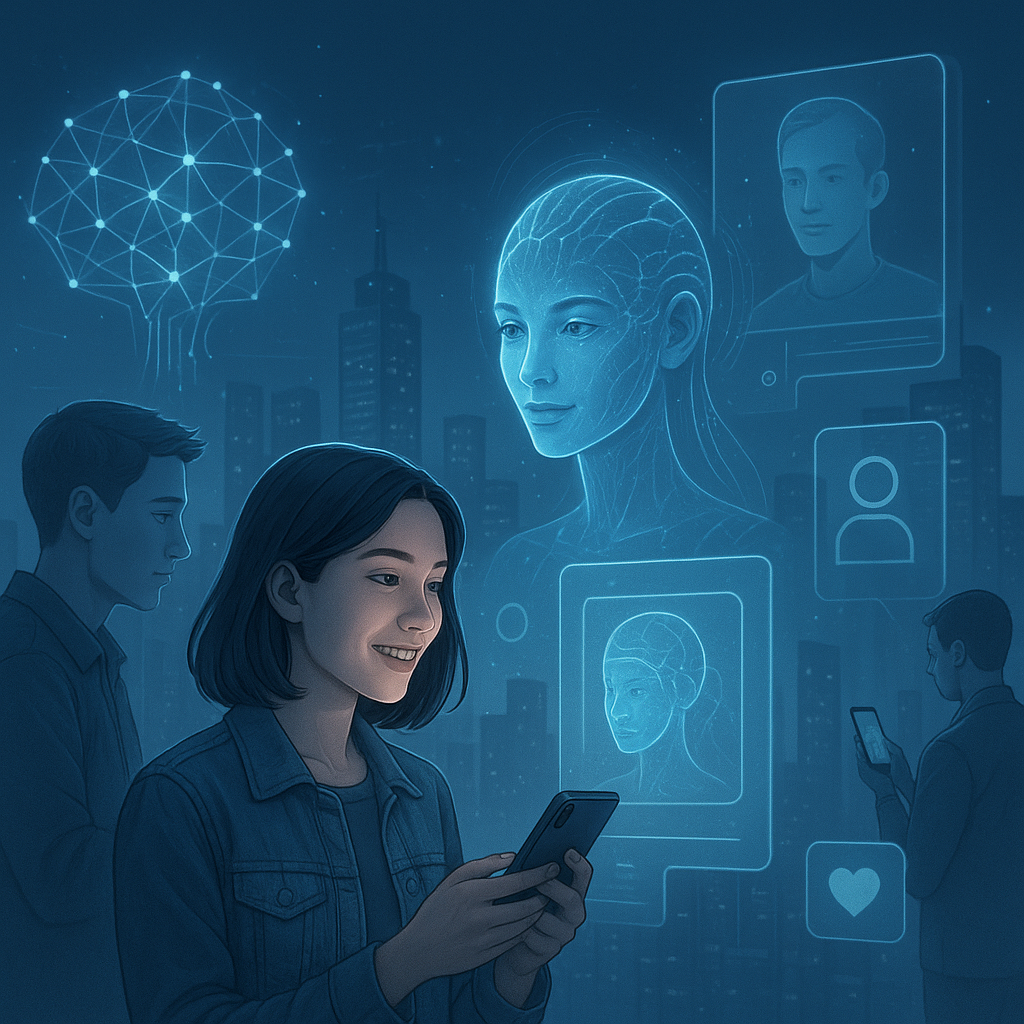
Setting the Scene: Social Media’s Transformation in 2026
In mid-2026, social media platforms are no longer just spaces for sharing moments or brand promotions; they have evolved into dynamic ecosystems powered by AI, immersive experiences, and a growing demand for authenticity. The average global daily social media usage has reached an unprecedented 3.1 hours per user, a 15% increase compared to 2024, according to recent industry data. Yet, beneath this growth lies a fundamental shift in user expectations and platform priorities. From AI-generated content that personalizes feeds with surgical precision to new formats emphasizing genuine human connection, social media’s landscape is being reshaped dramatically.
Picture a user scrolling through a feed where AI assistants curate conversations, moderate content in real-time, and even craft personalized interactive video narratives. This new reality is far from speculative; it is unfolding now, driven by advances in generative AI, augmented reality (AR), and blockchain authentication technologies. These forces challenge marketers, creators, and platforms alike to rethink engagement strategies fundamentally.
"2026 marks a pivotal year where AI-driven personalization meets a global craving for authentic digital experiences, redefining how communities form online," says Dr. Elena Morales, a digital culture analyst at the Social Media Research Institute.
Tracing the Path: How We Arrived at Today’s Social Media
To understand the trends dominating 2026, it’s essential to revisit the last decade’s key developments. The 2020s saw social platforms pivot from broadcast-style content to algorithmically tailored micro-communities. Early AI tools enhanced targeted advertising, while short-form video exploded with TikTok’s rise, influencing Facebook, Instagram, and Snapchat to innovate rapidly. However, by 2023, users expressed growing fatigue with hyper-curation and invasive data practices, sparking a wave of regulatory scrutiny and user demand for transparency.
Simultaneously, the adoption of AR lenses and virtual reality social hubs gained traction, though initial implementations felt fragmented. The breakthrough came in 2025 when multiple platforms integrated advanced generative AI models that could create immersive, context-aware content on the fly. This technology enabled not just passive consumption but active, collaborative content creation.
The convergence of these technologies and user sentiment led to a new social media ethos: favoring authenticity over artificial perfection, privacy over commodification, and community-driven experiences over mass broadcasting. This paradigm shift is thoroughly examined in TheOmniBuzz’s Why Social Media’s Next Chapter Is Redefining Digital Engagement, which highlights how these trends coalesce to shape platform strategies and user behavior.
Core Dynamics: AI, Authenticity, and New Content Formats
At the heart of 2026’s social media evolution is a triad of forces: artificial intelligence, authenticity, and innovative content modalities. AI capabilities have matured beyond simple recommendation engines to become collaborative creators and moderators. Platforms now deploy AI-powered "social architects" that dynamically assemble personalized social graphs, connecting users based on nuanced interests, values, and interaction styles rather than superficial metrics.
Authenticity, meanwhile, has transitioned from a marketing buzzword to a strategic imperative. Users increasingly reject overly curated images and scripted influencer content in favor of raw, unfiltered moments and genuine dialogue. This shift is supported by blockchain-based verification tools that certify content provenance, helping combat misinformation and fake profiles.
New content formats have emerged to support these values. Immersive AR stories that change based on audience input, AI-generated podcasts featuring user voices, and decentralized social tokens incentivizing meaningful engagement are now mainstream. Platforms like Lumina and Nexus Social have pioneered these formats, with Lumina’s AR story feature boasting a 40% higher engagement rate than traditional video posts, according to their 2026 user analytics report.
- AI-Driven Personalization: From feed curation to interactive narratives, AI tailors experiences uniquely per user.
- Blockchain Authentication: Ensures content and creator legitimacy, fostering trust.
- Immersive, Interactive Content: AR and AI combine to create dynamic storytelling formats.
- Community Token Economies: Reward authentic participation with digital assets.
"The fusion of AI and authenticity isn’t a contradiction but a synergy that enables social media to be more human," explains Marcus Nguyen, CTO of Lumina, a leading AR social platform.
2026 Developments: Platforms and Marketers Adapting Rapidly
The current year has seen major platforms recalibrate their offerings to align with evolving user demands and technological possibilities. Meta’s Horizon Worlds 3.0 update introduced AI moderators that facilitate safer and more engaging virtual spaces, while Twitter rebranded as "Twist" with a focus on ephemeral, AI-enhanced conversations. TikTok’s parent company ByteDance launched an AI music generator integrated into its platform, allowing creators to produce original soundtracks in real time.
Marketers have had to pivot from traditional influencer campaigns to co-creative partnerships with micro-communities. Brand authenticity is under intense scrutiny, with 72% of consumers indicating in a 2026 Nielsen survey that they prefer brands demonstrating social responsibility and transparent practices on social media. This has led to a rise in "authenticity audits" where brands are evaluated on genuine engagement metrics rather than vanity numbers.
Moreover, privacy regulations enacted in 2024 and 2025 across the EU, North America, and Asia have forced platforms to innovate in user data handling. Differential privacy techniques and on-device AI processing are now commonplace, enabling personalized experiences without compromising user data security.
- Meta Horizon Worlds 3.0 AI-powered moderation
- Twitter’s pivot to ephemeral, AI-curated conversations
- ByteDance’s real-time AI music creation for TikTok
- 72% consumer preference for authentic brand engagement (Nielsen 2026)
- Widespread adoption of privacy-first AI technologies
For marketers keen on adapting, the strategies outlined in Rethinking Social Media Marketing: Strategies for Authentic Engagement in 2026 provide actionable insights into navigating this new terrain.
Expert Insights: Industry Leaders on Social Media’s Future
Thought leaders across the digital marketing and technology sectors converge on the idea that 2026 represents a watershed moment. Dr. Susan Park, Chief Innovation Officer at SocialSphere Analytics, emphasizes that "the measurable shift is toward deeper, not broader engagement. Brands and platforms must prioritize meaningful connections over superficial reach." This reflects a broader trend highlighted in recent industry conferences where AI ethics and authenticity were key themes.
Similarly, marketing veteran Luis Hernandez notes that "the influencer economy is morphing into a creator-cohort economy. Smaller, verified groups producing authentic content will drive more value than traditional celebrity endorsements." This sentiment aligns with the rise of decentralized social tokens and community-driven content economies observed this year.
"In 2026, social media is less about broadcasting and more about building real, trusted communities," states Hernandez.
These perspectives underscore a shift in power—from centralized algorithms and mega-influencers toward empowered, engaged micro-communities supported by transparent AI systems.
Looking Ahead: What Marketers and Users Should Watch For
As we move beyond 2026, several trajectories will shape social media’s evolution. First, the integration of AI with biometric and environmental sensors promises hyper-personalized experiences that adapt to users’ emotional states and surroundings. This could revolutionize AR narratives and social gaming.
Second, regulatory frameworks will continue evolving, with increased emphasis on AI transparency and user data sovereignty. Platforms that lead in ethical AI deployment and user empowerment will likely dominate.
Third, the creator economy will deepen its reliance on blockchain and tokenization, enabling new monetization models that reward authentic engagement rather than simple virality.
- Hyper-personalized AI experiences integrating biometric data
- Stronger AI ethics and data sovereignty regulations
- Expansion of blockchain-enabled creator economies
- Growth of immersive AR and mixed reality social hubs
Users and marketers must prioritize adaptability, transparency, and authenticity to thrive. TheOmniBuzz’s Unlocking Social Media’s New Frontiers: How to Start Trending in 2026 offers a forward-looking playbook for engaging successfully amid these changes.
Ultimately, social media in 2026 is a complex, rapidly shifting environment where technology and human values intersect more deeply than ever before. Embracing this synergy will define success for platforms, brands, and users alike.