Market Overview
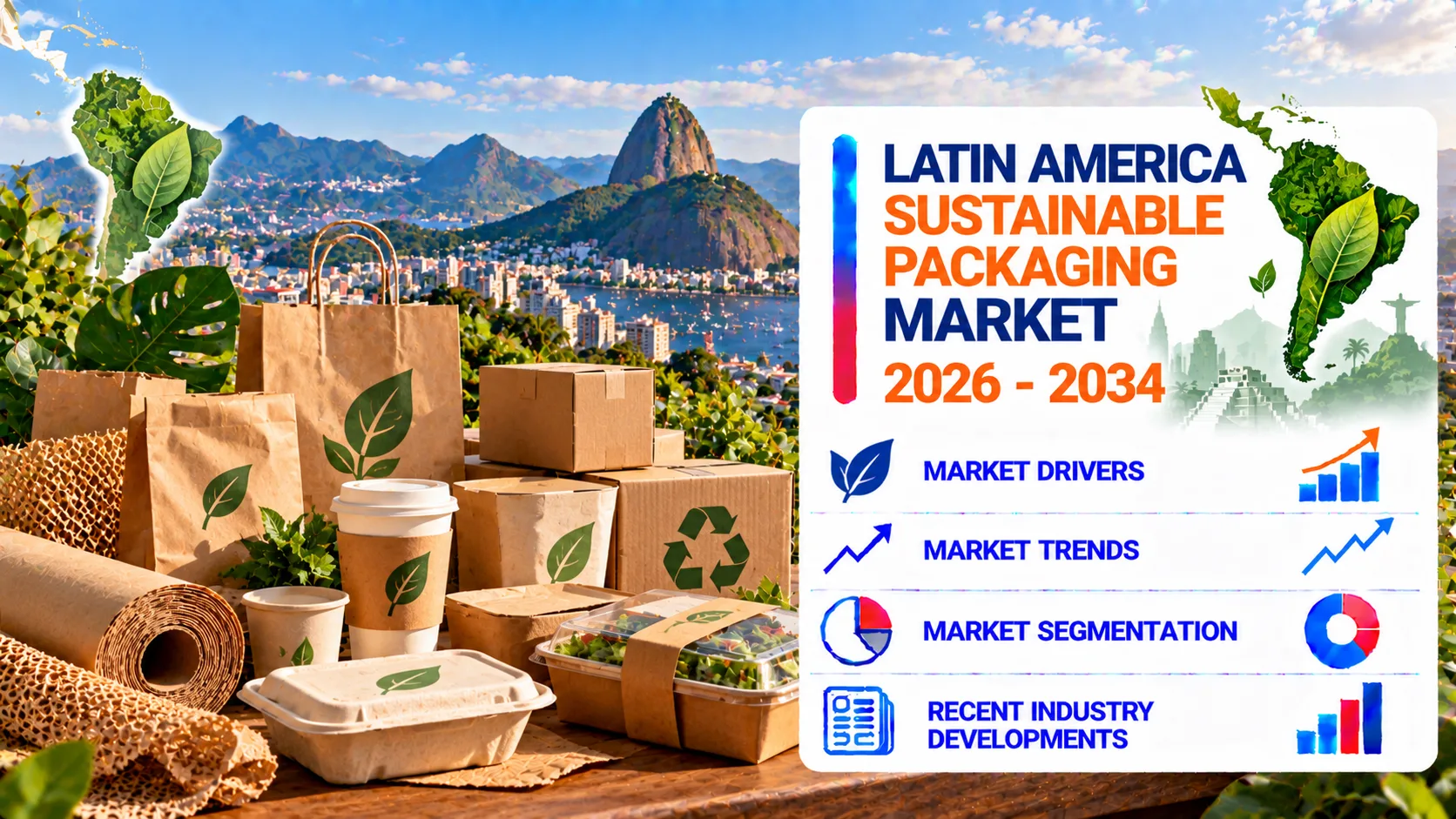
The Latin America sustainable packaging market size increased from USD 17.5 Billion in 2025 to USD 19.3 Billion in 2026 and is projected to reach USD 35.0 Billion by 2034, growing at a compound annual growth rate (CAGR) of 7.76% from 2026 to 2034. The market is driven by growing consumer awareness about environmental sustainability, rising government regulations on plastic waste and packaging materials, increasing demand for recyclable and biodegradable packaging solutions, and expanding retail and e-commerce sectors.
Request a Sample Report for In-Depth Market Insights: https://www.imarcgroup.com/latin-america-sustainable-packaging-market/requestsample
Latin America Sustainable Packaging Market Summary
- The Latin America sustainable packaging market encompasses a range of products, including plastics, paper and paperboard, glass, and metal materials, available in rigid and flexible types across primary, secondary, and tertiary packaging formats, processed through recyclable, reusable, and biodegradable methods.
- These products are valued for their role in reducing environmental impact, supporting circular economy principles, meeting regulatory compliance requirements, and appealing to environmentally conscious consumers across various industries.
- The ecosystem includes packaging manufacturers, material suppliers, brand owners, retailers, recycling companies, regulatory bodies, and end consumers across the region.
- Major segments identified in the market include material (plastics, paper and paperboard, glass, metal), type (rigid, flexible), packaging format (primary packaging, secondary packaging, tertiary packaging), process (recyclable, reusable, biodegradable), and country (Brazil, Mexico, Argentina, Colombia, Chile, Peru, Others).
- The market is benefiting from growing consumer demand for environment-friendly products, stringent government regulations on plastic waste, expansion of retail and e-commerce sectors, and corporate sustainability commitments.
- In August 2024, Coca-Cola announced plans to invest USD 35 Million in a new recycling factory in Chile called 'Re-Ciclar,' the most advanced Coca-Cola facility in Latin America, which will annually recycle 350 million plastic bottles and turn them into 100% recycled PET resin.
Porter's Five Forces Analysis
- Competitive Rivalry: High, with numerous established packaging manufacturers, international players, and emerging sustainable packaging specialists competing on price, innovation, and sustainability credentials. Business implication: Companies must differentiate through sustainable material innovation, cost efficiency, and brand partnerships.
- Supplier Power (Raw Material Suppliers): Moderate. Suppliers of recycled materials, bioplastics, and sustainable raw materials have some leverage, but the presence of multiple suppliers and the ability of large manufacturers to secure long-term contracts moderates this power. Business implication: Manufacturers should maintain diverse supplier relationships and invest in recycling infrastructure.
- Buyer Power (Brand Owners and Retailers): High. Buyers have extensive choice across packaging providers, materials, and formats, with growing awareness of sustainability, cost, and performance. Business implication: Providers must focus on quality, sustainability credentials, and cost competitiveness to build loyalty.
- Threat of Substitutes: Moderate. Traditional packaging materials, reusable containers, and packaging-free alternatives compete, but the functional benefits and regulatory compliance of sustainable packaging support its position. Business implication: The industry should emphasize performance, cost-effectiveness, and environmental benefits.
- Threat of New Entrants: Moderate. Higher barriers for established players (scale, distribution, certification), but lower barriers for niche and innovative sustainable packaging entrants. Business implication: Established players should build defensible positions through innovation, certifications, and strategic partnerships.
Market Growth Drivers
Growing Consumer Demand for Environment-Friendly Products
The increasing demand for environmentally friendly products among consumers propels the Latin America sustainable packaging market growth. Awareness about environmental issues such as plastic pollution and waste accumulation is growing. According to an industry report, Brazil can avoid 18 million tons of CO2 emissions and gain BRL 6 Billion in market value by decreasing disposable plastic. Due to this, consumers are becoming more conscious of the products they buy and their resultant impact on the planet. This shift in consumer behavior has heightened the demand for sustainable packaging solutions. These include recyclable, biodegradable, and compostable materials. Latin American consumers, particularly in urban areas, are opting for products packaged in eco-friendly materials more often. This is prompting businesses in industries such as food and beverages, cosmetics, and retail to adopt sustainable packaging practices. Brands that incorporate sustainable packaging are perceived more positively by environmentally conscious consumers. This further helps them in building stronger relationships and brand loyalty. As consumers prioritize sustainability in their purchasing decisions, this trend is driving the adoption of sustainable packaging in Latin America.
Stringent Government Regulations on Plastic Waste
Government regulations aimed at reducing plastic waste are vital in shaping the Latin America sustainable packaging market outlook. According to industry reports, about 44% of the 7 million tons of plastic products produced in Brazil each year are single-use, throwaway plastics, such as straws, cutlery, and packaging, among other things that are frequently used just once. Several countries in the region have imposed strict policies to reduce plastic pollution and increase the use of sustainable materials. For instance, Brazil, Chile, Colombia, and Mexico have passed bans or limitations on single-use plastics and plastic bags, prompting manufacturers and retailers to seek alternative and eco-friendly packaging solutions. These regulations make sure that plastic waste is curbed and recycling is encouraged while biodegradable material usage is increased. The government is also conducting public campaigns and raising awareness about waste reduction and recycling. This is encouraging more businesses to switch to sustainable packaging. The growing regulatory pressure in the region is propelling industries to find more sustainable options and embrace eco-friendly packaging practices to comply with legal requirements, facilitating overall industry expansion.
Expansion of Retail and E-Commerce Sectors
The expansion of retail and e-commerce sectors across Latin America is significantly driving demand for sustainable packaging solutions. As online shopping continues to grow, the need for protective, efficient, and environmentally responsible packaging has increased. E-commerce platforms and retailers are increasingly adopting sustainable packaging to meet consumer expectations and reduce their environmental footprint. The growth of modern retail channels including supermarkets and hypermarkets is also driving demand for sustainable packaging solutions that align with corporate sustainability commitments. Brands are using sustainable packaging as a differentiator to attract environmentally conscious consumers and build brand loyalty.
Corporate Sustainability Commitments and Brand Differentiation
Corporate sustainability commitments are playing an increasingly important role in driving the adoption of sustainable packaging across Latin America. Multinational corporations and regional brands are setting ambitious sustainability targets, including reducing plastic usage, increasing recycled content, and achieving carbon neutrality. These commitments are driving investment in sustainable packaging solutions and encouraging innovation in materials and processes. Brands that incorporate sustainable packaging are perceived more positively by environmentally conscious consumers, helping them build stronger relationships and brand loyalty. As consumers prioritize sustainability in their purchasing decisions, this trend is driving the adoption of sustainable packaging in Latin America.
Latin America Sustainable Packaging Market Segmentation
Material Insights:
- Plastics
- Paper and Paperboard
- Glass
- Metal
Type Insights:
- Rigid
- Flexible
Packaging Format Insights:
- Primary Packaging
- Secondary Packaging
- Tertiary Packaging
Process Insights:
- Recyclable
- Reusable
- Biodegradable
Country Insights:
- Brazil
- Mexico
- Argentina
- Colombia
- Chile
- Peru
- Others
Competitive Landscape
The Latin America sustainable packaging market features a competitive landscape encompassing global packaging companies, regional manufacturers, and emerging sustainable packaging specialists. Market participants differentiate through investment in sustainable material innovation, recycling infrastructure, and strategic partnerships with brand owners. The market is characterized by growing demand for recyclable and biodegradable packaging, increasing regulatory pressure, and expanding corporate sustainability commitments. Competition is intensifying as companies invest in R&D for new materials and processes, expand production capacity, and develop closed-loop recycling systems. The competitive analysis includes market structure, key player positioning, top winning strategies, competitive dashboard, and company evaluation quadrant, with detailed profiles of all major companies provided in the report.
Key players mentioned in the report context include:
- Coca-Cola announced plans in August 2024 to invest USD 35 Million in a new recycling factory in Chile called 'Re-Ciclar.' A major milestone in sustainable packaging solutions for the region, Re-Ciclar is the most advanced Coca-Cola facility in Latin America. The plant will annually recycle 350 million plastic bottles and turn them into 100% recycled PET resin.
- Nefab, a Sweden-based supplier of sustainable packaging solutions, announced in June 2024 its expansion in Latin America by establishing a new plant in Chile with an investment of USD 1 Million. The facility will manufacture a broad range of sustainable packaging options for the energy, mining, manufacturing, and telecommunications sectors and create up to 80 new jobs in the area.
Regional Analysis
- Brazil: The largest market in Latin America, driven by a large population, growing consumer awareness of environmental issues, and stringent regulations on single-use plastics. The country has significant potential to reduce CO2 emissions and gain market value by decreasing disposable plastic usage. Major brands and packaging manufacturers are investing in sustainable packaging solutions to meet regulatory requirements and consumer expectations.
- Mexico: A significant market driven by growing consumer demand for environmentally friendly products, government regulations on plastic waste, and expansion of retail and e-commerce sectors. The country has a well-developed packaging industry and increasing adoption of sustainable materials.
- Argentina: A growing market driven by increasing consumer awareness of sustainability, government initiatives promoting recycling, and growing demand for eco-friendly packaging across food and beverage, cosmetics, and retail sectors.
- Colombia: A growing market with expansion driven by stringent regulations on single-use plastics, growing consumer demand for sustainable products, and increasing investment in recycling infrastructure and sustainable packaging solutions.
- Chile: A significant market driven by advanced environmental regulations, strong consumer awareness of sustainability, and growing investment in recycling infrastructure. The country has attracted major investments including Coca-Cola's Re-Ciclar facility and Nefab's new plant.
- Peru: An emerging market with growing sustainable packaging demand, supported by improving regulatory frameworks, increasing consumer awareness, and growing adoption of eco-friendly packaging solutions across various industries.
- Others: Emerging markets with growing sustainable packaging demand, supported by improving regulatory frameworks and increasing consumer awareness of environmental issues.
Recent Industry Developments
September 2026: Mexico strengthened circular-economy commitments for metal packaging, bringing manufacturers, recyclers, authorities and other stakeholders together to improve material recovery and reintegration. The initiative focuses on circular design, recycling-chain coordination and compliance with Mexico’s evolving environmental legislation, supporting greater adoption of resource-efficient packaging systems.
August 2026: A new responsible-sourcing initiative expanded into Latin America through a project in Brazil with Tetra Pak and Alto Vale Celulose. The initiative aims to improve practices across the recycling value chain, strengthen responsible sourcing of recycled materials and support a more inclusive circular economy involving waste workers and industry participants.
August 2026: Extended producer responsibility regulations continued gaining momentum across Latin America, with Chile, Colombia and Uruguay operating established packaging schemes. Mexico also strengthened its framework through its General Law on Circular Economy, published in January 2026, increasing pressure on producers to improve packaging recovery, recycling and waste-management practices.
May 2026: Mexico released its national waste-management diagnosis, reporting 139,902 tonnes of municipal solid waste generated daily. Only 5% of waste receives treatment, while 72% lacks valorization processes. The findings highlighted significant infrastructure gaps and reinforced the need for investment in recycling, recovery and circular packaging systems.
April 2026: Brazil, Chile and Colombia continued strengthening requirements for recycled packaging materials and producer responsibility. Brazil’s rules require covered plastic packaging to contain at least 22% recycled content from 2026, while Chile targets a 32% plastic recovery rate and Colombia requires PET bottles to contain 50% recycled material, encouraging investment in recycling infrastructure.
Key Aspects Required for the Latin America Sustainable Packaging Market
- Market Performance: USD 17.5 Billion in 2025, increasing to USD 19.3 Billion in 2026, with a projected trajectory to USD 35.0 Billion by 2034.
- Market Outlook: A 7.76% CAGR through 2034 indicates steady growth across materials, types, packaging formats, processes, and countries, driven by consumer awareness, government regulations, retail expansion, and corporate sustainability commitments.
- Growth Drivers: Growing consumer demand for environment-friendly products; stringent government regulations on plastic waste; expansion of retail and e-commerce sectors; corporate sustainability commitments; increasing demand for recyclable and biodegradable packaging solutions; and growing investment in recycling infrastructure.
- Competitive Landscape: A competitive market with global packaging companies, regional manufacturers, and emerging sustainable packaging specialists. Differentiation occurs through sustainable material innovation, recycling infrastructure, and strategic partnerships.
- Value Chain Analysis: From raw material sourcing and packaging manufacturing through distribution and retail to end-use in food and beverage, cosmetics, and retail applications, with sustainability and circular economy trends shaping market dynamics.
- Industry Trends: Growing demand for recyclable and biodegradable packaging; increasing use of recycled content; expansion of recycling infrastructure; government regulations on single-use plastics; and corporate sustainability commitments.
- Strategic Recommendations: Invest in sustainable material innovation and recycling infrastructure; expand production capacity for recyclable and biodegradable packaging; develop closed-loop recycling systems; leverage government incentives and regulatory support; and focus on brand partnerships and consumer education.
Note: If you need any specific information that is not currently covered within the scope of the report, we will provide the same as a part of customization.
Speak to an analyst: https://www.imarcgroup.com/request?type=report&id=30289&flag=C
Report Format, Delivery, and Customization Details
- Report Format Mode: PDF and Excel (Editable version in PPT/Word format available on special request)
- Report Delivery Mode: Online Delivery, Physical Delivery
- Report Delivery Time: The report is delivered over email within 24 to 48 hours. If requested by the client, a physical copy will be delivered within three to ten days.
- Report Confirmation Mode: Yes, via email
- Report Customization Mode: Yes, via Email / Call
- Report Table of Content: Yes
- Report List of Figures: Yes
- Report Methodology Mode: Yes
- Request For Sample Report: Yes