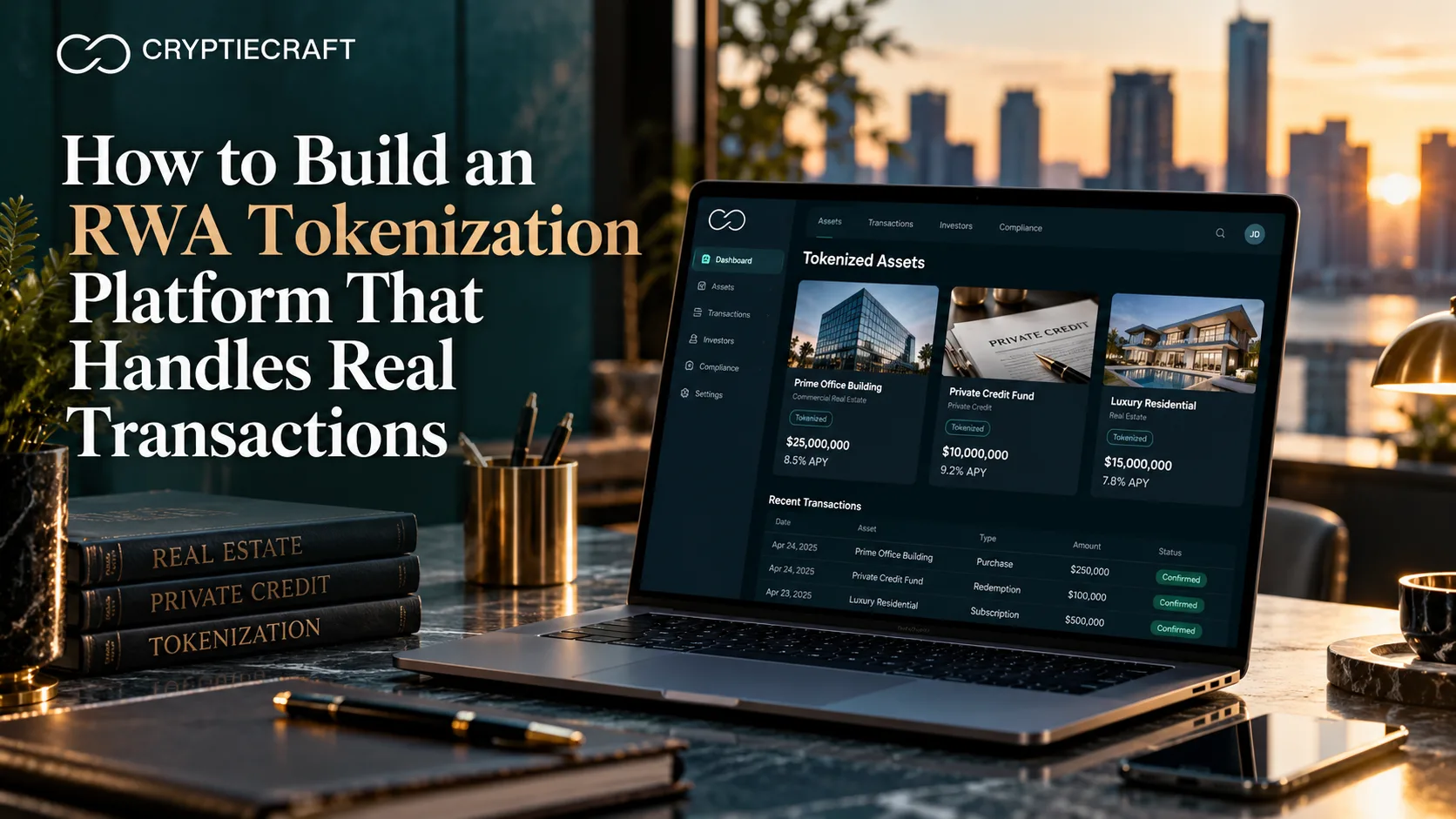

The demand for tokenized real estate is growing as property businesses look for faster and more efficient ways to offer fractional ownership to investors. Instead of spending months or even years building a platform from the ground up, many organizations now choose a white label real estate tokenization. A white label platform provides the technology foundation while allowing businesses to customize the branding, workflows, and user experience according to their requirements.
Although many providers offer similar services, their capabilities can differ significantly. The platform you choose will influence everything from security and compliance to investor confidence and future scalability. Making an informed decision at the beginning can save both time and money while reducing operational risks later. Here are the key factors to evaluate before selecting a provider.
Define Your Business Objectives First
Before comparing vendors, identify what you want your platform to achieve. Some businesses focus on residential properties, while others tokenize commercial buildings, vacation rentals, industrial assets, or mixed portfolios. Your goals determine the type of platform you need.
Think about the number of investors you expect, the regions you plan to serve, and the investment model you want to offer. A provider that understands your business vision will be better equipped to recommend suitable features instead of offering a generic solution.
Assess Industry Experience
Real estate tokenization combines blockchain technology with property investment, legal processes, and digital asset management. Because of this, experience matters.
Rather than asking only how long a company has been operating, explore the projects they have completed. A provider with hands-on experience in tokenization is more likely to understand ownership structures, investor workflows, and the technical challenges involved in managing digital real estate assets.
Review their previous implementations and ask how they solved challenges for other clients. Practical knowledge often delivers more value than broad software development experience alone.
Evaluate the Technology Stack
The underlying technology determines how efficiently your platform will perform over time.
A dependable provider should use modern blockchain infrastructure, secure smart contracts, flexible APIs, and a scalable architecture. The platform should also support future enhancements without requiring a complete rebuild.
Instead of selecting a solution because it supports a particular blockchain, ask why that network was chosen and whether it aligns with your long-term business strategy. The best technology is the one that supports your objectives rather than following market trends.
Prioritize Security from Day One
Security should never become an afterthought. Investors expect their assets and personal information to remain protected throughout every transaction.
Ask potential providers about their approach to cybersecurity. Important areas include encrypted communication, secure wallet integration, smart contract testing, user authentication, access management, backup strategies, and continuous monitoring.
A provider that invests in regular security assessments demonstrates a long-term commitment to platform reliability rather than simply delivering software.
Verify Compliance Capabilities
Every jurisdiction has its own legal framework governing digital assets and investment platforms. Choosing a provider that understands regulatory requirements can simplify expansion into different markets.
Look for features that support identity verification, anti-money laundering procedures, transaction records, investor documentation, and reporting tools. Even if regulations change over time, a flexible compliance framework makes adapting to new requirements much easier.
Compliance is not simply about avoiding penalties—it also strengthens investor confidence.
Examine Customization Options
One advantage of a white label solution is the ability to create a platform that reflects your own brand.
Your provider should allow you to customize visual elements such as logos, colors, dashboards, and user interfaces while also supporting business-specific workflows. For example, you may want different approval processes, investment limits, payment methods, or reporting formats.
The more adaptable the platform is, the easier it becomes to differentiate your business from competitors.
Check Scalability for Future Growth
Many businesses launch with only a few tokenized properties but plan to expand rapidly. Your platform should be capable of supporting increased traffic, larger property portfolios, and thousands of investors without sacrificing performance.
Ask providers how their infrastructure handles growth. Cloud-based deployment, modular architecture, and efficient database management are positive indicators that the platform can evolve alongside your business.
Selecting a scalable solution today prevents unnecessary redevelopment costs tomorrow.
Review Integration Capabilities
A successful tokenization platform usually connects with multiple external systems.
These may include digital wallets, payment processors, accounting software, CRM platforms, customer support tools, document management systems, and identity verification services.
Smooth integration reduces manual work, improves operational efficiency, and creates a better experience for investors. Providers with well-documented APIs generally make future integrations much easier.
Understand the Support Model
Launching the platform is only the beginning. Ongoing maintenance plays an important role in keeping the system secure, stable, and competitive.
Discuss post-launch services before signing any agreement. Clarify response times, software updates, blockchain upgrades, technical assistance, bug fixes, and feature enhancement policies.
Reliable support ensures your business can respond quickly to technical issues while continuing to deliver a seamless investor experience.
Evaluate Transparency
A trustworthy provider should communicate openly about timelines, pricing, deliverables, and responsibilities.
Request a detailed proposal explaining what is included in the package and what may require additional investment later. Transparent communication helps prevent misunderstandings and makes project planning more predictable.
If a provider avoids answering technical or commercial questions clearly, it may indicate challenges during implementation as well.
Compare Value Instead of Price
Cost is naturally an important consideration, but choosing the lowest-priced provider is rarely the best strategy.
Instead, compare the complete value being offered. Consider platform quality, customization flexibility, security practices, future scalability, technical support, compliance features, and upgrade options.
A solution that costs slightly more initially may deliver significantly better performance, lower maintenance expenses, and stronger investor satisfaction over the long term.
Final Thoughts
Selecting the right white label real estate tokenization provider requires more than comparing feature lists or pricing models. The right partner should understand both blockchain technology and the operational needs of the real estate industry while offering a secure, scalable, and customizable platform.
By carefully evaluating technical expertise, compliance readiness, security standards, integration capabilities, support services, and long-term scalability, businesses can confidently choose a solution that supports sustainable growth. Partnering with an experienced white label real estate tokenization platform development company can help accelerate your market entry while providing a reliable foundation for future expansion in the rapidly evolving digital real estate ecosystem.