
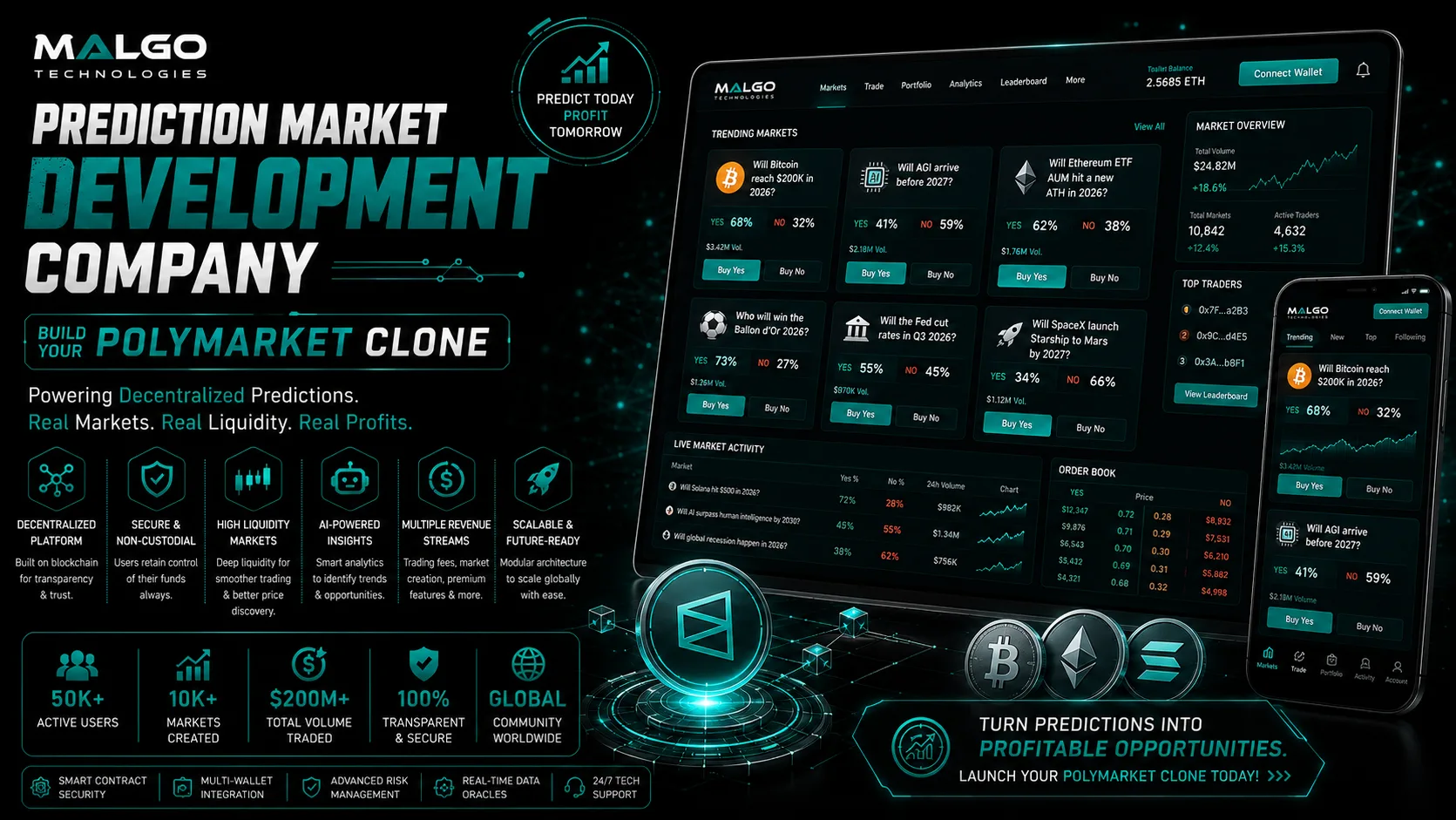
Prediction markets have transformed the way people forecast real-world events. From elections and financial trends to sports, entertainment, and emerging technologies, these platforms allow users to trade on the probability of future outcomes. As the popularity of decentralized finance, blockchain technology, and event-driven trading continues to rise, prediction market platforms are becoming a compelling business opportunity for entrepreneurs and startups.
Platforms inspired by the success of Polymarket demonstrate that a prediction market ecosystem is more than a place for forecasting events—it is a scalable digital business with multiple monetization opportunities. A well-designed platform can generate sustainable revenue while delivering a transparent, engaging, and secure experience for users.
This article explores the top revenue streams of a prediction market platform and explains how entrepreneurs can build a long-term business model without relying on a single income source.
Why Revenue Diversification Matters
One of the biggest advantages of a prediction market platform is its ability to create multiple recurring revenue channels. Instead of depending on only transaction activity, modern platforms combine several monetization strategies that support growth, improve user retention, and strengthen overall business stability.
A diversified revenue model also helps platform owners adapt to changing market trends, user behavior, and regulatory environments while maintaining consistent business performance.
Transaction Fees
Transaction fees remain one of the most reliable revenue streams for a prediction market platform. Every time users buy or sell shares in an event market, the platform can collect a small percentage of the trade.
As trading volume increases across multiple categories, these fees become a consistent source of recurring revenue. Entrepreneurs often focus on increasing market participation rather than relying on higher fee structures, creating a balance between profitability and user satisfaction.
A platform with active daily traders naturally benefits from continuous transaction activity throughout the year.
Market Creation Fees
Many prediction market platforms allow organizations, communities, or experienced users to create custom markets.
Charging a market creation fee helps ensure that only meaningful and high-quality events are listed while also generating additional revenue.
Examples include:
- Political forecasting events
- Sports tournaments
- Cryptocurrency price predictions
- Entertainment award outcomes
- Technology product launches
- Business and economic forecasts
This model encourages community participation while maintaining the quality and credibility of available markets.
Liquidity Provider Incentives
Healthy liquidity is essential for any successful prediction market. To support active trading, platforms often introduce liquidity provider programs where experienced traders contribute funds to improve market efficiency.
The platform benefits by creating deeper markets with smoother trading experiences, while liquidity providers receive rewards based on predefined participation models.
In some ecosystems, the platform also earns revenue through enhanced trading activity generated by improved liquidity.
Premium Membership Programs
As user communities mature, many platforms introduce premium membership options designed for advanced traders and professional analysts.
Premium memberships may include:
- Advanced market analytics
- Historical forecasting data
- AI-powered prediction insights
- Early access to newly launched markets
- Portfolio performance tracking
- Enhanced research dashboards
- Priority customer support
Offering exclusive features encourages long-term engagement while creating a recurring subscription-based revenue stream.
Data and Analytics Services
Prediction markets generate valuable data that reflects public sentiment and collective intelligence.
Businesses, financial institutions, researchers, media organizations, and consulting firms often seek access to this information for market analysis and strategic planning.
Platforms can provide:
- Forecast trend reports
- Historical prediction datasets
- Industry-specific insights
- API access for enterprise applications
- Real-time market intelligence
- Custom analytics dashboards
This business-to-business revenue stream expands the platform's commercial value beyond retail users.
API Licensing
Technology companies frequently integrate prediction market functionality into their own products.
Offering API access allows third-party applications to connect with the platform's trading engine, market data, user authentication, or forecasting services.
Potential customers include:
- Financial applications
- Sports analytics platforms
- Research organizations
- Media companies
- Educational institutions
- Enterprise software providers
API licensing creates scalable recurring revenue while increasing ecosystem adoption.
Advertising Opportunities
Once a prediction market platform attracts a large and active audience, advertising becomes another valuable monetization channel.
Relevant advertising opportunities include:
- Sponsored event categories
- Industry partnerships
- Featured market promotions
- Brand collaborations
- Educational campaigns
- Event sponsorships
Carefully managed advertising can generate additional revenue without negatively affecting the user experience.
Sponsored Prediction Markets
Brands increasingly use prediction markets to improve customer engagement.
Businesses may sponsor prediction events around:
- Product launches
- Industry conferences
- Sports campaigns
- Entertainment releases
- Technology announcements
- Consumer behavior research
Sponsored markets allow companies to interact with audiences while providing the platform with an additional commercial revenue source.
White-Label Platform Licensing
Many entrepreneurs prefer launching their own branded prediction market instead of building infrastructure from scratch.
Companies offering prediction market development services can license their platform as a white-label solution, allowing businesses to customize branding, features, and user experiences while leveraging an established technology foundation.
This model creates recurring enterprise revenue through long-term partnerships and platform expansion.
Enterprise Solutions
Prediction markets are increasingly being adopted within organizations for internal forecasting and decision-making.
Large enterprises use these platforms for:
- Sales forecasting
- Product demand estimation
- Risk assessment
- Market trend analysis
- Employee forecasting initiatives
- Innovation management
Providing enterprise-grade prediction market solutions opens opportunities for long-term business relationships and recurring service agreements.
Token Ecosystem Utility
Blockchain-based prediction markets often include utility tokens that support ecosystem participation.
Tokens may enable:
- Governance participation
- Staking mechanisms
- Reward distribution
- Enhanced platform access
- Community incentives
While the primary objective is strengthening user engagement, a well-designed token ecosystem can also contribute to sustainable platform growth when developed within applicable legal and regulatory frameworks.
Referral and Affiliate Programs
Referral programs help platforms expand organically through community-driven growth.
Partners, influencers, publishers, and existing users can introduce new participants in exchange for performance-based rewards.
Benefits include:
- Lower customer acquisition efforts
- Higher user engagement
- Community-driven expansion
- Increased platform visibility
- Sustainable long-term growth
Affiliate partnerships also strengthen brand awareness across niche industries.
Educational Content and Learning Resources
Many new users are unfamiliar with prediction markets, event trading, and probability-based forecasting.
Platforms can develop premium educational resources such as:
- Professional trading guides
- Market strategy workshops
- Certification programs
- Forecasting masterclasses
- Industry webinars
- Expert interviews
Educational offerings enhance user confidence while establishing the platform as a trusted industry authority.
Community Events and Competitions
Prediction competitions encourage higher participation and stronger community engagement.
Examples include:
- Seasonal forecasting contests
- Tournament prediction challenges
- Community leaderboards
- Industry-specific competitions
- Trading championships
These initiatives increase platform activity, improve retention, and create sponsorship opportunities that contribute to overall revenue growth.
Strategic Partnerships
Collaborating with blockchain projects, financial institutions, sports organizations, research firms, and media companies can unlock new monetization opportunities.
Strategic partnerships may include:
- Co-branded campaigns
- Integrated prediction services
- Shared analytics
- Joint research initiatives
- Cross-platform promotions
These collaborations help expand market reach while strengthening brand credibility.
Building a Sustainable Prediction Market Business
Long-term success depends on creating value for users rather than relying on a single revenue source. Entrepreneurs should focus on delivering a secure, transparent, and engaging platform supported by diverse monetization strategies that evolve alongside user demand.
Scalability, regulatory awareness, advanced security, intuitive user experience, and continuous innovation are key factors that influence both user trust and long-term profitability. By combining transaction-based earnings with subscriptions, enterprise offerings, analytics, sponsorships, and ecosystem partnerships, businesses can develop a resilient prediction market platform capable of sustaining growth in an increasingly competitive digital economy.
Conclusion
Prediction market platforms represent one of the most dynamic opportunities within the digital economy, combining collective intelligence with real-time market participation. Their business potential extends well beyond trading activity, offering multiple avenues for recurring revenue through premium services, enterprise solutions, analytics, sponsorships, licensing, educational initiatives, and strategic collaborations.
For entrepreneurs and founders exploring a Polymarket-inspired platform, success lies in building a comprehensive ecosystem that prioritizes user trust, innovation, regulatory readiness, and long-term engagement. A diversified revenue strategy not only strengthens financial sustainability but also positions the platform to adapt to evolving market demands while creating lasting value for users and business stakeholders alike.