
Behind almost every reliable, high-performance product, you’ll find components that quietly but critically guarantee its success. In the world of modern manufacturing, construction, and maintenance, sealing is one of those invisible essentials. Whether you’re shielding a car’s cabin from the elements, protecting sensitive electronics, or ensuring hygienic barriers in food processing facilities, effective seals are indispensable.
Traditionally, achieving reliable sealing and bonding meant labor-intensive processes, permanent fixtures, or messy liquid adhesives. But now, rubber adhesive strips are transforming how engineers and manufacturers approach sealing challenges. Through their unique combination of flexibility, quick application, and robust performance, rubber adhesive strips are setting new benchmarks for efficiency, reliability, and versatility across a vast range of industries.
Understanding Rubber Adhesive Strips: A Modern Engineering Marvel
What Are Rubber Adhesive Strips?
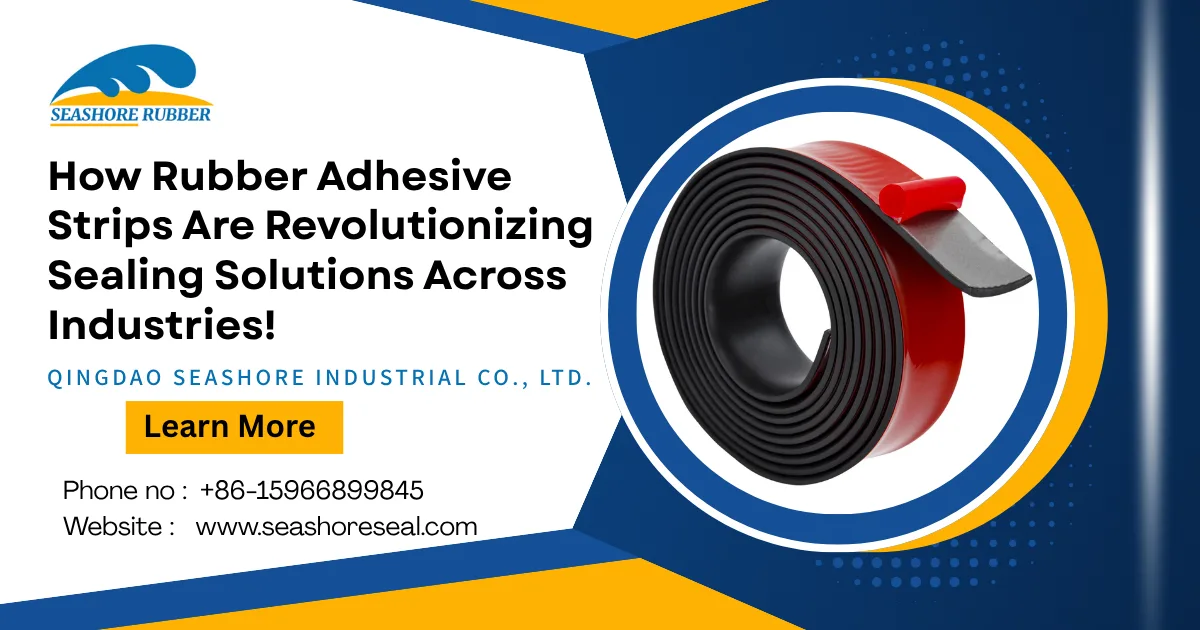
Rubber adhesive strips are engineered sealing and bonding products consisting of a flexible rubber substrate with an adhesive backing—usually protected by a release liner until final application. Unlike liquid adhesives or solid mechanical seals, these strips provide the combined benefits of robust rubber sealing and swift, mess-free self-adhesion.
The result is a product that is easy to transport, quick to install, and dependable in a wide range of environments. Rubber adhesive strips can be manufactured in a variety of thicknesses, widths, and profiles, and can be supplied in rolls, pre-cut lengths, or custom die-cut shapes tailored to your application.
Modern Versatility
Today’s rubber adhesive strips are used for everything from weatherstripping and vibration damping to electrical insulation, gasketing, gap filling, anti-slip solutions, and protective edging.
Why Rubber Adhesive Strips Are Disrupting Traditional Sealing Methods
1. Rapid, Easy Installation
Unlike molded gaskets, mechanical fasteners, or applied liquid sealants, rubber adhesive strips:
- Require minimal tools for application
- Can be installed by non-specialists without lengthy training
- Minimize mess and reduce production or assembly line downtime
2. Consistent, Reliable Sealing
Quality rubber adhesives deliver:
- Uniform thickness for predictable compression and gap fill
- Consistent and even adhesive application (thanks to precision manufacturing)
- Reduced human error—avoiding over/under-tightening, drips, or missed spots
3. Versatile Solutions Across Many Surfaces
Rubber adhesive strips adhere strongly to metals, plastics, glass, wood, and more—making them suitable for a host of substrates with varying smoothness or contour.
4. Temporary or Permanent Bonding
Advanced adhesives can be formulated for re-positionable application, semi-permanent, or permanent seals, depending on the task at hand.
5. Reduced Cost and Waste
No tub, tube, or can of adhesive to spill or dry out; strips are ready-to-use, reduce excess material, and streamline logistics—often leading to significant cost savings over traditional methods.
The Technology Behind Rubber Adhesive Strips
Material Innovations
Rubber Base Materials:
- EPDM: Great for outdoor weather resistance, UV, and ozone stability.
- Neoprene: Well-suited for oil resistance and moderate temperature ranges.
- Silicone: Ideal for high/low temperature extremes and medical or food-grade uses.
- Nitrile: Excellent for fuel and oil contact applications.
- PVC/PU: Used for lower-cost or lighter-duty tasks.
Adhesive Types:
- Acrylic adhesives: Outstanding for long-term, high-strength bonds and good temperature resistance.
- Rubber-based adhesives: Offer excellent initial tack and adhesion to low-energy surfaces.
- Silicone adhesives: Used for extreme environments or specialized medical/food applications.
Structural Options:
- Single-sided or double-sided tape
- Closed-cell or open-cell foam core
- Laminated multi-layer structures for complex environments
Customization Possibilities
At Qingdao Seashore Industrial Co., Ltd., we can precisely tailor:
- Strip width, thickness, and length
- Compound formulation for flexibility, density, and softness
- Adhesive type, strength, and temperature or chemical resistance
- Surface color, texture, and profile shape
- Backing/release liner design for easy removal and handling
Read more: Rubber Adhesive Strips: Versatile Solutions for Home and Industry!
Application Areas: Industry-Specific Solutions
Automotive & Transportation
- Weatherstripping & sealing: Door, window, trunk, and sunroof seals install faster and seal more reliably with adhesive strips.
- Vibration & noise dampening: Interior panels, dashboards, and electronics benefit from the dual role of sealing and sound-damping.
- Assembly line efficiency: Self-adhesive rubber strips speed up vehicle manufacturing and reduce error rates.
Electronics & Appliances
- Gasketing & EMI shielding: Protect delicate circuit boards and screens, or provide electrical isolation.
- Dampening & insulation: Gaps in home appliances (fridges, washers, ovens) are sealed with adhesive strips that resist mold, temperature, and cleaning chemicals.
Construction & Building
- Window and door weather seals: Installs in moments, ensuring thermal, sound, and moisture barriers.
- Expansion joints: Accommodate building movement while keeping out water and air—ideal for HVAC, curtain walls, or roofing.
- Anti-slip & safety padding: Floor edges and wall protections use adhesive-backed rubber for quick, safe installation.
Industrial Manufacturing
- Machinery gasketing: Strips provide seals against dust, fluids, gases, or vibration between machine parts.
- Protective edging: Machinery, glass panels, and metal racks stay chip free with cushion-providing adhesive rubber strips.
Medical, Food, and Cleanroom
- Soft seals in enclosures: Used wherever hygiene, re-sealing, or temperature resilience is critical.
- Safe adhesive chemistry: Medical and food-grade tapes keep health and regulatory compliance in mind.
Benefits Beyond Sealing: Why Rubber Adhesive Strips Are a Game-Changer
1. Design Flexibility
Engineers and designers can prototype quickly, modify on the fly, and specify precise properties for specialized challenges—with the backing of advanced material science.
2. Field-Ready Repairs
Rubber adhesive strips validate the “peel-and-stick” promise even outside the factory—maintenance technicians can make clean, effective, and lasting fixes in minutes, not hours.
3. Environmental and Energy Savings
Closed-cell rubber strips prevent energy loss through windows, doors, and panels, helping meet green building or vehicle efficiency targets.
4. Health and Safety
By minimizing the need for VOC-laden liquid adhesives or chemical solvents, these strips support safer workplaces and cleaner production lines.
How Qingdao Seashore Industrial Co., Ltd. Helps You Succeed with Rubber Adhesive Strips
Choosing the right partner for your sealing solutions can make all the difference in application ease, long-term reliability, and overall cost. Here’s why clients choose us:
- Custom Engineering: Our experts work with you to define materials, profiles, and adhesive types matched to your needs.
- Advanced Manufacturing: High-precision extrusion, lamination, and die-cutting, all underlined by industry-leading quality protocols (ISO 9001, IATF 16949).
- Broad Material and Adhesive Selection: We supply EPDM, neoprene, silicone, PVC, and more—paired with superior adhesives from globally trusted brands.
- Rapid Prototyping and Turnaround: Speed to market is crucial—we can quickly produce prototypes and scale up for mass production.
- Supply Chain Support: From local delivery to global logistics, our solutions help keep your operation running smoothly, anywhere in the world.
- Environmental Commitment: Sustainable materials and manufacturing for reduced impact and compliance with green standards.
The Future of Sealing Lies with Rubber Adhesive Strips
As industries advance and the need for efficient, reliable, and cost-effective solutions intensifies, the humble rubber adhesive strip has emerged as a revolutionary technology. By making sealing, bonding, and gasketing faster, easier, and smarter, rubber adhesive strips enable manufacturers, builders, and technicians to achieve results that were once out of reach.
FAQ
Q1: What makes rubber adhesive strips superior to traditional sealants or mechanical gaskets?
A: Rubber adhesive strips combine the impermeability and resilience of rubber with the instant bonding of adhesive tape. They’re faster and neater to apply, offer consistent sealing, and work with a variety of surfaces—all while eliminating the need for drying, curing, or complex fasteners.
Q2: How do I choose the right material for my rubber adhesive strip needs?
A: Material choice depends on your operating environment—EPDM for weather/UV, neoprene for oil, silicone for temperature extremes, and so on. Our engineers will guide you through a needs assessment to match the perfect material to your application.
Q3: Are rubber adhesive strips suitable for outdoor use?
A: Absolutely! High-quality adhesives and UV- or ozone-resistant rubber compounds (like EPDM or silicone) make strips ideal for harsh, outdoor environments.
Q4: Can I get custom shapes, sizes, and adhesive types?
A: Yes! We specialize in custom width, thickness, and die-cut profiles, and can provide a range of adhesive chemistries matched to surfaces from metal to textured plastics.
Q5: Are the adhesive bonds permanent?
A: They can be permanent or temporary, depending on the specific adhesive selected. Permanent bonds are suitable for structural sealing; re-positionable adhesives work for removable or re-serviceable joints.
Q6: What temperature range can rubber adhesive strips operate in?
A: Depending on the rubber and adhesive combo, strips can be made to tolerate -40°C to +180°C or beyond.
Q7: How do rubber adhesive strips perform against water and chemical exposure?
A: Closed-cell strips offer excellent water resistance, and specific rubbers can be chosen for chemical or oil resistance based on your risks.
Q8: Can they be applied by end users, or do they require professional installation?
A: Most applications are designed for easy, do-it-yourself installation—just peel, position, and stick. For high-precision, critical tasks, our technical support ensures your team can install to spec.
Q9: How are rubber adhesive strips supplied and stored?
A: Strips are typically supplied in rolls or sheets; storage should be cool and dry to preserve adhesive life (usually 6–12 months before application depending on type).
Q10: How does Qingdao Seashore Industrial Co., Ltd. support client projects?
A: From needs analysis and custom prototyping to global logistics and post-installation support, we partner with you at every step to ensure your sealing solution surpasses expectations.


