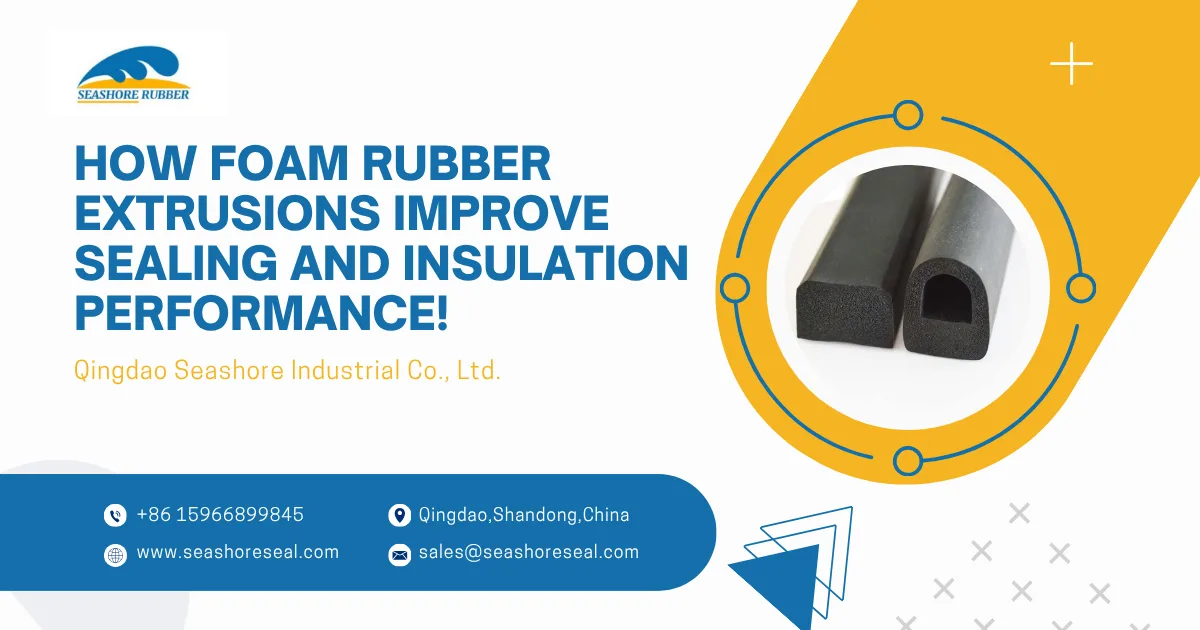
In modern industrial design and manufacturing, effective sealing and insulation are essential for ensuring product reliability, energy efficiency, and long-term durability. Whether in automotive systems, HVAC units, construction frameworks, marine equipment, or electrical enclosures, inadequate sealing can lead to air leakage, moisture intrusion, temperature instability, and even mechanical failure. Consequently, manufacturers are increasingly turning to advanced material solutions that deliver both flexibility and resilience. Among these solutions, foam rubber extrusions have emerged as a highly effective and versatile option.
Understanding Foam Rubber Extrusions
Foam rubber extrusions are continuous profiles made from cellular rubber materials that contain a controlled network of air-filled pockets. These pockets, formed during the foaming process, give the material its characteristic compressibility and lightweight properties. Unlike solid rubber extrusions, foam rubber extrusions offer enhanced flexibility, cushioning, and thermal resistance.
The extrusion process begins with carefully formulated rubber compounds, which are then processed through a specialized die to create specific cross-sectional shapes. After extrusion, the material undergoes curing to stabilize its structure and optimize performance characteristics. As a result, foam rubber extrusions can be manufactured in various densities, hardness levels, and configurations to suit specific applications.
The Role of Sealing in Industrial Applications
Sealing is a critical function in countless industries. When components fail to seal properly, contaminants such as dust, water, air, or chemicals can infiltrate systems, leading to corrosion, electrical malfunctions, and mechanical degradation. Therefore, selecting the right sealing material directly impacts product durability and safety.
Foam rubber extrusions improve sealing performance in several key ways:
1. Superior Compressibility
Because foam rubber contains air-filled cells, it compresses easily under pressure. This property allows the material to conform tightly to irregular surfaces, filling gaps that might otherwise allow leakage. Consequently, even uneven or rough contact surfaces can achieve effective sealing.
2. Consistent Recovery
After compression, high-quality foam rubber extrusions return to their original shape. This elastic recovery ensures long-term sealing effectiveness, even after repeated use or prolonged compression.
3. Lightweight Construction
The cellular structure of foam rubber reduces overall weight while maintaining performance. As a result, manufacturers can enhance sealing without significantly increasing product mass.
Enhancing Thermal and Acoustic Insulation
In addition to sealing, insulation is another critical performance factor in industrial design. Temperature fluctuations can compromise equipment functionality, while excessive noise can affect comfort and safety.
Foam rubber extrusions contribute to insulation performance through:
Thermal Resistance
The air trapped within foam rubber cells acts as a natural insulator. Consequently, foam rubber extrusions help reduce heat transfer, maintaining stable internal temperatures. This property is particularly valuable in HVAC systems, refrigeration units, and building structures.
Sound Dampening
The cellular structure also absorbs sound vibrations, reducing noise transmission. Therefore, foam rubber extrusions are commonly used in automotive interiors, machinery enclosures, and construction applications where noise control is essential.
Material Options for Foam Rubber Extrusions
Different applications require different material properties. Qingdao Seashore Industrial Co., Ltd. offers a range of rubber compounds suitable for foam extrusion, including:
- EPDM Foam Rubber – Excellent resistance to weather, ozone, and UV exposure.
- Neoprene Foam Rubber – Balanced resistance to chemicals and environmental conditions.
- Nitrile Foam Rubber (NBR) – Strong oil and fuel resistance.
- Silicone Foam Rubber – Outstanding performance under extreme temperatures.
By selecting the appropriate compound, manufacturers can ensure optimal sealing and insulation performance tailored to specific operating environments.
Industry Applications
Foam rubber extrusions are widely used across multiple industries due to their versatility and performance advantages.
1.Automotive Industry
In vehicles, foam rubber extrusions are used for door seals, window gaskets, and engine compartment insulation. These components prevent water intrusion, reduce noise, and improve passenger comfort.
2.Construction and Architecture
Building systems rely on foam rubber extrusions for window glazing seals, expansion joints, and thermal insulation. As a result, energy efficiency improves, and structural integrity is maintained.
3.HVAC Systems
Heating and cooling systems require reliable insulation to maintain temperature control. Foam rubber extrusions minimize energy loss and improve overall system efficiency.
4.Marine and Offshore Applications
Exposure to saltwater and fluctuating temperatures demands durable sealing materials. Foam rubber extrusions provide resilience against environmental stress.
5.Electrical and Electronics
Sensitive electronic components require protection from moisture and dust. Foam rubber extrusions offer effective sealing and vibration dampening.
Advantages Over Traditional Materials
While solid rubber and plastic seals are commonly used, foam rubber extrusions offer several distinct advantages:
- Greater compressibility for tight sealing
- Enhanced insulation performance
- Reduced material weight
- Improved flexibility for complex designs
- Cost-effective long-term performance
Consequently, many manufacturers prefer foam rubber extrusions for applications requiring both sealing and insulation capabilities.
Customization Capabilities
Every project has unique requirements. At Qingdao Seashore Industrial Co., Ltd., we provide custom foam rubber extrusions in various shapes, sizes, densities, and colors. Advanced die design and precision extrusion technology enable the production of intricate profiles that meet exact specifications.
Furthermore, we conduct thorough quality testing to ensure dimensional accuracy, material consistency, and performance reliability.
Sustainability and Energy Efficiency
Energy efficiency has become a global priority. By improving thermal insulation, foam rubber extrusions contribute to reduced energy consumption in buildings and machinery. Additionally, durable materials reduce replacement frequency, minimizing waste and supporting sustainability initiatives.
Foam rubber extrusions play a vital role in enhancing sealing integrity and insulation performance across diverse industries. Their compressibility, thermal resistance, and sound dampening capabilities make them indispensable components in modern manufacturing.
Frequently Asked Questions (FAQ)
1. What are foam rubber extrusions?
Foam rubber extrusions are continuous rubber profiles made from cellular rubber materials designed for sealing and insulation applications.
2. How do foam rubber extrusions improve sealing performance?
Their compressibility allows them to conform to irregular surfaces, creating tight and reliable seals.
3. What industries use foam rubber extrusions?
They are widely used in automotive, construction, HVAC, marine, and electronics industries.
4. Are foam rubber extrusions suitable for outdoor use?
Yes, especially when made from weather-resistant materials like EPDM.
5. Can foam rubber extrusions withstand extreme temperatures?
Yes, silicone foam rubber, for example, performs well in both high and low temperature environments.
6. How do they improve insulation?
The air-filled cellular structure reduces heat transfer and absorbs sound vibrations.
7. Can profiles be customized?
Yes, Qingdao Seashore Industrial Co., Ltd. offers fully customized extrusion solutions.
8. What is the difference between open-cell and closed-cell foam rubber?
Open-cell foam allows air flow and is softer, while closed-cell foam offers better moisture resistance and durability.