
From Basement Beginnings to a Global Powerhouse: Setting the Stage
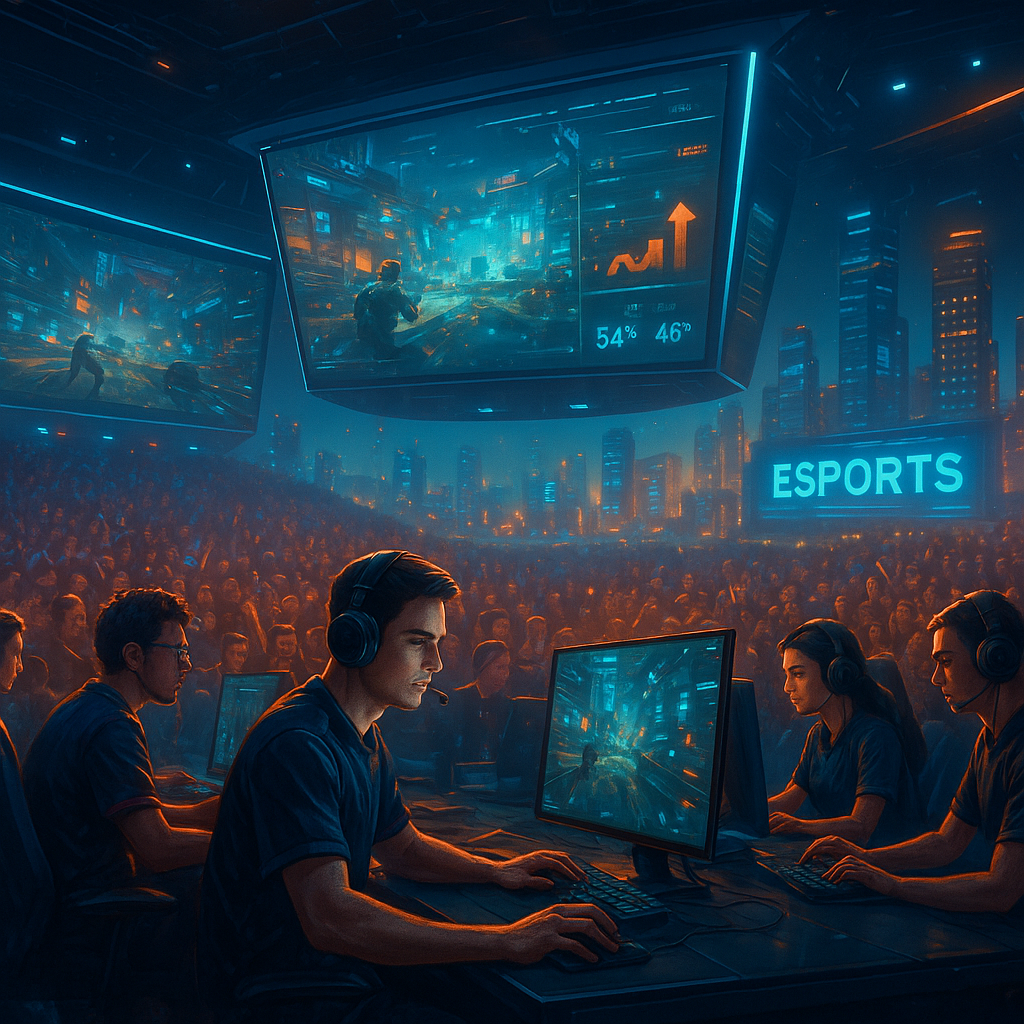
Imagine a packed arena in Seoul, South Korea, in early 2026. Tens of thousands of fans are on the edge of their seats, watching the finals of the 2026 League of Legends World Championship unfold on massive 8K ultra-wide screens. The electric atmosphere is punctuated by live commentary in multiple languages, with millions more tuning in via VR headsets worldwide, feeling as if they are truly present. This scene encapsulates the meteoric rise and future promise of esports, a phenomenon that has evolved far beyond niche hobbyist roots into a cornerstone of global entertainment and commerce.
Esports, once confined to small LAN parties and modest online streams, now commands a global audience surpassing 750 million viewers annually, according to industry estimates. The market revenue hit an estimated $3.7 billion in 2025 and is projected to exceed $5 billion by 2028, driven by sponsorships, media rights, merchandise, and innovative digital experiences. This explosive growth underscores esports’ transition from subculture to mainstream cultural and economic force.
Understanding how esports arrived at this juncture requires tracing its journey alongside technological advances, cultural shifts, and strategic industry moves. As we explore the future of esports, it is essential to contextualize these developments against the backdrop of a rapidly changing entertainment landscape.
Tracing the Arc: How Esports Reached Its 2026 Momentum
The roots of competitive gaming date back to the 1970s and 80s, but esports as we recognize it today took shape in the 2000s with titles like StarCraft, Counter-Strike, and later Dota 2 and League of Legends. Early tournaments were grassroots efforts, often organized by passionate communities. The real turning point came with the proliferation of high-speed internet and streaming platforms such as Twitch and YouTube Gaming during the 2010s, democratizing access and enabling global audiences.
By the early 2020s, esports had attracted significant investment from traditional sports franchises, media conglomerates, and tech giants. This influx of capital professionalized teams, enhanced production values, and expanded prize pools, drawing top-tier talent and solidifying fan bases. Simultaneously, the rise of mobile esports, especially in Asia, diversified the ecosystem.
Industry reports highlight several pivotal trends from the past decade shaping 2026's esports environment:
- Technological integration: The adoption of AI-powered analytics and immersive AR/VR experiences enhanced both player performance and viewer engagement.
- Globalization: Expanding regional leagues and cross-continental tournaments fostered international rivalries and fan communities.
- Monetization innovation: Beyond sponsorships and advertising, blockchain-based digital memorabilia and decentralized fan engagement platforms emerged.
- Regulatory strides: Esports governance bodies introduced standardized rules, player rights protections, and anti-doping policies.
These developments have laid the groundwork for esports to evolve beyond entertainment into a robust industry ecosystem.
2026 Snapshot: Esports’ Current Landscape and Technological Frontiers
The year 2026 finds esports at a critical intersection of technology, culture, and commerce. Recent breakthroughs in AI and immersive tech are redefining both gameplay and spectator experiences. For example, AI-driven coaching tools now offer real-time strategic insights, enhancing player training efficiency. Augmented reality overlays during live events provide spectators with dynamic statistics, player biometrics, and interactive features, heightening engagement.
Moreover, the rise of the metaverse has created virtual arenas where fans can gather, socialize, and even participate in mini-games or side competitions alongside professional matches. These virtual venues break down geographical barriers, expanding accessibility and community building. TheOmniBuzz’s coverage on AI and immersive tech highlights how these innovations are not just additive but transformative for the industry.
Economically, esports organizations have diversified revenue streams beyond traditional sponsorships and broadcast rights. Notably, non-fungible tokens (NFTs) representing exclusive digital collectibles and in-game assets have generated tens of millions in secondary market sales. Esports betting has also grown under tighter regulation, contributing to ecosystem liquidity.
Key statistics illustrating 2026 trends include:
- Global esports audience: approximately 780 million viewers, with Asia-Pacific accounting for 45%.
- Market size: estimated at $3.7 billion in revenue in 2025, forecasted to surpass $4.5 billion by 2026.
- VR/AR engagement: over 25% of esports viewers use immersive platforms for live events.
- Professional teams: more than 1,000 globally registered and actively competing in top-tier leagues.
The competitive landscape is also expanding beyond traditional genres. Fighting games, sports simulators, and even emerging AI-driven titles are gaining footholds. This diversification enhances audience variety and sponsorship appeal.
Voices from the Industry: Insights and Implications
Leading figures within esports emphasize the sector’s maturation and its broader societal impact. Samantha Lee, CEO of Titan Esports Group, states:
“Esports is no longer just about the game; it’s a cultural phenomenon driving innovation, inclusivity, and economic opportunity worldwide.”
Similarly, Dr. Marcus Chen, a gaming industry analyst, notes:
“The integration of AI and immersive tech is democratizing competitive gaming, enabling new forms of participation and storytelling that were unimaginable a decade ago.”
These perspectives underscore how esports serves as a nexus of technological advancement and cultural expression. The industry’s evolving governance models also reflect increasing professionalism and ethical mindfulness, with player welfare and fair play now central concerns.
Furthermore, esports’ impact on traditional sports has become a subject of academic and commercial interest. Crossovers between esports athletes and physical sports stars are more common, with hybrid events and co-branded content providing fresh engagement avenues.
For a deeper understanding of esports’ cultural and commercial shifts, see TheOmniBuzz’s analysis of esports redefining competition and culture.
Looking Ahead: What to Watch in Esports’ Next Decade
As esports heads toward its third decade of rapid growth, several key trends and challenges will shape its trajectory. Stakeholders across the ecosystem—players, teams, developers, investors, and fans—must navigate a complex environment balancing innovation with sustainability.
Areas poised for significant evolution include:
- Regulatory frameworks: Expect increased collaboration between international bodies to standardize player contracts, anti-cheat enforcement, and betting regulations.
- Technological breakthroughs: Advances in neural interfaces and haptic feedback could revolutionize player interaction and spectator immersion.
- Diversity and inclusion: Efforts to broaden participation across gender, ethnicity, and geography will intensify, fostering a more representative community.
- Educational integration: Esports programs in universities and schools will expand, offering pathways into tech, media, and sports careers.
- Environmental sustainability: Eco-conscious event production and digital infrastructure will become priorities amid global climate concerns.
Industry experts caution that the rapid pace of change also poses risks, including market saturation, burnout among players, and ethical dilemmas around data privacy and AI use.
For those seeking to engage with esports—whether as fans, creators, or investors—strategic foresight and adaptability will be essential. The sector’s dynamism promises exciting opportunities but also demands vigilance and thoughtful stewardship.
Case Studies in Innovation: Esports Pioneers Setting New Standards
Examining specific organizations and events offers practical insights into esports’ evolving future. Consider the 2026 CyberChamp Invitational held in Berlin, which integrated live VR spectator experiences with AI-driven match analysis, attracting over 3 million concurrent viewers worldwide. This event exemplified how technology can enhance accessibility and engagement.
Another example is Valorant Vanguard, a team that pioneered AI-powered training regimens and data analytics to optimize player performance. Their approach contributed to a 40% improvement in win rates over 18 months, setting new benchmarks for competitive preparation.
On the commercial front, NexGen Esports launched a groundbreaking NFT marketplace linked to in-game achievements and memorabilia, generating over $15 million in sales within its first year. This innovation created new revenue streams and deepened fan investment.
These instances illustrate esports’ capacity to blend entertainment, technology, and commerce into cohesive, scalable models. They also highlight the importance of continuous innovation to maintain audience interest and economic viability.
Such case studies complement broader analyses like our article Inside Esports: Unraveling the Forces Behind Competitive Gaming’s Global Surge, which explores the multifaceted drivers of the industry’s expansion.
Summary: The future of esports is a tapestry woven from technological innovation, cultural integration, and economic expansion. Its trajectory points toward deeper immersion, broader participation, and enhanced professionalism. As esports continues to redefine entertainment paradigms, its influence will extend beyond the screen, shaping global culture and economy in profound ways.