
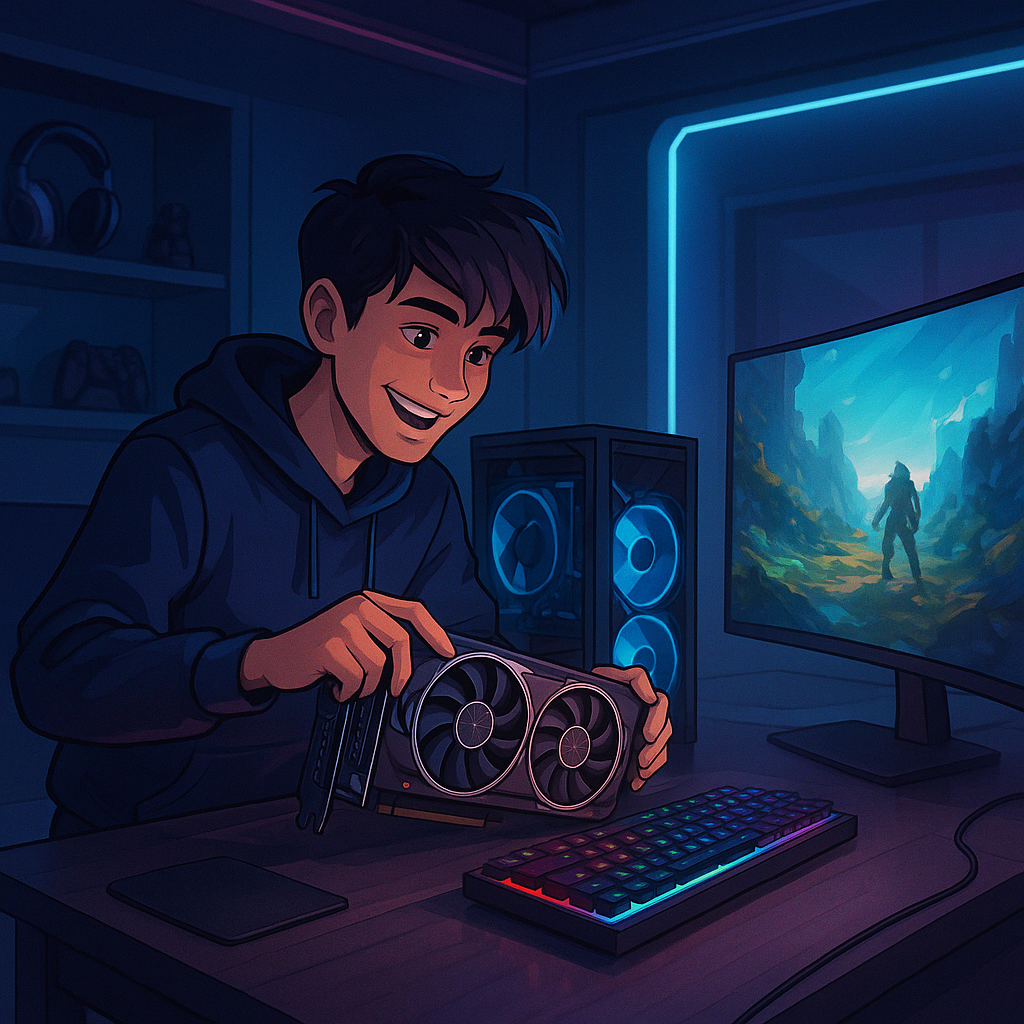
Starting Strong: The Allure and Challenge of Gaming Hardware
Imagine stepping into a world where every frame, every pixel, and every sound immerses you deeper into your favorite game. This is the promise of gaming hardware—a blend of technology and art that defines your play experience. Yet, for newcomers, the vast array of components, brands, and jargon can be disorienting. In 2026, gaming hardware has evolved to unprecedented levels of power and sophistication, but this also means the entry barrier may seem higher than ever.
Gaming hardware isn’t just about buying the most expensive graphics card or the flashiest peripherals. It’s about understanding your goals, your budget, and how to tailor your setup to what truly matters for your gaming style. According to industry reports, the global gaming hardware market surpassed $75 billion in 2025, reflecting surging demand but also increased complexity for first-time buyers. This article breaks down the essentials to help you get started confidently, avoiding common pitfalls and maximizing value.
"Choosing gaming hardware is a strategic decision that balances performance, compatibility, and future-proofing," says tech analyst Maya Chen. "Beginners should focus on their specific gaming needs rather than chasing specs."
Whether you’re aiming for competitive esports, immersive RPGs, or casual gaming, understanding core components and current trends is the first step toward an optimal setup.
Tracing the Evolution: How Gaming Hardware Got to This Point
The journey of gaming hardware is a fascinating tale of innovation and consumer demand that spans decades. Early gaming systems of the 1980s and 1990s offered limited graphics and simple controls. The explosion of PC gaming in the 2000s, fueled by breakthroughs in GPU technology and more affordable CPUs, transformed gaming into a mainstream hobby and eventually a professional sport.
In the 2010s, the rise of streaming and high-definition content pushed manufacturers to develop hardware capable of 4K resolutions and beyond. VR and AR integrations became more common, requiring specialized sensors and higher frame rates. The mid-2020s saw the introduction of AI-accelerated GPUs and energy-efficient architectures that deliver significant performance gains without proportional power draws.
Today, gaming hardware encompasses not only the core rig but also peripherals like mechanical keyboards, high-DPI mice, and ultra-wide curved monitors. The ecosystem has expanded to include cloud gaming devices, haptic feedback systems, and AI-powered software optimizers.
According to TheOmniBuzz analysis, "Gaming hardware innovation is driving the next level of player immersion," transforming passive play into interactive experiences that engage all senses.
This rich history underscores that understanding current hardware options requires appreciating how past developments shaped present capabilities and user expectations.
Core Components Breakdown: What Every New Gamer Should Know
To build or buy your first gaming setup, you need clarity on the main hardware components and their roles. Here’s a detailed overview of the essentials:
- Graphics Processing Unit (GPU): The heart of visual performance. In 2026, GPUs like NVIDIA’s RTX 6090 Ti and AMD’s Radeon RX 8900 XT lead the market, offering ray tracing, AI upscaling, and 8K support. Your choice depends on the games you play and target resolution.
- Central Processing Unit (CPU): Handles game logic, physics, and multitasking. Popular CPUs include Intel’s 15th Gen Core i9 and AMD’s Ryzen 9 7950X. Balance CPU and GPU power to avoid bottlenecks.
- Memory (RAM): 16GB is the new baseline, but 32GB is recommended for future-proofing and multitasking. DDR5 RAM is now standard, delivering faster speeds and lower latency.
- Storage: Solid State Drives (SSDs) are essential for fast load times. NVMe M.2 SSDs, with capacities of 1TB or more, offer lightning-fast game launch and texture streaming.
- Motherboard: The backbone connecting all components. Compatibility with your CPU and support for PCIe 5.0, DDR5, and USB4 are key considerations.
- Power Supply Unit (PSU): A high-quality PSU with adequate wattage (650W or higher for mid-to-high-end rigs) ensures stable power delivery.
- Peripherals: Mechanical keyboards, gaming mice with customizable DPI, and monitors with high refresh rates (144Hz+) and low response times enhance gameplay.
For those uncertain about building a PC, pre-built systems from reputable brands can be a practical start. However, understanding these components empowers you to make smarter upgrades and choices over time.
Here’s a quick comparison of entry-level vs. high-end setups to illustrate:
- Entry-Level: NVIDIA RTX 4060, Intel Core i5-13600K, 16GB DDR5 RAM, 512GB NVMe SSD, 1080p 144Hz monitor.
- High-End: AMD Radeon RX 8900 XT, Ryzen 9 7950X, 32GB DDR5 RAM, 2TB NVMe SSD, 4K 240Hz HDR monitor.
Both setups can run modern games smoothly, but target different audiences and budgets.
2026 Hardware Trends and Innovations You Shouldn't Miss
The gaming hardware landscape in 2026 reflects remarkable technological leaps. One major trend is the integration of AI-assisted rendering techniques that reduce GPU load while enhancing visual fidelity. NVIDIA’s DLSS 5.0 and AMD’s FSR 3.0 are now commonplace, enabling smoother frame rates even on mid-tier hardware.
Additionally, the widespread adoption of PCIe 5.0 motherboards and DDR5 memory modules has improved data transfer speeds significantly, translating into reduced in-game stuttering and faster asset streaming. Gamers can now enjoy seamless open-world experiences without sacrificing graphical quality.
Another notable development is the rise of modular gaming PCs that allow easy swapping of parts without specialized tools, catering to beginners eager to upgrade gradually. Brands like Alienware and Razer have launched models emphasizing this modularity and aesthetic customization.
On the peripherals front, haptic feedback gloves and eye-tracking-enabled headsets are gaining traction, especially in VR and AR gaming niches. These devices promise heightened immersion but also require compatible hardware and software ecosystems.
Energy efficiency remains a priority, too, with new GPUs delivering higher teraflops per watt ratios, addressing concerns about heat and electricity consumption among high-performance rigs.
Hardware engineer Luis Fernandez notes, "The 2026 generation of gaming gear focuses on delivering professional-level performance with accessibility, reducing barriers for newcomers."
For a deep dive into the latest hardware breakthroughs and how they impact player immersion, see our comprehensive coverage in Why Gaming Hardware Innovation Is Driving the Next Level of Player Immersion.
Expert Advice: How to Choose and Build Your Winning Setup
Seasoned gamers and hardware experts emphasize the importance of aligning your purchase decisions with your gaming goals and budget. Industry veteran and eSports coach Rachel Kim advises focusing first on the GPU and CPU balance, as these components most directly impact gameplay quality.
She recommends beginners start with mid-range parts that offer excellent price-to-performance ratios and upgrade as their needs evolve. Additionally, investing in a quality monitor with a high refresh rate can drastically improve reaction times and visual clarity, often more than chasing ultra-high resolution screens.
When considering peripherals, Kim suggests prioritizing comfort and responsiveness over flashy RGB lighting or brand prestige. For example, mechanical keyboards with tactile switches and ergonomic mice often provide better long-term satisfaction.
Another critical tip is to research compatibility and future upgrade paths. Choosing a motherboard that supports next-gen components and has multiple PCIe slots can save money and effort when expanding your system later.
Many newcomers benefit from consulting curated build guides or buying kits that bundle compatible parts, reducing the risk of incompatibility.
Rachel Kim states, "Mastering the fundamentals of hardware selection and maintenance sets the foundation for a gaming setup that lasts and performs."
For detailed pro tips on maximizing your hardware's lifespan and efficiency, our article Mastering Gaming Hardware: Pro Tips for Ultimate Performance and Longevity is an invaluable resource.
Looking Ahead: What Every New Gamer Should Watch For
The future of gaming hardware promises even more exciting developments. Quantum computing research, though still in early stages, hints at potential breakthroughs in rendering speeds and AI integration. Meanwhile, cloud gaming services continue to expand, reducing the need for high-end local hardware but raising bandwidth and latency considerations.
New display technologies like microLED and holographic projectors are on the horizon, offering unprecedented color accuracy and immersion. These advances will likely redefine the visual standards gamers expect within the next few years.
Moreover, sustainability is becoming a core concern. Leading companies are investing in recyclable materials and low-carbon manufacturing processes, influencing hardware design and consumer choices.
For beginners, staying informed about these trends can guide smarter investments and gradual upgrades. Embracing modularity and prioritizing compatibility will ensure that your gaming hardware remains relevant amid fast-paced innovation.
- Watch for AI-enhanced graphics and adaptive rendering software.
- Monitor the rollout of new connectivity standards like USB5 and Wi-Fi 7.
- Explore emerging peripherals that incorporate biometric feedback and AR integration.
- Consider power efficiency and environmental impact when selecting components.
Ultimately, the key takeaway is to balance ambition with practicality. Starting with a solid foundation and growing your setup thoughtfully will lead to the most rewarding gaming experience.
For newcomers eager to begin playing as they learn, consider reading Unlocking the Power of Gaming Hardware: A Beginner’s Roadmap to Winning Setup and How to Get Started with Video Games: A Beginner’s Roadmap to Play and Enjoyment for step-by-step guidance.