Precision in Play: The Rising Stakes of Esports Strategy
In a packed arena in Seoul, the crowd holds its breath as the reigning champions of "Valorant" execute a flawless synchronized push, dismantling their opponents' defense in under 90 seconds. This is not merely a display of mechanical skill but a testament to the evolution of strategic depth in esports. As the global esports audience surpasses 900 million in 2026 and prize pools reach unprecedented heights, teams are investing heavily in advanced strategies to gain an edge. The high-octane environment demands more than reflexes—it requires a mastery of data, psychology, and cutting-edge technology.
Esports has rapidly matured beyond its origins as casual gaming contests into a complex competitive arena where every decision is scrutinized and optimized. The difference between victory and defeat often hinges on who can innovate faster and exploit nuances in game mechanics, opponent tendencies, and meta shifts. This article explores the multifaceted, advanced strategies shaping esports today, revealing how teams and players leverage analytics, AI, communication protocols, and psychological conditioning to dominate.
From Casual Play to Analytical Warfare: The Strategic Evolution
Tracing esports' strategic journey reveals a transformation from instinct-driven gameplay to a domain dominated by data science and meticulous preparation. Early esports competitions of the 2000s focused primarily on raw skill and mechanical prowess. However, as the stakes escalated, teams recognized the need for systematic approaches.
By the mid-2010s, analytics platforms began to emerge, offering insights into player performance and game dynamics. Today, these tools have become indispensable. Organizations now employ dedicated analysts, strategists, and coaches who dissect thousands of hours of footage, using machine learning to predict trends and counter-strategies.
Significant milestones include the rise of "meta-game" analysis—understanding which strategies dominate the current patch or environment—and the integration of psychological profiling to optimize team synergy. This strategic sophistication mirrors traditional sports but accelerated by the rapid iteration cycles inherent in digital games.
According to industry reports, esports team revenues have doubled since 2023, partly due to these strategic investments. This economic incentive fuels a continuous feedback loop of innovation, as teams seek marginal gains in preparation, execution, and adaptability.
Decoding the Meta: Data-Driven Decision Making and Tactical Innovation
At the core of advanced esports strategies lies the concept of the "meta"—the prevailing optimal tactics shaped by game updates, player behavior, and competitive trends. Understanding and anticipating meta shifts is essential for maintaining dominance.
Teams employ sophisticated data analytics platforms that aggregate real-time match data, player stats, and patch notes. Machine learning algorithms analyze patterns to identify emerging strategies and vulnerabilities. For example, in games like "League of Legends" and "Counter-Strike: Global Offensive," minute changes in item stats or weapon recoil can ripple across competitive play, prompting strategic pivots.
Key components of data-driven strategy include:
- Opponent Profiling: Detailed analysis of rival teams’ playstyles, preferred champions or heroes, and decision-making tendencies.
- Patch Impact Assessment: Rapid evaluation of game updates to determine how changes affect current strategies and which new tactics can be exploited.
- In-Game Adaptation Models: Real-time data feeds allow coaches to suggest mid-game adjustments based on unfolding scenarios.
- Performance Metrics Tracking: Monitoring individual and team statistics to optimize roles, rotations, and resource allocation.
These practices demand robust infrastructures and skilled analysts. The rise of AI-enhanced coaching tools has empowered teams to simulate scenarios, test hypotheses, and refine tactics more efficiently than ever.
“The integration of AI and big data into esports strategy has fundamentally altered competitive preparation. It’s no longer about just playing the game but mastering its evolving ecosystem.” — Dr. Lina Sorenson, Esports Psychologist and Analyst
Communication and Coordination: The Neuroscience of Team Synergy
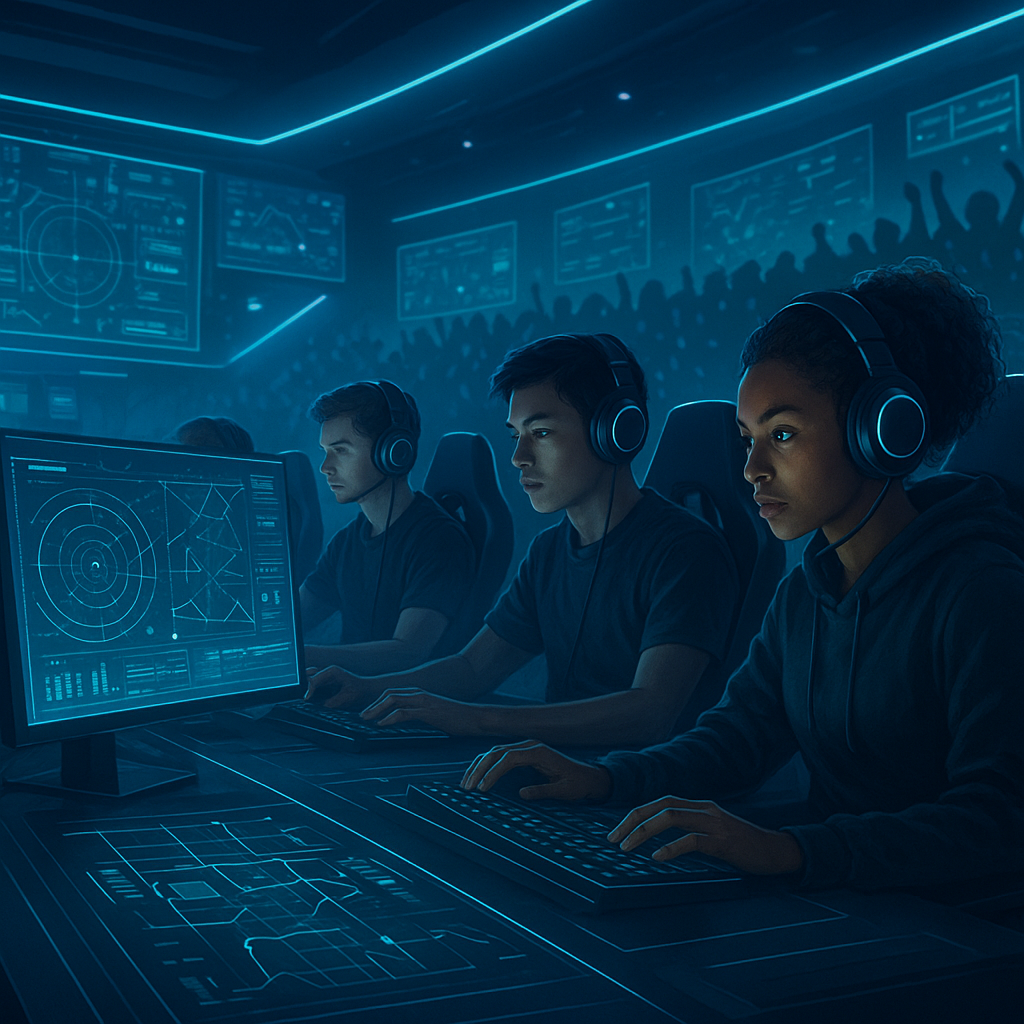
Esports teams operate in high-pressure environments where split-second decisions and flawless coordination determine outcomes. Advanced strategies now extend into optimizing communication pathways and team dynamics, leveraging insights from neuroscience and psychology.
Teams meticulously design communication protocols that minimize cognitive load and maximize clarity. This involves standardized callouts, pre-defined response plans, and adaptive communication hierarchies tailored to each game’s tempo. Voice analysis tools assess stress and fatigue levels, enabling support staff to intervene before performance degradation.
Beyond communication, psychological conditioning plays a vital role. Mental resilience training, mindfulness exercises, and conflict resolution workshops are incorporated into regular routines. Such approaches help maintain focus and cohesion during intense tournaments.
Scientific studies have shown that synchronized neural activity among team members correlates with better in-game coordination. Consequently, some organizations experiment with neurofeedback devices during practice sessions to enhance team flow and decision-making speed.
- Standardized callout lexicons enhance clarity and reduce miscommunication.
- Adaptive leadership models shift decision authority based on situational demands.
- Mental training programs improve stress management and focus under pressure.
- Neurofeedback tools track cognitive synchronization to boost team synergy.
“High-level esports competition is fundamentally a team sport. The best players lose without synergy; the best teams win because of it.” — Marco Chen, Head Coach, Phoenix Esports
Immersive Technologies and AI: The New Frontiers of Competitive Edge
2026 marks a watershed moment as AI and immersive technologies redefine training and competition in esports. Virtual reality (VR) and augmented reality (AR) environments are now standard tools for practice, allowing players to simulate scenarios with unprecedented realism and variability.
AI-driven coaching assistants provide personalized feedback, analyzing micro-movements, reaction times, and decision patterns. These systems can detect subtle weaknesses and suggest targeted drills. Additionally, AI opponents with dynamic difficulty scaling challenge players to adapt continuously.
Immersive tech also enhances spectator experience, but for competitors, it offers strategic advantages by enabling deeper scenario rehearsals and mental conditioning. Some teams utilize mixed-reality setups to study opponents’ playstyles in a 3D space, gaining spatial understanding beyond traditional video analysis.
Furthermore, AI tools help with draft strategy in hero selection phases by running thousands of simulations against possible opponent picks. This has led to more nuanced and less predictable team compositions.
- VR/AR training modules simulate high-pressure environments.
- AI coaching systems deliver granular, real-time performance analysis.
- Dynamic AI opponents foster adaptability and skill growth.
- Simulation engines optimize draft and composition strategies.
This synergy of technology and gameplay expertise exemplifies the modern esports ecosystem’s complexity and sophistication.
Looking Ahead: The Future Trajectory of Esports Strategy
As esports continues to mature, the arms race for strategic innovation will only intensify. Emerging trends suggest several key areas to watch:
- Personalized AI Tutors: Tailored training programs powered by machine learning to optimize individual player growth trajectories.
- Cross-Disciplinary Integration: Greater collaboration with cognitive scientists, biomechanists, and data engineers to refine training methodologies.
- Ethical AI Use: Establishing boundaries around AI assistance to preserve competitive integrity.
- Global Talent Pipelines: Expanding scouting and development programs worldwide using AI-driven analytics.
Industry experts emphasize the importance of adaptability and innovation. Organizations that embrace holistic, science-based approaches will set new standards for competitive excellence.
For those interested in the broader cultural and economic shifts accompanying esports’ ascent, TheOmniBuzz offers detailed insights in How Esports Is Redefining Competition, Culture, and Commerce in 2026 and How AI and Immersive Tech Are Shaping Esports’ Next Frontier. These articles complement the strategic focus here by illuminating the ecosystem’s multifaceted growth.
“The future of esports strategy lies at the intersection of human creativity and artificial intelligence, creating a hybrid intelligence that transcends traditional competitive boundaries.” — Elena Martinez, Director of Esports Innovation, Global Gaming Federation
In conclusion, mastering esports today demands a fusion of deep analytical rigor, psychological insight, and technological innovation. Teams that can harness these elements holistically will not only dominate tournaments but also shape the evolving narrative of competitive gaming. As the industry expands, these advanced strategies will become the blueprint for success, inspiring new generations of players and fans alike.