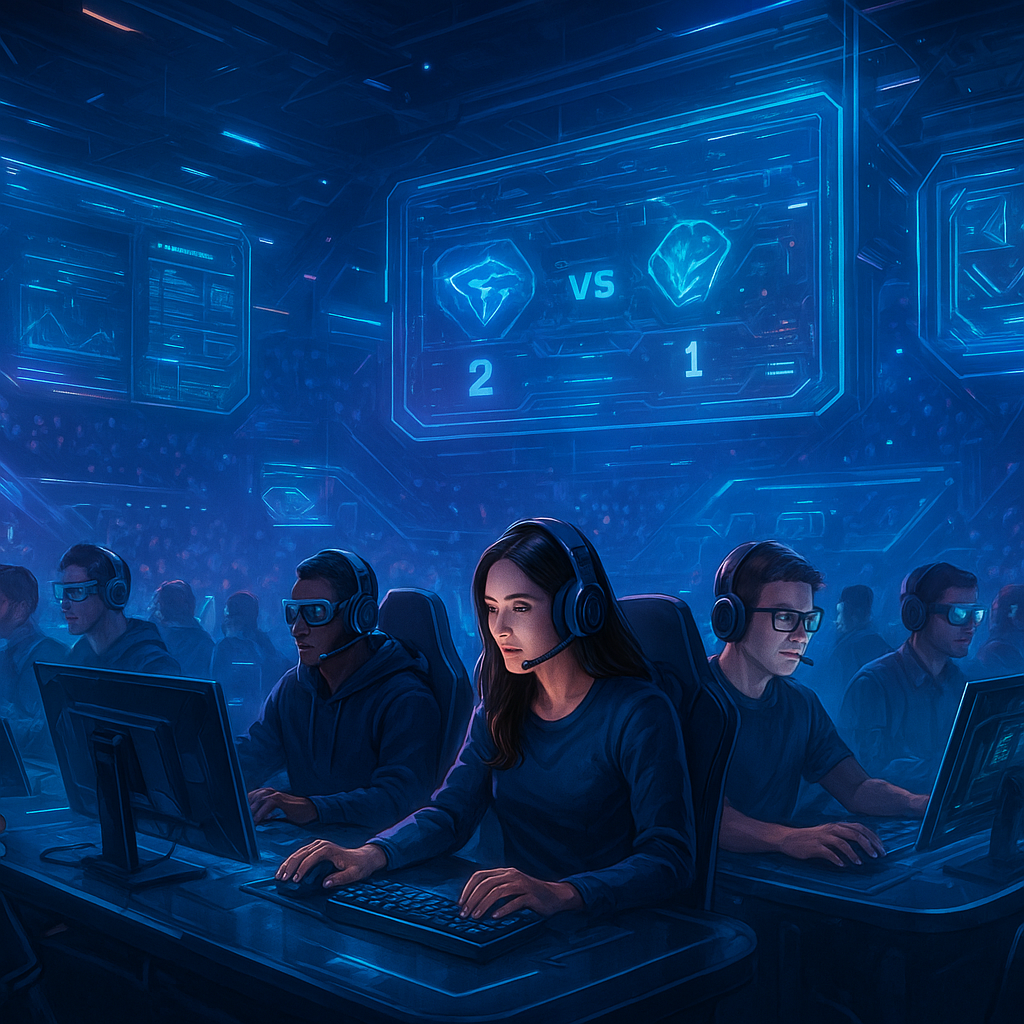
Opening the Arena: A New Dawn for Esports
In the summer of 2026, the crowd at the HyperX Arena in Seoul watched in awe as a player donned a full neural interface headset, seamlessly commanding his in-game character through thought alone. This moment encapsulates the rapid evolution of esports, thrusting it from a spectator sport reliant on traditional controls into an immersive, multisensory battleground. The global esports audience has now surpassed 750 million, with revenues exceeding $7.8 billion, according to industry analysts. Yet, these numbers only scratch the surface of the seismic shifts underway.
Esports is no longer just a competitive pastime. It is a crucible where technology, entertainment, and culture converge, accelerated by breakthroughs in artificial intelligence (AI), augmented reality (AR), and blockchain. The ecosystem has matured, attracting mainstream investments, regulatory scrutiny, and innovative models that challenge conventional sports and digital entertainment norms.
As we stand amid this transformation, understanding the forces reshaping esports is crucial for stakeholders—from players and fans to investors and policymakers. This article explores the dynamic landscape of esports in 2026, anchored in data, expert insight, and real-world examples. It also draws connections to broader gaming industry trends discussed in How Esports Is Redefining Competition, Culture, and Commerce in 2026 and Inside Esports: Unraveling the Forces Behind Competitive Gaming’s Global Surge.
“The integration of AI-driven coaching and neural control interfaces is not the future—it’s the present, and it’s revolutionizing how competitive gaming is played and consumed.” — Dr. Elena Morozova, Esports Technology Researcher
From Arcade Cabinets to Neural Interfaces: Tracing Esports’ Evolution
The roots of esports stretch back to the 1970s and 1980s arcade tournaments, but its modern identity took shape with the rise of internet connectivity and competitive PC gaming in the early 2000s. Titles like StarCraft, Counter-Strike, and Dota 2 established esports’ cultural and economic foundations, especially in South Korea and China.
By the 2010s, esports had become a global phenomenon, supported by streaming platforms such as Twitch and YouTube Gaming. The decade saw the emergence of professional leagues, franchising models, and substantial sponsorship deals. However, the reliance on conventional input devices—keyboards, mice, and controllers—limited the depth of player immersion and spectator engagement.
In the early 2020s, accelerated adoption of AI tools began transforming player training and game design. AI-powered analytics provided granular insights into player behavior, while machine learning algorithms enhanced matchmaking fairness and viewer personalization. Concurrently, AR and VR hardware steadily improved, enabling limited experiments with immersive esports events.
These developments laid the groundwork for today’s paradigm shift. Neural interface technologies, originally developed for medical and military applications, have been adapted to esports, allowing players to execute complex commands without physical input. Meanwhile, blockchain has introduced new models of ownership and monetization through NFTs and decentralized tournaments.
Data-Driven Disruption: Core Trends Shaping Esports in 2026
The esports ecosystem is now a multifaceted network driven by technological innovation, audience diversification, and regulatory evolution. Key data points highlight this transformation:
- Audience Growth: The global esports audience grew from 650 million in 2024 to 750 million in 2026, expanding into emerging markets such as Southeast Asia and Latin America.
- Revenue Streams: Sponsorships and advertising remain dominant, but new income sources include AI-enhanced coaching services, NFT collectibles, and immersive event ticketing.
- Player Earnings: The average professional player salary increased 22% since 2023, bolstered by revenue sharing from digital assets and personalized content.
- Technological Adoption: Neural interface devices are now standard in top-tier tournaments, reducing input latency by up to 70% compared to traditional peripherals.
- Diversity and Inclusion: Female participation in competitive esports rose to 28%, supported by dedicated leagues and anti-harassment policies.
These trends reflect a maturation phase but also new challenges. The growing complexity of platforms requires robust governance to prevent fraud and ensure fair play. Furthermore, rising concerns about mental health and burnout among pro players have prompted calls for improved support systems.
“Esports is entering a new chapter where the lines between player and machine blur, demanding ethical frameworks and holistic care models for athletes.” — Jasmine Lee, CEO of ProGaming Alliance
2026 Spotlight: Innovations Reshaping Competition and Consumption
This year has witnessed several landmark developments driving esports into uncharted territory. Neural interface startups like NeuroPulse and Synaptech have partnered with major game publishers to integrate brain-computer interfaces (BCIs) into flagship titles. This integration allows players to control avatars through thought patterns, bypassing traditional latency constraints.
On the spectator front, AR-enhanced broadcasts offer viewers interactive overlays showing real-time biometric data of players, strategic heatmaps, and customizable camera angles. These innovations have elevated viewer engagement, with average watch times increasing by 35% compared to standard streams.
Blockchain technology underpins new decentralized tournament platforms, enabling transparent prize pools and verifiable player rankings. Smart contracts automate payouts and sponsorship deals, reducing administrative overhead and increasing trust among participants.
Moreover, AI-driven content creation tools now assist commentators by generating instant game summaries, predictive analyses, and dynamic storylines, enriching the narrative experience for fans.
Industry-wide, major esports organizations are investing heavily in player wellness programs incorporating AI-monitored health metrics and virtual therapy sessions. These initiatives aim to sustain career longevity and address the psychological stresses unique to competitive gaming.
Industry Voices: Insights from Thought Leaders and Analysts
Leading figures across esports and technology sectors emphasize the blend of opportunity and responsibility facing the industry. Dr. Morozova, a pioneer in esports neurotechnology, remarks:“The convergence of AI and neural tech is unlocking performance levels previously thought impossible, but it raises profound questions about fairness and identity in competition.”
Jasmine Lee highlights the socio-cultural dimensions: “Esports has outgrown its niche roots. As it becomes mainstream, fostering diversity and combating toxicity are critical to its sustainable growth.”
Market analysts predict that investments in esports-related AI startups will exceed $1.2 billion in 2026 alone, signaling robust confidence in the sector’s potential. However, they caution that regulatory frameworks lag behind innovation, creating risks around data privacy and intellectual property.
These expert perspectives echo themes explored in How Indie Games Are Reshaping the Gaming Industry’s Future, particularly regarding creative autonomy and community-driven ecosystems.
Looking Ahead: What to Watch in Esports’ Next Phase
The trajectory of esports over the next five years will likely hinge on several critical factors:
- Technological Integration: Wider adoption of BCIs and immersive AR/VR hardware will redefine player skillsets and spectator experiences.
- Regulatory Evolution: Governments and industry bodies must develop standards for fair competition, data security, and athlete protection.
- Monetization Models: Continued expansion of NFT economies and decentralized platforms will reshape ownership and revenue sharing.
- Global Market Expansion: Emerging regions will contribute significant audience growth and talent diversification.
- Player Welfare: Holistic approaches to mental and physical health will become industry norms.
Stakeholders who adapt to these shifts and prioritize ethical innovation will shape esports’ long-term success. Meanwhile, fans can expect increasingly immersive, personalized, and socially connected experiences.
As esports continues to blur the boundaries between human skill and technological augmentation, it stands poised not just as a game but as a cultural phenomenon redefining competitive entertainment in the digital age.
For a deeper exploration of esports’ cultural and commercial impact, see our detailed analysis in How Esports Is Redefining Competition, Culture, and Commerce in 2026.