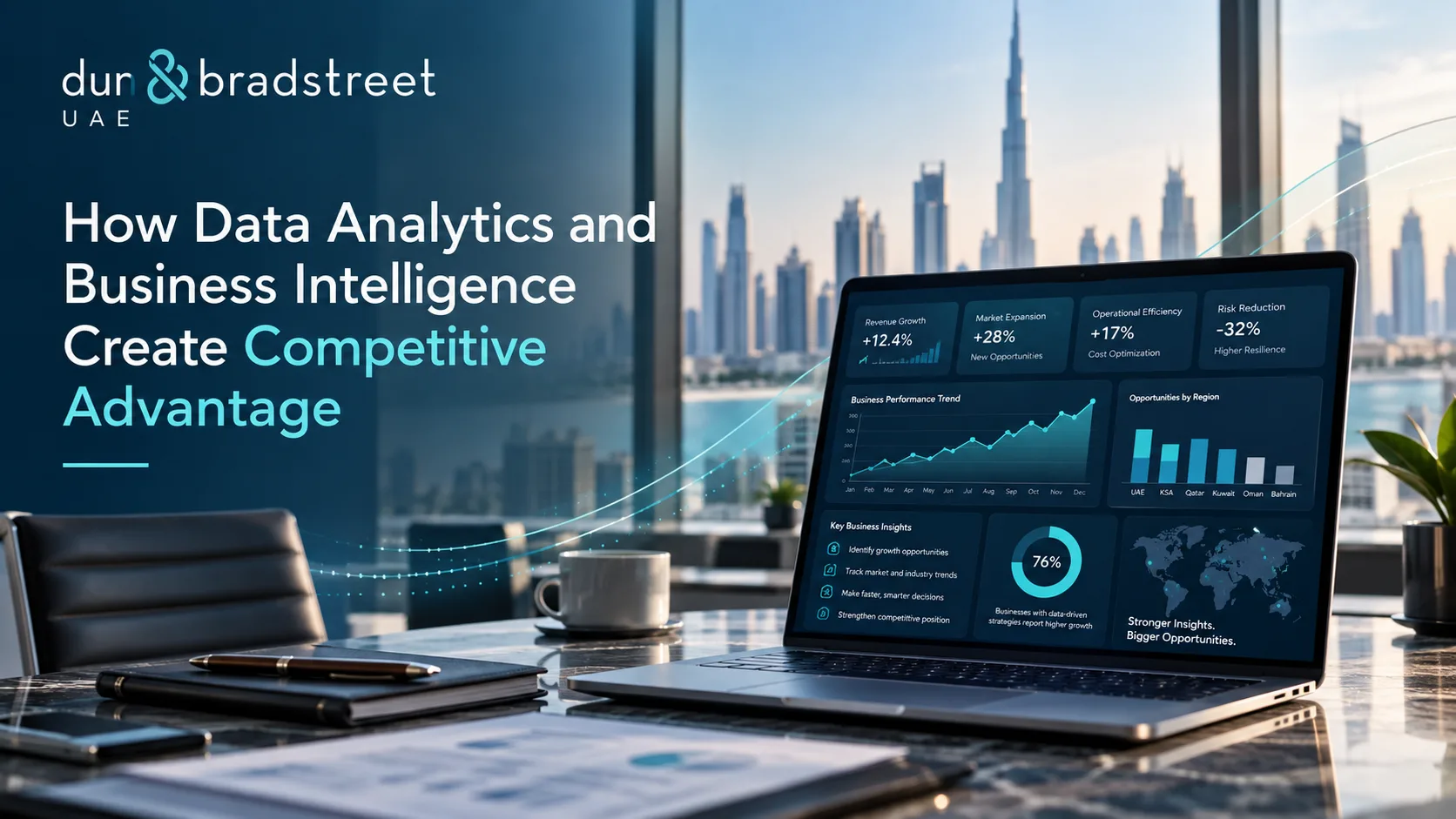
Businesses today generate enormous amounts of information across sales, finance, customers, suppliers, operations, and markets. Yet having access to data alone does not automatically improve business performance. The real advantage comes from turning accurate, relevant, and trusted information into insights that support faster and more confident decisions.
Data analytics and business intelligence help organisations understand what is happening across their operations, identify emerging opportunities, detect risks, and improve how resources are used. When supported by reliable business data, these capabilities can become an important source of competitive advantage.
Trusted Data Is the Foundation of Effective Business Intelligence
Business intelligence is only as reliable as the information behind it. If company records are outdated, incomplete, duplicated, or inconsistent, even advanced analytics tools can produce misleading conclusions.
Many organisations manage information across multiple systems, including customer relationship management platforms, finance software, procurement systems, and spreadsheets. Without consistent data standards, the same customer or supplier may appear differently across different databases.
Trusted business data helps organisations create a more accurate view of the companies they interact with. Reliable information on company identity, ownership, financial position, industry, location, and commercial relationships can strengthen dashboards, reporting, segmentation, forecasting, and risk assessment.
Improving data quality therefore becomes a critical first step in building effective analytics and business intelligence capabilities.
How Data Analytics Supports Business Growth
One of the most valuable applications of data analytics is identifying where future growth may come from.
By analysing customer, market, and company data, businesses can identify profitable customer segments, prioritise high-potential prospects, understand purchasing patterns, and uncover opportunities in new industries or markets.
Sales teams can use analytics to focus resources on companies that closely match their ideal customer profile. Marketing teams can improve audience segmentation and campaign targeting. Business development teams can analyse market trends and identify sectors where demand may be increasing.
Business intelligence also makes it easier for management teams to compare performance across markets, products, customer groups, and sales channels.
Instead of relying primarily on assumptions or historical experience, organisations can use measurable information to decide where to invest, which opportunities to pursue, and which customers are most likely to generate long-term value.
Strengthening Risk Management With Business Intelligence
Growth decisions must also be balanced against commercial and financial risk.
Businesses regularly make decisions about extending credit, onboarding suppliers, entering partnerships, and working with new customers. Each relationship introduces a different level of risk.
Data analytics can help organisations evaluate these risks more systematically. Credit information, payment behaviour, financial indicators, company characteristics, and historical transaction data can all contribute to a more complete risk assessment.
Business intelligence tools can also help companies monitor existing customers and suppliers instead of assessing them only during onboarding.
Changes in payment behaviour, financial performance, ownership, or other business indicators may signal increasing risk. Identifying these developments earlier can help organisations review credit limits, adjust payment terms, diversify suppliers, or investigate potential issues before they create significant losses.
Combining internal business information with reliable external data can therefore strengthen both risk visibility and decision-making.
Supporting Compliance and Business Due Diligence
Data also plays an important role in compliance and due diligence.
Before entering commercial relationships, organisations may need to verify company identities, understand ownership structures, assess counterparties, and identify potential compliance concerns.
Accurate business information can support processes such as customer and supplier due diligence, corporate identity verification, ownership analysis, and Ultimate Beneficial Owner checks.
Analytics can make these processes more efficient by helping compliance teams prioritise entities according to risk. Rather than reviewing every company using exactly the same approach, organisations can use available information to identify relationships requiring additional investigation.
Continuous monitoring can further strengthen compliance by helping businesses identify material changes after a customer, supplier, or partner has already been approved.
Improving Operational Efficiency Through Better Data
Business intelligence also creates value inside day-to-day operations.
When information is spread across disconnected systems and spreadsheets, teams often spend considerable time collecting, verifying, and reconciling data before they can make decisions.
Centralised reporting and analytics can reduce this administrative burden. Decision-makers can monitor important performance indicators through dashboards, compare results across departments, improve forecasting, and identify operational bottlenecks more quickly.
Better data can also reduce duplicate processes and create greater consistency between sales, finance, procurement, compliance, and management teams.
As a result, employees can spend less time searching for information and more time acting on it.
Turning Business Intelligence Into Competitive Advantage
Competitive advantage does not come from analytics technology alone. It comes from combining effective tools with reliable information and embedding data-driven decision-making across the organisation.
Companies that achieve this can identify opportunities earlier, respond faster to market changes, manage commercial risks more effectively, strengthen compliance, and improve operational performance.
Trusted business information is therefore becoming an increasingly important strategic asset. Dun & Bradstreet UAE supports organisations with business data and insights that can help strengthen decision-making across growth, risk management, compliance, and operational planning.
For organisations operating in increasingly complex markets, the ability to transform trusted data into actionable intelligence can make the difference between simply reacting to change and making better-informed decisions ahead of it.