
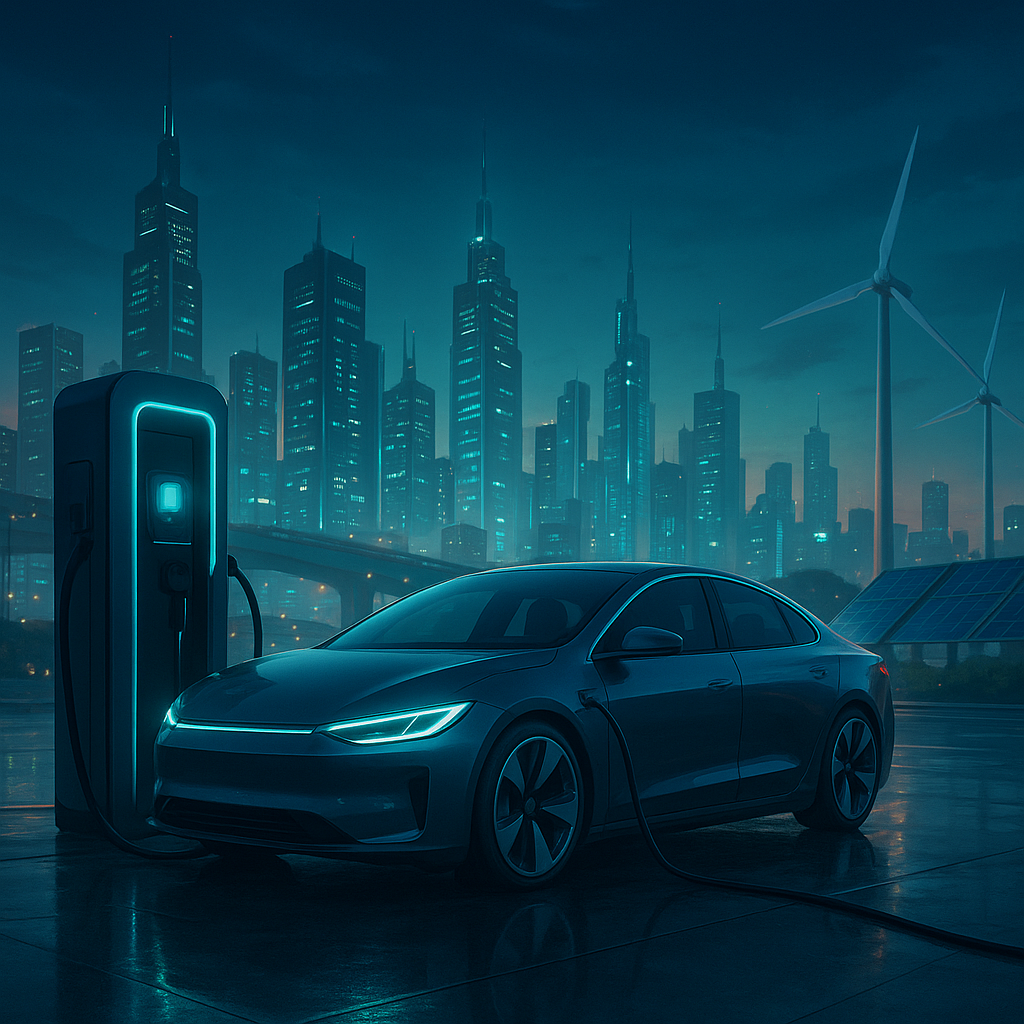
The Quiet Revolution on Our Roads
Imagine a morning commute in 2026 where the hum of combustion engines has all but faded, replaced by the near-silent glide of electric vehicles (EVs). This is no futuristic fantasy; it is rapidly becoming reality. Global EV sales surpassed 20 million units in 2025, marking an unprecedented 35% increase year-over-year, according to industry reports. Cities from Oslo to Shanghai now boast over 50% of new car sales as electric, signaling a seismic shift in personal transportation.
This transformation is not merely about cleaner cars; it reshapes sustainability paradigms, urban infrastructure, and energy systems. Yet, while EV adoption accelerates, the readiness of power grids, raw material supply chains, and consumer sentiment pose critical challenges. The narrative of electric vehicles in 2026 is one of remarkable growth shadowed by complex systemic pressures.
“The rapid adoption of EVs reflects not only technological progress but society’s urgent response to climate imperatives.” — Dr. Melissa Huang, Sustainable Mobility Expert
Tracing the Journey: From Niche to Norm
The story of electric vehicles begins over a century ago, but their path to mainstream acceptance has been fraught with technological, economic, and political hurdles. Early 2000s models were hindered by limited battery capacity, prohibitive costs, and sparse charging infrastructure. By the mid-2010s, a combination of advances in lithium-ion battery technology, government incentives, and growing environmental awareness ignited demand.
Policy frameworks have been pivotal. Europe’s aggressive CO2 targets and China’s subsidies catalyzed manufacturing scale-up. The U.S. followed with federal incentives and infrastructure investments under the Bipartisan Infrastructure Law of 2021. Industry giants like Tesla, Volkswagen, and BYD drove innovation and competition, pushing battery costs down by nearly 90% since 2010. This trajectory is well-documented in TheOmniBuzz’s coverage, particularly in Electric Vehicles Are Booming — But the Grid Isn't Ready.
However, the transition has not been uniform globally. Developing economies face unique obstacles including affordability and grid reliability. Meanwhile, supply chain issues for critical minerals like lithium, cobalt, and nickel have intermittently slowed production, a factor that remains relevant today.
Numbers, Nuances, and the Sustainability Equation
At the heart of the EV revolution lies its sustainability promise. Electric drivetrains produce zero tailpipe emissions, crucial for urban air quality and climate goals. Yet, a comprehensive analysis must consider life cycle impacts, from mining to manufacturing and electricity generation.
Recent lifecycle assessments show that EVs reduce greenhouse gas emissions by an average of 60% compared to internal combustion engine vehicles, assuming electricity grids continue decarbonizing. However, regional disparities exist; in coal-heavy grids, carbon savings are less pronounced. According to the International Energy Agency, global electricity generation has shifted significantly towards renewables, with solar and wind now accounting for over 40% of production in 2026, a major improvement supporting EV environmental credentials.
Battery production remains energy-intensive. Efforts to recycle batteries and develop solid-state technologies are underway, potentially reducing environmental footprints further. Meanwhile, the extraction of raw materials raises ethical and ecological questions, prompting the industry to pursue responsible sourcing and circular economy strategies.
“Sustainability in EVs is not binary; it’s a spectrum that improves as technology and policy evolve.” — Javier Morales, Lead Analyst at GreenTransport Analytics
Key Sustainability Metrics of EVs in 2026
- Average battery energy density: 350 Wh/kg, up 25% since 2022
- Global EV market share: Approximately 30% of new car sales
- EV-related raw material demand growth: 15% annually
- Share of renewable electricity globally: 42%
- Battery recycling rates: Estimated at 35%, with targets to exceed 70% by 2030
2026 Developments Shaping the Electric Vehicle Landscape
This year marks a milestone in EV adoption and innovation. Governments worldwide have intensified support for electrification, with over 25 countries committing to phase out internal combustion engine sales by 2035. The U.S. expanded its EV tax credits, now including a wider range of models and income brackets, improving affordability.
Automakers unveiled new model lineups emphasizing affordability and range. For instance, Hyundai’s Ioniq 7 and Tesla’s Cybertruck have garnered significant consumer interest, blending utility with efficiency. Battery electric vehicles (BEVs) now dominate, but plug-in hybrids (PHEVs) remain relevant in markets lacking charging infrastructure.
Charging infrastructure is evolving rapidly. Public fast chargers have doubled globally since 2023, exceeding 1.8 million units, according to data from the Global EV Outlook. Wireless charging and vehicle-to-grid technologies are emerging, allowing EVs to feed energy back to the grid during peak demand, as explored in Electric Vehicles Are Booming — But the Grid Isn't Ready.
Urban planning is adapting, with cities integrating EVs into public transport fleets and creating low-emission zones. Meanwhile, battery swapping stations have gained traction in Asia, offering rapid turnaround for taxis and delivery vehicles.
2026 Highlights in EV Sector
- Global EV stock: Surpassed 50 million vehicles
- Charging stations installed: Over 3 million worldwide
- Battery cost per kWh: Dropped below $80, a historic low
- New battery chemistries: Nickel-manganese-cobalt (NMC) and solid-state cells entering commercial production
- Policy milestones: EU’s Fit for 55 package enforcing stricter emission standards
Perspectives from Industry and Sustainability Experts
Expert opinion underscores a nuanced future for electric vehicles. Industry leaders emphasize innovation and collaboration. Mary Chen, CEO of VoltEdge Motors, stated, “Our focus is on integrating sustainability across the value chain, from raw materials to end-of-life vehicle management.”
Environmental advocates caution about complacency. “EVs are a vital step, but electrification must be coupled with grid decarbonization and smarter urban design,” notes Dr. Lars Petersen from the International Council on Clean Transportation.
The utility sector is grappling with demand surges. Grid operators are investing in smart grid technologies and storage solutions to manage peak loads driven by EV charging. These shifts demand regulatory agility and public-private partnerships.
“The EV revolution is a systems challenge as much as a product revolution.” — Anika Rao, Energy Systems Strategist
Social equity also emerges as a critical theme. Ensuring low-income communities benefit from EV incentives and infrastructure is central to inclusive sustainability. Public transit electrification and shared mobility services contribute to broader access.
What Lies Ahead: Watching the Road to 2030
Looking forward, several trends and challenges will shape the trajectory of electric vehicles and their role in sustainability.
- Battery innovation: Solid-state technology promises higher energy density and safety but faces scale-up hurdles.
- Grid integration: Vehicle-to-grid (V2G) systems could transform EVs into distributed energy resources, enhancing grid resilience.
- Material supply chains: Recycling and alternative materials will be vital to reduce dependency on critical minerals.
- Policy evolution: Dynamic regulations will need to balance market incentives with environmental safeguards.
- Consumer behavior: Education and experience will continue influencing EV adoption rates.
Industry watchers also foresee urban landscapes evolving. Smart charging hubs and integrated mobility platforms may become standard, supported by AI-driven energy management. The interplay between electric vehicles and renewable energy generation will deepen, creating synergies critical for decarbonization goals.
TheOmniBuzz’s ongoing coverage offers insights into these emerging dynamics, including analyses in Are Consumers Considering Electric Vehicles? A Deep Dive into the 2026 Landscape.
Case Studies: Real-World Impact of Electric Vehicle Adoption
Several regions provide instructive examples of EV integration and sustainability outcomes.
Norway: Long a pioneer, Norway’s comprehensive incentives and charging network have resulted in EVs constituting over 80% of new car sales in 2025. The government’s holistic approach, combining tax breaks, toll exemptions, and public awareness, has made EVs accessible and convenient, cutting urban emissions significantly.
China: The largest EV market globally, China’s push includes mandates for local production, substantial subsidies, and infrastructure investments. Cities like Shenzhen have electrified entire bus and taxi fleets, delivering measurable air quality improvements. Challenges remain in rural electrification and supply chain sustainability.
California, USA: With aggressive targets and a massive charging infrastructure rollout, California has become a bellwether for the U.S. transition. Public-private partnerships in the state have accelerated innovation in fast-charging and grid integration, while equity programs target underserved communities.
These cases illustrate diverse pathways to electrification, emphasizing tailored policies and stakeholder engagement. They also highlight the critical role of infrastructure readiness, a theme echoed across TheOmniBuzz’s articles on grid challenges related to EV growth.