The advancement of artificial intelligence (AI) has gone beyond science fiction and has become a revolutionary force impacting the future of many industries. Its rising expertise and multiple applications are transforming processes, opening up new opportunities, and necessitating a paradigm shift in how businesses function. Integrating AI software development is no longer a competitive advantage, but a requirement for future success. The global AI Consulting market is estimated to grow at a CAGR of 37.46% over the forecast period, reaching $630611.25 million by 2028.
AI's impact on businesses
Artificial intelligence is transforming the global business scene, providing businesses with strong tools for streamlining processes, cutting costs, and making better decisions. Its uses are altering industries as diverse as healthcare, banking, retail, and manufacturing. Businesses may increase productivity and profitability by using AI technologies to automate repetitive operations, acquire deeper insights from data, and create tailored consumer experiences on a large scale.
AI is not limited to a few specific industries; rather, its influence is widespread and affects all industries. AI is expected to be integrated into practically every element of company operations over the next decade, altering how businesses compete and create in an increasingly digital world.
Industries being transformed by AI-driven solutions
1. AI Revolutionising Manufacturing:
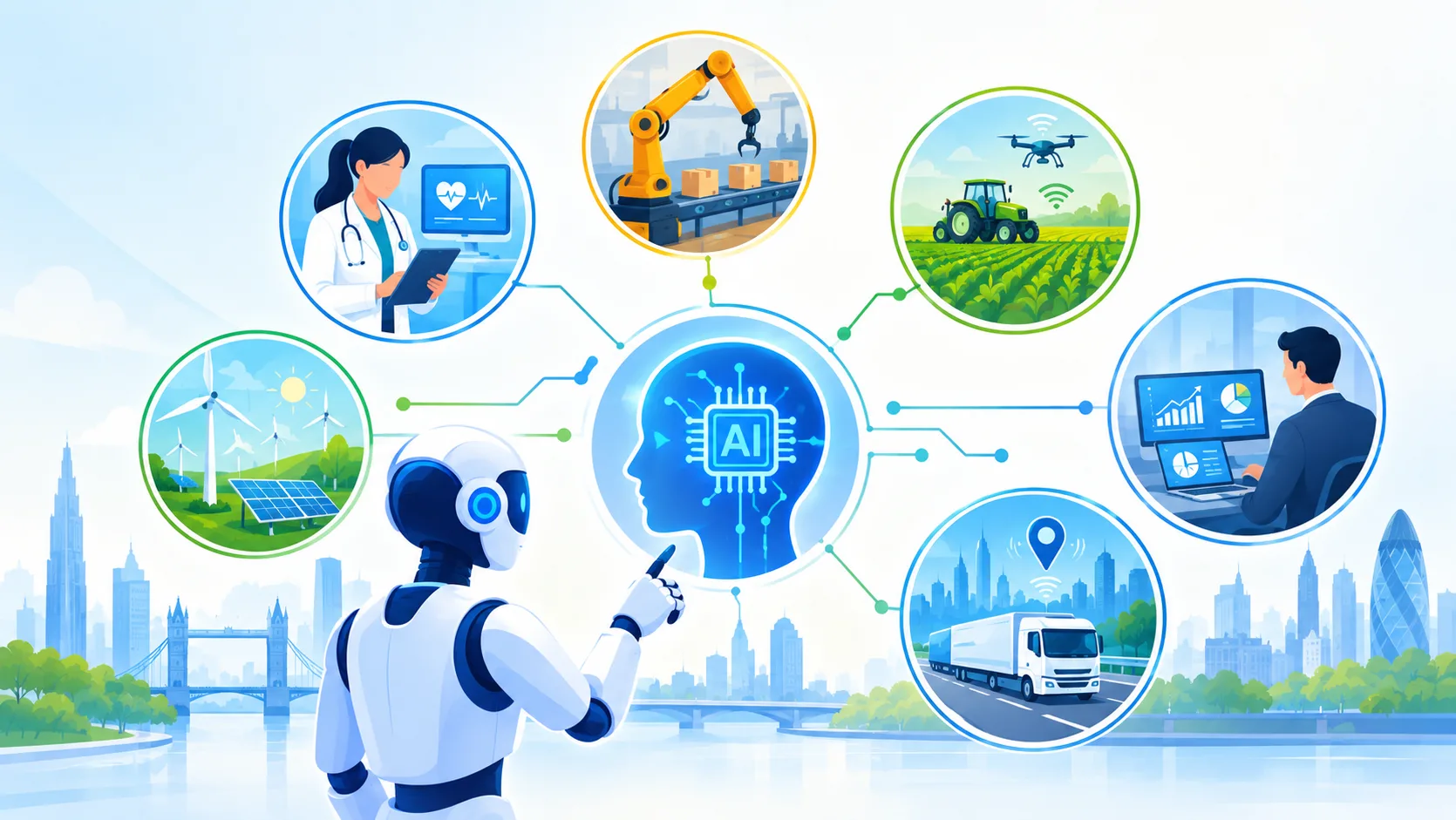
AI is streamlining production lines by analysing data to find bottlenecks and inefficiencies in the manufacturing process. Predictive maintenance, which is powered by AI, enables proactive equipment repair, reducing downtime and productivity losses. Furthermore, AI-powered supply chain management streamlines logistics, assuring seamless material flow and production continuity.
2. AI Redefining Healthcare:
The healthcare sector is experiencing a significant effect from AI. AI-Powered diagnostic tools allow medical personnel with assessing medical pictures with better precision, resulting in earlier and more exact diagnosis. By tailoring drug schedules and treatment strategies based on specific patient data, AI is also significantly improving patient care. AI advancements have resulted in significant achievements, such as virtual assistants that provide companionship and support to patients, and chatbots that provide easily accessible medical information.
3. AI Shaping the Financial Landscape:
The financial industry is using artificial intelligence to detect and prevent unauthorised transactions. AI-based risk management entails evaluating large datasets to identify financial risks and forecast probable losses, allowing for more informed decision-making. Additionally, AI-powered chatbots are redefining customer service by providing 24/7 assistance and tailored financial advice, hence improving user experience and satisfaction. AI is also influencing financial strategy by offering insights into market patterns and making data-driven investing decisions.
4. AI Powering Retail Innovation:
The retail business is using artificial intelligence to tailor the user experience with targeted recommendations and promotions. AI-powered inventory management systems improve stock levels by reducing stockouts and overstocking. Furthermore, AI is transforming marketing by analysing customer data and personalising efforts, resulting in higher conversion rates and customer loyalty.
5. AI Reshaping Entertainment and Media:
By using AI to recommend material, the media and entertainment industry is customising offers to the tastes of each individual viewer. AI is also used in audience analysis, giving content producers important information about the tastes and behaviour of viewers. The future of entertainment is full of intriguing possibilities, with AI potentially contributing to creative processes such as producing individualised stories or adapting music compositions to individual interests.
What industries might AI affect over the next decade?
- Energy: AI will optimise energy usage and drive the shift toward renewable sources. For instance, by anticipating usage trends and improving grid balancing, AI systems can control the demand for electricity, opening the door for sustainable energy solutions.
- Transportation: Autonomous vehicles and AI-enhanced logistics will revolutionise the way goods and people move across the globe. AI will optimise delivery routes, cut fuel usage, and develop smarter traffic management systems to enhance urban mobility.
- Agriculture: AI-powered precision farming will help optimise crop yields and manage environmental impacts, supporting sustainable agriculture. Artificial intelligence will optimise delivery routes, cut fuel consumption, and develop smarter traffic management systems to enhance urban mobility.
- Real estate: AI-powered analytics will enhance real estate investments by predicting market trends, assessing property values, and managing tenant relationships. Real estate companies will use AI to analyse massive datasets, improving decision-making and reducing risks.
- Telecommunications: AI will drive innovation in the telecommunications industry by optimising network performance, improving customer service through chatbots, and analysing large volumes of data for better service delivery.
- Education: AI-powered platforms will revolutionise education by offering personalised learning experiences, automating administrative tasks, and providing students with AI-driven tutors that adapt to their learning style and pace.
Conclusion
As AI technologies continue to evolve and permeate various sectors, businesses that harness these tools will not only streamline operations but also position themselves for sustained growth and innovation. From manufacturing and healthcare to finance and entertainment, AI-powered business transformation is paving the way for a future where companies can thrive in an increasingly complex and competitive landscape. By investing in AI, organisations can unlock new levels of efficiency, creativity, and customer satisfaction, ensuring they remain at the forefront of their industries.