
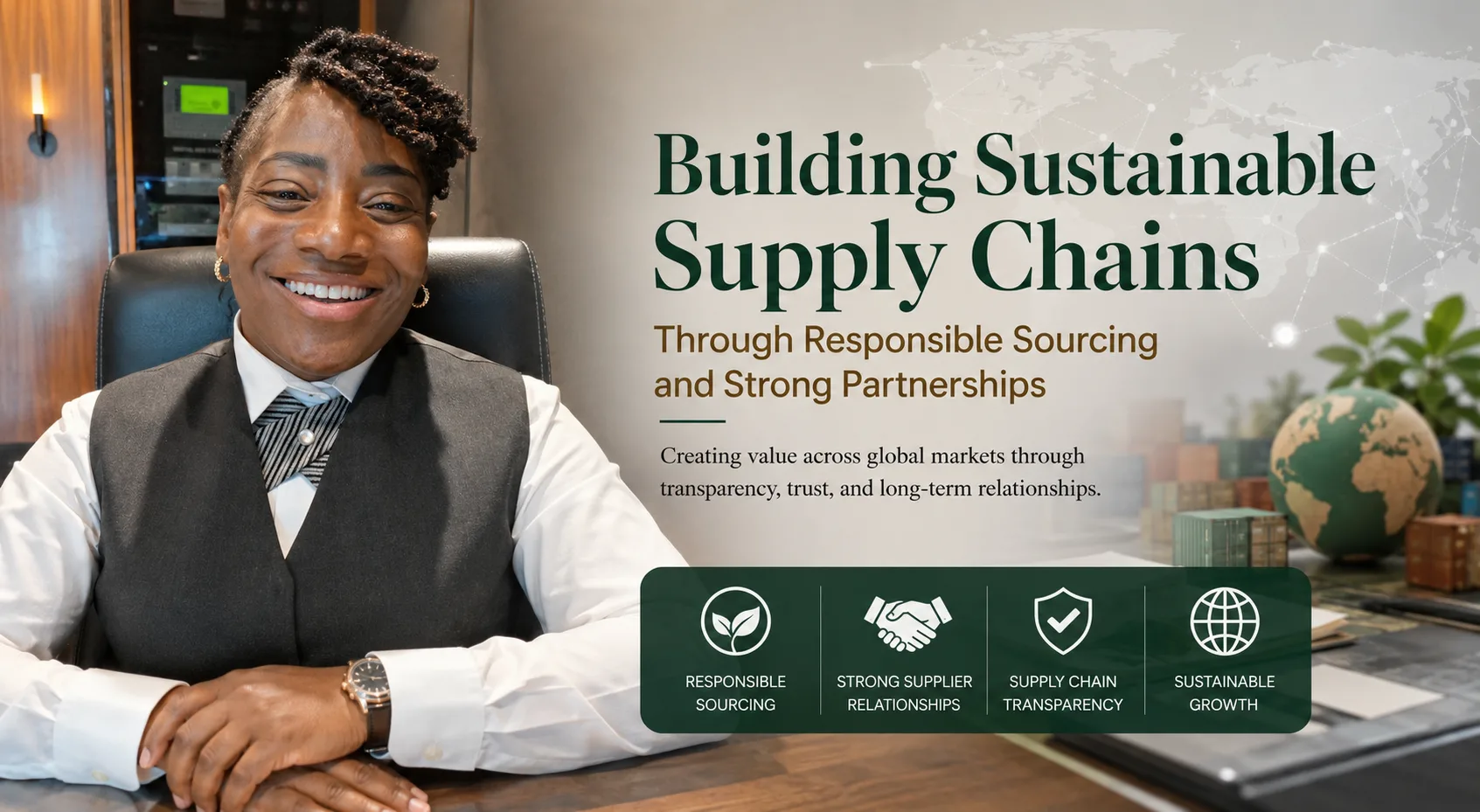
Global supply chains are being reshaped by a simple but important realization: the way a product is sourced can influence far more than its final price. Businesses are increasingly looking at supplier practices, environmental responsibility, transparency, logistics, and long-term relationships when making sourcing decisions. The discussion around Katrina Pierce Sustainable Supply Chains reflects this wider shift toward building supply networks that are responsible, transparent, and capable of supporting long-term business goals.
For many years, procurement decisions were primarily driven by cost, availability, and delivery speed. Those factors remain important, but modern businesses are dealing with a more complicated environment. Disruptions, changing customer expectations, regulatory requirements, transportation challenges, and greater awareness of sourcing practices have made supply-chain management a strategic responsibility rather than a purely operational function.
Why Sustainable Supply Chains Matter
A sustainable supply chain is not simply one that uses environmentally friendly materials. It is a broader system that considers how products and materials are sourced, produced, transported, and delivered while taking economic, environmental, and social factors into account. The objective is to create a supply network that can remain reliable while reducing unnecessary risks and supporting responsible business practices.
This approach is becoming increasingly relevant because companies are now expected to understand more about the origins of the products they sell. Customers may want to know where materials come from, while business partners may expect suppliers to demonstrate responsible practices. At the same time, companies need supply networks that can continue operating when markets experience unexpected disruptions.
Sustainability therefore needs to be connected with practical business decisions. A company that develops strong supplier relationships, maintains accurate information, monitors quality, and improves sourcing transparency can create a more resilient operating model while also working toward broader sustainability objectives.
Moving Beyond Short-Term Procurement
Traditional procurement often focuses on achieving the lowest possible cost for a specific purchase. While cost efficiency is necessary, concentrating only on price can create hidden risks when supplier quality, reliability, communication, or ethical standards are overlooked.
A lower initial price may not represent the lowest overall business cost if a supplier regularly experiences delays, provides inconsistent quality, or lacks sufficient documentation. Disruptions can affect production schedules, customer relationships, inventory planning, and ultimately a company's reputation.
Responsible procurement takes a broader view. Instead of asking only how much a product or material costs, procurement teams can consider supplier reliability, quality standards, production practices, documentation, logistics capabilities, and the potential for a long-term working relationship.
This shift is closely connected with the principles associated with Katrina Pierce Sustainable Supply Chains, where sourcing is considered as part of a larger relationship between buyers, suppliers, producers, and international markets. The goal is not simply to complete a transaction but to create a sourcing framework that can remain dependable over time.
The Role of Supplier Relationships
Strong supplier relationships are one of the foundations of sustainable supply chains. A supplier is not simply a company that provides a product; in many cases, it becomes an important partner in maintaining quality, availability, and continuity.
Long-term relationships can improve communication because both sides gain a better understanding of expectations. Buyers can communicate quality requirements and delivery needs more clearly, while suppliers can provide information about production capacity, challenges, and opportunities for improvement.
Trust also makes problem-solving more effective. When a disruption occurs, organizations with established relationships may be able to communicate quickly and identify practical solutions rather than spending valuable time searching for new suppliers without sufficient information.
Strong relationships do not mean that businesses should stop evaluating suppliers. Responsible supply-chain management requires ongoing assessment, documentation, performance monitoring, and communication. The difference is that evaluation becomes part of a long-term partnership rather than a process used only when selecting a supplier.
Improving Supply Chain Transparency
Transparency is another important part of sustainable sourcing. Global supply networks can involve producers, processors, exporters, logistics providers, distributors, and other intermediaries. Without clear information, it can become difficult for businesses to understand where materials originate and how they move through the supply chain.
Better transparency allows companies to make more informed decisions. Supplier documentation, quality records, origin information, logistics data, and communication systems can all contribute to a clearer picture of supply-chain performance.
Technology is also changing the way businesses approach transparency. Digital records, inventory systems, logistics platforms, supplier databases, and traceability tools can help companies maintain better visibility across complex networks.
However, technology alone does not create transparency. Businesses need accurate information, consistent processes, and willing partners. A sophisticated system is only useful when the information entered into it is reliable and when organizations use that information to make better decisions.
Responsible Sourcing and Producer Relationships
Responsible sourcing also requires businesses to consider the people and communities involved in production. In agricultural and natural-ingredient supply chains, producers can be several steps removed from the final buyer, creating challenges around communication and market access.
Developing more direct and structured relationships can help reduce unnecessary complexity. Buyers can gain better visibility into production conditions and quality, while producers may benefit from more predictable demand and stronger connections with international markets.
This relationship can be particularly valuable in developing markets where producers may face barriers related to infrastructure, export documentation, logistics, or access to international buyers. A responsible sourcing model can help create more organized connections between production and global demand.
The broader objective is to create value across the supply chain rather than concentrating benefits at only one stage. When producers, suppliers, buyers, and customers all have stronger relationships, the overall network can become more stable and capable of adapting to change.
Managing Risk Across Global Supply Networks
Supply-chain risk has become an important consideration for businesses operating across borders. Transportation disruptions, geopolitical developments, changing regulations, material shortages, currency fluctuations, and unexpected changes in demand can all affect international sourcing.
A sustainable supply-chain strategy should therefore include risk management. Companies can reduce exposure by understanding supplier capabilities, maintaining appropriate documentation, diversifying critical sourcing where practical, and establishing clear communication procedures.
Supplier diversification can be useful, but it should not automatically mean replacing long-term relationships with a large number of unfamiliar suppliers. Every additional supplier can introduce new requirements for quality control, communication, compliance, and coordination.
The better approach is to understand which risks matter most and build appropriate resilience around them. Strong supplier relationships, reliable information, and clear contingency planning can help businesses respond more effectively when unexpected problems occur.
Sustainable Business Practices and Long-Term Value
Sustainability becomes more meaningful when it is connected to measurable business value. Responsible sourcing can support better quality management, improved supplier communication, stronger operational planning, and greater visibility across the supply chain.
Businesses can also benefit from considering sustainability during supplier selection rather than treating it as a separate initiative. Questions about sourcing practices, environmental impact, labor standards, traceability, packaging, transportation, and resource use can become part of procurement discussions.
This approach helps integrate sustainability into everyday decision-making. Instead of creating a sustainability programme that exists separately from procurement, companies can make responsible sourcing part of how they evaluate business performance.
The long-term value of this approach can be significant. A company with reliable suppliers, strong documentation, transparent processes, and responsible sourcing practices may be better positioned to maintain customer confidence and respond to changing market expectations.
The Importance of Global Trade
Global trade connects producers and consumers across regions, but international sourcing also requires careful coordination. Differences in regulations, documentation requirements, logistics systems, business practices, and market conditions can make cross-border transactions more complex than domestic procurement.
Businesses working internationally therefore need more than a supplier list. They need systems for communication, quality control, documentation, transportation, and relationship management.
The sustainable supply-chain perspective encourages companies to view global trade as a connected network rather than a series of individual transactions. When each part of the network is understood and managed carefully, businesses can create more predictable sourcing processes.
Professionals working in this area contribute by helping organizations understand these relationships and develop sourcing models that balance commercial objectives with responsible practices. This is where the professional perspective behind Katrina Pierce Sustainable Supply Chains becomes relevant to the broader discussion of modern global commerce.
How Businesses Can Strengthen Their Supply Chains
Building a more sustainable supply chain does not necessarily require businesses to redesign their entire operation at once. A practical starting point is to identify the most important suppliers, materials, and risks within the existing network.
Companies can then improve supplier documentation, establish clearer performance expectations, strengthen communication, and introduce more consistent quality checks. Over time, these improvements can create a more organized and transparent sourcing environment.
Businesses should also review their supply-chain information regularly. Supplier performance can change, markets can evolve, and new regulations can affect international sourcing requirements. Continuous improvement is therefore more useful than treating sustainability as a one-time project.
The strongest results often come when procurement, operations, logistics, finance, and leadership teams work together. Sustainable sourcing affects multiple areas of a business, so collaboration is essential for turning individual improvements into a stronger overall supply-chain strategy.
The Future of Sustainable Supply Chains
The future of supply-chain management is likely to involve greater transparency, stronger supplier relationships, better digital visibility, and more careful attention to responsible sourcing. Businesses will continue to face pressure to understand the environmental and social implications of their procurement decisions while maintaining competitive pricing and reliable operations.
Technology will play an important role in this transition. Digital traceability, data analytics, automated documentation, supplier-management platforms, and logistics systems can provide businesses with better information about their supply networks.
At the same time, the human side of supply chains will remain important. Technology can organize information, but trust, communication, negotiation, and collaboration still depend on people. Sustainable supply chains will therefore require a balance between digital capabilities and strong business relationships.
The broader lesson from Katrina Pierce Sustainable Supply Chains is that sustainability should not be viewed as separate from commercial success. Responsible sourcing, transparency, reliable partnerships, and operational discipline can work together to create supply networks that are both more resilient and more responsible.
Conclusion
Sustainable supply chains are becoming an important part of modern business strategy because companies can no longer evaluate sourcing decisions only through the lens of price and speed. Customers, partners, regulators, and businesses themselves increasingly want greater visibility into how products and materials move through global markets.
Responsible sourcing provides a practical framework for addressing these expectations. By developing strong supplier relationships, improving transparency, managing risk, and integrating sustainability into procurement decisions, businesses can create supply networks that support both operational reliability and long-term value.
The future of global trade will depend on organizations that can combine efficiency with responsibility. Businesses that invest in transparent processes, dependable partnerships, and sustainable business practices will be better prepared to navigate an increasingly connected and changing marketplace.
Ultimately, the discussion around Katrina Pierce Sustainable Supply Chains represents a wider movement in global commerce: the transition from short-term transactional sourcing toward more thoughtful, transparent, and relationship-driven supply-chain management.