The reliability of electrical power networks depends fundamentally on the health and stability of liquid-filled power transformers. Because insulating oil acts as both the primary electrical barrier and the thermal transport medium, its physical and chemical properties dictate the safety margin of the entire substation. Over time, however, transformers are subjected to thermal cycling, electrical stress, and environmental contamination that degrade the dielectric and cooling capabilities of the oil. To prevent unexpected catastrophic failures, utility operators must implement a structured, multi-tiered oil maintenance blueprint that encompasses particulate filtration, vacuum dehydration, and chemical regeneration.
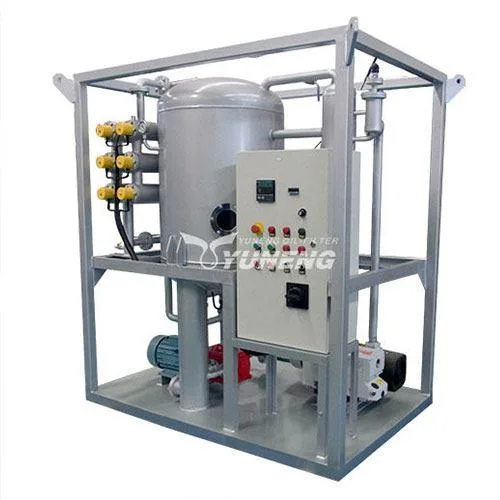
A successful maintenance strategy begins with continuous diagnostic monitoring of key oil parameters, including moisture content, interfacial tension, dissolved gas analysis (DGA), and Total Acid Number (TAN). When routine diagnostics indicate moisture contamination or rising combustible gas levels, deploying a high-performance vacuum transformer oil purifier provides an immediate and efficient solution. By utilizing moderate heating, multi-stage mechanical filtration, and deep vacuum distillation, the purifier extracts particulate debris, free water, and dissolved gases, restoring safe dielectric breakdown voltage levels for ongoing operations.
However, plant engineers must carefully evaluate the operational distinctions involved in transformer oil regeneration vs purification. While routine vacuum purification successfully handles physical contaminants, aging oil continuously develops polar oxidation byproducts, organic acids, and soluble sludge that remain chemically bound within the fluid. Ignoring these chemical decay markers leads directly to accelerated solid paper insulation degradation and internal metal corrosion.
To completely reverse this chemical deterioration, facilities must integrate a dedicated transformer oil regeneration machine into their long-term asset management framework. Operating on a closed-loop cycle, a professional regeneration plant passes the conditioned oil through specialized adsorption beds containing active Fuller's earth, stripping away acids and soluble sludge before routing the fluid through a final vacuum degassing stage. By reintroducing essential oxidation inhibitors post-treatment, the oil regains its original chemical stability and antioxidant defense. Ultimately, combining regular vacuum purification for physical upkeep with periodic chemical regeneration creates a comprehensive, cost-effective, and environmentally sustainable defense mechanism that maximizes transformer lifespan and ensures uninterrupted power transmission.
When utility engineers speak about transformer reliability, the conversation often begins with the transformer itself: core design, winding configuration, cooling system, and insulation structure. Yet one of the most underestimated stages in the life of a high-voltage asset is what happens to the insulating oil before it ever enters the tank. Even new transformer oil is not automatically “grid-ready.” During refining, drum storage, international transport, drum transfer, and site handling, the fluid can pick up trace moisture, dissolved air, fine particulate matter, and occasional atmospheric contamination. For this reason, the modern commissioning workflow treats oil conditioning as a separate discipline, not as a formality. This is where the vacuum transformer oil purifier becomes indispensable.