For years, product visibility was predictable. Brands optimized product pages, invested in paid ads, improved marketplace rankings, and tracked SEO performance. But shopping is changing the game, making visibility dynamic and forcing brands to optimize products for both shoppers and AI agents today.
But product discovery is changing.
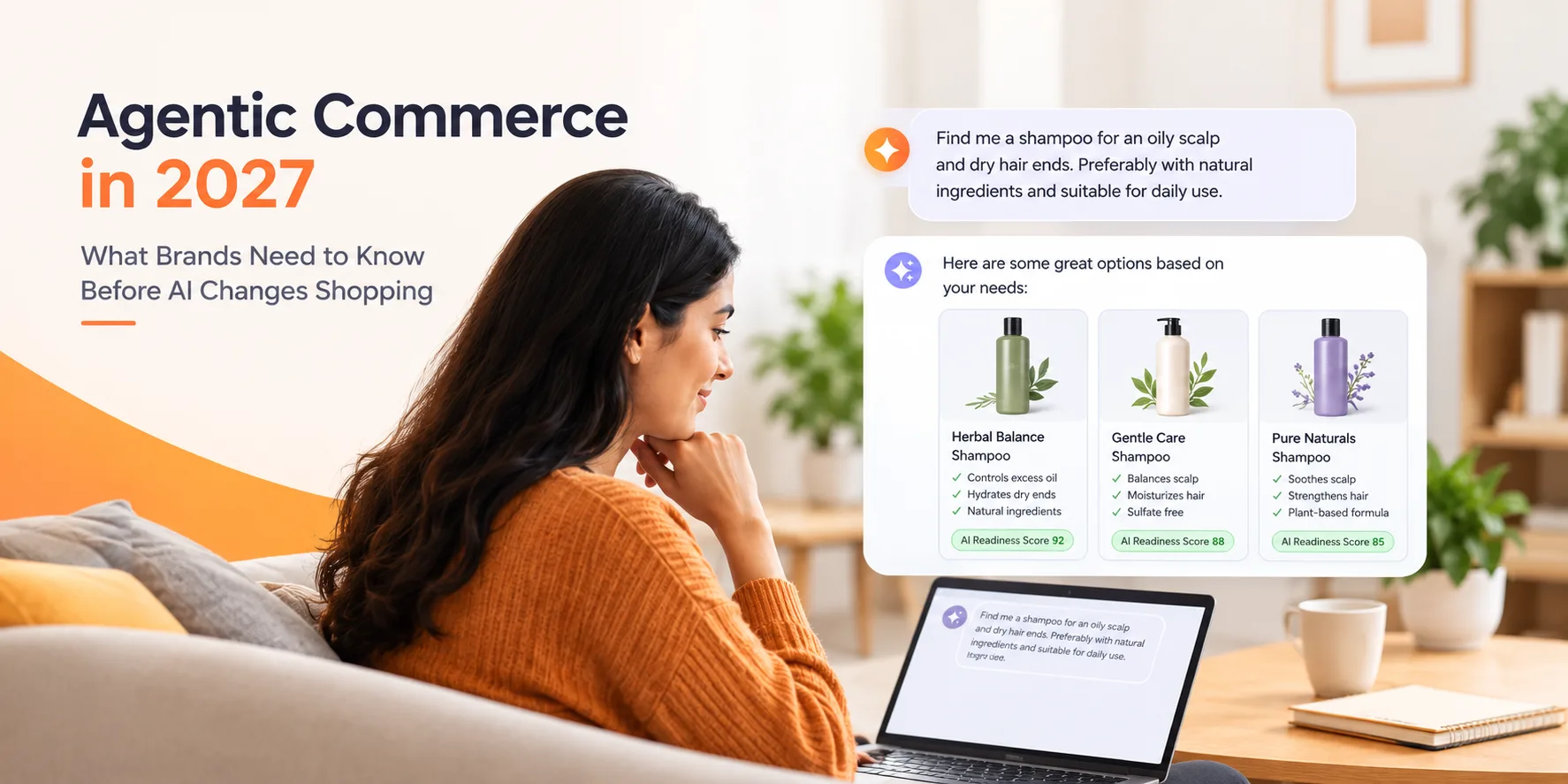
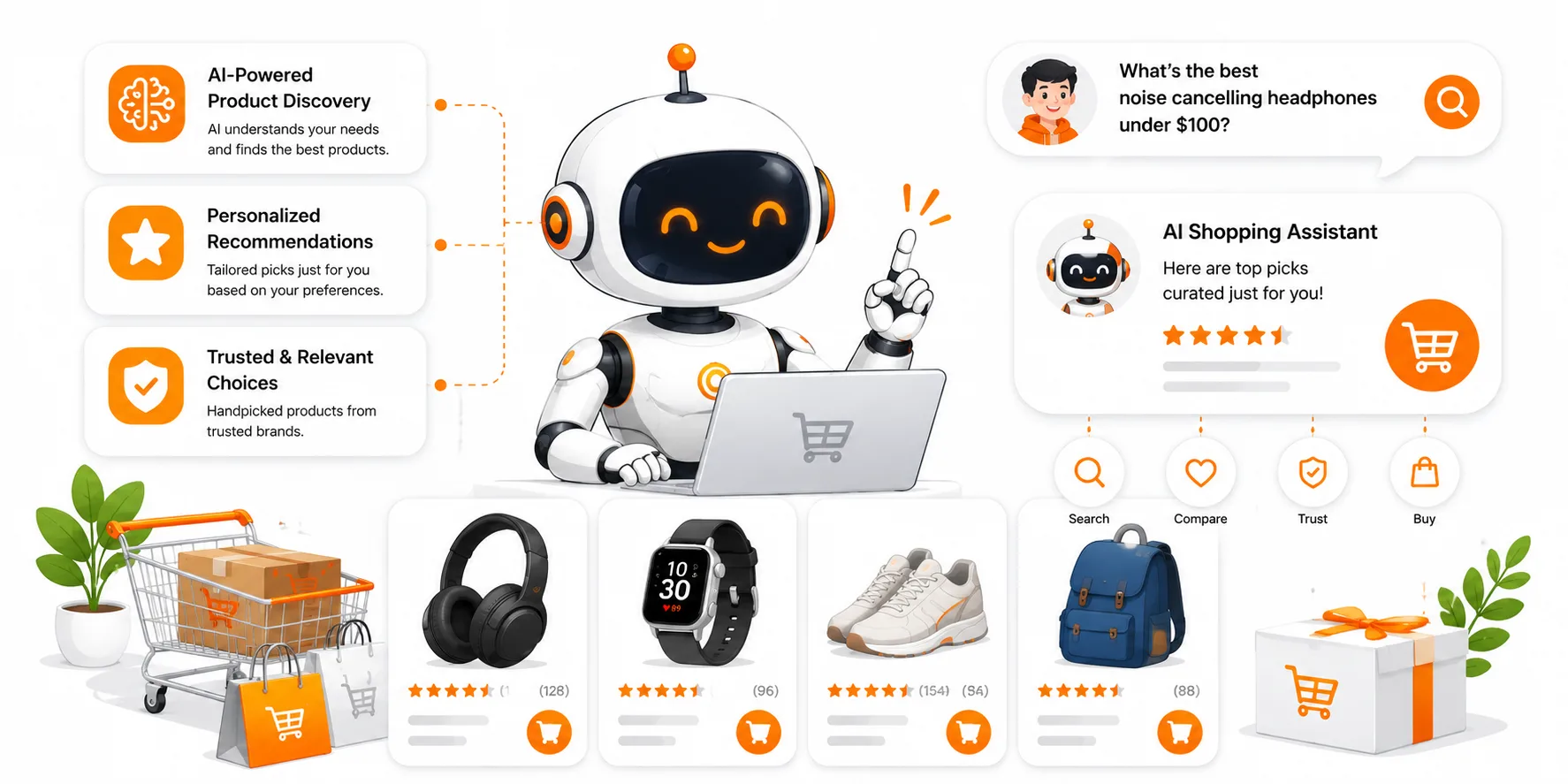
With AI shopping agents becoming part of the buying journey, customers can now ask AI tools questions such as, “What’s the best running shoe for flat feet?” or “Which anti-dandruff shampoo is best for an oily scalp?”
Instead of browsing dozens of product pages, shoppers may receive a short list of recommendations.
That creates a new challenge for brands: your product can rank well in traditional search and still struggle to appear in AI recommendations.
AI Shopping Changes Product Visibility
Traditional search helps users discover websites and product pages.
AI shopping agents work differently. They need to understand products, match them to shopper intent, compare alternatives, and provide recommendations.
That means AI needs more than a product name and a keyword-rich description.
It needs clear, reliable, and complete product information.
If important attributes are missing or difficult to understand, an AI system may have less confidence when deciding whether your product matches a shopper's needs.
This is where AI product visibility becomes important.
Your Competitor May Simply Be Easier for AI to Understand
Consider two products that offer similar benefits.
Product A has a short description:
“Advanced anti-dandruff shampoo for a clean and healthy scalp.”
Product B clearly explains its ingredients, benefits, scalp type, usage instructions, product specifications, FAQs, and ideal customer.
Which product gives an AI shopping agent more information to work with?
The answer is obvious.
Product B may not necessarily be a better product. But it provides stronger signals for AI-powered product discovery and comparison.
In AI shopping, being understandable can become a competitive advantage.
Missing Product Information Can Cost Recommendations
Shoppers ask specific questions during the buying process.
They may want to know:
- Is this product suitable for sensitive skin?
- What ingredients does it contain?
- Is it good for oily hair?
- How should it be used?
- What makes it different from competing products?
- Is it suitable for everyday use?
- What size or variant should I choose?
If your product page doesn't answer these questions, AI may have limited information when evaluating your product.
This doesn't mean adding unnecessary content.
It means providing useful, specific, and decision-making information in a format that both shoppers and AI systems can understand.
Product Data Matters More Than Ever
AI shopping also makes product data quality increasingly important.
Attributes such as price, availability, size, dimensions, ingredients, compatibility, materials, variants, benefits, and use cases should be accurate and consistent.
When information differs across your website, marketplaces, feeds, or other digital channels, AI systems may have difficulty determining which information is reliable.
A strong product listing should therefore be:
Complete, consistent, structured, and easy to interpret.
Why AI Product Visibility Can Change Quickly
AI recommendations aren't static.
Your product visibility can change as competitors improve their content, product availability changes, reviews increase, pricing changes, or AI systems update how they retrieve and evaluate information.
This means AI visibility isn't a one-time SEO task.
Brands need to continuously monitor how their products appear in AI-powered shopping experiences.
A product that gets recommended today shouldn't be assumed to remain visible tomorrow.
How to Improve Your AI Product Visibility
Start by reviewing your product pages from an AI shopping perspective.
Ask:
“If an AI shopping agent had to recommend this product to a specific shopper, would it have enough information to confidently choose it?”
Then evaluate your product content across five areas:
1. Information Sufficiency
Does your product page answer the questions shoppers are likely to ask?
2. Agent Indexability
Can AI systems easily identify important product attributes and relationships?
3. Product Data Quality
Are specifications, descriptions, pricing, and availability accurate?
4. Competitive Differentiation
Is it clear why someone should choose your product over alternatives?
5. Trust Signals
Are reviews, ratings, product claims, FAQs, and supporting information available?
The Future of Product Visibility
SEO isn't disappearing. It's expanding.
Brands now need to optimize not only for search engines and human shoppers but also for AI shopping agents that increasingly influence product discovery and recommendations.
The brands that succeed in agentic commerce won't simply have the most content.
They'll have the right information, structured clearly, consistently, and around real shopper questions.
Your product doesn't have to disappear from search results to lose visibility.
Sometimes, it only needs to become harder for AI to understand, compare, and recommend.
And in the age of AI shopping, that can happen much faster than brands expect.