
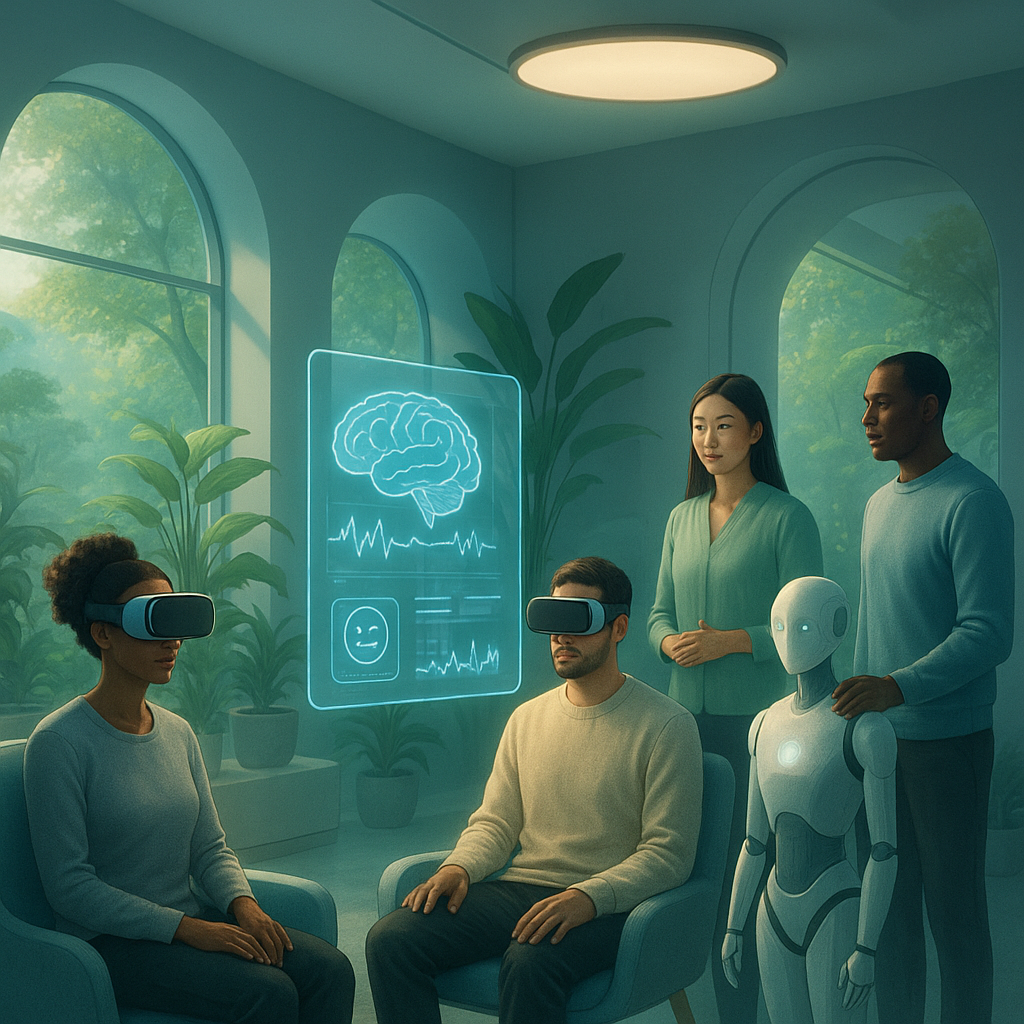
The New Face of Health: Mental Wellness Takes Center Stage
April 2026 marks a pivotal moment in global health, where mental wellness has finally emerged from the shadows to assume a central role in health and wellness conversations worldwide. Unlike previous decades that focused heavily on physical health metrics, this year has seen a surge in innovative approaches addressing mental health as an equal priority. This shift is underscored by the World Health Organization’s recent report indicating a 23% reduction in untreated depression and anxiety cases globally since 2024, thanks largely to early intervention programs and breakthrough digital therapies. The streets of major cities from New York to Tokyo now feature community mental health kiosks equipped with AI-powered screening tools, while employers increasingly integrate mental well-being into workplace policies.
Such transformations resonate deeply with millions. Take the bustling scene of London’s TechHealth Expo in early April 2026, where startups unveiled wearable neurofeedback devices capable of real-time anxiety management. These innovations are not just gadgets but lifelines for those struggling with chronic stress and mood disorders. The momentum reflects a broader cultural acceptance and destigmatization of mental health issues, driven by powerful advocacy and scientific advances alike.
“Mental health is no longer an afterthought; it’s the foundation on which all health innovations must be built,” states Dr. Lina Harcourt, Chief Research Officer at MindWave Technologies.
From Past to Present: Tracing the Evolution of Health Priorities
Understanding April 2026’s health landscape requires reflecting on how we arrived here. The early 2020s saw a global reckoning triggered by the COVID-19 pandemic, which exposed glaring vulnerabilities in healthcare systems, particularly in mental health support. The pandemic’s prolonged isolation, economic uncertainty, and health anxieties accelerated a surge in mental illness worldwide. According to the Global Burden of Disease Study 2023, depression and anxiety disorders increased by nearly 40% during the pandemic years.
This crisis galvanized governments and private sectors to rethink healthcare. Telemedicine adoption skyrocketed, but so did demands for integrated care addressing mind and body as inseparable. The Omnibus Health Act of 2025 in the United States, for example, mandated insurance coverage parity for mental health conditions, catalyzing innovations in accessible care delivery. Simultaneously, advancements in neuroscience and AI began to converge, offering personalized mental health interventions.
Historical parallels with the HIV/AIDS activism of the late 20th century are evident. Just as advocacy reshaped public health policies then, grassroots movements in the 2020s pushed mental health to the forefront, demanding equitable funding and research. This trajectory reflects a broader societal transformation from reactive to preventive health strategies, with April 2026 standing as a watershed moment in that journey.
Data-Driven Insights: The Metrics Behind April 2026’s Health Revolution
Concrete data underscore the scale and scope of health changes this April. According to the International Mental Health Innovation Consortium’s April 2026 report, the following trends stand out:
- Digital Therapeutics Adoption: Over 45% of individuals diagnosed with mild to moderate depression now use app-based cognitive behavioral therapy (CBT) tools, a 20% increase from 2024.
- Workplace Mental Health Programs: 68% of Fortune 500 companies have implemented mandatory mental well-being protocols, including digital check-ins and resilience training.
- Neurotechnology Integration: Wearable devices that monitor brainwave patterns for stress detection have penetrated 15% of the global wellness market, with projected growth of 30% annually.
- Community-Based Support Expansion: Local governments in at least 50 countries have launched peer-support networks and crisis response units, increasing access to immediate care.
- Insurance Coverage Improvements: Mental health coverage now accounts for 25% of total health insurance claims, reflecting increased utilization and acceptance.
These figures illustrate a health ecosystem not only embracing mental wellness but also leveraging technology and policy to create scalable solutions. Moreover, the integration of biometric data and AI algorithms allows for precision medicine approaches, tailoring interventions to individual neurobiological profiles.
“Data is the new compass guiding mental health care from guesswork to precision,” emphasizes Dr. Rajesh Mehta, a leading neuropsychiatrist and AI researcher.
April 2026’s Breakthroughs: Current Developments Reshaping Wellness
This year has witnessed several landmark developments fundamentally altering health and wellness paradigms. Foremost among them is the approval and rollout of the NeuroCalm implant by MedNeuro Inc., a minimally invasive device that modulates brain circuits implicated in treatment-resistant depression. Clinical trials published in March 2026 demonstrated a 60% remission rate after six months of implantation, a significant improvement over existing therapies. This breakthrough is complemented by advances in gene editing techniques targeting psychiatric disorders, with preliminary human trials underway.
Simultaneously, AI-driven mental health platforms have evolved beyond symptom tracking to predictive analytics capable of forecasting depressive episodes weeks in advance. Startups like MindSight and Emotiva have attracted multi-billion-dollar investments, reflecting confidence in technology’s role in mental health management. These platforms integrate data from wearables, social media behavior, and physiological signals to provide personalized interventions.
Public health initiatives have also expanded. The WHO’s Global Mental Health Alliance launched in early 2026 aims to harmonize efforts across countries, focusing on reducing disparities in mental health care access. This is crucial in low- and middle-income countries where stigma and resources remain barriers. Innovative community programs using local health workers trained in digital tools are showing promising results in rural regions of Africa and Southeast Asia.
Furthermore, lifestyle medicine is gaining traction, with research linking gut microbiome health to mental well-being prompting new nutritional guidelines. Integrative approaches combining diet, exercise, mindfulness, and pharmacotherapy are becoming standard practice in leading health institutions.
Voices From the Field: Expert Perspectives and Industry Impact
The health innovations of April 2026 are reshaping entire industries, eliciting diverse expert insights. Dr. Emily Chen, Director of Behavioral Health at Global Wellness Institute, notes that “the convergence of technology and neuroscience is finally delivering on the promise of personalized mental health care, but challenges in ethical data use and equitable access remain.” This sentiment echoes concerns raised by patient advocacy groups emphasizing transparency and privacy protections.
Pharmaceutical companies are pivoting strategies, investing heavily in neurotherapeutics and digital health partnerships. Pfizer’s 2026 annual report highlights a 35% revenue increase in mental health drugs, driven by novel compounds targeting neuroinflammation. Meanwhile, tech giants like Apple and Google are expanding health-focused divisions, developing integrated platforms for holistic wellness monitoring.
The insurance sector is undergoing transformation as well, with mental health underwriting becoming more sophisticated. Risk models now incorporate behavioral data, enabling dynamic policy adjustments and incentivizing preventive care. However, some experts warn of potential biases and discrimination risks, calling for stringent regulatory frameworks.
Universities and research institutions are fostering interdisciplinary collaborations, blending psychiatry, computer science, and social sciences to tackle complex mental health challenges. This cross-pollination fuels innovation but also underscores the need for robust ethical guidelines.
“April 2026 embodies a health renaissance where collaboration across sectors is essential to sustain momentum,” reflects Carlos Mendoza, CEO of MindWell Ventures.
Looking Ahead: What April 2026 Teaches Us About the Future of Health
The advances defining this month offer a roadmap for the future of health and wellness. First, the normalization and prioritization of mental health will continue, supported by technological and policy innovations. The integration of AI and neurotechnology promises increasingly precise and proactive care, but balancing innovation with equity and ethics will be critical.
We anticipate:
- Expansion of global mental health infrastructure, particularly in underserved regions.
- Greater emphasis on preventive and holistic care models integrating physical and mental health.
- Continued growth of digital therapeutics and AI-driven diagnostics.
- Heightened focus on data privacy, ethical AI use, and patient empowerment.
- Increased collaboration between public, private, and community stakeholders to sustain innovation.
Individuals, too, must become active participants in their health journeys, embracing self-care practices and leveraging available tools. The lessons from April 2026 highlight that health is not merely the absence of illness but a dynamic state of well-being shaped by science, technology, and society.
For readers interested in the broader technological influences on wellness, our coverage of April 2026’s transformative gadgets offers illuminating perspectives. Additionally, insights into cognitive enhancement and study methodologies can be found in Unlocking Peak Performance: Proven Study Techniques Transforming April 2026, which parallels the mental health advances discussed here.