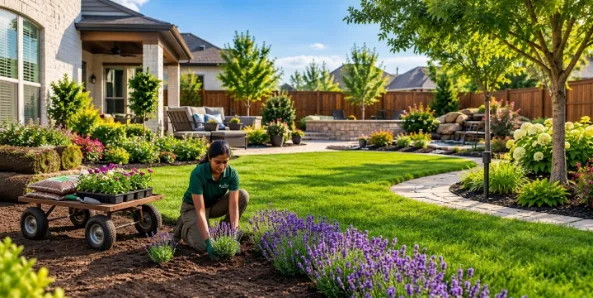
A lawn can look healthy when it is first installed or maintained, yet problems may begin developing long before brown patches, thinning grass, or weeds become obvious. The condition of the soil, drainage, grass selection, sunlight, and initial preparation can all influence how a yard performs later. For homeowners in Southlake, understanding these underlying factors can make routine lawn work much more effective.
Instead of treating every lawn issue as a maintenance problem, it helps to look at what happened before the problem appeared. A strong lawn usually starts with the right conditions beneath and around the grass.
Look Beneath the Surface Before Blaming the Lawn
When grass starts losing its color or becoming thin, the first reaction is often to increase watering or fertilizer. Those steps may help in some situations, but they do not solve every problem. If the soil is compacted, drainage is poor, or the grass is receiving too much shade, adding more products may not address the real cause.
The ground beneath a lawn plays an important role in root development. Healthy roots need access to moisture, oxygen, and enough space to grow. Compacted soil can restrict that environment, while excessively wet conditions can create another set of challenges.
Before making major changes, homeowners should examine:
- Whether water drains away after rainfall
- Areas where the soil feels unusually hard
- Spots receiving very little sunlight
- Places where grass repeatedly becomes thin
- Sections affected by frequent walking or vehicle traffic
These observations can reveal patterns that are easy to miss when the focus stays entirely on the grass blades.
Soil Preparation Has a Long-Term Effect
Soil preparation is one of those jobs that receives little attention once the lawn looks finished. However, its influence can continue long after installation. Uneven grading, compacted areas, poor soil structure, or insufficient preparation can make future maintenance harder.
A prepared lawn area should provide a reasonable environment for roots to establish. Depending on the property, preparation may involve removing unwanted growth, loosening compacted ground, improving the soil, and correcting uneven areas.
Why Compacted Soil Creates Trouble
Compaction can happen naturally over time or result from construction, landscaping activity, repeated foot traffic, and heavy equipment. When soil becomes compressed, roots may struggle to expand normally. Water can also behave differently, either draining too slowly or running across the surface instead of moving into the ground.
This is why a recurring weak patch should not automatically be treated as a fertilizer issue. The underlying soil may deserve closer attention.
Grass Selection Should Reflect the Yard
Another source of future problems is choosing grass based only on appearance. A variety that looks attractive in one part of a property may struggle somewhere else because the growing conditions are different.
Southlake yards can include open sunny areas, tree-covered sections, narrow side yards, and spaces affected by nearby structures. Each location can create a different environment for turf.
When selecting grass, homeowners should consider:
- How much sunlight reaches the area
- How frequently the lawn will be used
- Seasonal weather conditions
- Water availability
- Expected maintenance requirements
Choosing appropriately from the beginning can reduce the amount of correction required later.
Drainage Problems Often Reveal Themselves Slowly
Poor drainage is another issue that may exist long before homeowners recognize it as a lawn problem. A yard does not necessarily need to remain flooded for drainage to be an issue. Repeatedly damp soil, slow-drying sections, runoff, or erosion can also indicate that water is not moving properly.
A low section of lawn might look perfectly normal during dry weather but become saturated after heavy rain. Over time, repeated moisture can weaken turf and create conditions that encourage other problems.
Homeowners can watch for signs such as:
- Water remaining on the lawn after surrounding areas have dried
- Soil that stays muddy for extended periods
- Visible runoff during heavy rain
- Bare areas developing in low sections
- Erosion around slopes or property edges
Fixing the movement of water may be more useful than repeatedly treating the visible symptoms.
Shade Can Change the Maintenance Equation
Trees are valuable landscape features, but mature trees can significantly change the conditions beneath them. As canopies expand, previously sunny lawn areas may receive less direct light.
Grass growing in shade often behaves differently from grass growing in full sun. It may become thinner, recover more slowly from traffic, or compete with tree roots for available moisture.
This does not necessarily mean homeowners need to remove trees or abandon shaded areas. Instead, the landscape may need to be adjusted around those conditions. In some locations, reducing the amount of turf and introducing suitable plants, mulch, or other landscape elements may produce a more sustainable result.
Watering Mistakes Can Hide the Real Issue
Watering is essential, but simply adding more water whenever grass looks stressed can create confusion. A lawn that appears dry may actually be suffering from compacted soil, damaged roots, poor irrigation coverage, or another underlying issue.
A better approach is to examine how water is reaching the lawn. Irrigation heads can become blocked or misaligned, creating areas that receive much more or less water than intended.
A useful watering check includes:
- Looking for dry areas that consistently receive less coverage
- Checking for runoff instead of absorption
- Observing how quickly the soil dries
- Adjusting irrigation during changing weather
- Avoiding unnecessary watering after substantial rainfall
Good watering supports healthy roots, but it works best when the surrounding soil and drainage conditions are suitable.
Where Southlake Lawn Care Fits Into the Bigger Picture
Routine southlake lawn care is important, but it works best when it follows a well-understood foundation. Mowing, watering, fertilizing, weed management, and seasonal adjustments can help preserve a healthy lawn, but regular maintenance cannot always compensate for poor grading or unsuitable growing conditions.
This is where professional assessment can be useful. The Grounds Guys of Southlake can help homeowners look at lawn and landscape conditions as a connected system rather than treating every visible issue as an isolated problem.
Professional assistance can be particularly useful when a property has recurring trouble spots, drainage concerns, difficult slopes, large areas of turf, or changing landscape requirements. The goal is to identify practical solutions that fit the property instead of relying on the same treatment everywhere.
Maintenance Should Respond to What the Lawn Shows
Once the underlying conditions are addressed, maintenance becomes easier to manage. Instead of following an identical routine throughout the year, homeowners can adjust their approach according to weather, grass growth, and the condition of the yard.
Mowing is a good example. Cutting too much grass at once can place unnecessary stress on the turf. Keeping equipment maintained and avoiding excessively short cuts can support healthier growth.
Fertilization should also be approached thoughtfully. Applying products without understanding what the lawn needs can waste resources and potentially create additional problems.
A useful maintenance routine should account for:
- Seasonal changes in grass growth
- Recent rainfall and soil moisture
- Mowing height appropriate for the turf
- Weed activity
- Areas showing unusual stress
The objective is consistency without becoming mechanical.
Foot Traffic Can Shape Lawn Health
Some lawn problems have little to do with weather or irrigation. They develop because certain sections of the yard are simply used more than others.
A narrow route between a patio and driveway may become worn because everyone naturally walks across the same strip. Children playing in one section or pets repeatedly using another area can produce similar patterns.
Rather than trying to force heavily used areas to behave like decorative turf, homeowners can rethink the layout. A pathway, stepping stones, or another durable surface may protect the lawn while making movement around the property easier.
This kind of planning connects lawn maintenance with the wider landscape. A yard designed around actual daily habits is often easier to maintain than one designed only for appearance.
Common Mistakes That Create Future Lawn Issues
Many recurring lawn problems can be traced to small decisions made earlier in the process. Homeowners do not always realize that a shortcut taken during preparation can create additional work months later.
Some common mistakes include:
- Installing turf without checking soil conditions
- Ignoring low spots that collect water
- Choosing grass without considering available sunlight
- Watering every area of the yard identically
- Allowing repeated traffic to damage vulnerable sections
Another mistake is waiting until a problem becomes severe before investigating it. A small area of thinning grass may be easier to understand and correct than an entire section that has already deteriorated.
Seasonal Changes Require Different Priorities
A lawn's needs are not identical throughout the year. Growth patterns, rainfall, temperatures, sunlight, and household activity can all change.
During periods of active growth, mowing and irrigation may require more attention. During stressful weather, protecting the lawn from unnecessary strain can become more important than encouraging rapid growth.
Seasonal planning can include:
- Checking irrigation before periods of increased demand
- Monitoring areas that dry out faster than others
- Adjusting mowing practices as growth changes
- Watching for developing weeds or bare patches
- Inspecting drainage after major rainfall
A flexible routine allows homeowners to respond to conditions rather than forcing the lawn into a fixed schedule.
Think About Long-Term Yard Performance
A successful lawn should not only look good immediately after maintenance. It should remain useful and manageable as the property changes.
Trees grow, families use outdoor spaces differently, irrigation systems age, and landscape layouts evolve. These changes can gradually alter the conditions that once supported healthy turf.
Long-term southlake lawn care therefore involves observation as much as physical maintenance. Homeowners who notice changes early can make smaller adjustments before they turn into major renovation projects.
Sometimes the best long-term decision is not adding more turf. A property may benefit from combining lawn with planting areas, paths, shade-tolerant landscaping, or other features that better match how each section is used.
Professional Planning Can Prevent Repeated Repairs
There are situations where professional input makes sense, particularly when a homeowner has already tried routine maintenance without solving a recurring issue. Persistent drainage problems, uneven growth, extensive bare areas, difficult grading, or large-scale lawn changes can require a broader assessment.
A professional can evaluate several factors together rather than focusing on one symptom. This may help homeowners understand whether the issue relates to soil, water, turf selection, landscape layout, or maintenance practices.
The benefit of this approach is not simply convenience. Identifying the cause before spending money on repeated treatments can help make future lawn decisions more deliberate.
Conclusion
Lawn problems often become visible during maintenance, but their causes can begin much earlier. Soil preparation, drainage, grass selection, sunlight, irrigation, and the way a property is used all influence how well turf performs over time.
Homeowners who pay attention to these factors can build a more practical maintenance routine and avoid treating the same symptoms repeatedly. Regular mowing and watering still matter, but they are much more effective when the lawn has a suitable foundation.
For properties that need southlake lawn care, the most useful strategy is to look beyond surface appearance and understand what the yard is telling you. A lawn built around appropriate conditions, thoughtful planning, and consistent care has a stronger chance of staying healthy as the seasons and the property itself change.
Frequently Asked Questions
Why do lawn problems keep returning?
Recurring problems can come from underlying issues such as compacted soil, poor drainage, insufficient sunlight, or uneven irrigation. Treating only the visible symptom may not resolve the original cause.
How can homeowners identify poor drainage?
Look for standing water, muddy areas that dry slowly, repeated runoff, or grass that consistently struggles in low sections. These patterns can indicate that water is not moving properly through the property.
Does shade affect grass growth?
Yes. Reduced sunlight can make some turf thinner and less capable of recovering from traffic. Shaded sections may require different lawn or landscape strategies.
Is soil preparation really necessary?
Proper preparation can support root development, drainage, and more even turf establishment. Skipping this stage may create maintenance problems later.
Should every part of a lawn receive the same amount of water?
Not necessarily. Sun exposure, soil conditions, slope, and irrigation coverage can differ throughout one property, so watering may need to be adjusted by area.
When should homeowners consider professional lawn help?
Professional assistance can be useful when problems continue despite routine care or when a property has drainage, grading, soil, or large-scale lawn concerns that are difficult to evaluate independently.