Action RPGs are built around one of the most satisfying loops in gaming: defeat enemies, collect loot, improve your character, and push into harder content.
This loop is simple to understand, but modern ARPGs can become extremely complex. Players may need to compare rare items, understand modifiers, evaluate currencies, follow market trends, test builds, and decide whether an item should be sold, crafted, kept, or ignored.
That is why trading tools have become so important for many ARPG players.
They help players save time, understand item value, and participate more confidently in complex player-driven economies.
Why Loot Value Is Hard to Judge
Loot is exciting because every drop has potential.
A player may find an item that looks ordinary but is valuable to another build. Another item may appear rare but have little demand. Some items are valuable only because of one modifier. Others become useful because of a popular build, a crafting method, or a new patch.
This makes item value difficult to judge.
New players often struggle the most. They may sell valuable items too cheaply, keep too many low-value items, or ignore useful crafting bases. Even experienced players can make mistakes because markets change quickly.
In modern ARPGs, value is not only about rarity.
It is about demand, timing, item combinations, and build relevance.
Why Price Checking Matters
Price checking is one of the most useful habits in a trading-heavy ARPG.
Without checking prices, players may lose currency by underpricing good items. They may also waste time overpricing items that never sell. Both problems slow progression.
A good trading workflow helps players compare similar listings, understand market demand, and decide whether an item is worth selling.
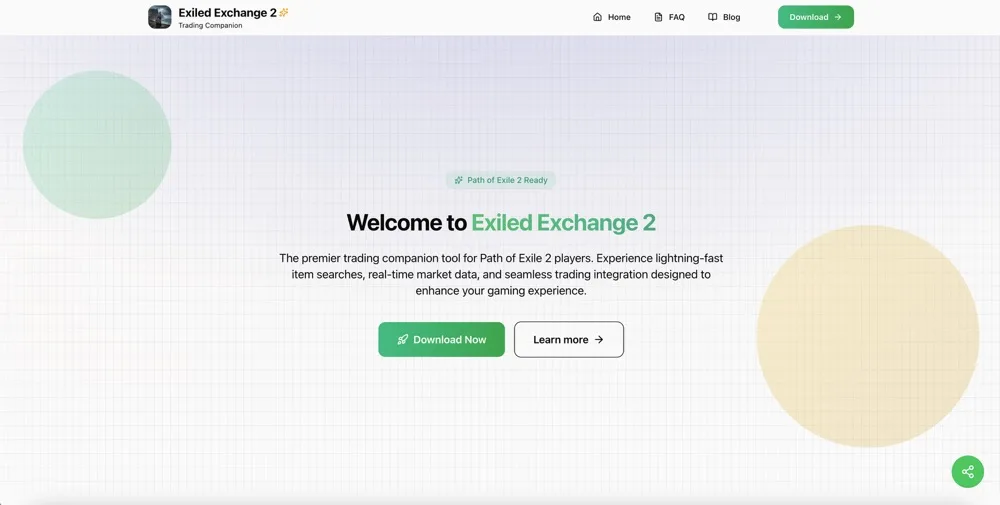
A tool like exiled exchange 2.0 can help ARPG players think more clearly about item trading, market value, and price-checking workflows.
The goal is not only to trade more often. The real goal is to trade smarter.
Trading Turns Random Loot Into Progress
In loot-based games, players rarely find every item they need by themselves.
A build may require specific weapons, armor pieces, jewels, crafting materials, or rare modifiers. Instead of waiting for the perfect drop, players can sell useful items and use the currency to buy upgrades.
This makes trading a bridge between farming and character progression.
A drop that does not fit your own build may still help another player. Selling it can fund the item you actually need.
This is why trading is so powerful.
It gives players more control over progression and reduces reliance on luck.
Helping New Players Learn the Economy
ARPG economies can be intimidating.
New players may understand combat but feel confused by item stats, currency values, market listings, crafting potential, and build-specific demand. They may not know why one item is valuable while another is ignored.
Trading tools can help reduce that learning curve.
By comparing items and checking prices, players gradually learn which stats matter. They begin to understand why certain combinations are valuable and how market demand changes over time.
This kind of learning is practical.
Instead of only reading theory, players learn through real examples.
Supporting Build Experimentation
One of the best parts of ARPGs is build experimentation.
Players enjoy trying different skills, weapons, defenses, movement styles, and playstyles. However, experimenting often requires access to specific gear.
If trading is slow or confusing, players may avoid trying new builds.
Better trading tools make experimentation easier. When players can price items, sell loot, and find upgrades more efficiently, they are more likely to explore new ideas.
Trading is not only about making currency.
It also supports creativity.
Why Market Trends Change Quickly
ARPG markets are always moving.
An item that is expensive early in a season may become cheaper later. A patch may make one build stronger and another weaker. A streamer or guide creator may suddenly increase demand for a specific item. A new crafting strategy may make certain bases valuable overnight.
This means old assumptions can become inaccurate.
Players need current market awareness when making decisions. A price that made sense last week may not make sense today.
That is why live market comparison and flexible trading workflows are useful.
In a changing economy, timing matters.
Common Trading Mistakes
Many ARPG players make similar trading mistakes.
They list valuable items too cheaply.
They overprice average items.
They ignore similar listings.
They assume rarity always means value.
They keep too many items that will never sell.
They spend too much time managing low-value loot.
Better trading habits can prevent these problems.
Players should compare similar items, understand demand, think about build relevance, and avoid listing everything automatically. Sometimes the best decision is to sell quickly. Other times, it is better to wait, craft, or keep the item for another build.
A good tool helps players make these decisions faster.
Saving Time for Serious Players
Time is one of the most valuable resources in an ARPG.
Players want to spend more time mapping, farming, crafting, bossing, and improving builds. They do not want to manually research every item for several minutes.
Trading tools help reduce repetitive work.
Instead of opening many searches and guessing blindly, players can build a faster routine for price awareness and market comparison.
This improves the overall gameplay experience.
The player stays focused on the game instead of getting stuck in slow manual research.
Useful for Casual Players Too
Trading tools are not only for advanced players.
Casual players can benefit even more because they may not have enough experience to recognize valuable items quickly. A simple price-checking workflow can help them avoid major mistakes and understand the market faster.
For example, a casual player may find a rare item and not know whether it is worth selling. Checking similar items can give them a better idea of value.
This helps make complex economies less intimidating.
A better trading experience can keep casual players engaged longer.
Trading and Community Knowledge
ARPG communities are built around shared knowledge.
Players discuss builds, crafting methods, market changes, farming strategies, item value, league mechanics, and powerful combinations. Trading tools support these conversations because they give players more information to work with.
When players understand the economy better, they can share better advice.
Guides become more useful. Build discussions become more practical. New players receive clearer explanations. Experienced players can refine strategies more quickly.
A strong trading ecosystem helps the whole community.
The Role of Price Awareness in Crafting
Crafting and trading are often connected.
Before crafting an item, players need to understand whether the base is valuable, whether the modifiers are worth improving, and whether the final item could sell. Without price awareness, crafting can become expensive and inefficient.
Trading tools help players make better crafting decisions.
They can compare similar items, estimate demand, and decide whether it makes sense to invest more currency into an item.
This does not guarantee profit, but it improves decision-making.
In ARPGs, better information often leads to better outcomes.
Responsible Use of Trading Tools
Trading tools should be used responsibly.
They are best used to support fair trading, price awareness, and personal decision-making. Players should always follow the rules of the game and avoid automation or behavior that harms the community.
It is also important to remember that no tool is perfect.
Listings may be outdated. Some items are difficult to compare. Unique combinations may require human judgment. Market manipulation can happen. A tool can guide decisions, but players still need experience and common sense.
The best traders combine tools with knowledge.
Why Trading Tools Will Keep Improving
ARPGs are becoming more complex.
New systems, modifiers, currencies, crafting methods, and build options make the genre deeper, but also harder to understand. As complexity grows, players need better ways to manage information.
Trading tools help make that complexity more approachable.
They allow players to understand item value faster, avoid common mistakes, and spend more time enjoying the core gameplay loop.
For new players, they reduce confusion.
For experienced players, they improve efficiency.
That is why trading tools will continue to matter in modern ARPG communities.
Final Thoughts
Trading is one of the most important parts of many modern action RPGs.
It helps players turn random loot into progress, experiment with builds, understand the economy, and participate in a larger community marketplace. But trading can also be confusing without the right tools and habits.
Price-checking tools and smarter trading workflows help players save time, avoid mistakes, and make better decisions.
They do not replace game knowledge. They make that knowledge easier to apply.
In a genre built around loot, builds, and progression, better trading tools can make the entire experience more efficient, more flexible, and more enjoyable.