The shift is already happening, and businesses investing in AI Workflow Optimization are pulling ahead faster than most people expected. If your team is still spending hours on repetitive tasks, chasing approvals, or switching between tools that don't talk to each other, you're losing time that your competitors are saving. And in 2026, that gap matters more than ever.
Workflow Optimization Services are no longer something only large enterprises think about. Companies of all sizes, from growing startups in India to established IT firms across the USA, are making this a priority. It helps businesses cut down on wasted effort, reduce errors, and get more done without adding more people.
This post looks at why so many companies are making this move now, what's actually driving the shift, and what it looks like in practice.
The Real Reason Workflows Break Down
Most workflow problems don't start overnight. They build up slowly. A new tool gets added here, a manual step gets added there, and before long the whole process is a patchwork of workarounds.
Teams end up spending more time managing the process than doing the actual work. Approvals get stuck. Information gets lost between tools. People duplicate effort because systems don't share data properly.
And the longer this goes on, the harder it becomes to fix. That's why so many businesses eventually reach a point where small fixes aren't enough anymore.
What Changed in 2026
A few years ago, process improvement meant hiring a consultant to map out workflows on a whiteboard. That still happens, but the tools available today are very different.
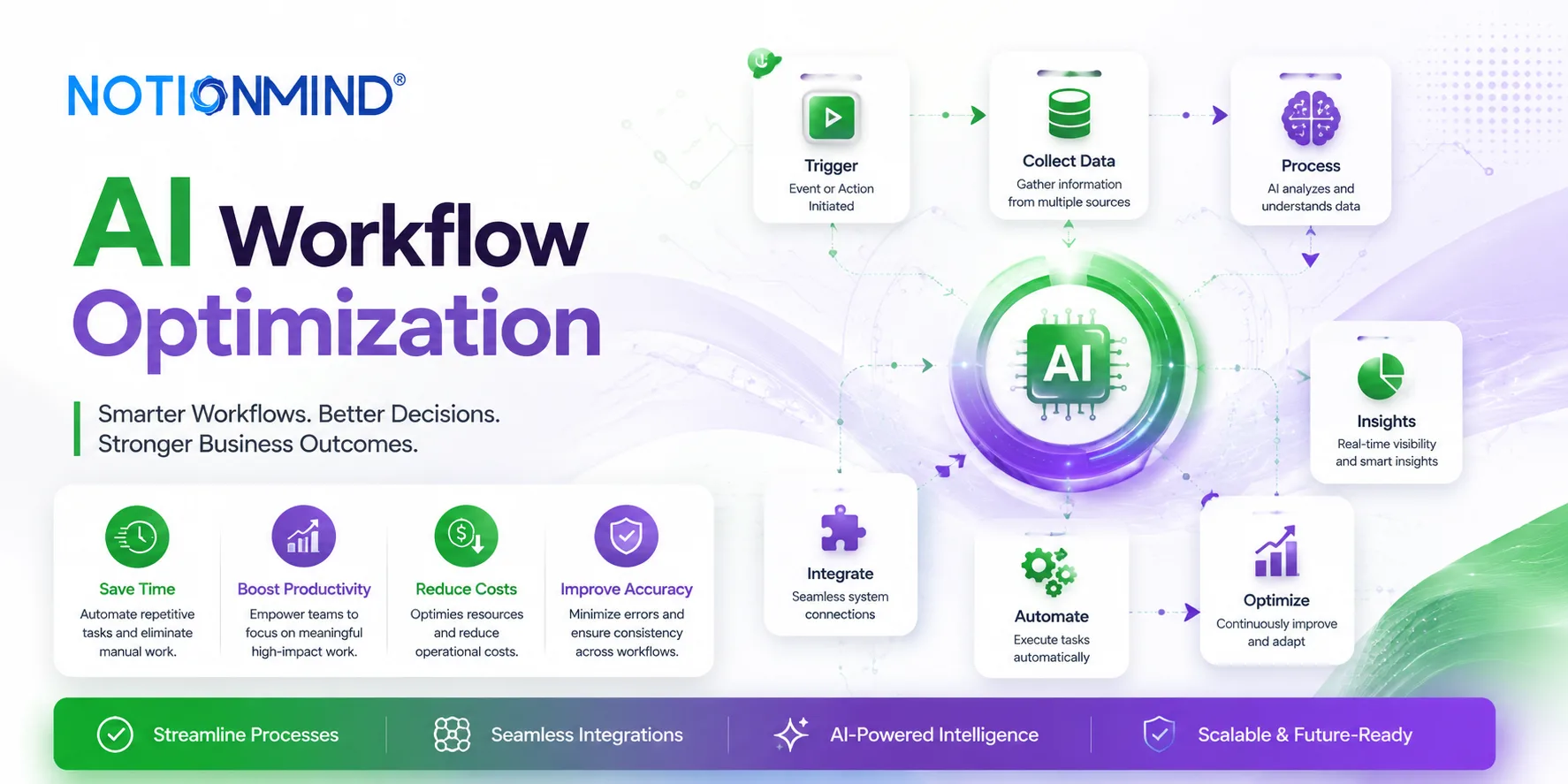
AI can now analyze how work actually moves through a system, spot the slowdowns, and suggest or even implement fixes automatically. It doesn't just automate what you tell it to. It learns from patterns and helps you make better decisions about where to focus.
This is the core shift. Automation used to mean replacing a manual step with a scripted one. Now it means building systems that can adjust, flag issues, and improve over time without constant human input.
Why IT Companies Are Leading This Shift
IT companies feel workflow inefficiencies faster than most. When development cycles slow down, when QA approvals pile up, or when communication breaks across teams, the cost shows up quickly in missed deadlines and frustrated clients.
AI Workflow Optimization gives IT teams a way to clean up the process side of their work, not just the technical side. Things like automated ticket routing, smarter handoffs between development and testing, and real time visibility into project status are all areas where AI driven workflow tools make a real difference.
And once the results show up internally, those same companies start offering similar solutions to their own clients. That's partly why adoption is growing so fast in the IT sector specifically.
What This Actually Looks Like Day to Day
It's easy to talk about optimization in abstract terms. Here's what it looks like in real operations:
A finance team that used to spend three days processing invoices manually gets that down to a few hours through automated data extraction and approval routing.
A customer support team stops losing tickets between systems because integrations now pass information automatically from one platform to the next.
A project manager who used to send weekly status update emails gets a dashboard that updates in real time so the whole team stays aligned without the extra meetings.
None of these are dramatic transformations. They're practical improvements that add up quickly. And that's exactly why businesses find them worth doing.
The Role of System Integration in Making It Work
One thing that often gets overlooked is that workflow optimization doesn't work in isolation. If your tools don't connect, automation only solves part of the problem.
System integration is the layer that makes everything work together. When your CRM, your project management tool, your billing platform, and your communication tools all share data properly, workflows can actually flow from one stage to the next without manual intervention.
Workflow Optimization Services is where a lot of businesses stall. They automate one step but leave gaps between systems. Filling those gaps is often where the biggest efficiency gains are hiding.
Final Thoughts
Companies aren't adopting AI Workflow Optimization just because it sounds modern. They're doing it because the problems it solves are real and the results show up fast. Less manual work, fewer delays, better visibility across teams, these are things every business wants regardless of size or industry.
If your processes feel slow or messy right now, that's usually a sign there's room to improve. The good news is you don't have to figure it all out at once. Start with the biggest bottleneck and build from there. For more information, contact NotionMind, your all in one platform solution partner.