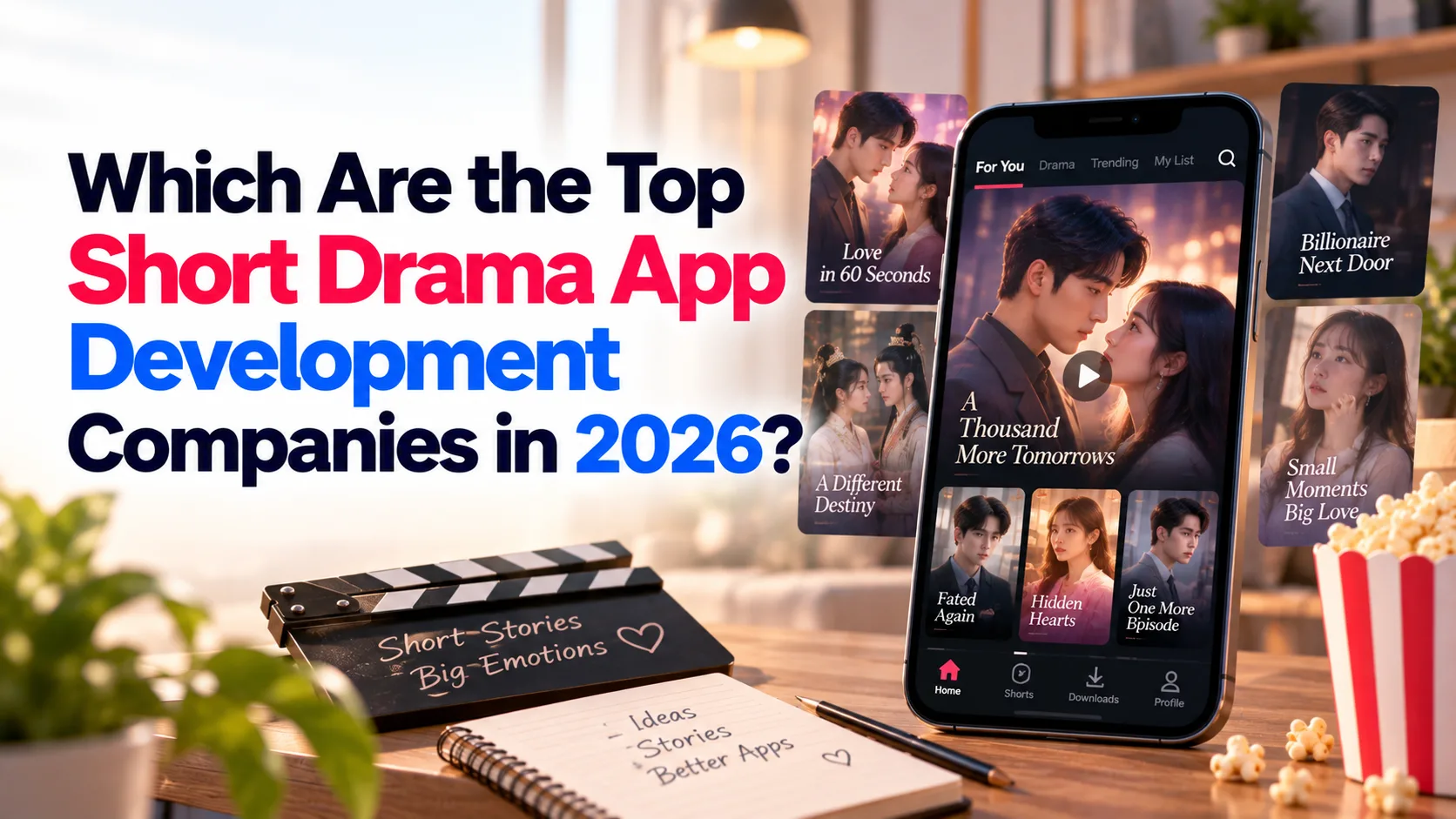
A recurring question across media subreddits and developer forums is how platforms like ReelShort, DramaBox, ShortMax, and FlexTV generate millions of dollars in monthly revenue from ultra-short videos. The global short-form vertical drama market has rapidly expanded into a multi-billion-dollar digital industry. These applications replace conventional 45-minute horizontal television episodes with 9:16 vertical video episodes lasting between 60 and 90 seconds. Designed with rapid emotional conflict in the first 5 seconds and cliffhangers every minute, micro-dramas transform passive social media scrollers into active digital spenders.
The financial strength of these platforms lies in their episodic coin economies. Instead of low-margin flat monthly subscriptions, short drama apps use micro-transaction paywalls. Viewers receive the first five to ten episodes for free, only to hit a hard paywall at a pivotal plot twist where unlocking each subsequent episode costs $0.30 to $0.50. Dedicated viewers regularly spend $15 to $25 in a single sitting to finish an 80-episode series, yielding an average revenue per paying user that frequently outpaces traditional streaming services.
However, executing short drama app development requires far more than embedding a basic mobile video player. If a vertical swipe lags by even one second, viewers lose interest and abandon the app. Developing a high-performance platform requires building a zero-latency vertical player with predictive edge pre-fetching, multi-CDN video routing, hardware-grade digital rights management (DRM) to prevent screen piracy, and an ACID-compliant virtual currency ledger that eliminates double-spending.
Selecting the right software engineering partner determines whether an app scales smoothly during viral user acquisition spikes or suffers from costly buffering and runaway bandwidth bills. This comprehensive guide evaluates how to choose the right engineering firm, reviews the leading short drama app developers in 2026, and breaks down the technical architecture required for success.
How Do You Choose the Right Short Drama App Development Partner?
Evaluating software engineering firms for a micro-drama platform requires assessing technical capabilities across mobile media rendering, cloud streaming, and micro-transaction security. When vetting prospective development companies, evaluate these five critical technical benchmarks:
- Low-Latency Player Tuning and Predictive Pre-Fetching: The development team must have proven experience building custom media playback loops using native tools like AVPlayer on iOS and Google Media3 or ExoPlayer on Android. The player must pre-fetch the next two episodes into local memory while the active episode plays, ensuring zero-latency playback upon swiping.
- Hardware-Grade DRM and Piracy Mitigation: Because serialized drama episodes are premium intellectual property, unauthorized screen recording can ruin an entire marketing campaign. The development firm must know how to implement Apple FairPlay Streaming, Google Widevine Modular (L1/L3), and OS-level secure window flags that black out native screen recording.
- ACID-Compliant Virtual Coin Ledgers: Micro-transactions require high transactional integrity. The engineering partner must design a wallet backend using PostgreSQL and Redis distributed locks to ensure rapid screen tapping never results in race conditions or duplicate episode unlocks.
- Cost-Optimized Multi-CDN Video Architecture: Streaming thousands of high-definition vertical video chunks consumes immense bandwidth. The provider must know how to configure adaptive bitrate ladders using modern codecs like H.265 and AV1, paired with cost-effective multi-CDN routing to prevent bandwidth costs from eroding gross margins.
- Granular Content Management and Drop-Off Analytics: The administrative content management system must support bulk video transcoding, localized subtitle synchronization, and second-by-second analytics funnels that track the exact scenes where viewer drop-off occurs.
Who Are the 10 Leading Short Drama App Development Companies in 2026?
1. Idea Usher
Best suited for: Custom end-to-end short drama platform engineering, zero-latency vertical streaming engines, and proprietary coin economies.
Idea Usher is a specialized digital product engineering firm that designs and constructs custom video streaming platforms, mobile entertainment applications, and micro-transaction ecosystems. The company approaches short drama development from a complete systems engineering perspective, building the underlying cloud video transcoding pipelines alongside responsive, cross-platform mobile apps for iOS and Android. They build custom streaming architectures capable of supporting millions of concurrent viewers without playback buffering.
A primary technical differentiator of Idea Usher is their custom client-side pre-fetching engine. Their mobile developers configure native media decoders to download the first two segments of upcoming episodes in the background, ensuring that vertical swiping between cliffhanger episodes happens instantly. Idea Usher also engineers complete monetization infrastructures, including Apple StoreKit 2 and Google Play Billing coin bundles, direct web-to-app top-up portals using Stripe to bypass 30% app store fees, and hardware-isolated DRM configurations that prevent screen capture piracy. Their full-ownership delivery model ensures clients retain complete ownership of their source code without recurring runtime royalties.
- Core Strengths: Custom zero-latency vertical video player development, predictive edge pre-fetching, multi-tier coin paywalls, Apple FairPlay and Google Widevine DRM integration, and direct web top-up portals.
2. Intellivon
Best suited for: AI-driven viewer retention analytics, automated multi-language localization, and dynamic pricing models.
Intellivon operates at the intersection of artificial intelligence and high-concurrency media software engineering, developing intelligent data layers and automated workflows for digital entertainment platforms. In the short drama sector, where script pacing dictates conversion rates, Intellivon builds predictive analytics engines that evaluate viewer retention funnels at the exact second a paywall triggers.
Their engineering team builds automated machine learning pipelines that support global content expansion. Intellivon integrates clinical natural language processing and voice synthesis models that generate automated multi-language subtitles and synchronized AI dubbing, allowing production studios to repurpose domestic video libraries for international audiences at minimal cost. Furthermore, Intellivon develops dynamic pricing engines that adjust episode unlock costs based on user engagement history, maximizing viewer lifetime value across both casual and high-spending audiences.
- Core Strengths: Second-by-second viewer drop-off analytics, AI-assisted video localization and dubbing, predictive user lifetime value modeling, and dynamic paywall optimization.
3. VdoCipher
Best suited for: Studio-grade video security, anti-piracy screen recording prevention, and enterprise DRM infrastructure.
VdoCipher is a dedicated video hosting and cybersecurity software company that specializes in preventing video piracy for premium content providers. In the short drama market, where exclusive cliffhangers are vulnerable to unauthorized re-uploading on social media, VdoCipher provides foundational streaming security technology.
Their software suite combines Hollywood-grade DRM encryption through Apple FairPlay and Google Widevine with dynamic user-specific watermarking. When a user streams an episode, VdoCipher dynamically injects a semi-transparent, moving watermark containing the user ID and IP hash across the video canvas. Their mobile player SDKs automatically block native screen capture tools, desktop screen recorders, and virtualized emulators, ensuring high-value drama episodes cannot be copied without authorization.
- Core Strengths: Multi-DRM packaging (FairPlay and Widevine), dynamic forensic watermarking, automated screen capture blocking, and encrypted cloud video hosting.
4. Bitmovin
Best suited for: High-speed cloud video transcoding, adaptive bitrate optimization, and multi-device player performance.
Bitmovin provides foundational developer infrastructure and cloud video software utilized by global streaming platforms. The company specializes in cloud-based video encoding, adaptive streaming players, and comprehensive video performance analytics.
For short drama apps, Bitmovin offers high-speed chunk-based encoding pipelines that transcode raw master files into optimized HLS and MPEG-DASH packages within minutes. Their encoding profiles leverage modern H.265 (HEVC) and AV1 compression algorithms, reducing file sizes by up to 50% compared to legacy formats without compromising mobile video quality. Bitmovin also provides modular player SDKs with low-level buffer controls, enabling developers to fine-tune playback pre-fetching and minimize startup delays across diverse mobile networks.
- Core Strengths: Chunk-based cloud encoding, AV1 and H.265 bandwidth reduction, multi-bitrate ladder design, and developer-friendly mobile player SDKs.
5. Mux
Best suited for: API-first video infrastructure, real-time quality of experience (QoE) monitoring, and rapid streaming deployment.
Mux is an established video-first infrastructure provider that abstracts the complexity of video hosting, encoding, and delivery into straightforward developer APIs. Digital entertainment startups widely utilize Mux to build fast, scalable streaming platforms without managing dedicated transcoding server clusters.
Their technical suite includes Mux Video, which automatically optimizes video storage and CDN routing for global playback, and Mux Data, which provides real-time monitoring of video performance metrics. For short drama operators, Mux Data delivers real-time visibility into video startup times, rebuffering percentages, and playback failure rates across different cellular carriers and device models, allowing engineering teams to identify and resolve streaming bottlenecks before they impact subscriber retention.
- Core Strengths: API-first video streaming infrastructure, real-time Quality of Experience analytics, automated thumbnail extraction, and global CDN delivery.
6. Appinventiv
Best suited for: Scalable mobile consumer engineering, high-concurrency cloud infrastructure, and multi-region deployment.
Appinventiv is an international digital product development agency that designs and builds high-scale mobile applications for global enterprises and funded tech startups. With a large engineering team, the company builds high-throughput consumer platforms capable of handling sudden traffic spikes caused by viral social media campaigns.
For short drama initiatives, Appinventiv engineers native iOS and Android applications backed by resilient microservices architectures on AWS and Google Cloud. Their developers build smooth 9:16 swipe gesture interactions, integrated episode drawers, and multi-tiered social sharing tools. Appinventiv ensures that backend databases maintain stability when hundreds of thousands of users attempt to purchase coin bundles simultaneously during peak evening hours.
- Core Strengths: High-scale mobile app engineering, cloud microservices architecture, smooth gesture navigation UI, and payment gateway integrations.
7. Yalantis
Best suited for: Custom media streaming architectures, mobile buffer tuning, and interactive community features.
Yalantis is an experienced software engineering and technical consulting company that specializes in building mobile-first consumer products, custom communications engines, and digital streaming platforms. The firm has extensive experience optimizing real-time data flows and media playback on mobile hardware.
In the short drama space, Yalantis specializes in low-level player engineering. Their developers configure custom cache eviction policies and memory management routines that prevent mobile apps from crashing during long binge-watching sessions. Yalantis also designs interactive community engagement layers, such as real-time bullet comments that float across the video screen, timed emoji reactions, and user-generated discussion boards that build community around active series.
- Core Strengths: Low-level mobile memory optimization, custom cache eviction architecture, real-time in-video commenting, and resilient cloud backends.
8. Cleveroad
Best suited for: Modular streaming microservices, studio content management portals, and cross-platform mobile apps.
Cleveroad is a full-cycle software development firm that builds custom web and mobile solutions tailored to specific commercial requirements. The company has delivered numerous media streaming platforms, video-on-demand services, and content management consoles for clients across North America and Europe.
Their technical practice excels at building modular content management systems (CMS) for production studios. Cleveroad builds backends that support drag-and-drop batch episode uploads, automated subtitle alignment, release scheduling, and granular paywall configurations. Their developers construct cross-platform mobile applications using Flutter and React Native, implementing strict architectural patterns that isolate video playback, user authentication, and payment processing into decoupled services.
- Core Strengths: Studio content management portals, batch video upload automation, cross-platform mobile app development, and modular backend architecture.
9. ScienceSoft
Best suited for: Secure streaming architectures, enterprise data governance, and high-availability cloud backends.
ScienceSoft brings more than 35 years of IT consulting, cybersecurity software development, and cloud systems integration experience to digital streaming platforms. Operating under ISO 27001 data security frameworks, the company specializes in engineering secure, highly reliable media architectures for digital entertainment brands.
Their engineers excel at building high-availability cloud architectures that integrate smoothly with third-party payment processors, global content delivery networks, and enterprise data warehouses. ScienceSoft approaches short drama app development with strict data protection controls, implementing role-based access security for studio administrators, PCI-DSS-compliant in-app payment routing, and robust server failover routines to ensure uninterrupted global service.
- Core Strengths: ISO 27001 data security compliance, high-availability cloud architecture, PCI-DSS payment security, and enterprise database engineering.
10. Innowise Group
Best suited for: Cross-platform video client engineering, in-app billing mechanics, and multi-CDN distribution pipelines.
Innowise Group is an international software development company with deep technical capabilities across mobile consumer apps, digital media platforms, and financial software. Their digital entertainment practice builds scalable, high-performance streaming platforms designed for global reach.
When developing short drama platforms, Innowise engineers cross-platform mobile clients that deliver consistent 60-frames-per-second navigation across both modern flagship devices and budget smartphones. Their developers build robust integration connectors for Apple StoreKit 2, Google Play Billing, and alternative direct payment gateways. Innowise Group also designs multi-CDN delivery networks that route video traffic dynamically based on real-time regional network performance, ensuring consistent video quality for global audiences.
- Core Strengths: Cross-platform mobile video UI engineering, in-app billing and coin wallet development, multi-CDN performance routing, and media pipeline integration.
What Is the Best Technical Architecture for Zero-Latency Vertical Streaming?
A short drama application handles hundreds of rapid, distinct video playback requests per user session rather than a single long-form video stream. The underlying cloud architecture must be optimized specifically for low latency, efficient data caching, and continuous media switching:
The Video Ingestion and Transcoding Subsystem
Master files uploaded by production studios pass through an automated media processing pipeline. Videos are converted into fragmented MP4 (fMP4) containers and packaged into HTTP Live Streaming (HLS) and Dynamic Adaptive Streaming over HTTP (DASH) manifests.
To ensure fast adaptation to mobile networks, segment durations are locked to exactly 2 seconds. The adaptive bitrate ladder is optimized specifically for 9:16 vertical displays:
- High Definition: 1080x1920 at 3.5 Mbps for fast Wi-Fi and 5G connections
- Standard Definition: 720x1280 at 2.0 Mbps for standard 4G mobile data
- Medium Definition: 480x854 at 1.0 Mbps for low-bandwidth cellular connections
- Low Definition: 360x640 at 600 Kbps as an emergency fallback stream
Multi-CDN Edge Caching Strategy
Video chunks and master playlist files (.m3u8) reside in high-durability cloud object storage. A multi-CDN architecture routes traffic dynamically through Cloudflare, Fastly, or AWS CloudFront.
Edge nodes cache the video manifest files and the first two media chunks of every episode close to the end user. The edge servers maintain aggressive Time-to-Live (TTL) configurations, ensuring initial video metadata requests return in under 100 milliseconds regardless of geographic location.
Client-Side Pre-Fetching and Ring-Buffer Memory
The primary technical reason users abandon vertical video platforms is the loading spinner between episodes. Mobile client applications must manage background caching actively:
- While a viewer watches Episode 8, the player client queries the episode playlist API.
- The client downloads the manifest and the first two media chunks (roughly 4 seconds of media) for Episode 9 and Episode 10 into an encrypted local ring buffer in memory.
- When the user swipes upward, Episode 9 begins playing immediately from local memory while the player streams subsequent chunks over the network.
- A cache-eviction policy purges media files located three episodes behind the active viewing position to keep local device memory usage low.
Transactional Coin Ledgers and Distributed Locking
The virtual currency engine must guarantee absolute consistency. The backend pairs a relational database (PostgreSQL) with a distributed in-memory cache (Redis):
- When an unlock request occurs, the system initiates a Redis distributed lock on the user account to prevent race conditions from rapid screen tapping.
- A transactional database query validates that the user balance covers the episode cost.
- The balance is decremented, an entitlement record is inserted for that user and episode ID, and the lock is released.
- The backend generates a signed JSON Web Token (JWT) or temporary playback license granting the mobile player access to decrypt the media segments.
Digital Rights Management and Screen Recording Prevention
Because micro-drama episodes are high-value commercial assets, platforms enforce a multi-layered content protection framework:
- Hardware DRM: Media chunks are encrypted via Common Encryption (CENC). iOS devices enforce Apple FairPlay Streaming, while Android devices use Google Widevine Modular (Level 1/3). Decryption occurs strictly inside the device hardware-isolated secure media path.
- Native Screen Capture Prevention: On iOS, playback renders inside secure UI layers that display a black frame on native screen recordings and screenshots. On Android, the player window strictly enforces the FLAG_SECURE window parameter.
- Dynamic Forensic Watermarking: The player renders a semi-transparent, moving watermark across the video frame displaying the active account ID and an encrypted session hash. If a user captures the screen with an external camera, the source account can be traced and suspended.
What Is the Best Monetization Model to Maximize Short Drama Revenue?
The high profitability of short drama apps stems from a multi-tiered monetization architecture that captures revenue across every user segment, from casual free viewers to high-spending binge viewers:
- Episodic In-App Purchases (Virtual Coin Model): The primary revenue driver across top platforms is the micro-transaction coin economy, accounting for up to 80% of total gross revenue. Users purchase coin packages through Apple In-App Purchase and Google Play Billing. Pricing episodes in virtual currency (for example, 50 coins per episode) detaches the viewer from direct fiat spending, lowering purchasing hesitation. Coin packages are structured so that completing an 80-episode series leaves a small leftover balance, encouraging the purchase of another bundle to unlock the next title.
- Direct-to-Consumer Web Top-Up Portals: To avoid the 15% to 30% platform fees imposed by Apple and Google, operators deploy external web checkout stores powered by payment gateways like Stripe. Platforms incentivize users to top up coins on the web by offering 20% to 30% more bonus coins per tier. Users receive web purchase links via SMS, push notifications, and email re-engagement campaigns.
- Rewarded Video Ads (In-App Advertising): To monetize non-paying users who refuse to make cash purchases, platforms integrate rewarded video ad networks. Viewers can watch a 30-second programmatic ad to earn enough coins to unlock a single episode, with daily ad watches capped at 5 to 10 episodes. This keeps non-paying users engaged while establishing an ad-supported revenue baseline.
- Recurring VIP Subscriptions (SVOD): Platforms increasingly introduce weekly or monthly VIP subscription passes ($14.99 to $29.99 per month). Subscribers gain unlimited access to the entire content catalog, ad-free streaming, and early access to new series releases. This recurring model provides predictable monthly cash flow that balances the transaction volatility of impulse coin purchases.
How Much Does It Cost to Build the Best Short Drama App in 2026?
The total capital required to design, develop, and launch a custom short drama platform varies based on player optimizations, DRM complexity, and custom infrastructure requirements:
- Basic MVP Platform ($25,000 to $50,000 | 2 to 3 Months): Cross-platform mobile app (iOS and Android), standard HLS vertical player, manual pre-fetching, basic coin wallet, Apple/Google In-App Purchases, admin upload console, and standard analytics.
- Advanced Streaming App ($55,000 to $110,000 | 4 to 6 Months): Native player optimizations, predictive edge pre-fetching, Apple FairPlay and Google Widevine DRM, rewarded ad mediation, web top-up portal, drop-off analytics, and localized subtitles.
- Enterprise Global Platform ($120,000 to $200,000+ | 6 to 9+ Months): Multi-CDN dynamic switching, dynamic forensic watermarking, automated studio payout splits, multi-language auto-dubbing pipelines, and multi-region cloud deployment.
What Are the Most Common Questions People Ask on Reddit and Quora About Short Drama Apps?
What is the difference between a short drama app and TikTok?
TikTok is an algorithmic social network built around user-generated content and monetized primarily through brand advertising. A short drama app is a mobile-first streaming service delivering professionally scripted, serialized narrative fiction (typically 60 to 100 continuous episodes per show) monetized primarily through pay-per-episode virtual coin paywalls.
How do short drama apps handle the 30% app store fee on coin purchases?
In-app coin purchases made inside iOS and Android applications are subject to standard 15% to 30% platform fees. To protect profit margins, operators deploy companion web top-up portals using processors like Stripe. Platforms incentivize users to buy coins on the web by offering 20% to 30% more bonus coins for the same price point, capturing higher gross margins while complying with app store external linking policies.
How much does it cost to produce content for a short drama app?
Production budgets vary by region and production scale. An 80-episode series filmed in North America typically costs between $100,000 and $200,000, while series produced in international filming hubs range from $25,000 to $60,000. Many operators license completed, localized drama libraries before launching proprietary in-house productions.
What video codec is best for vertical short drama streaming?
H.264 (AVC) remains the most widely compatible fallback codec across all older mobile hardware. However, production platforms primarily utilize H.265 (HEVC) and AV1 for modern smartphones. These advanced codecs deliver 35% to 50% bandwidth savings compared to H.264 at identical visual quality, drastically reducing cloud CDN data transfer expenses while speeding up video load times on mobile cellular networks.
The expansion of the short drama vertical proves that mobile entertainment has entered an era centered on speed, emotional intensity, and micro-transaction economics. For media organizations, production studios, and digital entrepreneurs, building a proprietary short drama application unlocks an audience engagement model that outperforms conventional ad-supported and flat-subscription formats.
Achieving sustainable commercial success requires backing high-retention content with an enterprise-grade technical architecture. By engineering low-latency pre-fetching players, multi-CDN delivery networks, hardware-grade DRM security, and robust coin ledgers, operators can deliver the seamless, instant-play viewing experience required to scale profitably in the modern digital entertainment economy.