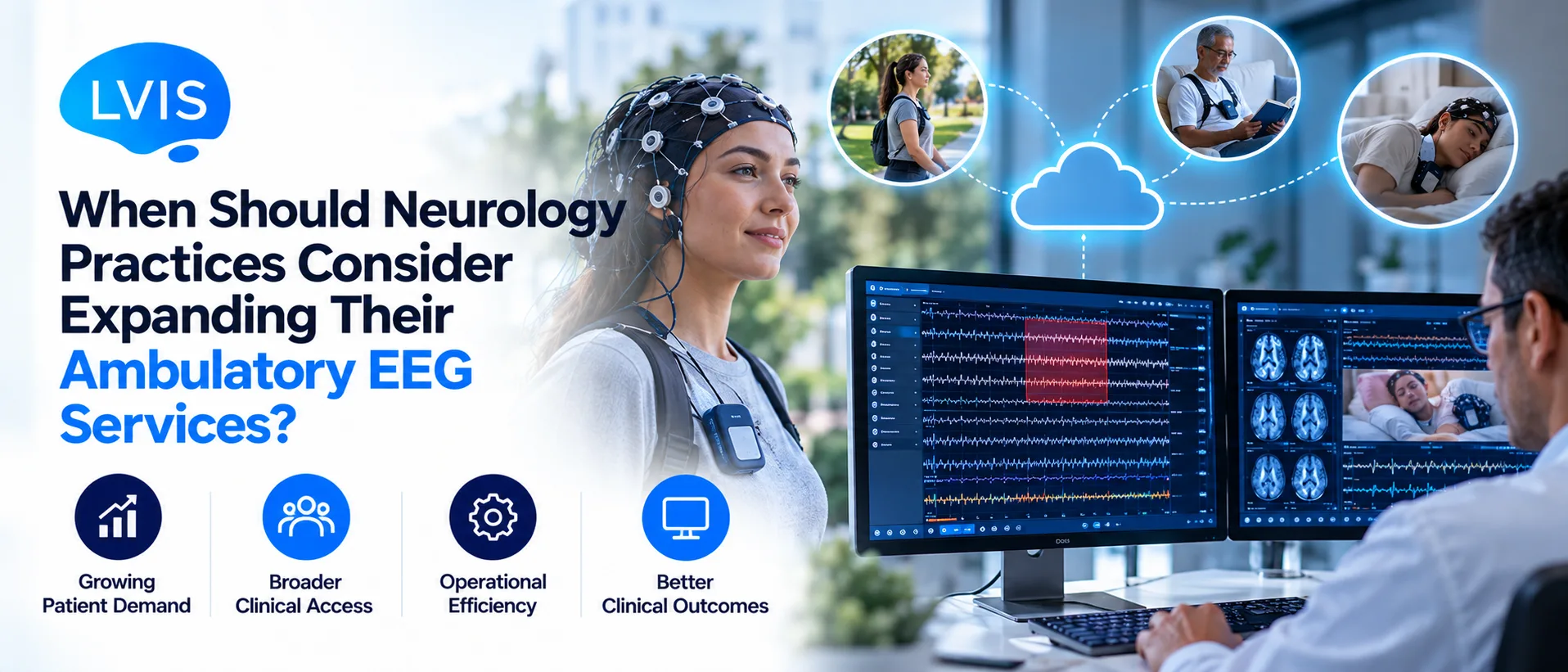
Neurology practices are facing increasing demand for accessible diagnostic services as more patients require evaluation for suspected seizures, epilepsy, and other neurological conditions. Traditional electroencephalogram (EEG) testing remains essential, but short-duration recordings may not capture intermittent events that occur outside the clinical setting. Expanding ambulatory eeg services can help practices offer longer recording periods while allowing suitable patients to continue many of their normal daily activities. However, introducing or expanding these services requires careful consideration of patient demand, clinical staffing, recording quality, interpretation workflows, and financial sustainability. Neurology practices should evaluate these factors before investing in additional equipment, technology, and operational resources.
What Is Ambulatory EEG and Why Is It Important for Neurology Practices?
Ambulatory EEG is a diagnostic procedure that records electrical activity in the brain over an extended period while a patient remains outside a traditional inpatient monitoring environment. Depending on the clinical indication and equipment used, recordings may continue for 24 hours, 48 hours, 72 hours, or longer. This extended observation period can improve the opportunity to capture intermittent neurological events that might not occur during a routine EEG examination. Patients may also be able to maintain aspects of their usual daily routines, which can provide useful context when evaluating reported symptoms. However, ambulatory recordings have limitations, and some patients still require inpatient video EEG monitoring or other specialized assessments.
How Does Ambulatory EEG Differ From Routine EEG Testing?
Routine EEG examinations generally capture a relatively short period of brain activity under controlled clinical conditions. Although these studies can identify important abnormalities, they may not record intermittent events that occur infrequently. Extended ambulatory monitoring provides additional recording time and may help clinicians investigate symptoms that remain unexplained after shorter assessments. Some ambulatory systems also support synchronized video recording, which can provide behavioral context when available. Neurologists should select the appropriate monitoring method based on the patient's clinical history, diagnostic question, and safety requirements.
When Does Patient Demand Justify Expanding Ambulatory EEG Services?
One of the clearest indicators that a practice may benefit from expanded monitoring services is sustained demand for prolonged EEG testing. Neurology clinics should review referral volumes, appointment availability, scheduling delays, and the number of patients referred elsewhere for extended recordings. Increasing demand from primary care physicians, neurologists, and epilepsy specialists may indicate an opportunity to improve local diagnostic access. Practices should also evaluate whether existing testing capacity can accommodate patients without creating unreasonable delays. Consistent demand supported by reliable referral patterns provides a stronger basis for expansion than occasional increases in appointment requests.
Identifying Patients Who May Benefit From Extended Monitoring
Extended EEG monitoring may be appropriate for selected patients experiencing intermittent episodes that require further neurological evaluation. These may include suspected seizures, unexplained episodic symptoms, or situations in which clinicians need additional information about seizure frequency or electrographic activity. The decision should be based on clinical judgment rather than the availability of monitoring equipment alone. Practices must consider whether outpatient testing can safely answer the diagnostic question or whether inpatient monitoring is more appropriate. Clear patient selection criteria help ensure that expanded services support meaningful clinical needs.
How Can Practices Evaluate Their Current EEG Testing Capacity?
Before expanding services, neurology practices should assess how effectively their existing EEG operations meet patient and referring physician needs. This includes reviewing equipment utilization, technologist availability, appointment scheduling, and report turnaround times. A practice may have sufficient recording equipment but limited interpretation capacity, creating delays after studies are completed. Other clinics may experience bottlenecks because of inadequate device availability or insufficient patient setup appointments. Identifying the actual source of capacity constraints helps organizations determine where investment will produce the greatest operational benefit.
Key Indicators That Additional Capacity May Be Needed
Several operational indicators can suggest that a practice should consider expanding its monitoring services:
- Increasing referrals for prolonged outpatient EEG testing.
- Extended waiting periods for available monitoring appointments.
- Frequent referrals to external facilities because of limited capacity.
- High utilization of existing ambulatory recording equipment.
- Delays in downloading, reviewing, or interpreting completed studies.
- Growing demand from affiliated hospitals and epilepsy specialists.
- Limited access to extended EEG services in the surrounding community.
- Opportunities to improve continuity of neurological care.
These indicators should be evaluated over a meaningful period rather than relying on isolated fluctuations. Practices should also consider seasonal demand, payer requirements, staffing availability, and local referral relationships. High referral volumes do not necessarily justify expansion if reimbursement or interpretation resources are insufficient. A comprehensive capacity assessment helps organizations distinguish sustainable demand from temporary operational pressures. This information supports more informed decisions about equipment purchases and staffing investments.
How Does Remote EEG Monitoring Support Service Expansion?
Technology can play an important role in helping neurology practices coordinate recordings and clinical review across multiple locations. Solutions supporting remote eeg monitoring may allow authorized specialists to access EEG information without being physically present at the recording location. However, practices should distinguish between remote access to stored recordings and real-time physiological monitoring because these capabilities serve different clinical purposes. Cloud-based platforms can support distributed review workflows when compatible acquisition systems, reliable connectivity, and appropriate security safeguards are available. These capabilities may be particularly useful for practices collaborating with hospitals or specialists across different geographic areas.
Supporting Collaboration Between Neurologists and EEG Technologists
Extended EEG monitoring requires coordination between personnel responsible for patient setup, recording quality, data transfer, and clinical interpretation. EEG technologists must ensure that recording equipment is functioning appropriately and that patients receive clear instructions. Neurologists and other qualified readers then evaluate the recordings according to established clinical procedures. Digital collaboration tools can help these professionals exchange relevant information and coordinate review responsibilities. Practices should establish clear communication procedures to prevent delays and ensure that clinically important findings receive appropriate attention.
When Should Practices Invest in More Advanced EEG Review Technology?
Expanding recording capacity without improving interpretation workflows can create new operational bottlenecks. Long-duration EEG studies generate substantial amounts of data that require careful review by trained clinicians. Practices should evaluate whether existing workstations, software tools, and reporting procedures can accommodate additional studies. Modern EEG review software may support signal visualization, event navigation, annotation review, and structured reporting. Technology investments should focus on improving workflow efficiency while preserving the clinical oversight necessary for accurate interpretation.
Reducing Administrative Work During EEG Review
Extended recordings often require staff to transfer large files, organize study information, and prepare recordings for physician interpretation. Manual processes can become increasingly difficult to manage as patient volumes grow. Digital platforms may help streamline file access, organize annotations, and support consistent reporting procedures. However, the operational benefits depend on system compatibility, implementation quality, and staff familiarity with the technology. Practices should measure existing administrative workload before deciding which processes require improvement.
How Can AI-Assisted EEG Analysis Help Practices Manage Larger Workloads?
Artificial intelligence is increasingly being explored as a tool for assisting clinicians with the review of lengthy EEG recordings. AI-assisted systems may identify candidate seizure events, spikes, or other signal patterns that require further examination. Specialized EEG analysis software can provide automated annotations and tools for navigating potentially relevant portions of a recording. These capabilities may help organize clinical review, although their effectiveness depends on algorithm performance and the characteristics of the recordings. Automated findings must be evaluated by qualified clinicians and should not be treated as independent diagnostic conclusions.
Evaluating Automated Event Detection Performance
Practices should examine clinical validation evidence before introducing automated EEG event detection into routine workflows. Important considerations include sensitivity, false detection rates, supported patient populations, and performance under different recording conditions. Ambulatory recordings may contain movement artifacts, electrode disturbances, and other sources of interference that complicate automated analysis. Clinicians should understand how the system handles these conditions and whether it provides sufficient context for reviewing flagged events. Any claimed efficiency improvements should be assessed through representative clinical workflows rather than assumed from vendor demonstrations.
What Staffing Requirements Should Practices Consider Before Expansion?
Increasing ambulatory monitoring capacity requires more than purchasing additional recording devices. Practices must ensure that qualified personnel are available to prepare patients, apply electrodes, maintain equipment, and manage completed studies. Physicians also need sufficient time and resources to interpret recordings and prepare clinically appropriate reports. Staffing plans should account for appointment demand, equipment turnaround, technical troubleshooting, and patient communication. Expansion should proceed only when the organization can maintain appropriate clinical quality and operational oversight.
Training EEG Technologists for Ambulatory Monitoring
Ambulatory EEG setup requires careful attention to electrode placement, recording stability, patient instructions, and equipment operation. Technologists should be trained to explain how patients can protect the recording equipment and document relevant symptoms during the monitoring period. Depending on the device and service model, staff may also need to manage video recording components or technical support requests. Training should address common recording problems and procedures for responding to equipment failures. Consistent preparation helps reduce preventable technical issues and supports reliable data collection.
How Should Practices Evaluate Patient Safety and Monitoring Limitations?
Patient safety should remain a central consideration when deciding whether outpatient extended EEG monitoring is appropriate. Some patients may require continuous observation, medication adjustments, or immediate clinical intervention that cannot be provided through an ambulatory service. Practices should establish clear eligibility criteria and determine when inpatient epilepsy monitoring is more appropriate. Patients and caregivers should receive instructions explaining the limitations of outpatient recording and what to do if concerning symptoms occur. Ambulatory EEG should not be presented as an emergency response service unless a specific system and care pathway are designed and authorized for that purpose.
Establishing Patient Instructions and Follow-Up Procedures
Patients undergoing extended monitoring need practical guidance on device care, daily activities, symptom documentation, and appointment schedules. They should understand whether their equipment records continuously, stores data locally, or supports any form of remote transmission. Practices must explain how and when recordings will be reviewed, particularly when analysis is retrospective rather than continuous. Patients should also receive appropriate emergency instructions based on their clinical circumstances. Clear communication helps prevent misunderstandings about the capabilities and limitations of the monitoring service.
How Can Practices Improve Ambulatory EEG Data Management?
Extended EEG studies can generate large files that require reliable storage, secure transmission, and organized clinical access. As monitoring volumes increase, practices may encounter challenges involving local workstation capacity, manual file transfers, and inconsistent documentation. Centralized data management can help authorized personnel retrieve recordings and coordinate review across different locations. Practices should evaluate compatibility with existing acquisition equipment, electronic health record systems, and reporting procedures. A scalable data management strategy helps organizations prepare for increasing volumes without compromising information security.
Protecting Patient Information and Maintaining HIPAA Compliance
EEG recordings may contain protected health information that must be handled according to applicable privacy and security requirements. Practices should evaluate encryption, access permissions, authentication controls, audit logging, and data retention policies when selecting technology vendors. Cloud-based platforms require additional consideration of hosting arrangements, business associate agreements, and incident response responsibilities. Organizations should also confirm that patient information can be securely exported or retrieved when necessary. Security and compliance reviews should be completed before sensitive clinical data is introduced into a new system.
How Does EMU Software Relate to Ambulatory EEG Expansion?
Neurology practices may collaborate with epilepsy monitoring units when patients require more comprehensive neurological evaluation. Technology used in inpatient monitoring environments may provide capabilities that complement outpatient EEG services, including advanced visualization, event review, and reporting. Practices exploring EMU Software should evaluate whether the platform supports their intended outpatient workflows and recording formats. Not every system designed for an epilepsy monitoring unit will be suitable for ambulatory recording management. Understanding these distinctions helps organizations select technology based on clinical requirements rather than broad product categories.
Coordinating Outpatient and Inpatient EEG Workflows
Some patients may begin with outpatient EEG testing and later require inpatient video EEG monitoring for further evaluation. Practices should establish procedures for sharing relevant recordings and reports with receiving specialists when clinically appropriate. Compatible digital systems can simplify authorized information exchange between outpatient clinics and hospital-based teams. However, organizations must account for differences in acquisition systems, file formats, and documentation requirements. Effective coordination supports continuity of care while reducing unnecessary administrative barriers.
What Financial Factors Should Neurology Practices Evaluate?
Expanding ambulatory EEG services requires a realistic assessment of capital expenses, operating costs, and anticipated reimbursement. Equipment purchases or leases may represent only one part of the total investment. Practices should also account for electrode supplies, maintenance, staffing, software licensing, data storage, technical support, and physician interpretation costs. Reimbursement varies according to payer contracts, applicable billing codes, service components, and documentation requirements. Financial projections should be based on verified local reimbursement information rather than assumed revenue per study.
Calculating Service Expansion Costs
A practical financial model should estimate expected study volume, equipment utilization, direct costs, and recurring operational expenses. Practices should determine how many studies can realistically be completed with available devices and staffing resources. Equipment downtime, canceled appointments, repeat recordings, and delayed interpretations can affect financial performance. Decision-makers should also consider whether outsourcing selected technical functions or interpretation services is operationally appropriate. A detailed cost analysis helps identify the patient volume needed to support sustainable service delivery.
When Should Practices Consider a Multi-Location Ambulatory EEG Model?
Neurology groups operating several clinics may benefit from coordinating extended EEG services across multiple facilities. A shared operational model can allow organizations to distribute recording equipment, standardize patient preparation, and coordinate interpretation resources. However, the feasibility of this approach depends on transportation logistics, staffing, scheduling, and technology compatibility. Practices should determine whether centralized interpretation or distributed recording workflows can improve access without creating unnecessary complexity. Multi-location expansion should follow a structured assessment of patient demand and operational capacity.
Standardizing Workflows Across Different Clinics
Consistency becomes increasingly important when ambulatory monitoring services operate across several locations. Practices should establish common procedures for patient eligibility, electrode application, device setup, recording documentation, and data transfer. Standardized reporting and quality assurance processes can help reduce variation between facilities. Staff should receive consistent training and have access to clearly documented escalation procedures. These measures support operational reliability as the organization expands its service footprint.
How Can LVIS Corporation Support Modern EEG Review Workflows?
LVIS Corporation develops neurological technology focused on EEG analysis, cloud-based workflows, and AI-assisted clinical review. Its NeuroMatch® platform is designed to support EEG visualization, event identification, reporting, and collaboration between authorized healthcare professionals. LVIS has also discussed the potential for AI-assisted technology to streamline ambulatory recording review by helping clinicians identify relevant EEG patterns within lengthy studies. Practices considering these capabilities should evaluate supported recording formats, clinical validation, and compatibility with their existing workflows. Regulatory status and feature availability should be confirmed before adopting the platform for a specific clinical application.
Supporting Extended EEG Review With AI-Assisted Technology
Long-duration recordings can contain substantial amounts of information that must be interpreted by qualified clinicians. LVIS describes AI-assisted capabilities intended to identify candidate seizure and spike events for further clinical examination. These tools may help organize recordings and support more efficient navigation when appropriately implemented. However, performance can vary across recording environments, patient populations, and types of EEG abnormalities. Practices should request relevant validation information and verify whether each intended feature is authorized for clinical use in their jurisdiction.
Exploring Digital Brain Technology and Neurological Innovation
LVIS Corporation also explores advanced neurological technologies involving brain data analysis and computational modeling. Its broader work includes the concept of a digital twin brain, which reflects an emerging approach to representing and analyzing aspects of brain activity through computational systems. Such technologies may contribute to future research and development in personalized neurological assessment. However, emerging brain modeling concepts should not be confused with established ambulatory EEG diagnostic capabilities. Healthcare organizations should evaluate commercially available clinical tools separately from research-stage technologies.
What Performance Indicators Should Practices Track After Expansion?
Neurology practices should establish measurable goals before increasing their ambulatory monitoring capacity. These goals may include reducing scheduling delays, improving equipment utilization, maintaining recording quality, and shortening interpretation turnaround times. Organizations should also evaluate patient satisfaction, technical failure rates, and the number of studies requiring repeat acquisition. Performance indicators should be interpreted alongside changes in referral volume and clinical case complexity. Regular monitoring helps leadership determine whether expansion is delivering the expected operational benefits.
Recommended Ambulatory EEG Performance Metrics
- Monthly ambulatory EEG referral volume.
- Average waiting time for monitoring appointments.
- Equipment utilization and device turnaround time.
- Percentage of technically adequate recordings.
- Frequency of repeat studies caused by technical problems.
- Average time from recording completion to finalized interpretation.
- Staff workload and review capacity.
- Patient satisfaction and appointment completion rates.
- Direct operating cost per completed study.
- Reimbursement performance and service profitability.
These metrics provide a practical framework for evaluating service expansion. Practices should establish baseline measurements before introducing additional equipment or changing workflows. Leadership can then compare results across defined periods to identify improvements and emerging bottlenecks. Financial performance should be evaluated alongside clinical quality rather than treated as the only measure of success. Consistent reporting helps organizations make informed decisions about future investments.
What Steps Should Practices Take Before Expanding Services?
A successful expansion strategy begins with identifying unmet clinical demand and understanding the limitations of existing services. Practices should involve neurologists, EEG technologists, administrators, IT personnel, and financial stakeholders in the planning process. Equipment and software evaluations should address technical compatibility, clinical validation, data security, and ongoing support requirements. A phased rollout may help organizations test operational assumptions before committing to larger investments. This approach reduces implementation uncertainty and provides opportunities to improve workflows before broader expansion.
A Practical Expansion Checklist
- Evaluate demand: Review referrals, scheduling delays, and local access to extended EEG testing.
- Assess clinical suitability: Identify patient populations and diagnostic indications appropriate for outpatient monitoring.
- Review current capacity: Examine equipment availability, staffing, and interpretation turnaround times.
- Compare technology options: Evaluate recording devices, review platforms, compatibility, and clinical capabilities.
- Verify compliance requirements: Review applicable privacy, security, billing, and regulatory obligations.
- Build a financial model: Estimate capital costs, recurring expenses, reimbursement, and expected utilization.
- Train clinical teams: Establish consistent procedures for patient preparation, recording management, and reporting.
- Launch a controlled pilot: Evaluate workflows and technical performance before expanding further.
- Monitor results: Track clinical quality, operational efficiency, and financial sustainability.
Each stage should be completed with appropriate input from the professionals responsible for service delivery. Practices should document operational assumptions and verify them through available data. Clinical safety and recording quality must remain priorities throughout the expansion process. Technology should be selected according to defined requirements rather than assumed efficiency benefits. A structured plan helps practices expand responsibly while maintaining appropriate standards of neurological care.
Conclusion
Neurology practices should consider expanding ambulatory eeg services when sustained patient demand, clinical needs, and operational capacity support additional monitoring. Extended outpatient EEG testing can provide valuable diagnostic information for selected patients, but successful expansion requires more than increasing the number of recording devices. Practices must evaluate staffing, interpretation workflows, patient safety, data management, technology compatibility, and reimbursement considerations. AI-assisted analysis and cloud-based platforms may help manage growing recording volumes when their capabilities are clinically appropriate and properly validated. By following a structured expansion strategy, neurology practices can improve access to extended EEG services while maintaining reliable clinical operations.
Explore Advanced EEG Technology With LVIS Corporation
LVIS Corporation develops neurological technologies designed to support EEG analysis, clinical collaboration, and modern diagnostic workflows. Its NeuroMatch® platform provides cloud-based viewing, reporting, and AI-assisted analysis capabilities that may be relevant to organizations managing large volumes of EEG recordings. Neurology practices, hospitals, and epilepsy centers can explore how these technologies align with their existing infrastructure and clinical requirements. Headquartered in Palo Alto, California, LVIS Corporation also maintains operations in South Korea and focuses on advancing neurological technology. Visit LVIS Corporation to learn more about its EEG technology and discuss potential solutions for your practice.
Medical and regulatory disclaimer: Ambulatory EEG testing and automated EEG analysis should be performed or interpreted under the supervision of appropriately qualified healthcare professionals. AI-generated findings require clinical verification, and the regulatory authorization of specific software features must be confirmed before use in patient care. Not every feature described by a technology provider may be cleared or available for clinical use in the United States.