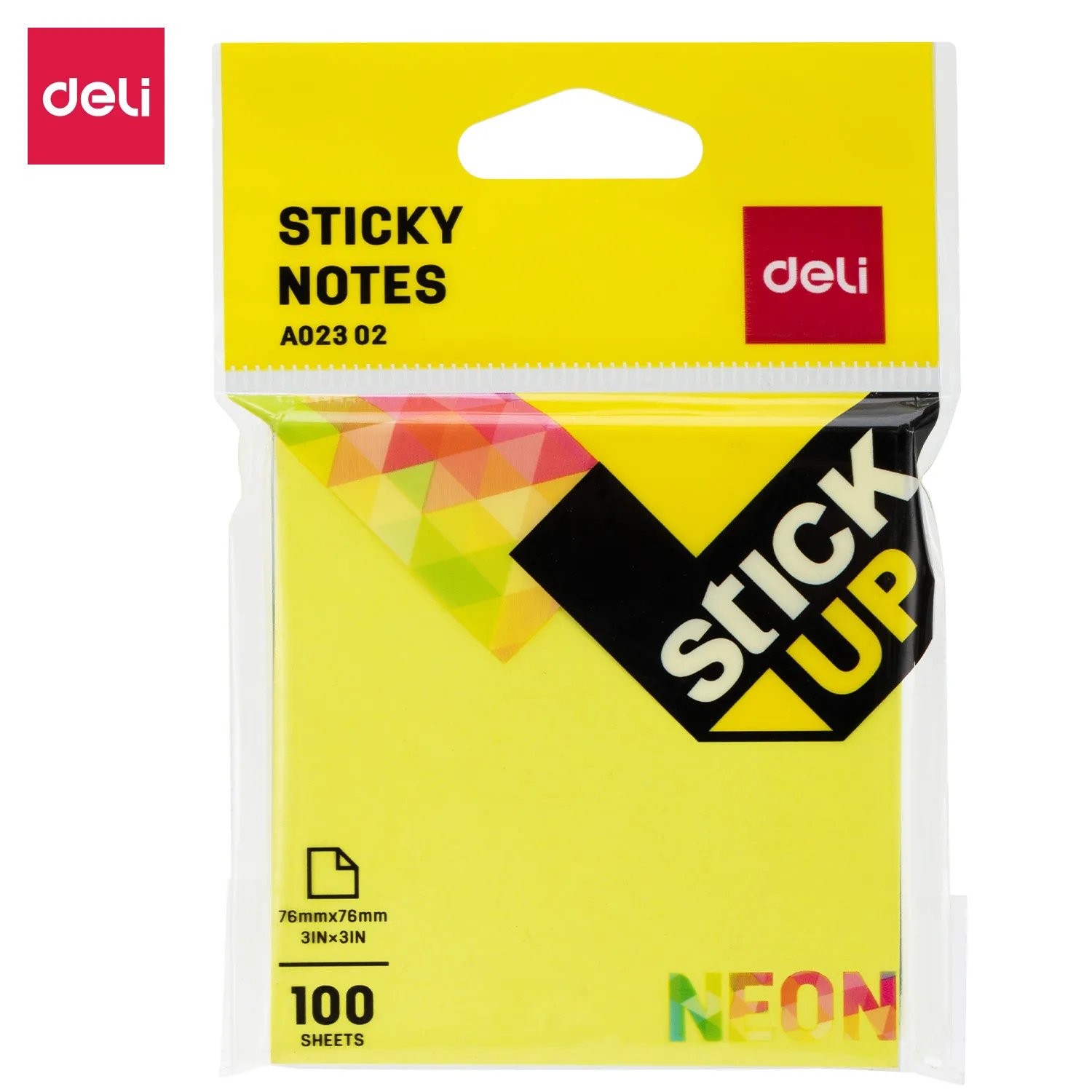
Pull open any desk drawer at work or school, and there's almost always a small stack of sticky notes tucked somewhere near the pens. Half of them are curling at the edges. A few have lost their stick entirely and just sit there as scrap paper. That's usually when you realize not all Sticky Note Paper is made the same — some stays put for days, while some gives up within an hour of being stuck to a folder.
Linc focuses on the small details that can make one Sticky Note Paper pad more dependable than another in everyday use. It's a small product, but getting it right takes more attention than most people assume.
Why Sticky Note Paper Quality Actually Matters?
Here's something nobody thinks about until it goes wrong: a sticky note that doesn't stick isn't just annoying; it's a small but real productivity drain. A reminder that falls off a laptop screen, or a note that peels away from a shared file before the next person even sees it — that's information lost, not just a mild inconvenience. In a busy office, those small interruptions can become surprisingly frustrating, even when the initial saving seemed worthwhile.
Cheap Sticky Note Paper usually fails in one of two ways. Either the adhesive is too weak, and it drops off surfaces within hours, or it's too aggressive and tears the paper underneath when someone tries to remove it. Good Sticky Note Paper sits right in the middle — sticks firmly, comes off clean, and can even be repositioned once or twice without losing its grip completely.
That's why Linc pays attention to adhesive strength as an important part of the overall product, rather than treating it as a minor detail.
Key Features That Separate Good Sticky Note Paper From the Rest
Not every pad on the shelf will perform equally well in everyday use. Some feel flimsy the moment you peel the first sheet. Here's what actually matters when judging Sticky Note Paper before buying a stack:
- Balanced adhesive strength — sticks reliably without shredding the surface it's removed from
- Smooth writing surface that doesn't bleed through with regular pens or markers
- Consistent sheet thickness, so notes don't tear apart while being peeled off the pad
- Fade-resistant colour, especially for notes left on boards or windows for days
- Reliable stack bonding, so pulling one sheet doesn't drag three others along with it
These details are easy to overlook when a pad works as expected. They become much more noticeable when a sheet tears, the adhesive fails, or several sheets come away from the pad at once.
Linc's Take on Everyday Office Stationery Items
A messy desk rarely stays organized on its own — it needs a few dependable basics to hold everything together, and Sticky Note Paper is one of those quiet essentials. It's easy to overlook until the one time you actually need a quick reminder and can't find a single working sheet in the drawer.
As a familiar name in office stationery, Linc treats Sticky Note Paper as more than a throwaway accessory. It shows up in daily workflows more than people admit — flagging documents before a meeting, leaving quick handoffs for a colleague, marking pages that need a second look later.
Office stationery items like this may be simple, but they can make everyday tasks easier to manage. Remove those basics from the desk, and small everyday tasks can suddenly feel less convenient.
Sticky Note Paper Beyond the Office: School Stationery and Study Habits
Offices aren't the only place where this matters. Walk into any classroom or study space, and Sticky Note Paper shows up just as often — flagging textbook pages, marking assignment due dates, or breaking down a big topic into smaller chunks stuck along the margin of a notebook.
For students, reliable school stationery can make it easier to keep notes, reminders, and study material organized. A sticky note that peels off a textbook page overnight defeats the entire purpose of using it. Linc designs its Sticky Note Paper with everyday use in mind, whether it's being used in a notebook, textbook, folder, or study planner.
It's also common to see Sticky Note Paper paired with Index tabs for exam preparation — tabs marking chapters, sticky notes flagging specific formulas or dates within those chapters. Together, they turn a thick textbook into something a student can actually navigate quickly under time pressure, which matters more during revision season than any fancy stationery ever could. Linc's Index tabs are usually bought alongside these sticky note pads for exactly that reason — students tend to grab both at the same time rather than one or the other.
Here's how most students end up combining the two during exam season:
- Colour-coded Index tabs for each chapter or unit, so flipping through a textbook takes seconds instead of minutes
- Sticky Note Paper for quick formulas, dates, or definitions that need to be visible without flipping pages
- Larger sticky notes on a study table or wall, breaking a syllabus into manageable sections
Conclusion
Good Sticky Note Paper comes down to a handful of details that are easy to overlook until they go wrong — adhesive strength, sheet quality, and how well it holds up under daily use. Whether it's flagging documents at work or marking chapters alongside Index tabs for exam prep, the right pad can make everyday organisation a little easier.
Linc brings these practical needs together across its range of office stationery items and school stationery, giving users simple tools for reminders, page marking, and quick notes. Combining Sticky Note Paper and Index tabs is a good way to make files, notebooks, and textbooks easier to navigate without adding much complexity. In the end, a good sticky note does a simple job well: it stays where you put it, gives you a clean surface to write on, and comes away when you're finished.