
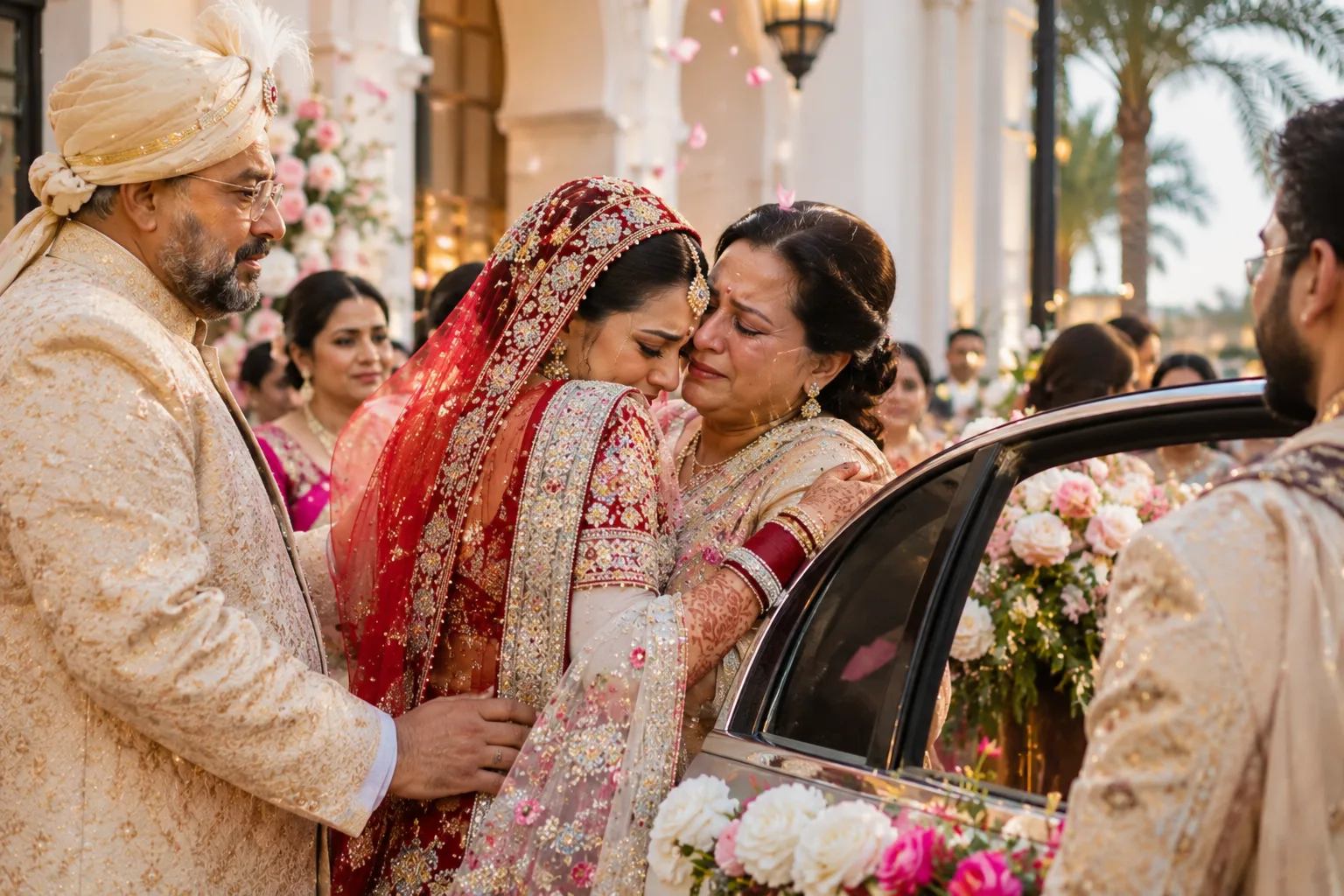
A Destination Wedding in Bahrain brings families together to celebrate an important milestone in the bride and groom's lives. Among the many wedding celebrations, Vidaai holds a particularly emotional place because it marks the bride's farewell to her family as she begins a new chapter of married life.
After days of celebrations, traditional ceremonies, music and family gatherings, Vidaai creates a quieter moment for parents, siblings and relatives to express their love and blessings for the bride.
For Indian couples celebrating their wedding in Bahrain, organising this ceremony requires thoughtful preparation. Families need to consider cultural traditions, the farewell location, music, photography, transportation and the bride's onward travel arrangements.
The objective is not simply to organise an emotional departure. It is to create a respectful and meaningful experience that reflects the family's traditions and allows the bride to say goodbye in her own way.
Here are practical ways to organise a memorable Indian Vidaai ceremony during a destination wedding in Bahrain.
1. Understand the Meaning of Vidaai and Discuss Family Traditions
Before planning the decorations or departure arrangements, discuss the meaning and traditions of Vidaai with both families.
Vidaai represents the bride's farewell from her parental family after the wedding. However, the specific rituals and expressions differ across Indian regions and communities.
Some families include:
- Blessings from parents and grandparents.
- Traditional farewell songs.
- Emotional family embraces.
- Rice-throwing rituals, where customary.
- A ceremonial farewell at the venue entrance.
- A decorated vehicle for the bride's departure.
For example, some North Indian families include a rice-throwing ritual, while Bengali families may observe Kanakanjali and Punjabi families may refer to the farewell as Doli or Vidaai.
Do not assume that every family follows the same sequence. Ask the bride, parents and family elders which customs they would like to include.
The ceremony should respect the family's cultural background rather than introducing rituals simply because they are popular at other weddings.
2. Choose a Suitable Location for the Vidaai Ceremony in Bahrain
The location should provide privacy, enough space for family members and convenient access to the couple's departure vehicle.
Since the main wedding celebrations may take place inside a hotel ballroom or private event venue, the Vidaai can be arranged in a nearby area that allows the family to gather comfortably.
Consider these options:
Hotel entrance: A designated private entrance can provide a suitable setting for the bride's farewell and departure.
Garden area: A quiet garden or landscaped outdoor space can create a peaceful atmosphere for family blessings.
Private event area: An adjoining event space can be useful when the family wants to conduct the farewell away from the main reception.
Decorated driveway: If approved by the venue, a designated driveway area can provide convenient access to the bride's departure vehicle.
Before finalising the location, discuss the arrangement with the hotel's event management team.
Check the available space, lighting, accessibility, vehicle access and privacy arrangements. Avoid areas where guests, service vehicles or other events could interrupt the ceremony.
3. Create Simple and Elegant Vidaai Decorations
Vidaai is an emotional family moment, so the decoration should enhance the atmosphere without making the farewell feel like another elaborate reception.
Choose decorations that complement the overall wedding theme.
Some ideas include:
Floral pathway: Use fresh flowers along the bride's departure route.
Decorative entrance arch: Create a beautiful floral arch at the exit area.
Soft lighting: Use warm lighting to create a peaceful atmosphere.
Traditional Indian elements: Include subtle decorative motifs or flowers associated with the family's traditions.
Personalised welcome details: Display the couple's initials or wedding date where appropriate.
Decorated departure vehicle: Add coordinated floral arrangements to the couple's vehicle, subject to venue and vehicle requirements.
For a luxury Bahrain wedding, consider using ivory, blush pink, champagne or other soft colours that complement the reception décor.
Avoid excessive decorations around the departure route. The bride and family should have enough space to move comfortably.
4. Involve Parents, Siblings and Close Family Members
The people closest to the bride play an important role in making Vidaai meaningful.
Instead of limiting the ceremony to a quick farewell, give family members an opportunity to spend a little time together before the bride departs.
Consider including:
Parents' blessings: Allow the bride's parents to offer their blessings and share a personal message.
Sibling farewell: Brothers and sisters can share memories and accompany the bride towards the departure vehicle.
Grandparents' blessings: Give elderly family members an opportunity to participate comfortably.
Family embraces: Allow the bride to say goodbye to close relatives without rushing the moment.
Message from family elders: A short blessing or personal message can make the ceremony especially meaningful.
The wedding planner should coordinate the family sequence in advance while keeping enough flexibility for natural emotional moments.
Do not force speeches, performances or photographs when family members would prefer a quiet farewell.
5. Include Traditional Vidaai Rituals According to Family Customs
Some families want to preserve specific rituals during the farewell, while others prefer a simpler modern ceremony.
Discuss the preferred arrangements with family elders and the relevant religious representative, where appropriate.
Depending on family customs, the ceremony may include:
- Rice or grain being thrown behind the bride as a symbolic blessing.
- A traditional farewell song.
- A final blessing from the bride's mother.
- A family prayer.
- A ceremonial gesture at the departure entrance.
- A traditional farewell before the bride joins the groom.
Some families may also follow different regional practices or use different names for the farewell ceremony.
Prepare the required items in advance so that nobody needs to arrange them at the last minute.
Most importantly, include only those traditions that genuinely matter to the bride and her family.
6. Select Meaningful Music for the Vidaai Ceremony
Music can create the emotional atmosphere of the farewell.
Many Indian families prefer traditional Vidaai songs, while others choose instrumental music or songs that have a special meaning for the bride.
Consider these options:
Traditional Vidaai songs: Select songs familiar to the family and connected with its regional customs.
Soft instrumental music: Instrumental compositions can provide a gentle background without overpowering family conversations.
Regional farewell music: Choose a song that reflects the bride's cultural background.
Personalised song selection: Include a meaningful song selected by the bride and her parents.
Live musical performance: A suitable live singer or musician can create a personal experience where the venue permits it.
Discuss the music with the DJ or entertainment team before the event.
Keep the volume appropriate so that family members can speak and share their final moments together.
7. Plan the Bride's Vidaai Outfit and Comfort
The bride may already have spent several hours wearing a heavy lehenga, traditional jewellery and elaborate footwear.
Her comfort should remain a priority during the farewell.
Before the ceremony, consider:
- Whether she wants to remain in her wedding outfit.
- Whether she needs assistance with her dupatta or veil.
- Whether comfortable footwear should be arranged.
- Whether she needs a short break before leaving.
- Whether a lighter outfit is preferred for onward travel.
- Whether essential personal belongings are ready.
If the bride plans to change into comfortable clothing, reserve enough time and a private changing room.
Keep a small personal bag ready with essentials such as her phone, charger, basic toiletries, medication if applicable and travel documents where needed.
Avoid making the bride rush between the final wedding ceremony, family photographs and departure arrangements.
8. Arrange a Beautiful and Comfortable Departure Vehicle
The bride's departure vehicle is an important part of the Vidaai arrangement.
Instead of treating transportation as a last-minute booking, coordinate the vehicle well before the wedding.
Consider:
Decorated luxury car: A comfortable vehicle with subtle floral decorations can create an elegant departure.
Traditional floral styling: Coordinate the vehicle decorations with the wedding's colour palette.
Private couple transport: Arrange a vehicle that allows the bride and groom to leave comfortably together.
Family escort arrangements: Decide whether close relatives will accompany the couple to the hotel, residence or airport.
Before confirming the vehicle, check its availability, parking access, passenger capacity and the venue's decoration permissions.
The departure route should be clear, and a designated coordinator should communicate with the driver.
If the bride and groom are travelling to another country or their onward destination immediately after the ceremony, confirm the journey details separately.
9. Coordinate the Vidaai Timing With the Wedding Schedule
Indian wedding ceremonies can extend beyond their original planned timings.
As a result, the Vidaai should not be scheduled so tightly that family members are forced to hurry through it.
Prepare a realistic timeline with the wedding planner.
The schedule should account for:
- Completion of the main wedding ceremony.
- Final family photographs.
- Time for the bride to prepare for departure.
- Family blessings and traditional rituals.
- Farewell music.
- Departure vehicle positioning.
- Transportation and onward travel.
If the venue has an agreed event finishing time, discuss the Vidaai arrangement with the hotel in advance.
Reserve a suitable time window for the farewell rather than treating it as an activity that must happen immediately after the last ceremony.
The bride and her family should be able to experience the moment without unnecessary pressure.
10. Capture Emotional Family Moments Through Photography
Vidaai is one of the most meaningful opportunities to preserve family memories during an Indian wedding.
However, photography should be handled sensitively.
Ask the photographer to focus on genuine moments rather than repeatedly asking the family to recreate emotional scenes.
Important photographs may include:
- The bride with her parents.
- The bride with her siblings.
- Grandparents offering their blessings.
- Family members embracing the bride.
- The bride and groom together before departure.
- Traditional farewell rituals, where observed.
- The bride walking towards the vehicle.
- Family members watching the couple leave.
A photographer can use suitable camera positions to capture these moments without standing too close to the family.
Allow family members to request a private moment without photography if they prefer.
The purpose is to preserve genuine memories, not to make the farewell feel like a staged photoshoot.
11. Include International Family Members in the Farewell
A Destination Wedding in Bahrain may bring together relatives travelling from India and other countries.
Some close family members may have to return home before the wedding ends because of flight schedules, work commitments or other travel arrangements.
Plan the farewell in a way that allows important family members to participate.
Consider:
- Informing relatives about the expected Vidaai timing.
- Arranging sufficient seating for elderly relatives.
- Coordinating transportation for guests who need to leave.
- Allowing family members to share personal messages.
- Providing a short explanation of the ritual for international guests.
- Arranging a private video call for relatives who cannot attend.
If family members are joining online, appoint someone to manage the video call so the bride and parents do not need to handle technical arrangements.
This can make the farewell more inclusive for families celebrating away from home.
12. Plan the Bride's Onward Journey After Vidaai
For destination weddings, the bride's journey after the ceremony may involve more arrangements than a traditional wedding at the family home.
The couple may be travelling to another hotel, a nearby residence or an airport for their onward journey.
Before the wedding, confirm:
- The couple's next destination.
- Vehicle booking and driver details.
- Departure timing.
- Luggage arrangements.
- Hotel check-out requirements, if relevant.
- Travel documents for international journeys.
- Any planned rest before further travel.
If the bride and groom are travelling after a long celebration, consider arranging a comfortable overnight stay before starting a longer journey.
Keep important belongings accessible rather than placing everything in checked luggage or sending it away before the ceremony.
The departure plan should be clear enough that the bride can focus on her family rather than worrying about transportation.
13. Allow the Bride and Family to Experience the Moment Naturally
Not every Vidaai needs to be extremely emotional or follow a fixed sequence.
Some brides may prefer a traditional farewell, while others may want a shorter ceremony with blessings, family photographs and a relaxed departure.
Respect the bride's preferences.
Consider:
- Allowing time for personal conversations.
- Avoiding unnecessary announcements.
- Keeping music at a comfortable volume.
- Giving family members privacy when requested.
- Avoiding pressure to cry or perform traditional gestures.
- Allowing the couple to decide how they want to say goodbye.
The meaning of Vidaai is the family's love and blessings, not the number of rituals or the amount of visible emotion.
A natural and respectful farewell will be more memorable than an elaborate ceremony that makes the bride uncomfortable.
Vidaai Ceremony Planning Checklist for Bahrain
Before the wedding, confirm the following:
- Family traditions and rituals discussed.
- Vidaai location confirmed with the venue.
- Decorations and floral pathway approved.
- Family members' participation arranged.
- Traditional items prepared where required.
- Music selection finalised.
- Bride's departure outfit and footwear arranged.
- Private preparation space confirmed.
- Departure vehicle booked.
- Photography and videography team briefed.
- International family members informed of the timing.
- Onward travel and luggage arrangements confirmed.
- Venue event schedule coordinated.
- Privacy and family comfort considered.
Frequently Asked Questions
1. What is the meaning of Vidaai in an Indian wedding?
Vidaai is a farewell ceremony in which the bride says goodbye to her parental family after the wedding. It represents an important transition in her married life and is often accompanied by family blessings and traditional customs.
2. When is Vidaai performed during an Indian wedding in Bahrain?
Vidaai is generally organised after the main wedding rituals and related celebrations. The exact timing depends on the family's customs and the wedding schedule.
3. What are the traditional rituals performed during Vidaai?
Depending on the family and region, rituals may include blessings from parents, traditional farewell songs, rice-throwing customs and a ceremonial departure. Not every family follows the same practices.
4. How can couples make Vidaai meaningful during a destination wedding in Bahrain?
Include family blessings, meaningful music, traditional customs that matter to the family and enough time for personal goodbyes. The arrangements should also allow the bride to depart comfortably.
5. Where can couples organise a Vidaai ceremony in Bahrain?
A suitable hotel entrance, private event area, garden or designated departure space can be considered, depending on the venue layout and permissions.
6. Should the bride change her outfit before Vidaai?
This depends on her preferences and the onward travel arrangements. Some brides prefer to remain in their wedding attire, while others choose comfortable clothing before leaving.
7. How can international relatives participate in the Vidaai ceremony?
Inform them about the schedule in advance, arrange convenient seating and consider a private video call for close family members who cannot attend in person.
8. How can photographers capture Vidaai without disturbing the family?
Brief the photography team in advance, identify the important family moments and ask them to capture natural interactions from respectful distances. Family privacy should always be respected.
Final Thoughts
Vidaai is more than the final event in an Indian wedding schedule. It is a meaningful opportunity for the bride and her family to share their love, memories and blessings before beginning a new chapter.
Whether the family chooses a traditional farewell with regional rituals or a simple gathering filled with blessings and personal moments, the most memorable Vidaai will be one that respects the bride's wishes and reflects the love of her family.