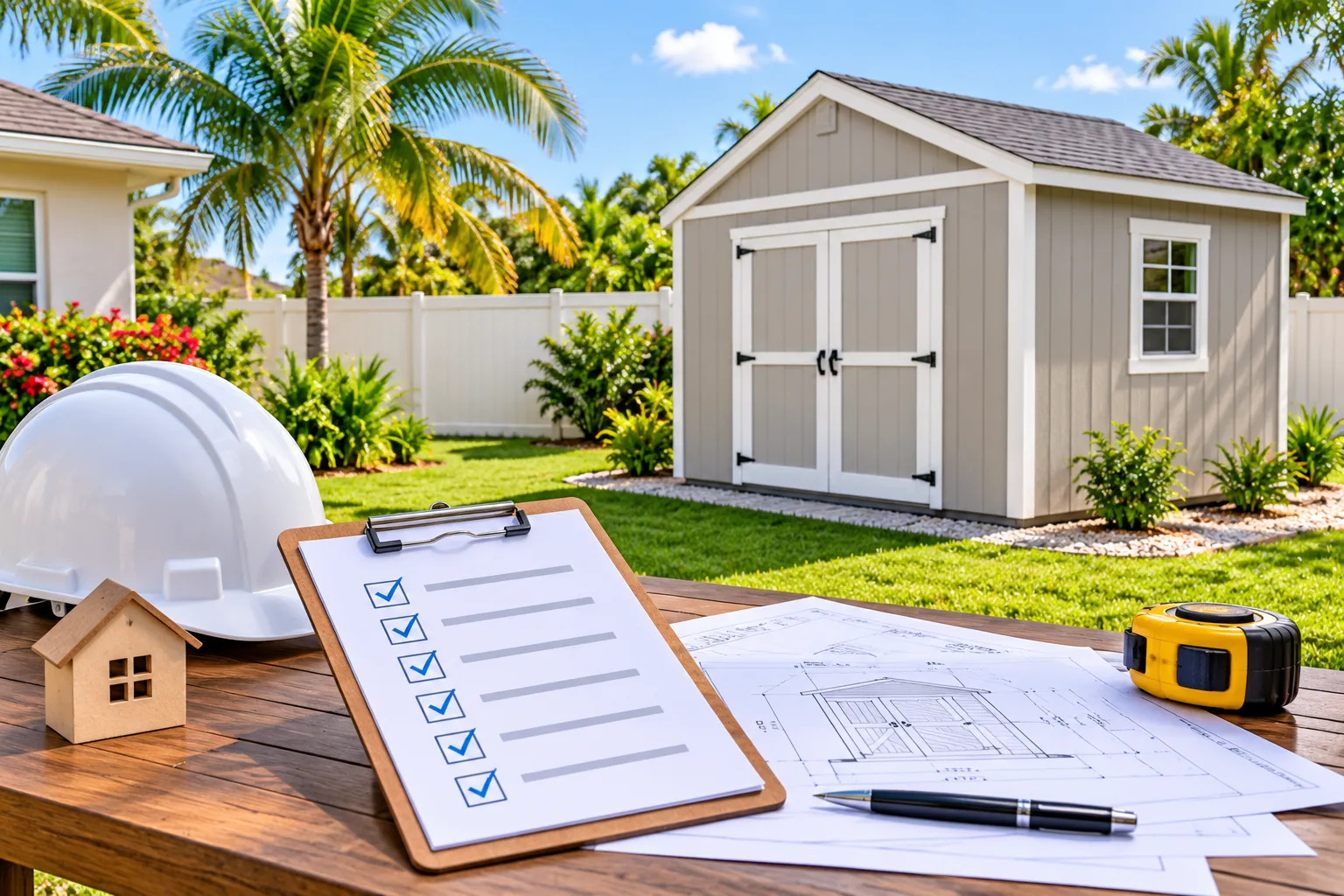
A prefabricated shed can be a practical addition to a Florida property. It provides extra storage for gardening equipment, lawn tools, bicycles, seasonal decorations, and other household items without requiring a major home renovation. However, purchasing a shed and choosing a convenient location are only two parts of the process. Homeowners must also consider local building regulations, property setbacks, wind resistance, drainage, and permit documentation.
Florida's weather and construction requirements make proper planning especially important. A shed that works well in another state may not automatically meet the requirements for a Florida property. Even when a manufacturer offers a ready-to-install structure, local authorities may require documentation before installation.
Understanding the basics of prefab shed permit plans Florida requirements can help homeowners avoid unexpected expenses, application corrections, and installation delays. Here are six important things to consider before bringing a prefabricated shed onto your property.
1. Understand When a Prefabricated Shed Needs a Permit
One of the first questions homeowners ask is whether a prefabricated shed requires a building permit. The answer depends on the shed's size, construction, location, intended use, and the rules enforced by the local building department.
Florida's building code includes certain exemptions for small detached storage structures. However, an exemption from a building permit does not automatically mean that every local zoning, floodplain, or property restriction can be ignored. Some municipalities also have specific requirements for accessory structures.
For example, a small storage shed may qualify for an exemption under certain conditions, while a larger prefabricated building may require a formal permit application and supporting documents. Panama City Beach, Orlando, and other Florida jurisdictions publish their own shed submission requirements.
Homeowners should contact their local building department before purchasing or installing a structure. Ask whether a building permit, zoning review, site plan, manufacturer documentation, or inspection is required.
A useful Florida prefab shed permit guide starts with confirming the rules for the exact property rather than relying on general advice found online.
2. Check Property Setbacks and Choose the Right Location
Choosing where to place a shed involves more than finding an empty corner of the backyard. Local zoning regulations generally establish how close accessory structures can be placed to property boundaries and other features.
Setbacks are especially important because a shed installed too close to a property line may violate local development requirements. Depending on the jurisdiction and property conditions, restrictions may also apply to easements, drainage areas, septic systems, utility access, and existing structures.
Before selecting a location, review the property survey. It can help identify boundary lines, existing buildings, driveways, and recorded easements. Compare the proposed shed location with the applicable setback requirements.
Also consider practical access. Delivery vehicles need enough room to reach the installation area, and homeowners should leave adequate space for doors, maintenance, and future repairs.
Some local authorities may request a site plan showing the shed's dimensions, location, and distances from property lines. Planning this information early can prevent relocation problems after delivery.
Homeowner tip: Do not assume that an area is suitable simply because a neighboring property has a shed in a similar position. Different lots can have different zoning conditions and restrictions.
3. Review Wind Resistance, Anchoring, and Manufacturer Documents
Florida's exposure to strong storms and hurricanes makes structural performance an important consideration when choosing a prefabricated shed.
A shed should be appropriate for the wind-design conditions applicable to its installation location. Its roof, walls, doors, connections, and anchoring system all contribute to how well the structure performs during severe weather.
Before purchasing, ask the manufacturer or distributor for documentation showing the shed's applicable Florida approval status, design information, and installation requirements. Depending on the product and jurisdiction, the building department may request approved plans, product information, anchoring details, or installation instructions.
Anchoring deserves particular attention. A shed that is not properly secured may be vulnerable to movement or damage during strong winds. The required anchoring method depends on the shed design, foundation conditions, and applicable requirements.
Avoid assuming that a manufacturer's standard installation package automatically satisfies every local requirement. Verify that the product documentation applies to the specific model and proposed installation.
For homeowners comparing several shed options, reviewing these details before making a purchase can prevent the frustration of discovering that a selected model needs additional documentation or modifications.
4. Consider Flood Zones, Drainage, and Foundation Requirements
Florida homeowners should also evaluate the property's drainage and flood exposure before installing a shed. Heavy rainfall, tropical storms, and localized flooding can create problems for structures placed in unsuitable areas.
Start by checking whether the property is located in a designated flood hazard area. Properties within these areas may have additional requirements for accessory structures, including elevation, anchoring, flood-resistant materials, or other protective measures.
The exact requirements depend on the flood zone, structure, intended use, and local regulations. A shed intended strictly for storage may be treated differently from a structure designed for occupancy.
The ground beneath the shed matters as well. Uneven soil, poor drainage, and inadequate foundation preparation can contribute to shifting, water accumulation, or structural problems.
Depending on the manufacturer's specifications and local requirements, installation may involve a concrete slab, approved foundation system, or properly prepared base. The foundation must be suitable for the structure and its site conditions.
Avoid placing a shed where it blocks established drainage paths or directs stormwater toward neighboring properties or the home. A little planning before installation can help prevent long-term maintenance issues.
5. Prepare the Right Shed Permit Plans and Documents
Once the location and shed model have been selected, homeowners can begin organizing the required paperwork. This is an important part of shed permit planning in Florida because incomplete or inconsistent documentation may result in additional review requests.
Although requirements vary by jurisdiction, a permit application may request several of the following:
- Property survey or site plan: Shows property boundaries, existing improvements, and the proposed shed location.
- Shed dimensions: Identifies the building's width, length, height, and overall footprint.
- Setback information: Shows distances between the proposed shed and relevant property lines.
- Manufacturer's drawings: Provides information about the prefabricated structure's design and specifications.
- Approval documentation: Includes applicable Florida approval information or other accepted product documentation.
- Anchoring details: Explains how the shed will be secured to its foundation or supporting surface.
- Flood-related information: Provides additional documents when required for properties in regulated flood areas.
- Application forms: Includes completed permit forms, owner information, and other required supporting records.
A clear site plan is particularly useful because it allows reviewers to understand how the proposed structure fits within the property.
Professional site plan preparation can help homeowners present property dimensions, existing structures, proposed improvements, and setback information in an organized format. The appropriate drawing details should always follow the local building department's submission checklist.
6. Avoid Common Installation Mistakes and Plan Ahead
Many shed installation problems are preventable when homeowners address the important details before ordering the structure.
One common mistake is purchasing a shed before confirming local requirements. Another is relying entirely on the manufacturer's general installation instructions without checking whether additional documents or approvals are needed.
Homeowners should also avoid overlooking homeowners association (HOA) rules. Even when a shed meets local building requirements, an HOA may have separate restrictions involving placement, appearance, materials, colors, or structure dimensions.
Before installation, use this simple planning sequence:
- Contact the local building department and confirm permit requirements.
- Review the property survey and applicable zoning restrictions.
- Check setbacks, easements, drainage, and flood conditions.
- Select a shed with appropriate manufacturer documentation.
- Prepare the required site plan and supporting documents.
- Obtain necessary approvals before beginning regulated work.
- Follow installation instructions and arrange required inspections.
Site Plans FL helps property owners and contractors with residential and commercial site plan services. If your shed project requires a site plan, professional assistance can help organize the property information and proposed layout for permit submission.
Final Thoughts
Installing a prefabricated shed can make a Florida property more functional, but successful installation starts with proper preparation. Homeowners should understand local permit requirements, verify property setbacks, review manufacturer documentation, and consider wind and flood conditions before purchasing a shed.
A well-prepared site plan and complete application can help reduce avoidable corrections and make the approval process more manageable. Rather than treating permitting as an afterthought, include it in the project from the beginning.
With careful shed permit planning in Florida, homeowners can make more informed decisions, avoid common installation mistakes, and move forward with greater confidence.