How to Choose the Best Goat Head Removal Equipment for Your Property
Maintaining a clean and comfortable outdoor space isn't always easy, especially when stubborn weeds start spreading across your lawn. Goat heads are a common example. These troublesome plants produce sharp seed pods that can stick to shoes, puncture bicycle tires, and cause painful injuries to pets walking through the yard.
For homeowners and property managers, removing these stickers can quickly become a regular maintenance challenge. While picking them up by hand might work in a small area, larger properties require a more efficient approach.
That's why investing in suitable goat head removal equipment can be a practical decision. However, with different tools and designs available, choosing the right option requires understanding your property, the extent of the problem, and how the equipment works.
What Makes Goat Heads So Difficult to Remove?
Goat heads, also called puncturevine, are low-growing plants that thrive in warm, sunny environments. They produce small, hard seed pods with sharp spines that can spread across lawns, pathways, gardens, and open land.
The biggest challenge is that these seed pods can remain scattered across the ground even after the visible plants have been removed.
This creates several problems for property owners:
- Children may experience painful injuries while playing outdoors.
- Dogs can step on sharp seed pods during walks.
- Bicycle and equipment tires can become punctured.
- Walking barefoot becomes uncomfortable.
- Seeds can spread to other areas through shoes, tires, and outdoor equipment.
Removing visible weeds alone doesn't necessarily solve the problem. Property owners also need to address the mature seed pods already present on the ground.
How Does Goat Head Removal Equipment Work?
Mechanical goat head removal equipment is designed to collect loose seed pods from outdoor surfaces.
Different models use different collection mechanisms, but the general idea is straightforward. As the equipment moves across the ground, its collection surface picks up burrs that can then be removed from the tool.
Unlike traditional hand-picking, mechanical collection can help cover larger areas with less repetitive manual effort.
Some models are designed for homeowners who need to maintain small yards, while others are built for larger properties where covering more ground is important.
It's important to understand that these tools primarily collect existing burrs. They aren't a replacement for removing growing puncturevine plants or preventing new seed production.
Which Type of Equipment Should You Choose?
The best option depends largely on the amount of land you need to maintain.
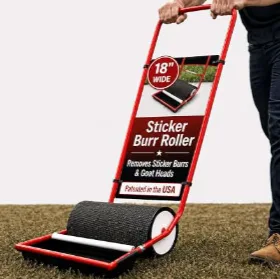
1. Compact Push Rollers for Residential Properties
If goat heads are mainly affecting your backyard, front lawn, or garden surroundings, a compact push roller may be a sensible choice.
These tools are generally easier to maneuver and don't require a towing vehicle.
They can be useful for:
- Small residential lawns
- Walkways and outdoor spaces
- Areas around patios
- Pet-friendly yards
- Smaller recreational spaces
Their main advantage is convenience. Homeowners can use them as part of their regular outdoor maintenance routine.
2. Larger Push Rollers for Extended Lawn Coverage
Some properties have more ground to cover than a typical residential yard but don't necessarily require vehicle-towed equipment.
In these situations, a larger push roller may provide a useful middle ground.
When comparing models, pay attention to the collection width, handling, weight, and how easily accumulated burrs can be removed.
A wider collection surface may help reduce the number of passes required, depending on the ground conditions and equipment design.
3. Pull-Behind Rollers for Large Properties
Managing goat heads across several acres can be a different challenge altogether.
For ranches, larger residential properties, and open fields, pull-behind equipment may be more practical.
These products are designed to be towed behind compatible vehicles, allowing users to cover larger areas without manually pushing the equipment.
Before choosing a model, check its towing compatibility, operating requirements, terrain suitability, and recommended maintenance procedures.
Five Things to Check Before Buying Goat Head Removal Equipment
Purchasing outdoor maintenance equipment without comparing its features can lead to unnecessary expenses. Here are five things worth considering.
1. Match the Equipment to Your Property
Think about how much ground needs regular maintenance. A small push roller may be sufficient for a backyard, while a larger property may require a wider or towable option.
2. Understand the Collection Mechanism
Not all burr removal tools work in the same way. Review the manufacturer's explanation of how the equipment collects seed pods and whether it is suitable for your lawn conditions.
3. Consider Build Quality
Outdoor equipment is exposed to dust, moisture, uneven surfaces, and repeated use. Look for durable construction and clearly documented product specifications.
4. Check Cleaning and Maintenance Requirements
Collected burrs need to be removed from the equipment after use. Choose a design that makes cleaning manageable and check whether replacement components are available.
5. Compare Practical Value
The cheapest product isn't always the most economical option. Consider how frequently you'll use it, the amount of work it can handle, and its expected maintenance costs.
Can Mechanical Removal Help Protect Pets and Children?
One reason homeowners take goat head problems seriously is the discomfort these sharp seed pods can cause.
Dogs frequently walk across lawns and outdoor pathways, making their paws vulnerable to sharp stickers. Children playing barefoot can face similar problems.
Mechanical collection can help reduce loose burrs in frequently used outdoor areas. However, no equipment should be considered a guarantee that a yard is completely free of sharp seed pods.
After using a removal tool, inspect the ground carefully, especially around play areas, pet routes, garden edges, and walkways.
Combining regular collection with early weed removal can help make outdoor spaces more comfortable.
Mechanical Collection and Long-Term Weed Management
Although goat head removal equipment is useful, property owners should understand the difference between collecting seed pods and controlling the plants themselves.
A more complete management strategy includes several activities.
Identify affected areas: Look for puncturevine growing in dry, sunny locations, especially near driveways, paths, and disturbed soil.
Remove young plants: Address growing weeds before they develop mature seed pods.
Collect existing burrs: Use appropriate mechanical equipment to remove loose seed pods from the ground.
Maintain healthy vegetation: Dense turf and suitable ground cover can make it harder for unwanted weeds to establish themselves.
Inspect regularly: Check the property throughout the growing season and repeat removal when necessary.
This combination helps address both the existing seed pods and the conditions that allow new plants to grow.
Where to Explore Goat Head Removal Equipment
Finding a tool designed specifically for sticker burr collection can make property maintenance more manageable.
Sticker Burr Roller offers specialized mechanical equipment for collecting goat heads and other troublesome burrs. Its product selection includes different push-style and pull-behind solutions for properties of varying sizes.
Homeowners can explore the available models, compare their intended applications, and review the product specifications before deciding which option fits their needs.
For anyone dealing with recurring sticker burr problems, understanding the available equipment options is a useful starting point.
Final Thoughts
Goat heads may be small, but their sharp seed pods can create surprisingly big problems for homeowners, pet owners, and property managers.
Choosing suitable goat head removal equipment can make routine collection easier and reduce the time spent manually picking up stickers. The right choice depends on property size, ground conditions, equipment design, and maintenance requirements.
Rather than waiting until the problem spreads, make regular inspections and mechanical collection part of your outdoor maintenance routine. A consistent approach can help keep lawns, pathways, and other frequently used spaces more comfortable throughout the year.