When the Assembly Lines Went Silent: A Stark Scene in Chattanooga
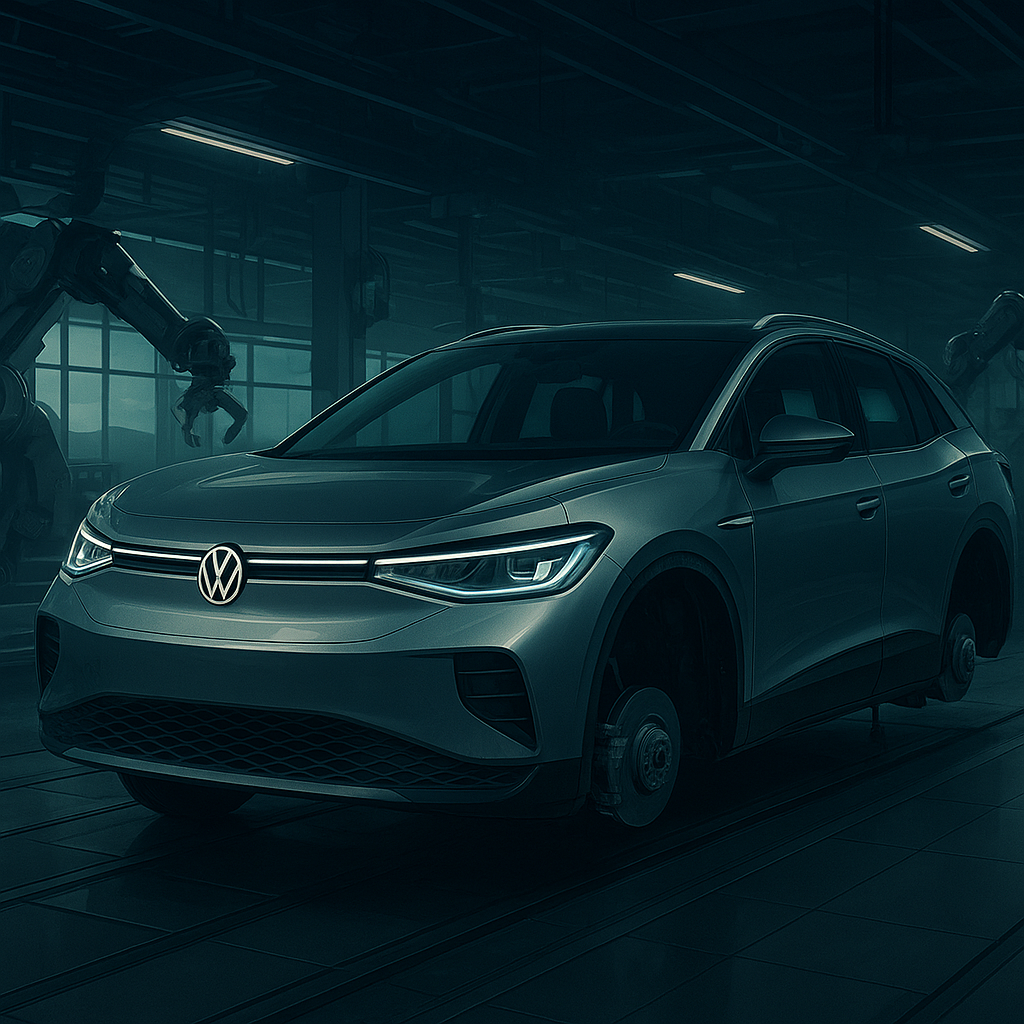
In early May 2026, the hum of Volkswagen’s assembly lines in Chattanooga, Tennessee, came to an abrupt halt. The production of the ID.4 electric SUV, once a flagship model in VW’s North American electric push, stopped indefinitely. The United Auto Workers (UAW) union, representing the plant’s workforce, confirmed that declining sales figures were the primary cause behind this drastic move. The empty factory floors, which had been a symbol of the electric vehicle (EV) revolution in the region, now stand as a somber indicator of shifting consumer preferences and market realities.
This cessation is more than a manufacturing pause; it marks a critical juncture in the EV sector and Volkswagen’s ambition in the U.S. market. The plant, inaugurated in 2020 as part of VW’s $800 million investment to produce the ID.4 locally, was heralded as a commitment to American EV adoption and green manufacturing jobs. Yet, sales have consistently underperformed expectations in recent quarters. The UAW’s announcement has sent ripples through the automotive industry, raising urgent questions about the sustainability of EV production strategies and the competitive pressures facing legacy automakers.
“The decision to stop ID.4 production is a direct reflection of the rapidly changing market dynamics and consumer hesitance in adopting this particular EV model,” said a UAW spokesperson. “It’s a wake-up call for the industry and for Volkswagen’s future plans in the U.S.”
Understanding the factors behind this shutdown is essential not only for industry insiders but also for policymakers and consumers tracking the trajectory of electric vehicles in America.
Tracing the Road to Chattanooga’s Production Halt: Context and Background
Volkswagen’s Chattanooga plant was envisioned as a cornerstone of the company’s electrification strategy in North America. Launched amid the 2020 surge in EV optimism, the ID.4 was positioned as a competitive mid-size electric SUV that could rival Tesla’s offerings and appeal to the growing segment of environmentally conscious consumers. The Chattanooga facility, employing approximately 3,000 workers at its peak, was adapted to produce the ID.4 at scale, aiming to capitalize on local demand and avoid import tariffs.
However, several factors undermined this vision over the past three years. Firstly, the ID.4’s market reception in the U.S. has been lukewarm compared to expectations. Despite initial enthusiasm, sales plateaued and then declined, influenced by a crowded EV market, shifting consumer tastes, and the rise of more affordable or better-performing competitors. Meanwhile, supply chain disruptions caused by geopolitical tensions and semiconductor shortages in 2024 and 2025 also affected production volumes and delivery timelines.
Additionally, Volkswagen’s strategic pivot towards higher-margin models such as luxury electric SUVs and crossovers in its premium lineup has deprioritized the ID.4. Industry analysts suggest that VW’s investment focus has shifted towards the ID.7 sedan and upcoming Scout EV, delaying innovation and marketing support for the ID.4. These strategic decisions, combined with a lack of a compelling value proposition for the ID.4 against rivals, contributed to waning sales.
The Chattanooga plant’s production halt mirrors broader challenges facing traditional automakers attempting to transition from internal combustion engines to EVs while competing with disruptive newcomers. As TheOmniBuzz reported earlier this year in Why Volkswagen Halted ID.4 Production in Chattanooga Amid Slumping Sales, the decision reflects a complex interplay of market forces and corporate strategy.
Analyzing the Numbers: Sales Data and Market Trends
Delving into the sales figures reveals the stark reality behind the production suspension. According to industry data compiled in early 2026, U.S. sales of the Volkswagen ID.4 dropped by approximately 28% year-over-year in the first quarter compared to 2025. Total sales for the full year 2025 were estimated at just under 18,000 units, a significant shortfall from the 30,000 units Volkswagen had forecasted for the North American market in 2024.
Several factors contributed to this decline:
- Increased Competition: Rivals such as Tesla’s Model Y, Ford’s Mustang Mach-E, and Hyundai’s Ioniq 5 have steadily captured larger market shares with more compelling features, pricing, and brand appeal.
- Price Sensitivity and Incentive Changes: Federal tax incentives for EVs have been restructured under new regulations, tightening eligibility and reducing benefits for certain models including the ID.4, making it less financially attractive to buyers.
- Consumer Perception: The ID.4 has faced criticism over range limitations, interior quality, and technological features compared to competitors, eroding consumer confidence.
- Economic Factors: Inflationary pressures and rising interest rates have dampened overall new vehicle purchases, with consumers more cautious about higher-priced EVs.
Volkswagen’s internal reports, shared confidentially with TheOmniBuzz sources, indicate that dealer inventories of the ID.4 have increased by 35% over the past six months, signaling slowing demand and creating pressure to cut back production.
Moreover, the Chattanooga plant’s fixed costs and workforce commitments have become increasingly unsustainable with the shrinking production volume. Analysts estimate that continuing ID.4 production at current sales levels would lead to operational losses exceeding $100 million annually at the plant.
“The ID.4’s sales trajectory is a cautionary tale about the importance of aligning product offerings with evolving market expectations,” noted an automotive market analyst. “Volkswagen’s decision underscores the brutal economics of EV manufacturing in today’s competitive environment.”
Current 2026 Developments: Volkswagen’s Strategic Recalibration
In response to the Chattanooga production halt, Volkswagen has announced a comprehensive review of its North American EV operations. Company executives have confirmed a temporary suspension of ID.4 assembly while exploring options to retool the plant for future models. This pause is not yet a permanent closure but signals a strategic pivot.
Volkswagen’s CEO for the Americas, speaking at the 2026 North American Auto Show, emphasized a renewed focus on next-generation EV platforms and more premium offerings. The company plans to accelerate development of the ID.Buzz electric van and the upcoming Scout EV, which is expected to target a different customer segment with greater demand potential.
Concurrently, the UAW has expressed concern about job security for Chattanooga workers, urging Volkswagen to commit to retraining and future production plans that preserve employment levels. The union has also highlighted the importance of ensuring that the local workforce is included in Volkswagen’s future EV ambitions.
This situation unfolds amid a broader industry recalibration where manufacturers are reassessing EV portfolio breadth, production footprints, and supply chain resilience. Volkswagen’s Chattanooga case is emblematic of the challenges faced by many legacy automakers balancing ambitious electrification goals with real-world market dynamics.
For consumers, the production halt may limit availability of the ID.4 in key markets, potentially pushing buyers toward competing models. For investors, it raises questions about Volkswagen’s U.S. competitiveness and the viability of its mass-market EV strategy.
These developments also intersect with ongoing debates about government EV incentives, infrastructure rollout, and regulatory frameworks that impact automaker decisions.
Industry Perspectives and Broader Implications
Experts interpret Volkswagen’s Chattanooga ID.4 production halt as a symptom of broader systemic issues within the EV market and automotive industry transformation. According to several industry consultants, automakers must now navigate a complex landscape marked by heightened competition, shifting consumer expectations, and evolving regulatory environments.
One key insight is the increasing importance of product differentiation and innovation in EV offerings. The ID.4’s challenges highlight that simply electrifying existing models is insufficient; consumers demand superior performance, technology, and value propositions.
Moreover, the Chattanooga case underscores the criticality of supply chain agility and localized manufacturing strategies. The plant’s earlier promise as a U.S.-based EV hub is now tempered by the need to adapt rapidly to market shifts.
“Volkswagen’s experience sends a clear message: automakers must be nimble and responsive, aligning production closely with real-time demand and consumer trends,” said an automotive industry strategist. “Rigid commitments can lead to costly missteps.”
From a labor perspective, the halt raises questions about workforce transition and the social contract in an electrifying industry. The UAW’s involvement and calls for retraining reflect the broader challenge of ensuring equitable transitions for workers amid technological disruption.
Finally, the incident feeds into the ongoing dialogue about the pace of EV adoption in the U.S. versus other global markets. While Europe and China have seen more robust ID.4 sales, the American market presents unique hurdles including consumer preferences for larger vehicles, regulatory complexity, and infrastructure gaps.
Looking Ahead: What This Means for Volkswagen and the EV Sector
As Volkswagen recalibrates its strategy following the Chattanooga ID.4 production pause, several key takeaways emerge for the future of the company and the wider EV sector.
- Strategic Portfolio Focus: Volkswagen will likely concentrate on fewer, more differentiated EV models that can command stronger market positions and profitability, as signals from the ID.4 experience suggest.
- Manufacturing Flexibility: The necessity to repurpose existing plants quickly for new models or technologies will become a competitive advantage in an uncertain market.
- Consumer-Centric Innovation: Success in the EV market will hinge on meeting evolving consumer demands for range, charging convenience, technology, and affordability.
- Labor and Community Engagement: Ensuring workforce stability through retraining and involvement in new production lines will be critical to maintaining social license and operational continuity.
- Policy Impact: Ongoing government incentives and infrastructure investments will heavily influence automaker decisions and market growth trajectories.
For Volkswagen specifically, the Chattanooga plant’s future may involve a transition toward newer EV models like the Scout or ID.Buzz, contingent on market reception and strategic priorities. The company’s ability to restore momentum in the U.S. EV market will be closely watched by industry observers and competitors alike.
Consumers and stakeholders interested in the evolving dynamics of EV adoption can also explore related insights on TheOmniBuzz, such as the implications of delayed EV launches in "Scout EV Delays Raise Alarms for Electric Vehicle Momentum" and ownership lessons highlighted in "Owning Two EVs Taught Me What Buyers Really Need to Know".
“The Chattanooga production halt is a pivotal moment — it’s a reminder that the EV revolution is not guaranteed but must be earned through innovation, market insight, and adaptability,” concluded a senior analyst at a leading consultancy.
The coming months will reveal whether Volkswagen can translate this setback into a strategic rebound or if it signals more profound challenges for legacy automakers competing in the electrified era.