Small molded rubber bellows play an important role in applications where flexibility, protection, and controlled movement are required within a compact space. As equipment continues to become smaller and more precise in 2026, manufacturers increasingly need miniature components that can perform reliably without adding unnecessary bulk.
From pumps and medical devices to sensors, actuators, and industrial equipment, small rubber bellows can help accommodate movement while protecting sensitive components from dust, moisture, pressure, and other environmental factors. Custom Rubber Bellows focuses on producing molded rubber bellows designed around the specific requirements of each application.
What Are Small Molded Rubber Bellows?
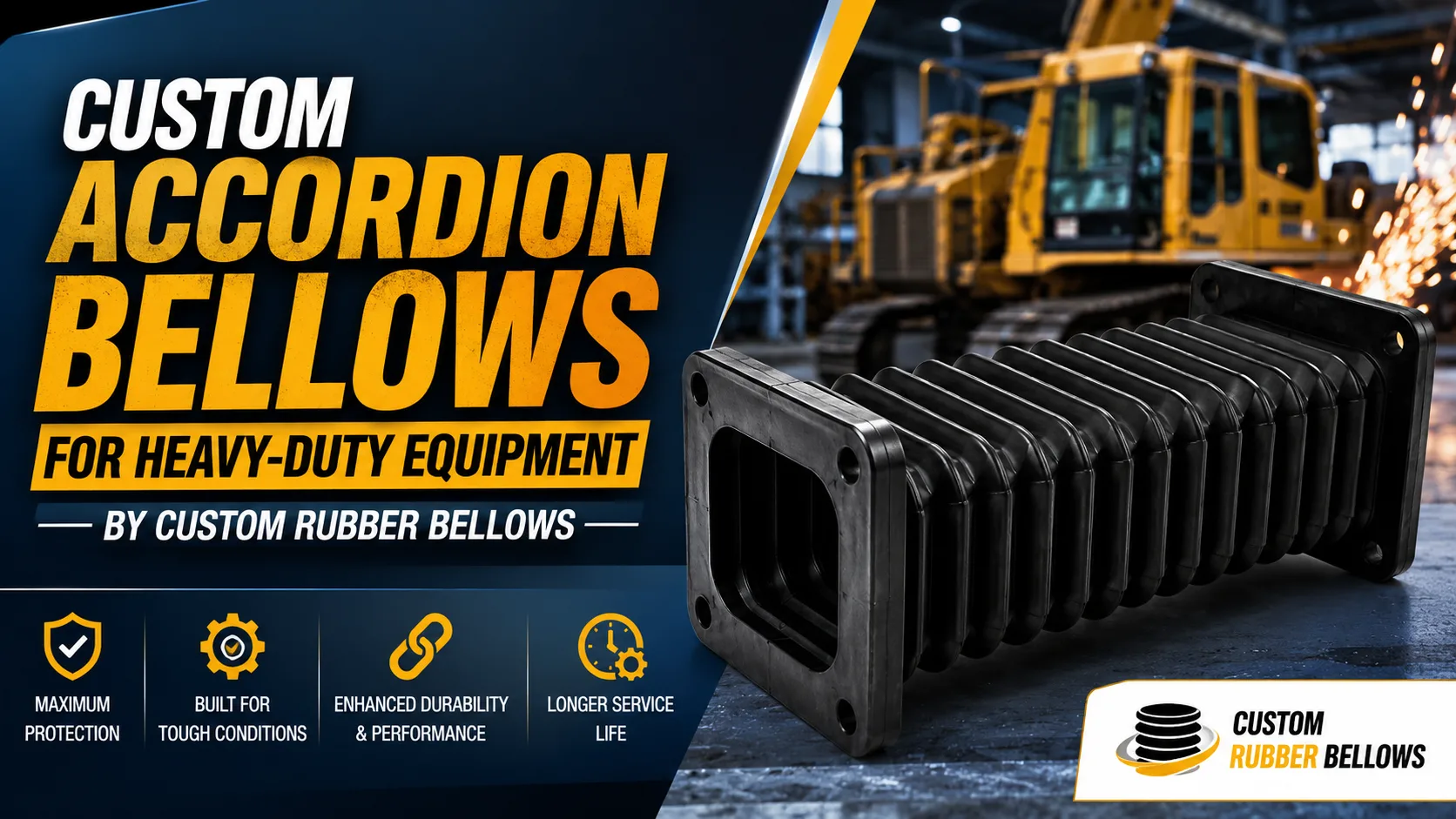
Small molded rubber bellows are flexible components manufactured with a series of folds or convolutions. These folds allow the bellows to compress, expand, bend, or move while maintaining a controlled seal or barrier.
Unlike rigid components, molded rubber bellows are designed to accommodate mechanical movement. Their flexibility Bellows makes them useful when components need protection while still allowing shafts, rods, or other moving parts to operate.
The size, wall thickness, material, number of convolutions, and overall geometry can all be adjusted according to the application’s requirements.
Why Use Small Rubber Bellows?
The main advantage of small rubber bellows is their ability to provide flexibility in limited spaces. When equipment has a compact design, conventional protective components may not provide enough movement or may take up too much room.
Small bellows can offer several benefits:-
- Flexible movement and compression
- Protection against dust and contaminants
- Resistance to moisture and environmental exposure
- Compact installation
- Reduced exposure of moving components
- Customizable dimensions and shapes
- Support for demanding mechanical applications
For manufacturers designing compact equipment, choosing the right bellows geometry can make a significant difference in overall component performance.
Applications Of Miniature Rubber Bellows
Considering miniature rubber bellows are commonly considered for applications where space is limited but reliable movement or protection is still necessary.
Pumps & Fluid Systems
Bellows can also be useful in compact pumping systems. Small rubber bellows for pumps can provide controlled movement while helping isolate internal mechanisms from external contaminants.
Depending on the design, bellows may be incorporated into pumping or pressure-management mechanisms where repeated flexing is required.
Sensors
Modern sensors and instruments often have limited internal space. A small bellows can provide protection for moving elements without significantly increasing the size of the assembly.
The bellows geometry can be designed to accommodate the required range of movement while maintaining a consistent protective barrier.
Choosing The Right Material
Material selection is one of the most important considerations when designing a rubber bellows. Different applications can expose the component to temperature changes, oils, chemicals, pressure, abrasion, or repeated mechanical movement.
RequirementWhat to ConsiderTemperatureOperating and peak temperature rangeFlexibilityRequired compression, extension, and bendingChemical ExposureContact with oils, solvents, fluids, or chemicalsEnvironmentDust, moisture, outdoor or industrial conditionsMovementFrequency and range of repeated flexingDimensionsAvailable installation space and connection pointsThe correct material should be selected based on the actual operating environment rather than simply choosing a material based on general flexibility.
Small Diameter Rubber Bellows For Compact Designs
Equipment designers sometimes need small diameter rubber bellows because there is very little space available around a moving component. In these situations, the bellows must be designed carefully to balance flexibility, wall thickness, durability, and available installation space.
A smaller diameter does not necessarily mean a simpler design. The geometry of each convolution can influence how the bellows moves and how much stress develops during repeated operation.
Custom Design And Manufacturing
Off-the-shelf bellows may not always match the dimensions or performance requirements of a specialized application. Custom bellows can be developed around specific dimensions, movement requirements, connection methods, and environmental conditions.Conclusion
Small molded rubber bellows provide a practical solution for applications that require flexibility, protection, and compact construction. From small rubber bellows for pumps to miniature rubber bellows for medical devices, these components can be customized to meet different mechanical and environmental requirements.
Working with us as a custom manufacturer also makes it possible to optimize the material, dimensions, and overall design for the intended application.
FAQs
1. What are small molded rubber bellows used for?
Small molded rubber bellows are used to protect moving components while allowing controlled compression, extension, bending, or movement. They are commonly considered for pumps, medical devices, sensors, actuators, and industrial equipment.
2. Can small rubber bellows be custom manufactured?
Yes. Custom rubber bellows can be designed according to specific dimensions, movement requirements, material properties, connection points, and environmental conditions.
3. What materials can be used for miniature rubber bellows?
Material selection depends on the application. Factors such as temperature, flexibility, chemical exposure, moisture, abrasion, and repeated movement should be considered when choosing the appropriate rubber compound.
4. Where are small rubber bellows for pumps used?
They can be used in compact pumping and fluid-handling systems where flexible movement, pressure management, or protection of internal components is required.
5. How do I choose small diameter rubber bellows?
Consider the available installation space, required movement, operating temperature, chemical exposure, pressure, frequency of movement, and desired service life. A custom manufacturer can help determine the appropriate geometry and material for the application.