
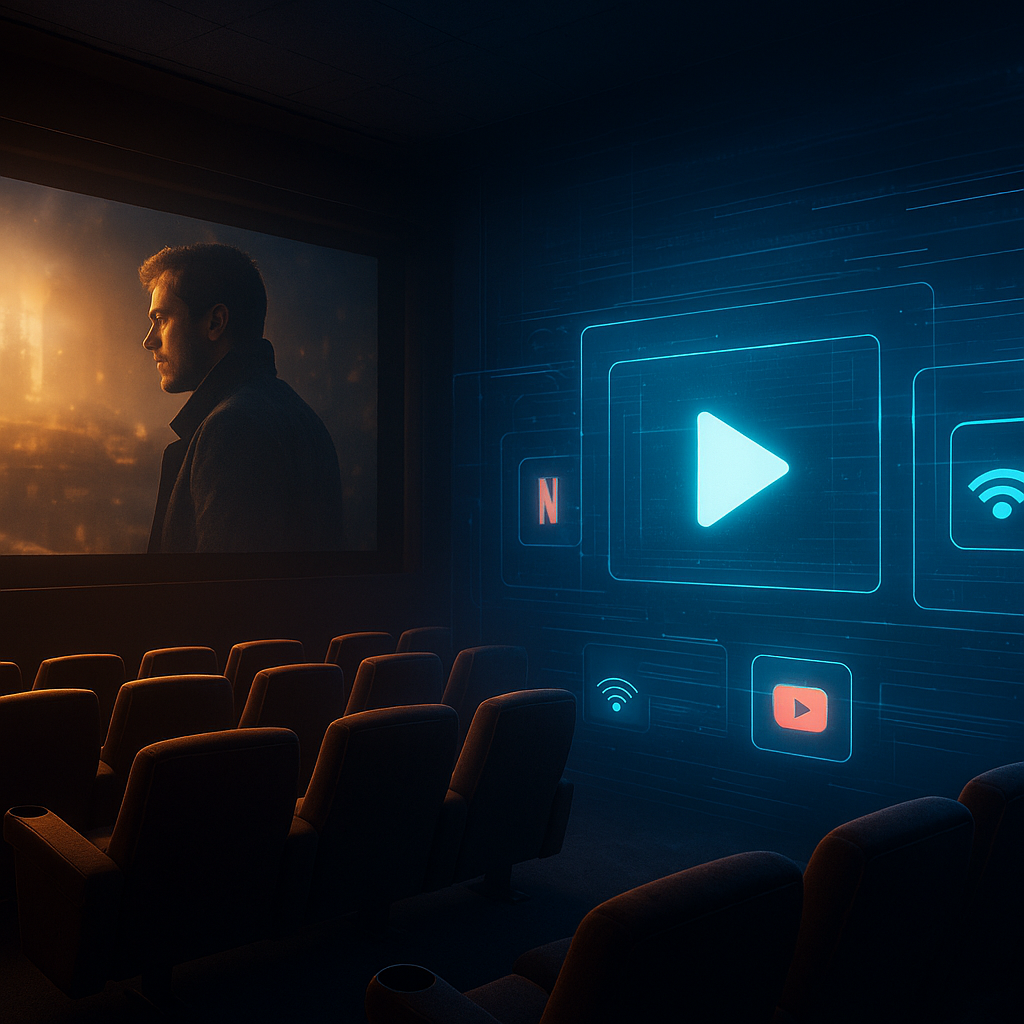
Reimagining the Silver Screen: A Night at Home Outshines Theaters
On a chilly evening in early 2026, millions settled into their living rooms to watch one of the year's most anticipated cinematic releases—not in a theater, but on their personal devices. This shift exemplifies a profound transformation in how movies are consumed and produced. The rise of streaming platforms like StreamFlix, CineVerse, and NovaPlay has not only altered distribution models but also challenged the traditional theatrical experience.
According to industry data, global streaming subscriptions surpassed 1.8 billion in mid-2026, marking a 15% increase from 2025. This surge correlates with a notable decline in theatrical attendance, which has fallen by nearly 25% over the past three years, according to figures from the International Motion Picture Association (IMPA). These trends signal that the moviegoing experience has become more personal, dynamic, and accessible, reshaping the entertainment landscape.
“The way audiences engage with movies is no longer dictated by theaters. Accessibility and convenience are the new currency of cinematic success.” — Dr. Lena Hartwell, Media Studies Professor
The implications of this transformation extend well beyond viewer habits. Filmmakers and studios are recalibrating their strategies, focusing on content that thrives in home environments, such as serialized cinematic universes and interactive narratives. The shift also raises questions about the cultural role of theaters and the future of communal movie experiences.
This article explores the multifaceted evolution of movies in 2026, analyzing historical context, current trends, expert perspectives, and what lies ahead for cinema and its audiences.
Tracing the Journey: From Silver Screens to Streaming Screens
Understanding the current cinematic paradigm requires revisiting the industry's evolution over the past century. The golden age of Hollywood in the mid-20th century established theaters as cultural hubs, with studios controlling production, distribution, and exhibition.
However, the advent of home video in the 1980s introduced the first major disruption. VHS tapes and later DVDs allowed viewers to own or rent films, initiating a shift toward home consumption. The internet and broadband expansion in the 2000s accelerated this trend, birthing platforms like Netflix and Hulu, which initially operated on DVD-by-mail before pivoting to streaming.
By 2020, streaming had become mainstream, but the COVID-19 pandemic accelerated adoption dramatically. With theaters shuttered worldwide, studios experimented with day-and-date releases, debuting films simultaneously in theaters and online.
By the mid-2020s, streaming transformed from an alternative to the dominant mode of film consumption. Studios restructured their release calendars around streaming exclusives, while theaters focused on event films and immersive experiences to lure audiences.
TheOmniBuzz has chronicled these shifts extensively, including in Movies in 2026: Evolution, Trends, and the Future of Cinema, highlighting how technological advances and consumer preferences have converged to redefine the industry.
Data-Driven Insights: Streaming’s Impact on Box Office and Content Creation
The numbers behind the shift reveal a complex interplay between streaming platforms and traditional studios. In 2025, global box office revenue totaled approximately $28 billion, down from $42 billion in 2019. Meanwhile, streaming platforms reported combined revenues exceeding $85 billion, underscoring their dominance.
Key data points illuminating this transformation include:
- Streaming Subscriptions: Over 1.8 billion globally, driven by markets in Asia-Pacific and Latin America.
- Original Content Investment: StreamFlix allocated $20 billion to original movies and series in 2025, a 30% increase over 2024.
- Theatrical Release Windows: The average gap between theatrical and streaming releases shrank from 90 days to 30 days in major markets.
- Audience Demographics: Younger viewers (ages 18-34) prefer streaming by a 3:1 margin, while older demographics still attend theaters more frequently.
This data signals that studios are prioritizing streaming-first releases, tailoring content to binge-friendly formats and interactive elements. The decline in theatrical revenue has forced cinemas to innovate, offering premium experiences like enhanced sound systems, luxury seating, and augmented reality features.
“The future belongs to platforms that can marry storytelling with technological innovation and audience convenience.” — Marcus Chen, Chief Content Officer at CineVerse
These shifts also affect the creative process. Writers and directors now often conceive projects with multiple viewing contexts in mind, balancing cinematic spectacle with intimate storytelling suited for smaller screens.
2026 in Review: Streaming Wars Heat Up and Theatrical Reinvention
The year 2026 has been pivotal. Streaming services have intensified competition, investing heavily in exclusive content to capture and retain subscribers. For instance, StreamFlix’s release of "Eclipse Horizon," a sci-fi epic with an interactive narrative component, drew over 50 million viewers in its first month, setting new benchmarks for engagement.
Meanwhile, theaters are experimenting with hybrid models. Some chains have adopted subscription services offering unlimited movie access, while others focus on niche programming such as restored classics and international cinema.
TheOmniBuzz's recent piece, April Movies 2026: Emerging Trends and Box Office Surprises Unveiled, details how regional box office rebounds in countries like India and South Korea demonstrate localized resilience of theaters when paired with streaming strategies.
Technological advances have also entered theaters. Enhanced laser projection, AI-driven scheduling, and personalized viewing environments are becoming commonplace. The introduction of "CinemaConnect," a platform launched in early 2026, allows theaters to synchronize live streaming events with in-person screenings, blending digital and physical experiences.
- Hybrid Release Strategies: Studios now often opt for simultaneous or near-simultaneous theater and streaming launches.
- Interactive and Immersive Content: Use of virtual reality (VR) and augmented reality (AR) is expanding in both streaming and theatrical contexts.
- Global Market Expansion: Streaming services are penetrating emerging markets with localized content, fueling subscriber growth.
Voices from the Industry: Navigating Change and Innovation
Industry leaders acknowledge the challenges and opportunities this transformation presents. Veteran director Amina Khoury, known for her hybrid film "Crossroads," emphasizes adaptation as key:
“Filmmaking is about connecting with audiences. Whether on a giant screen or a handheld device, the story must resonate. We’re learning to craft narratives that flex across formats.”
Executives from major studios report increased collaboration with streaming platforms while maintaining theatrical roots. Marcus Chen of CineVerse notes a dual approach:
“We don’t see theaters and streaming as adversaries but as complementary. The goal is to maximize reach and impact, whether through immersive theater events or personalized streaming experiences.”
Simultaneously, independent filmmakers are leveraging streaming to bypass traditional gatekeepers, democratizing content creation and distribution. Platforms now host millions of indie titles, some achieving cult status and influencing mainstream trends.
This democratization fosters diversity, with stories from underrepresented voices gaining visibility on global stages. TheOmniBuzz’s article How Movies Shape Culture and Commerce: What You Need to Know explores this intersection of culture, economics, and technology further.
Looking Ahead: What the Next Decade Holds for Cinema
As 2026 unfolds, the future of movies appears to be one of hybridization and innovation. The following trends are likely to shape the industry’s trajectory:
- Personalized Storytelling: AI-driven narratives adapting to individual viewer choices will become mainstream.
- Multi-Sensory Experiences: Theaters will integrate scent, touch, and motion technologies to deepen immersion.
- Global Content Fusion: Cross-cultural collaborations will produce films appealing to worldwide audiences, supported by streaming’s borderless reach.
- Sustainability Focus: Eco-friendly production and distribution methods will gain priority amid climate concerns.
- Community-Driven Platforms: Viewer engagement through social features and fan contributions will influence content creation.
Despite uncertainties, one constant remains: the human desire for compelling stories. Whether experienced on a colossal screen or a handheld device, movies continue to captivate, challenge, and connect us.
In light of the evolving landscape, industry watchers and audiences alike should monitor the interplay between technology, creativity, and consumer behavior. TheOmniBuzz will continue providing in-depth analyses and updates to keep readers informed about these dynamic shifts.
“Cinema is not dying; it is transforming. The narrative is expanding beyond screens to become an all-encompassing cultural experience.” — Dr. Lena Hartwell