Electric Promise Meets Harsh Reality: The Chattanooga ID.4 Shutdown
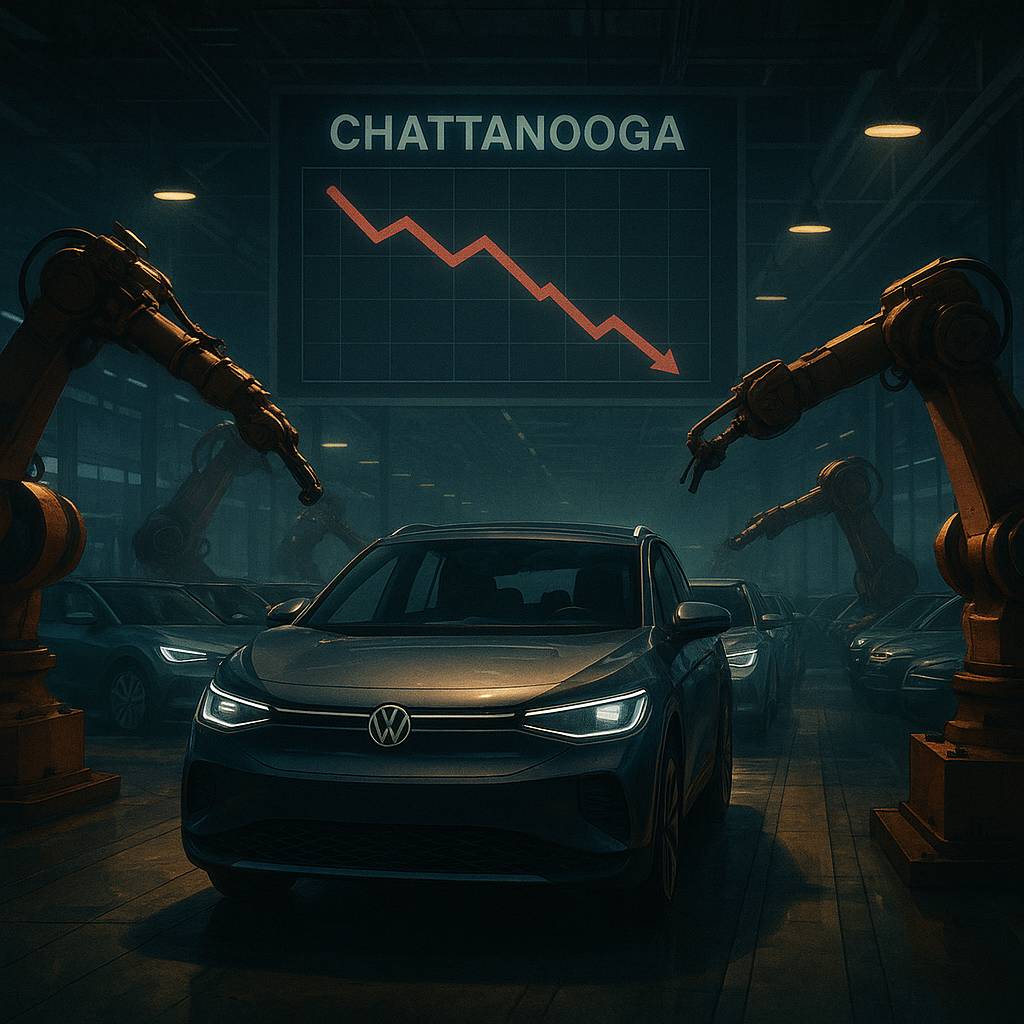
On April 20, 2026, a significant development shook the U.S. electric vehicle (EV) sector: Volkswagen announced the suspension of production for its ID.4 model at the Chattanooga assembly plant. The news, confirmed by the United Auto Workers (UAW) union, marked a sharp pivot from Volkswagen's earlier ambitions to establish Chattanooga as a key hub for EV manufacturing on American soil. This halt comes amid a troubling trend for the ID.4, whose sales have reportedly declined sharply over the past 18 months. Industry insiders and union representatives alike view this pause as a critical turning point, raising questions about Volkswagen’s U.S. EV strategy and the broader challenges facing manufacturers in the competitive American EV market.
Inside the Chattanooga plant, once buzzing with optimism, workers now face uncertainty. The union stressed that this pause is driven by "significant market headwinds," with the ID.4's sales figures dropping below projections despite recent incentives and refreshed models. According to union spokesperson Dana Reynolds, "Our members are concerned about what this means for jobs and the local economy. Volkswagen must clarify its plans going forward." This development has sent ripples through automotive circles, highlighting the complex interplay of supply chain pressures, shifting consumer preferences, and intensifying competition.
"The pause in Chattanooga's ID.4 production is a wake-up call not just for Volkswagen but for all automakers grappling with the evolving EV market in the U.S." – Dana Reynolds, UAW Spokesperson
The stakes are high. Chattanooga was chosen strategically to help Volkswagen meet U.S. EV demand and regulatory targets. Yet, the ID.4's sales slump suggests deeper structural challenges. This article explores the background, data, and industry perspectives behind this decision, alongside insights into what this means for Volkswagen, its workers, and the American EV landscape.
From Ambition to Adversity: How Volkswagen’s ID.4 Journey Led Here
Volkswagen's entry into the U.S. EV market was marked by enthusiasm and strategic investment. The ID.4, launched in 2021, was Volkswagen’s first fully electric SUV tailored for the American market, manufactured domestically at the Chattanooga plant—a move intended to bolster local jobs and avoid tariffs. The facility was retrofitted with a $800 million investment to handle EV production, and initial demand was robust.
However, a combination of factors gradually eroded the ID.4's momentum. Early optimism was tempered by supply chain disruptions—especially semiconductor shortages—that delayed deliveries in 2022 and 2023. Meanwhile, competitors like Tesla, Ford with its Mustang Mach-E, and Rivian aggressively expanded their EV lineups, eroding Volkswagen’s market share.
Compounding these challenges, consumer preferences shifted rapidly. While the ID.4 was praised for its comfort and spaciousness, critics pointed to its range and charging network as lagging behind rivals. Additionally, increasing battery raw material costs pushed prices upward, making the ID.4 less competitive despite federal tax incentives designed to encourage EV adoption.
Volkswagen’s broader corporate strategy also evolved. In late 2024, VW Group announced a pivot toward more premium EV models and greater investment in solid-state battery technology, signaling reduced emphasis on volume-oriented models like the ID.4. The Chattanooga plant, once seen as a cornerstone for U.S. EV growth, now faces uncertainty amid these shifting priorities.
"Volkswagen’s recalibration towards premium EVs and advanced battery tech reflects the intense pressure to innovate and differentiate in a crowded market." – Automotive industry analyst Karen Li
Data Deep-Dive: Sales Trends and Market Dynamics Impacting the ID.4
Examining the numbers reveals the scope of the challenge Volkswagen faces. According to industry data compiled through early 2026, U.S. ID.4 sales have fallen 27% year-over-year since mid-2024. In contrast, Tesla’s Model Y and Ford’s Mustang Mach-E have continued to grow, capturing larger shares of the EV SUV segment.
Several key factors underpin this decline:
- Price Pressure: The ID.4’s average transaction price rose by approximately 5% in 2025 due to increased battery costs and inflationary pressures, placing it out of reach for some price-sensitive buyers.
- Range and Charging Infrastructure: While the ID.4 offers an estimated EPA range of around 275 miles, competitors began pushing 300+ miles or faster charging capabilities, enhancing consumer appeal.
- Increased Competition: The U.S. EV market saw over 40 new EV models launch in 2025 alone, with many targeting the popular compact SUV segment.
- Supply Chain Volatility: Persistent supply chain issues, including battery cell shortages, disrupted production schedules and dealer inventory levels.
Sales figures by quarter demonstrate Volkswagen’s struggles:
- Q1 2024: 12,000 units
- Q2 2024: 11,500 units
- Q3 2024: 9,000 units
- Q4 2024: 7,800 units
- Q1 2025: 6,900 units
- Q2 2025: 6,200 units
Internal sources suggest Volkswagen forecast a rebound following a 2025 model refresh, but sales failed to meet targets, prompting the production pause. The Chattanooga plant, capable of producing 150,000 vehicles annually, is now operating at less than 40% capacity, an untenable position economically.
This trend reflects a broader market shift where consumer expectations for range, tech, and brand cachet heavily influence EV purchasing decisions. Volkswagen’s ID.4, once a frontrunner in the mainstream EV segment, now struggles to keep pace.
2026 Update: What Has Changed and What This Means for Volkswagen
The production halt at Chattanooga is part of a wider reorganization within Volkswagen’s U.S. operations. The company has announced a strategic focus on higher-margin electric models and plans to invest more heavily in battery R&D at its North American facilities. However, the immediate impact on the workforce and regional economy is acute.
Reports from the UAW indicate that approximately 1,200 employees are directly affected by the production suspension, with potential layoffs or furloughs looming depending on Volkswagen’s next moves. The union has urged Volkswagen to provide clarity and support for affected workers.
Volkswagen’s leadership has framed the pause as temporary, emphasizing the need to "align production with market demand" and accelerate innovation. CEO Markus Klein stated in a recent press briefing, "We remain committed to Chattanooga and the U.S. market, but must adapt rapidly to evolving consumer preferences and supply realities." However, analysts caution that recovery depends on Volkswagen’s ability to differentiate future offerings and improve supply chain resilience.
Meanwhile, Volkswagen is reportedly accelerating development of its ID.Buzz EV and a new electric SUV prototype that could replace the ID.4 in the U.S. market with improved range and features. The company is also exploring partnerships for solid-state battery production, which could dramatically enhance vehicle performance and cost structure.
"Volkswagen’s Chattanooga production pause underscores the critical need for automakers to remain agile amid an increasingly crowded and demanding EV market." – Markus Klein, VW CEO, April 2026
Consumers and investors will be watching closely. Volkswagen’s ability to rebound in the U.S. EV market hinges on swift innovation and strategic clarity. For now, Chattanooga’s plant serves as a cautionary tale of the risks inherent in the rapid EV transition.
Industry Perspectives: What Experts Say About Volkswagen’s Setback
Industry analysts and automotive experts have weighed in on Volkswagen’s Chattanooga decision, interpreting it as symptomatic of broader challenges in the EV sector.
Karen Li, a senior automotive analyst at GreenTech Insights, explained, "Volkswagen’s experience reflects the brutal competitive environment in the U.S. EV market. Legacy automakers must not only contend with Tesla’s dominance but also nimble startups and aggressive pricing from traditional rivals." She added that Volkswagen’s brand identity, historically tied to combustion engines, complicates its EV market penetration.
Labor experts emphasize the human dimension. UAW representative Dana Reynolds highlighted the importance of transition assistance for workers. "We need retraining programs and clear communication from Volkswagen to protect livelihoods during this uncertain period," Reynolds said. This echoes concerns raised in similar production pauses by other automakers in recent years.
Meanwhile, supply chain consultants note that Volkswagen’s Chattanooga challenges also stem from persistent raw material bottlenecks. "Battery materials like lithium and nickel remain volatile in price and availability," said Miguel Torres, a supply chain strategist. "This volatility squeezes manufacturers’ margins, making it harder to price competitively." The push toward solid-state batteries is seen as a potential long-term solution but requires significant investment and time.
- Key expert insights include:
- Need for continuous innovation to meet evolving consumer EV expectations
- Importance of supply chain diversification and battery tech advancement
- Critical role of workforce support and transition planning
These perspectives underline that Volkswagen’s Chattanooga decision is not isolated but emblematic of a transitional period for the entire automotive industry.
Looking Ahead: What the Future Holds for Volkswagen and Chattanooga
What lies beyond the current production halt is both uncertain and pivotal. Volkswagen’s strategic choices over the next 12 to 24 months will determine whether Chattanooga remains a vital EV manufacturing hub or faces a prolonged downturn.
Volkswagen has indicated plans to resume production once market conditions improve and new models arrive. Key factors to watch include:
- New Model Launches: The success of upcoming vehicles like the next-generation ID.4 replacement and ID.Buzz EV will be crucial.
- Battery Technology Progress: Commercialization of solid-state batteries could improve range, cost, and safety, boosting competitiveness.
- Market Dynamics: Consumer preferences, federal EV incentives, and competitor moves will shape demand.
- Supply Chain Stability: Securing raw materials and components to avoid production disruptions.
- Labor Relations: Effective engagement with the UAW to manage workforce transitions.
Volkswagen’s experience offers lessons for other automakers investing heavily in EV production. Flexibility, innovation, and stakeholder engagement are non-negotiable in this volatile market. For Chattanooga, the hope is that Volkswagen's recommitment to the region will translate into sustainable growth and job security.
For readers interested in broader automotive manufacturing challenges, you might enjoy our analysis on Scout EV Delays Spotlight Challenges in the Electric Vehicle Boom. Additionally, our detailed report on Understanding Forged Flanges: Types, Standards, and Industrial Uses provides insight into critical components underpinning automotive assembly.