
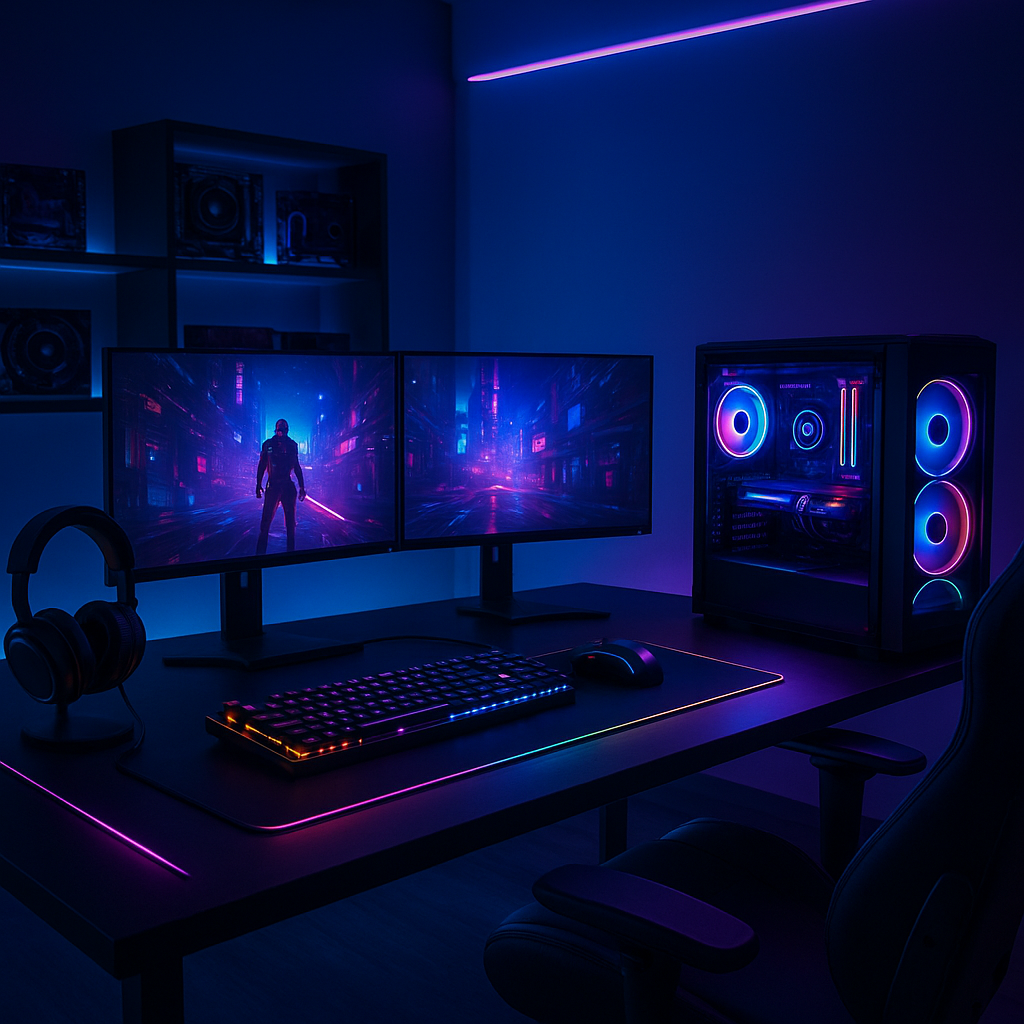
Setting the Stage: Why Your Gaming Hardware Matters More Than Ever
Imagine sitting down to play the latest blockbuster game, only to be met with choppy frame rates, long load times, and lag that ruins the immersive experience. For gamers just starting out, understanding the critical role of gaming hardware is the key to unlocking smooth, responsive gameplay and vivid visuals. The gaming hardware ecosystem in 2026 has evolved into a complex but rewarding landscape that can feel overwhelming at first glance. Yet, with the right knowledge, beginners can confidently build or select systems that offer both performance and longevity.
Recent industry data highlights that in 2025, global spending on gaming hardware exceeded $60 billion, signaling a sustained and growing demand for high-performance components tailored to gaming needs. This surge is driven by new game engines requiring advanced graphics and processing power, as well as innovations like real-time ray tracing and AI-enhanced environments. For newcomers, the challenge lies in navigating this ocean of options and understanding which components truly impact gaming performance.
"The foundation of an exceptional gaming experience starts with hardware that matches the demands of modern games," says Dr. Elena Mercer, a leading gaming systems analyst. "Beginners often underestimate the interplay between CPU, GPU, and memory, which can make or break gameplay quality."
To guide new gamers through this landscape, this article breaks down essential hardware components, current trends in 2026, expert insights, and practical advice to help you build or pick your ideal gaming setup.
From Pixels to Performance: A Brief History of Gaming Hardware Evolution
The journey to today’s sophisticated gaming hardware began decades ago with rudimentary consoles and PCs. The 1980s introduced home consoles like the NES, which featured basic chips dedicated to rendering simple graphics. The 1990s saw the rise of 3D graphics accelerators, such as the NVIDIA RIVA series, laying the groundwork for immersive environments.
By the early 2000s, gaming PCs grew increasingly customizable, with off-the-shelf GPUs and CPUs allowing players to upgrade systems for better performance. The past decade accelerated this trend with the introduction of multi-core processors and GPUs capable of hardware-accelerated ray tracing, fundamentally changing visual fidelity.
Fast forward to 2026, gaming hardware now incorporates specialized AI co-processors and DDR6 memory, driving frame rates beyond 240 FPS at 4K resolutions for flagship systems. Meanwhile, compact gaming laptops and cloud-based streaming hardware have expanded accessibility. This evolution reflects a relentless push for realism, responsiveness, and immersion.
"Gaming hardware has transitioned from simple graphics chips to complex systems integrating AI and specialized memory," notes Marcus Chen, CTO of a major hardware manufacturer. "Understanding this context helps beginners appreciate why certain components deserve investment."
Core Components Unveiled: What Every Beginner Needs to Know
At the heart of every gaming rig are a few essential hardware components, each playing a pivotal role in delivering seamless gameplay. Let’s explore these and their impact in 2026’s gaming environment.
- Central Processing Unit (CPU): The ‘brain’ of the system, the CPU manages game logic, physics, and general computations. Modern gaming benefits from CPUs with high single-thread performance and multiple cores. In 2026, flagship CPUs like AMD’s Ryzen 9 8800X and Intel’s Core i9-14900K dominate benchmarks, offering up to 24 cores and clock speeds above 5.5 GHz.
- Graphics Processing Unit (GPU): Responsible for rendering images and visual effects, the GPU is arguably the most critical component. Leading models such as NVIDIA’s RTX 5090 Ti and AMD’s Radeon RX 8900 XT leverage AI-driven upscaling and real-time ray tracing. The GPU’s VRAM (video memory) also affects performance, with 24GB now common in high-end cards.
- Memory (RAM): Fast, ample RAM ensures the CPU and GPU have quick access to data. For gaming, 16GB DDR6 is the baseline in 2026, with 32GB recommended for future-proofing and multitasking.
- Storage: Modern NVMe SSDs provide lightning-fast load times compared to traditional hard drives. The latest PCIe 5.0 SSDs deliver speeds exceeding 10,000 MB/s, dramatically reducing game loading and asset streaming delays.
- Motherboard and Power Supply: The motherboard connects all components, with gaming-centric models offering enhanced VRMs and multi-GPU support. A reliable power supply with sufficient wattage and efficiency rating ensures system stability.
Understanding how these components interplay is crucial. For instance, pairing a high-end GPU with a low-tier CPU causes bottlenecks, limiting performance. Conversely, balanced builds maximize the value of each part.
2026 Gaming Hardware Trends: What’s New and Noteworthy?
The gaming hardware space continues to innovate rapidly. Several trends stand out this year, shaping how beginners should approach their setups.
- AI-Enhanced GPUs: The integration of dedicated AI cores in GPUs has accelerated rendering techniques, including DLSS 4.0 and AMD’s FidelityFX Super Resolution 3. These technologies upscale lower-resolution images with minimal quality loss, enabling smoother gameplay on mid-tier hardware.
- Modular and Compact Designs: Manufacturers offer modular PCs allowing easy upgrades, a boon for beginners hesitant about building from scratch. Compact form factors like the Intel NUC 14 Extreme deliver desktop-class power in small footprints, perfect for limited space.
- Energy Efficiency: With global concerns about power consumption, gaming hardware is becoming more energy-conscious. New GPUs feature dynamic power scaling, and CPUs optimize cores based on workload, reducing electricity bills without sacrificing performance.
- Cloud and Hybrid Gaming: While local hardware remains dominant, cloud gaming platforms now support 144Hz streaming at 4K, complementing hardware setups and expanding options for gamers with limited budgets or mobility.
These developments mean beginners can either invest in cutting-edge local rigs or embrace hybrid solutions to balance cost and performance.
Expert Insights: How Industry Leaders Advise Beginners on Building Their Gaming Arsenal
To paint a clearer picture for newcomers, we reached out to industry veterans for their perspectives.
"Start with a balanced build rather than chasing the most expensive GPU or CPU," advises Sarah Kim, lead engineer at a major PC builder. "Match your components to your gaming goals and budget. For example, 1080p gamers don’t need the latest 8K-ready GPU."
Experts also emphasize the importance of peripherals, from monitors with high refresh rates and low latency to mechanical keyboards and gaming mice, which enhance responsiveness and comfort.
Energy efficiency and sustainability have become priorities as well. "Choosing components with good power efficiency ratings not only reduces environmental impact but also lowers operational costs," says Marcus Chen, underscoring the trend toward greener gaming setups.
"Don’t overlook software optimization and driver updates. They can unlock significant performance gains without changing hardware," adds Dr. Elena Mercer.
For those seeking deeper knowledge, TheOmniBuzz’s Mastering Gaming Hardware: Pro Tips for Ultimate Performance and Longevity offers advanced guidance to extend hardware lifespan and optimize settings effectively.
Practical Takeaways: How to Choose and Build Your First Gaming PC in 2026
Getting started with gaming hardware can seem daunting, but following a structured approach simplifies the process.
- Define Your Gaming Needs: Identify the games you want to play and at what resolution and frame rate. Casual gamers may prioritize budget builds, while esports enthusiasts seek ultra-low latency setups.
- Set a Realistic Budget: Allocate funds between core components, peripherals, and accessories. Remember to reserve budget for a quality monitor and input devices.
- Research and Compare: Use benchmark data and reviews from trusted sources to compare CPUs, GPUs, and memory options within your budget.
- Consider Upgrade Paths: Opt for motherboards and power supplies that support future expansion to extend your system’s relevance.
- Leverage Prebuilt or Modular Options: If building a PC is intimidating, consider prebuilt systems from reputable brands or modular PCs that simplify assembly.
Additionally, keeping abreast of the latest hardware news helps identify deals and emerging tech. For example, TheOmniBuzz’s Why Cutting-Edge Gaming Hardware Is Redefining Player Experience Today explores how new hardware innovations enhance immersion, a useful read for those planning upgrades.
Looking Ahead: The Future of Gaming Hardware and What Beginners Should Anticipate
The horizon for gaming hardware promises even greater advances, particularly in AI, materials, and integration.
- AI-Driven Personalization: Future systems will dynamically adjust settings based on player behavior and game demands, optimizing performance and visuals without user intervention.
- Quantum Computing Integration: While still nascent, quantum processors could revolutionize gaming physics and AI simulations, enabling unprecedented realism.
- Advanced Cooling Solutions: New materials and liquid cooling innovations will allow higher clock speeds and quieter operation, critical for maintaining performance in compact builds.
- Augmented and Virtual Reality Hardware: Enhanced wearable devices with faster processors and better displays will expand immersive gaming experiences beyond traditional monitors.
Beginners who start with solid foundational knowledge and a flexible setup will be best positioned to embrace these future trends with minimal disruption.
"The future of gaming hardware is about smart, adaptive systems that cater to individual players," predicts Sarah Kim. "Beginners should focus on learning fundamentals, as these will remain relevant despite rapid tech changes."
In conclusion, the path to a rewarding gaming experience begins with understanding your hardware. By appreciating the evolution, current landscape, and expert advice, new gamers can confidently build or buy rigs that deliver thrilling gameplay and longevity. Staying informed through quality resources and embracing emerging trends ensures you remain at the forefront of gaming technology.