
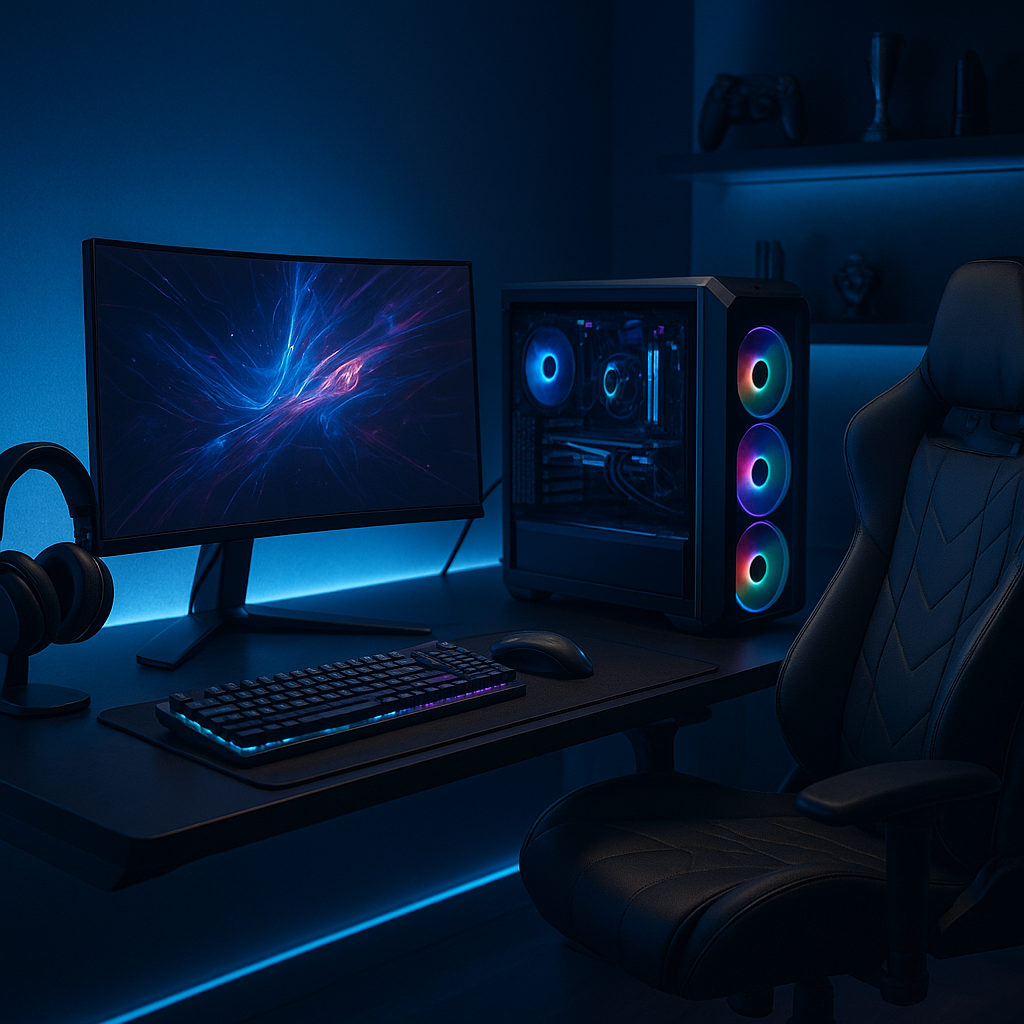
Setting the Stage: Why Hardware Mastery Defines Gaming Success
Imagine a pro gamer in the heat of a global esports final. Every millisecond counts; the difference between victory and defeat hinges not only on skill but on the gaming rig’s ability to deliver flawless performance. In 2026, the stakes have never been higher as hardware complexity and game demands escalate simultaneously. To truly dominate, gamers must understand the nuances of their equipment beyond mere brand names or flashy specs.
This scenario is no longer limited to esports elites. With the rise of AI-driven immersive experiences and hyper-realistic graphics, the average enthusiast also faces hardware choices that impact gameplay quality and future-proofing. According to industry estimates, gamers upgrading or customizing their rigs increased by 35% since 2023, reflecting a growing awareness that hardware expertise can be as decisive as game strategy.
Whether you’re building a new PC or optimizing an existing setup, expert tips for gaming hardware can elevate your experience from frustrating lag and overheating to seamless immersion. In this deep dive, we explore foundational principles, cutting-edge trends, and actionable guidance to help gamers at all levels maximize value and performance.
From Silicon to Software: The Evolution of Gaming Hardware
The journey to today’s gaming hardware landscape is a story of rapid innovation and shifting priorities. Early 2020s gaming rigs prioritized raw GPU power, with Nvidia and AMD battling for supremacy in the high-end graphics card market. By 2024, however, we saw a paradigm shift: efficiency and integrated AI acceleration became equally critical as framerates surged past 240 FPS in competitive titles.
CPU architecture evolved in tandem, embracing multi-core designs optimized for simultaneous game engine threads, streaming, and background AI processes. The rise of DDR5X memory modules and PCIe 5.0 interfaces enabled bandwidth that was unimaginable just a few years ago, pushing graphics fidelity and load times to new heights.
Storage technology also transformed gaming experiences. The widespread adoption of NVMe Gen 5 SSDs with heatsink solutions eliminated bottlenecks that plagued previous generations, slashing loading times in open-world games by over 50%, according to manufacturer benchmarks from Western Digital and Samsung.
Furthermore, peripherals began to incorporate adaptive technologies. Mechanical keyboards with haptic feedback tuned for specific game genres, monitors with ultra-low latency OLED panels, and audio systems featuring spatial sound algorithms redefined immersion.
This hardware evolution set a new baseline for gamers, but it also introduced complexity and potential pitfalls for those lacking expertise. Understanding these shifts is crucial to making informed decisions amid the abundance of options available today.
Core Analysis: Decoding the Hardware Components That Matter Most
Not all hardware components contribute equally to gaming performance. Expert gamers prioritize certain elements based on their play style and game demands. Here are the critical components and how to optimize each:
- Graphics Processing Unit (GPU): The heart of visual rendering, modern GPUs incorporate dedicated AI cores and ray tracing units. In 2026, flagship cards like Nvidia’s RTX 6090 Ti and AMD’s Radeon RX 8900 XT dominate benchmarks, delivering up to 70% more performance per watt than 2023 models. Gamers should balance raw power with thermal efficiency; undervolting and custom BIOS profiles can squeeze extra FPS while reducing heat.
- Central Processing Unit (CPU): Multithreaded performance is king. Intel’s 16-core Alder Lake successors and AMD’s Ryzen 9000 series provide ample headroom for gaming and streaming simultaneously. For competitive gamers, clock speed stability under load is critical; liquid cooling solutions help maintain peak frequencies during marathon sessions.
- Memory (RAM): The transition to DDR5X at speeds above 7600 MHz has significantly improved load times and texture streaming. However, capacity remains contextual; 32GB is now the sweet spot for most gamers, particularly those running background applications like Discord or OBS.
- Storage: NVMe Gen 5 SSDs with heat dissipation technology reduce latency and prevent thermal throttling. Expert builders often configure separate drives for OS, games, and scratch space to optimize read/write cycles.
- Display: Beyond resolution and refresh rates, 2026 monitors incorporate AI-enhanced motion blur reduction and dynamic contrast adjustment. OLED remains the premium choice for color accuracy and response time, but mini-LED alternatives offer better anti-burn-in durability at competitive prices.
Fine-tuning these components requires monitoring software and stress testing tools. Popular utilities such as MSI Afterburner and HWInfo provide real-time telemetry, enabling users to tweak voltage, clock speeds, and fan curves precisely.
“Effective hardware optimization is about balancing raw specs with real-world performance metrics. Overclocking without monitoring often backfires,” advises Dr. Elena Torres, a leading hardware engineer at TechCore Labs.
Moreover, compatibility is paramount. Mismatched components or outdated BIOS firmware can drastically reduce system stability, an aspect often overlooked by novices.
Latest Developments in 2026: AI and Sustainability Shape Hardware Trends
Two major forces are currently reshaping gaming hardware in 2026: artificial intelligence integration and sustainability concerns.
AI is no longer confined to gameplay mechanics alone. GPU manufacturers now embed dedicated AI accelerators that assist with real-time upscaling, noise reduction, and predictive frame rendering. Nvidia’s DLSS 5.0 and AMD’s FidelityFX Super Resolution 3.0 exemplify this trend, boosting perceived frame rates by up to 40% without sacrificing visual quality.
AI also extends into hardware management. Advanced system controllers dynamically adjust power delivery and cooling based on game genre and player behavior, optimizing performance and energy consumption in real time.
On the sustainability front, industry pressure has led to more eco-conscious hardware designs. Companies like ASUS and MSI now offer modular components with recyclable materials and energy-efficient manufacturing processes. According to a 2025 report by the Global Electronics Sustainability Initiative, gaming hardware emissions have decreased by 22% since 2020, thanks in part to these innovations.
Additionally, the rise of cloud-assisted gaming has influenced hardware requirements. With services like GeForce Now Premium and Xbox Cloud Gaming Pro, gamers can offload some processing tasks to servers, reducing the need for ultra-high-end local rigs. However, for competitive players, local hardware remains indispensable due to latency sensitivities.
These developments create new opportunities and challenges for gamers seeking the best hardware setup.
“The fusion of AI with hardware management represents a paradigm shift. We’re moving towards systems that learn and adapt to individual gaming styles,” explains Marcus Lin, CTO of HyperCore Gaming.
Practical Expert Tips: Building and Optimizing Your Gaming Rig
The theoretical knowledge must translate into actionable practice. Here are expert tips to help gamers harness their hardware’s full potential:
- Prioritize Balanced Builds: Avoid bottlenecks by pairing your GPU with a CPU of comparable caliber. For example, pairing an RTX 6090 Ti with a mid-range CPU will limit performance gains.
- Invest in Quality Cooling: Air cooling remains viable, but liquid cooling solutions offer better thermal stability. Incorporate high-quality thermal paste and ensure proper airflow with multiple intake and exhaust fans.
- Regular Maintenance: Dust accumulation can increase temperatures by up to 15%. Schedule monthly cleaning and monitor fan health.
- Update Firmware and Drivers Promptly: Manufacturers release frequent updates that improve compatibility and performance. Use official tools like Nvidia GeForce Experience or AMD Radeon Software.
- Use Calibration Tools: Calibrate your monitor’s color profile and adjust in-game settings to balance visuals and frame rates effectively.
- Leverage AI Features: Enable AI upscaling technologies in supported games to enhance graphics without taxing hardware.
For gamers interested in streaming or content creation, allocating extra RAM and CPU cores can ensure smooth multitasking. According to a 2025 Twitch analytics report, streamers with optimized hardware setups saw up to 30% fewer dropped frames.
Furthermore, choosing peripherals tailored to your gaming genre enhances performance. For instance, mechanical keyboards with low actuation force keys benefit fast-paced FPS players, while customizable macro pads aid MMO enthusiasts.
Combining these tips with continuous learning about emerging hardware trends fosters a competitive edge.
Looking Ahead: What Gamers Should Watch for in Hardware Evolution
The horizon of gaming hardware promises exciting innovations. Quantum computing prototypes hint at breakthroughs in simulation speeds, although widespread adoption remains years away. Meanwhile, neuromorphic chips designed to replicate brain-like processing could revolutionize AI-driven gaming experiences.
Wireless technology is also advancing. The latest Wi-Fi 7 standard and ultra-low latency Bluetooth 6.0 promise near-zero input lag for peripherals, potentially rendering wired connections obsolete for competitive gamers.
Custom silicon tailored to specific game engines is emerging as well. Partnerships between chipmakers and game studios aim to optimize hardware-software synergy, enhancing efficiency and immersive realism.
Moreover, sustainability efforts will intensify, with more manufacturers adopting circular economy principles and offering hardware-as-a-service models. This approach could lower entry barriers for gamers seeking high-end rigs without large upfront costs.
Gamers must stay informed, balancing excitement for new tech with pragmatic considerations to avoid premature upgrades.
“Future gaming hardware will be defined by adaptability and sustainability. Players who embrace this mindset will thrive,” predicts Dr. Torres.
For those interested in industry trends and esports impacts, our in-depth coverage in Inside Esports: Unraveling the Forces Behind Competitive Gaming’s Global Surge and the exploration of Why Esports Is More Than Just Gaming: What You Need to Know offer valuable perspectives on how hardware innovations shape competitive play and community growth.
Case Study: How a Pro Gamer Optimized for the 2026 Meta
Consider the example of Lina "Spectra" Zhang, a top-tier FPS competitor who revamped her setup in early 2026 to adapt to the latest game engine updates emphasizing AI-powered visual effects.
Starting with an AMD Ryzen 9 7950X3D and an Nvidia RTX 6090 Ti, Lina incorporated a custom liquid cooling loop with a 360mm radiator and replaced her DDR5-6400 RAM with DDR5X-8000 modules. She installed an NVMe Gen 5 SSD with active cooling and switched to a 27-inch 240Hz OLED monitor featuring adaptive sync and AI motion interpolation.
Using monitoring software, she fine-tuned voltage settings to balance performance and temperature, achieving a stable 5% FPS boost over stock settings. Additionally, enabling DLSS 5.0 in supported games increased frame rates during intense firefights without quality loss.
This comprehensive overhaul helped Lina reduce input lag by 15ms and improve visual clarity, directly contributing to her winning streak in the Spring 2026 esports circuit.
Her approach illustrates the importance of integrating hardware knowledge with gameplay strategy — a synergy that every serious gamer should strive to achieve.